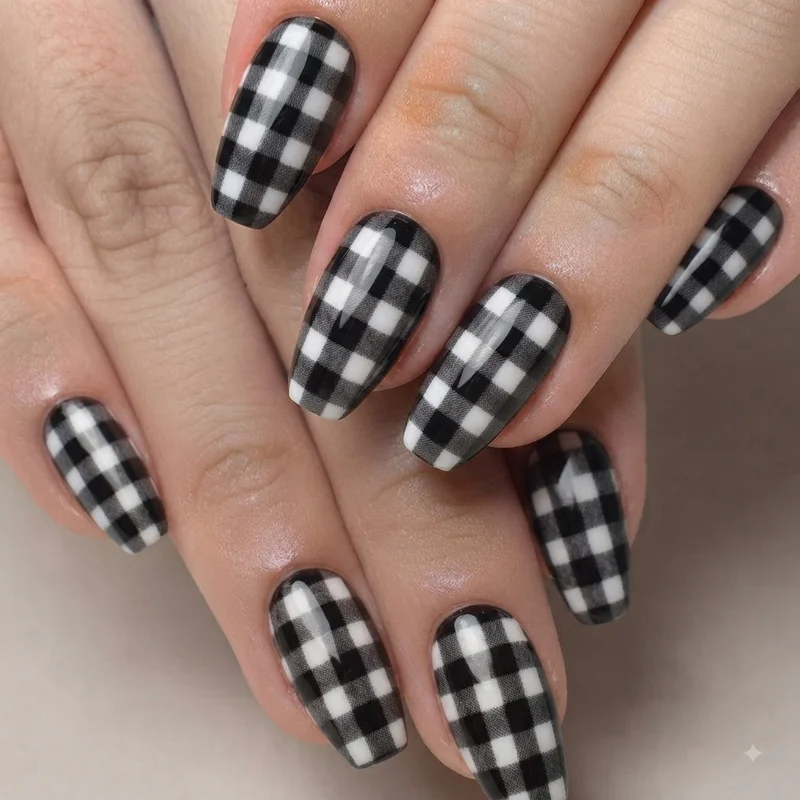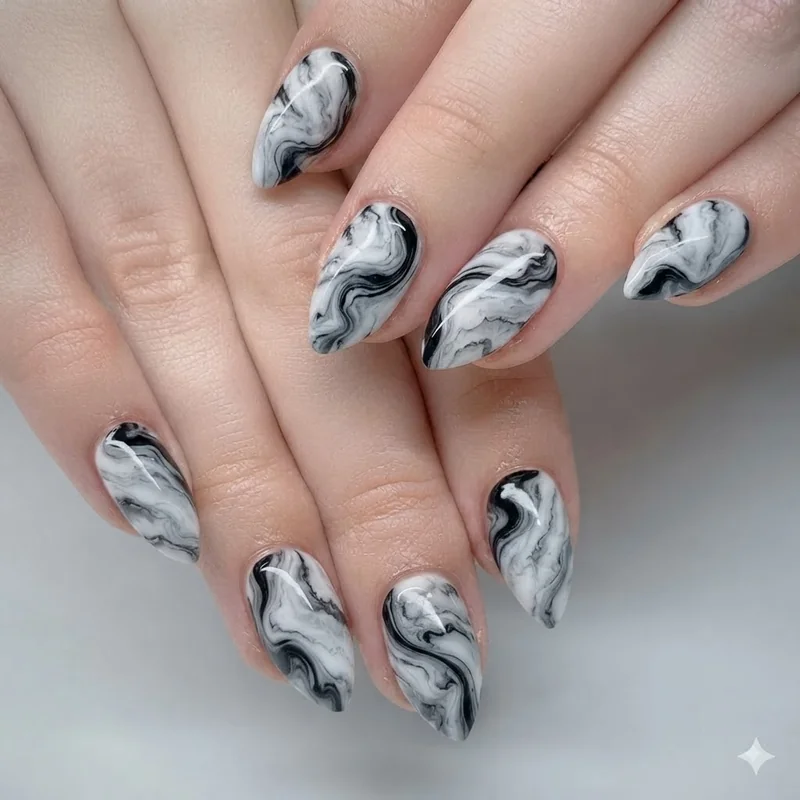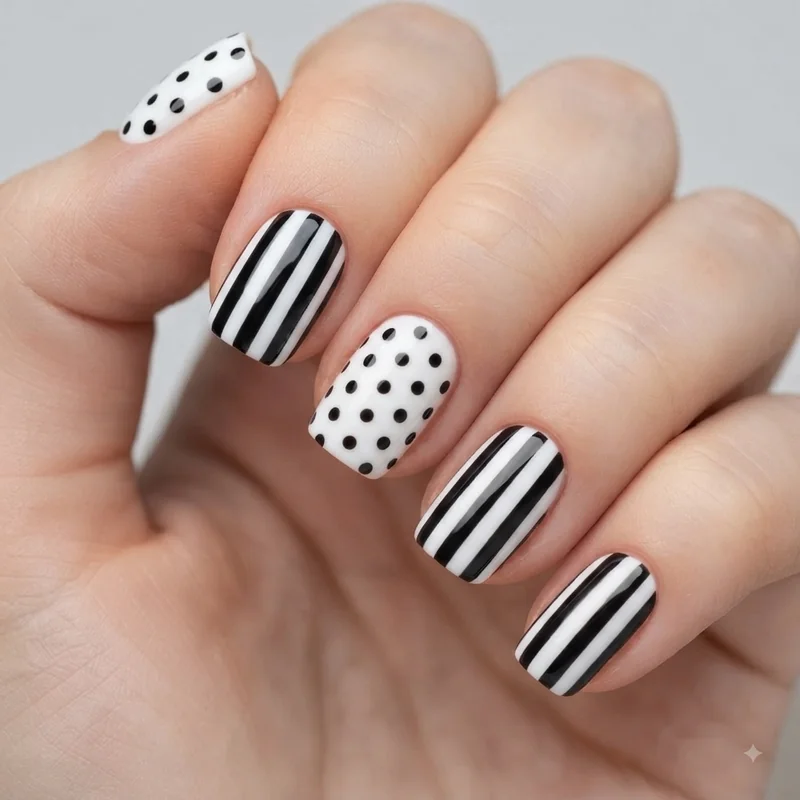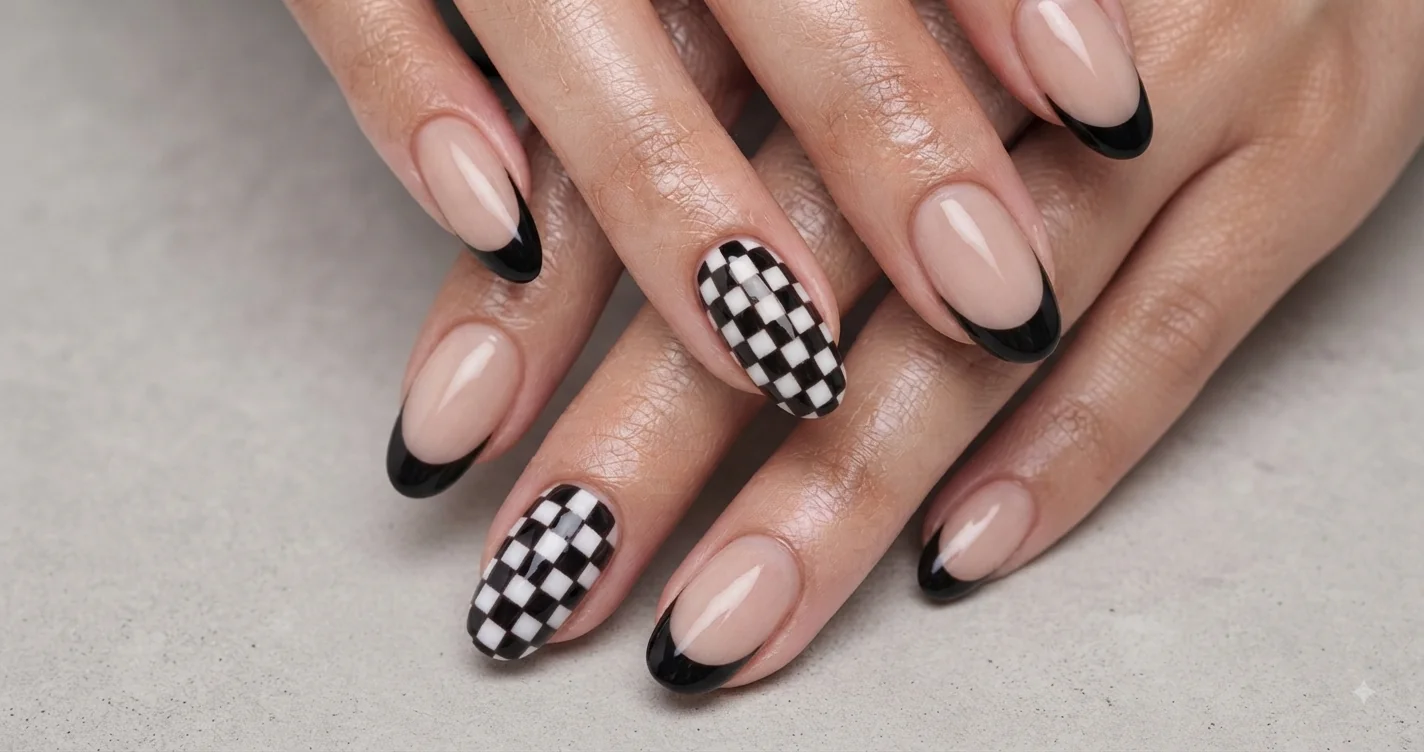
Black and white nails work with every nail shape and length, provided the pattern's scale matches the nail's surface area. Fine, detailed patterns like checkerboard need the extra length of an almond or coffin shape, while bold, simple designs like a French tip or a clean negative space cut hold up on short square nails without losing definition. That single rule of matching scale to surface is the difference between a black and white nails look that reads sharp and one that reads muddy by day three, and it is the rule most roundups never bother to mention.
Here is what nobody tells you in the average roundup: you can screenshot forty-five nearly identical photos and still not know if checkerboard will survive your actual nail length, or whether the design you love reads too casual for Monday's client meeting. Black and white nails deserve better than a photo dump. This is the palette that never asks you to match it to a season, an undertone, or an outfit colour, which is exactly why it keeps returning every time a trend cycle claims something new is taking over.
So this roundup is built differently. Twenty-five designs, grouped into five pattern families, each one carrying the detail competitors skip: which shape it suits, whether it survives short nails, and which occasion it was actually made for. Every pattern family below gets the same treatment, no exceptions, because a photo without that context is not actually useful to anyone standing in front of a nail polish rack trying to decide. By the end, you will not be choosing from a wall of photos. You will know which one is yours, down to the shape and the occasion it was made for.
What Shape Works Best for Black and White Nails?
Almond and coffin shapes give patterned black and white designs the most room to read cleanly, since their longer, flatter surface keeps fine details like checkerboard grids and thin stripes proportionate. Square and short round shapes suit bolder, simpler designs, think solid French tips or negative space blocks, where there is less detail competing for space. The shape does not limit the palette. It limits which pattern within the palette will actually look intentional.
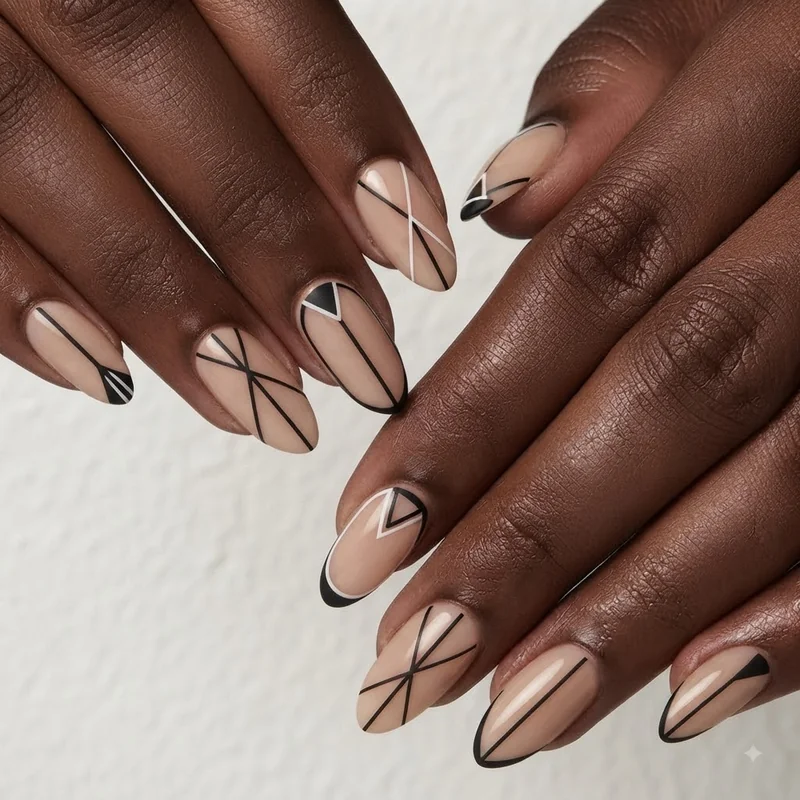
Most roundups treat shape as an afterthought, a caption under a photo rather than a decision that comes first. That is backwards. A checkerboard grid sized for a long coffin nail, shrunk onto a short oval, does not shrink gracefully. The squares blur into a smudge instead of a pattern. The reverse is also true: a bold single-line negative space design that looks striking on a short square nail can look sparse and unfinished stretched across a long stiletto with nothing else to fill the space.
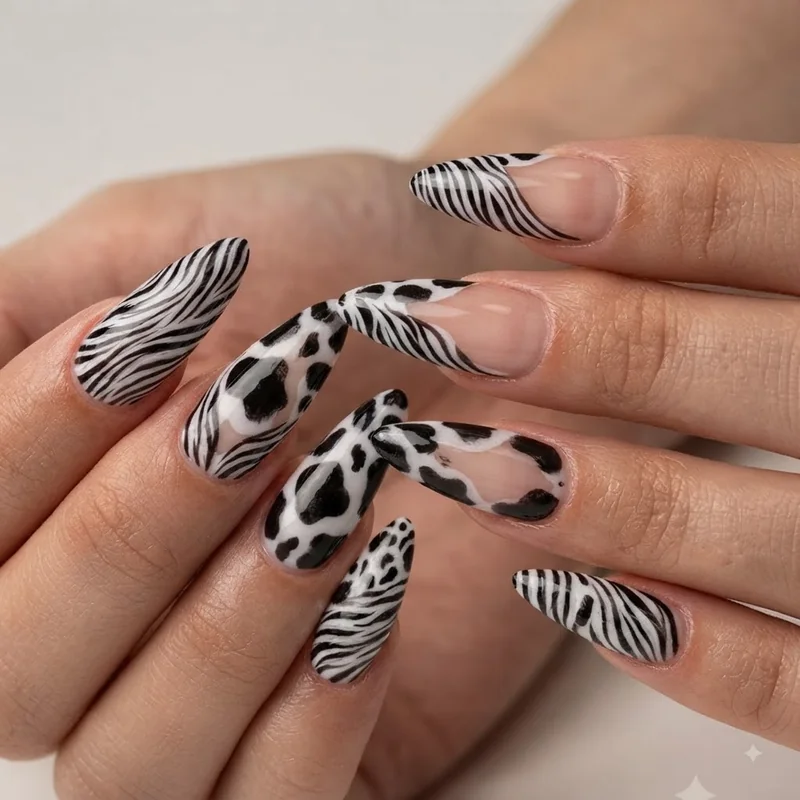
The workable pairing list looks like this. Almond and coffin: checkerboard, fine stripes, detailed florals, anything with repeated small elements. Square and short round: French tips, negative space, single geometric shapes, bold swirls. Stiletto: animal print and abstract marble, where the elongated shape actually amplifies the drama of the pattern rather than competing with it.
None of this means a shape locks you out of a pattern you love. It means the execution changes. A checkerboard fan with short square nails is not stuck choosing a different design, she is choosing a larger, three-square grid instead of a fine five-square one. A stiletto lover who wants negative space simply anchors the bare section with a bold black line rather than leaving it undefined, so the extra length has something to hold onto. Black and white nails reward this kind of small adjustment because the palette itself never changes, only the proportion within it does, which is the entire reason it survives every shape without needing a shape-specific colour swap the way trend colours often do.
Classic French Tip Reimagined in Black and White
Three coats. That is roughly what separates a French tip that looks crisp from one that looks like it is still drying. A classic French manicure pairs a nude or sheer pink base with a clean white tip, following the natural smile line of the nail. It is the most recognisable manicure format in the world for a reason: it works on every shape, every length, and every occasion without a single design decision beyond the tip colour.
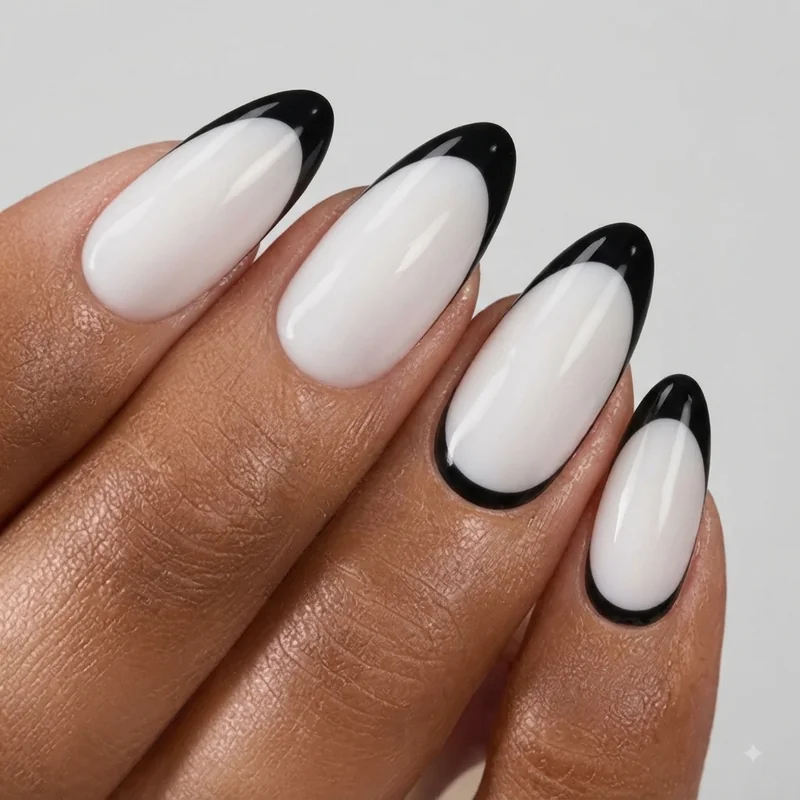
The black and white version keeps that exact structure and swaps the palette. A white or nude base with a black tip reads sharper and more graphic than the traditional soft white-on-nude pairing, while a black base with a white tip flips the contrast entirely and lands somewhere between goth and editorial. Neither version asks you to relearn the technique. If you can paint a French tip, you can paint this one, and that low technical barrier is exactly why this pattern family sits at the beginner-friendly end of the whole roundup.
Where it gets interesting is the variation layer. A double French, black tip on top of a thin white line, adds a second edge without adding complexity. An asymmetric French, where the tip angles instead of following a straight smile line, updates the whole look without touching the palette. A black and white nails French set with a single thin black stripe running through the white tip splits the difference between minimal and detailed, and it happens to be one of the easiest at-home upgrades on this list, since it only adds one extra line to a technique you already know.
Colour placement matters more than most people assume here. Keep the base sheer or nude and the tip solid black for the sharpest, most graphic contrast. Reverse it, solid black base with a crisp white tip, and the whole look reads bolder and more deliberate, closer to a bold graphic manicure than a subtle update. A thin metallic or clear line dividing base from tip is optional, but it does sharpen the smile line further for anyone who wants precision over softness.
Shape-wise, this pattern is the most forgiving in the entire roundup. Square, almond, coffin, short round, all of them carry a French tip without needing scale adjustments the way checkerboard or zebra print do, since the design lives entirely in one clean line rather than a repeated element. That versatility, paired with how quickly it can be executed at home, is what makes black and white French tips the single easiest starting point for anyone new to this palette.
For readers who want the format explored past the black and white lane, the full range of modern French tip formats beyond black and white covers colour pairings, tip shapes, and finish variations worth bookmarking separately.