Skin beside the nail that has turned hot, tight, and shiny, with a pulse you can feel in the fingertip, is very unlikely to be nail fungus. That is paronychia, an infection of the skin fold that frames the nail. Mild cases usually settle with warm soaks at home, while pus under the nail, a fever, or redness creeping up the finger means a doctor. The infection starts in the skin, not the nail plate, so paronychia is not a fungal nail infection.
Most readers arrive having guessed fungus or an ingrown nail, and that guess is where the wrong advice starts. Anything aimed at fungus misses an infected nail fold. A pus pocket that looks about to burst is not yours to open.
Below is how paronychia looks on a finger and on a big toe, why manicures and picked hangnails so often set it off, what to do tonight, and the signs that mean a doctor.
What Is Paronychia? The Nail Infection That Isn't Fungus
Paronychia is a skin infection that happens to sit beside a nail: an infection or inflammation of the skin folds around a fingernail or toenail, not of the nail plate itself. The nail fold is the skin along the base and sides of the nail, and germs get in through a small break there.
Most cases stay mild when treated early. Paronychia arrives as acute (sudden, under six weeks) or chronic (six weeks or longer), on a finger or a toe.
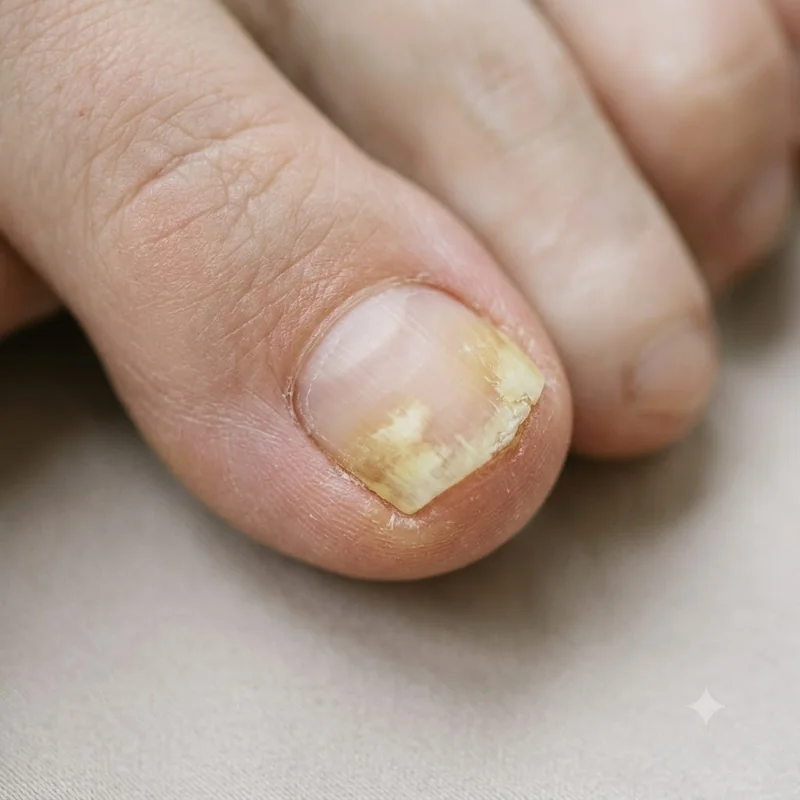
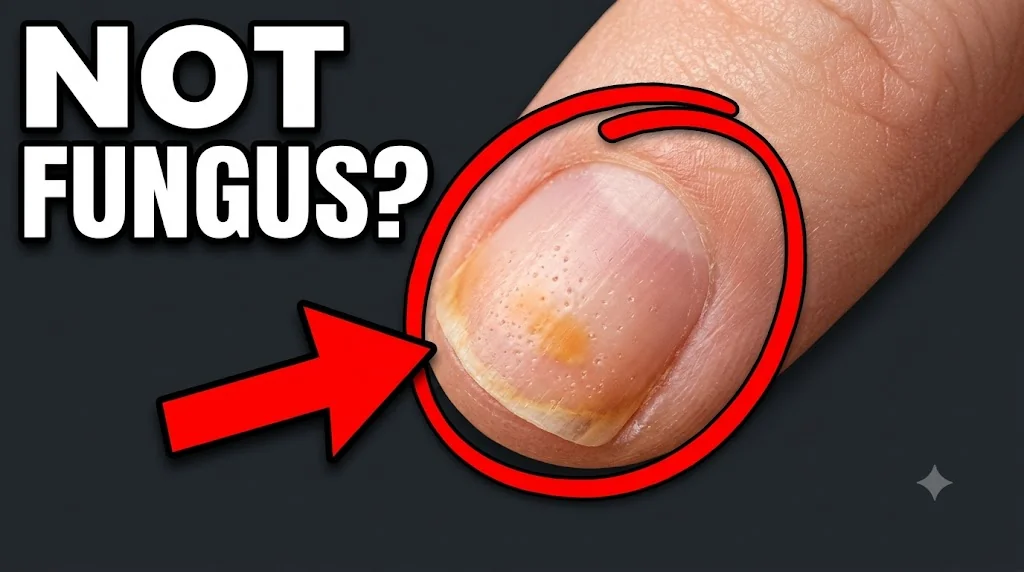
That location is why nail-fungus advice does not fit paronychia. Nail fungus settles in the nail plate, while the trouble here sits in the skin beside it.
Paronychia Symptoms: What It Looks and Feels Like
Red, swollen skin beside a nail looks like one problem and behaves like two. If the skin at the base or side of a nail is red, swollen, and tender, paronychia is the most likely cause, and the speed of onset tells you which kind. Acute paronychia is sudden, lasts under six weeks, and is usually bacterial. Chronic paronychia lasts six weeks or longer and is most often irritant dermatitis of the nail fold, with Candida often present.
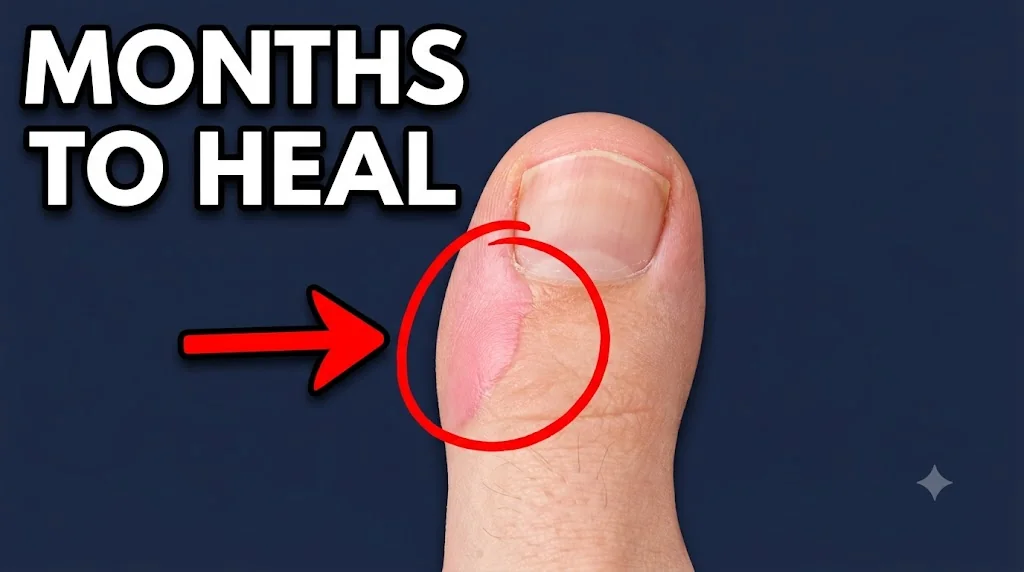
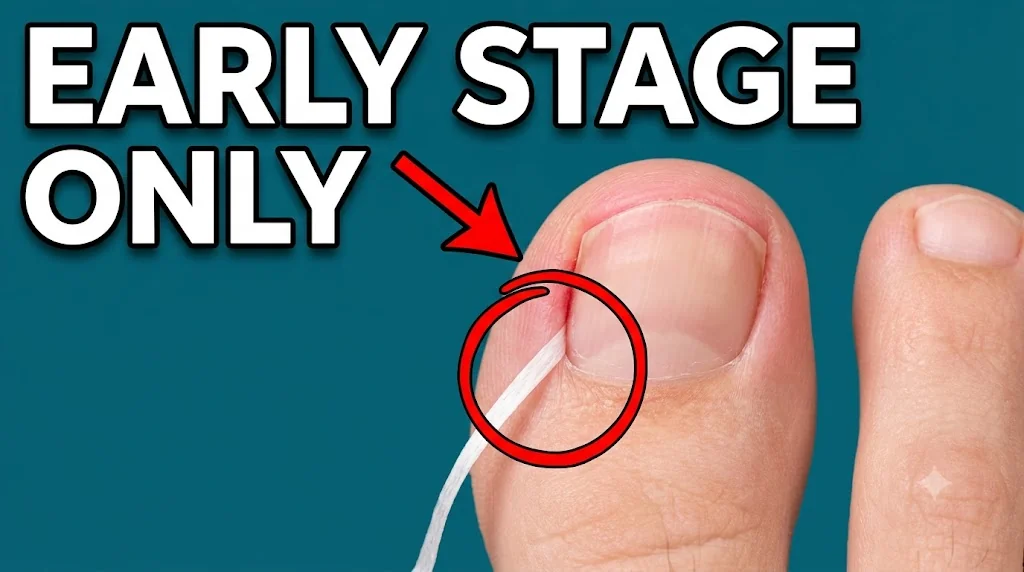
Acute cases announce themselves. The fold turns hot, shiny, and tight, the throbbing can be fierce, and a whitehead or pus pocket often forms beside a single nail. On a big toe, it usually appears down the side next to the nail.
Chronic cases are quieter. The skin looks puffy and boggy, the cuticle wears away, several nails can be involved, and the nail plate picks up ridges. Dermatologists treat this slow version as a form of nail-fold dermatitis, and this dermatologist-written overview of paronychia covers the clinical picture in detail.