Why Dermatologists Say Not to Cut Your Cuticles
Why would a dermatologist care about something this small? Because "small" is exactly what makes it risky. The skin at the base of your nail is thin, it sits close to a blood supply, and it seals off an area that produces new nail cells. Whether you cut or push back your cuticles stops being a debate the moment you understand what that seal is protecting.
The dermatologists strongly recommend against cutting cuticles, and the reasoning holds up under scrutiny rather than falling apart on inspection. Cutting breaks a barrier that exists specifically to keep bacteria and fungi out of the nail matrix. Once that seal is compromised, even a superficial nick can let something in, and the American Academy of Dermatology lists infection, irregular nail growth, and delayed healing among the documented downsides. This isn't a fear-mongering stretch. It's the same reason a paper cut on your fingertip stings more than one on your forearm: thinner skin, closer to living tissue, less margin for error.
There's a habit angle too. People who bite or pick at their cuticles compound the damage cutting starts, and how to stop picking at your cuticles is worth reading if that sounds familiar. Once the barrier is broken once, it becomes easier to break again.
Cuticle vs. Eponychium: What's Actually Being Cut
Picture the moment your nail tech leans in with the nippers, close enough that you can see exactly which skin she's about to touch. That's the moment this distinction actually matters, because two different types of tissue sit in nearly the same spot, and only one of them is safe to remove.
The eponychium is the living skin fold at the base of the nail. It should never be cut. The cuticle, by contrast, is the thin layer of dead tissue that clings to the nail plate itself, and it can be safely trimmed or lifted away. Nearly every consumer article online tells you to "never cut your cuticles," which professional sources like professional nail industry guidance on cuticle anatomy point out is technically imprecise. This is really the whole answer to should you cut or push back cuticles: the advice is right in spirit and wrong in vocabulary. What people are actually being warned against is cutting the eponychium, not the cuticle.
This is why your tech pushes rather than cuts, even when it would be faster to reach for scissors. The eponychium produces the cuticle and seals the nail matrix from bacteria. Cut into it and you're not tidying up dead skin, you're wounding living tissue that has a job to do. Understanding this one distinction resolves most of the confusion that sends people searching for an answer in the first place.
What Happens If You Cut Your Cuticles Anyway
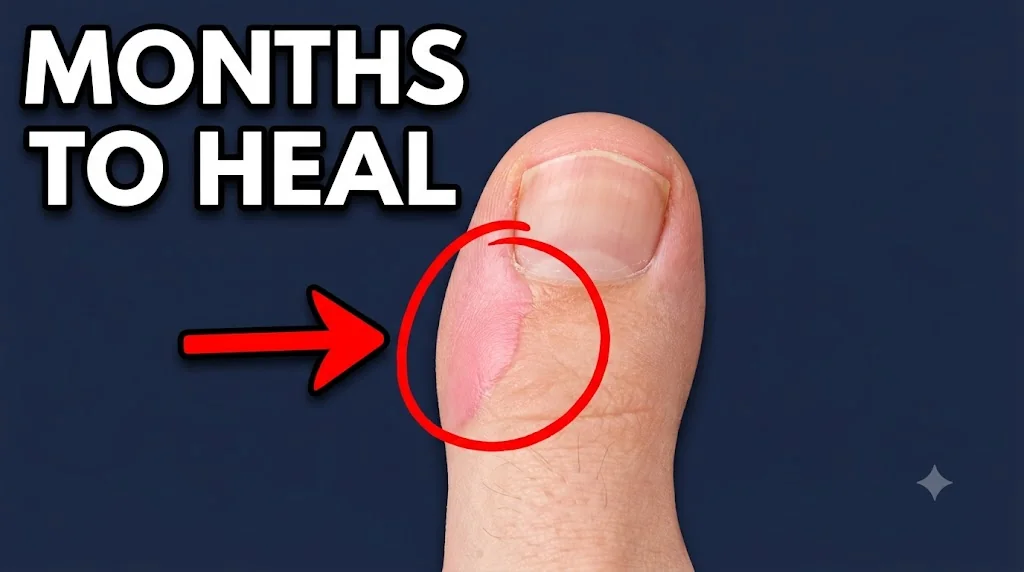
Say it plainly: choosing to cut rather than push back your cuticles carries real, specific consequences, and they are not rare edge cases. The first is paronychia, a bacterial or fungal infection of the skin around the nail that shows up as redness, swelling, and tenderness, sometimes with a small collection of pus at the nail fold. It is not exotic. It is one of the more common minor infections dermatologists see, and it starts almost exactly the way you'd expect: a break in the skin that lets something in.
The second consequence is less dramatic but more persistent. Skin that's repeatedly cut tends to grow back thicker and more irregular, a defensive response the body uses to protect an area it perceives as vulnerable. That's the opposite of what most people wanted from the cut in the first place. A hangnail is a common byproduct of this cycle, and why hangnails keep coming back and how to prevent them breaks down that pattern in more depth if it's a recurring issue for you.
There's also the immediate, practical risk: bleeding, stinging, and a manicure that looks worse three days later than it did leaving the salon chair, once the swelling and irritation set in.
How to Push Back Your Cuticles the Right Way
You'd think the safer option would also be the harder one. It isn't. Learning how to push back cuticles correctly takes roughly the same three minutes as cutting them, and it's arguably more forgiving of a slightly unsteady hand, since there's no blade involved.
Start with softening, not force. Soak your fingertips in warm water for a few minutes, or apply cuticle oil and let it absorb, so the skin becomes pliable rather than tight against the nail plate. Reading how cuticle oil supports healthy cuticles is worth doing here, since the oil step is what most people skip and it's the one that makes the rest of this actually work. Once the skin is soft, use an orangewood stick or a rubber-tipped cuticle pusher and gently ease the dead cuticle tissue back toward the base of the nail, working in small strokes rather than one hard push. A cuticle pusher is designed specifically for this: it moves dead tissue without engaging the living skin underneath, provided you're using light pressure and sanitised tools.
Any loose or flaking dead skin that lifts away on its own during this process can be trimmed with a clean cuticle nipper. That's a different action entirely from cutting into the eponychium, and it's the part of the routine that's genuinely fine to do.