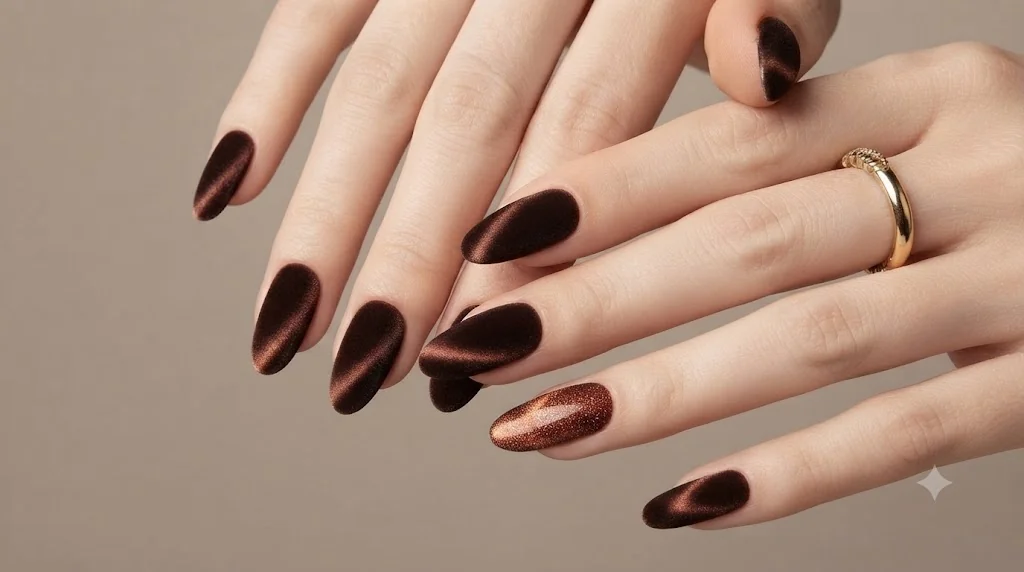
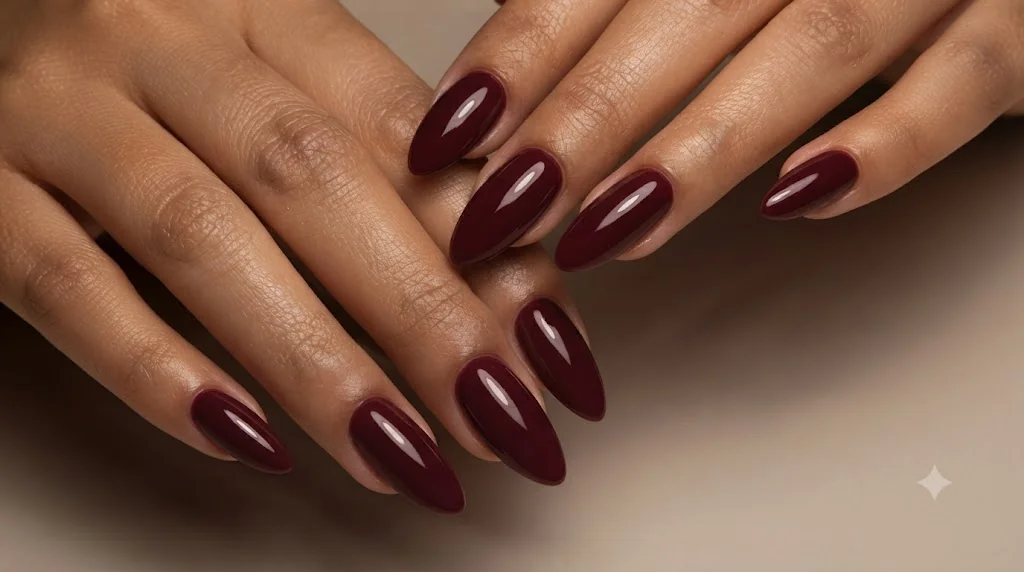
Someone shows you a photo. Soft pink bloom at the centre of each nail, fading into nothing. "Igari nails," the caption says. You search it. Three results call it blush nails. One calls it aura nails. None of them agree, and none of them tell you why the name even exists.
That confusion is the whole problem with how igari nails get covered online. The name carries specific meaning, not a vague aesthetic category, and most coverage treats it as interchangeable with two or three other trends that simply look similar from a distance. Igari nails have a precise definition, a real origin story, and a technique that distinguishes them from their lookalikes, and almost nothing online walks through all three properly.

What are igari nails exactly?
Igari nails are a Korean nail technique that creates a soft, diffused circle of blush colour at the centre of each nail, fading outward to a sheer or nude base. The bloom sits in the middle of the nail plate rather than at the tip or the cuticle, and the edges are deliberately blurred rather than sharp.
That centre placement is the detail most descriptions skip past. It is not blush brushed across the whole nail, and it is not a gradient that runs edge to edge. It is contained, soft at the borders, and meant to look like colour rising from underneath the nail rather than sitting on top of it. The effect borrows directly from a makeup technique, which is where the name comes from and where the rest of this story starts. Within the wider korean nail art landscape, igari sits as one of the more restrained, skin-focused styles, closer to a finish than to decoration.

Where did igari nails come from?
Igari nails are Japanese in origin, not Korean, despite how the trend is now associated almost entirely with Korean nail culture. The name comes from Shinobu Igari, a Japanese makeup artist whose flushed, soft-focus makeup style became influential in J-beauty around 2018.
Igari's signature look placed blush in unexpected zones, under the eyes and across the bridge of the nose, to mimic the appearance of someone who had just laughed too hard or had a little too much to drink. It picked up the nickname "hangover makeup" for exactly that reason. The aesthetic prized softness over precision and imperfection over polish, a sharp break from the heavily contoured looks that came before it.
Korean nail artists picked up the same logic and applied it to nails. Where the makeup version blurs colour into skin, the nail version blurs colour into polish, and the centre-bloom placement on the nail plate echoes the cheek and nose-bridge placement of the original makeup. The crossover did not happen in reverse. Japan supplied the concept and the name. Korea supplied the technique and the platform that took igari nails global through salons and, eventually, TikTok.