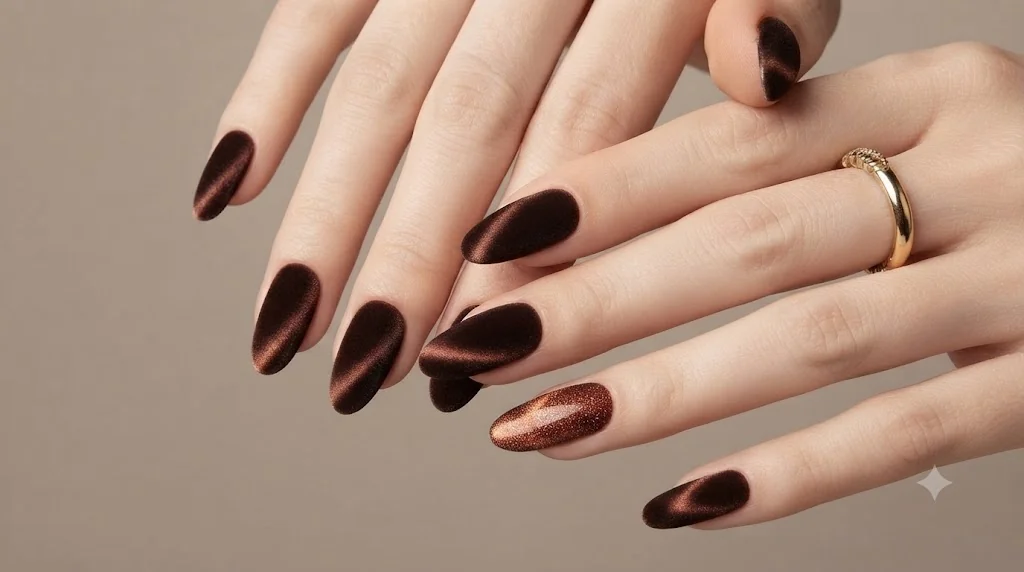
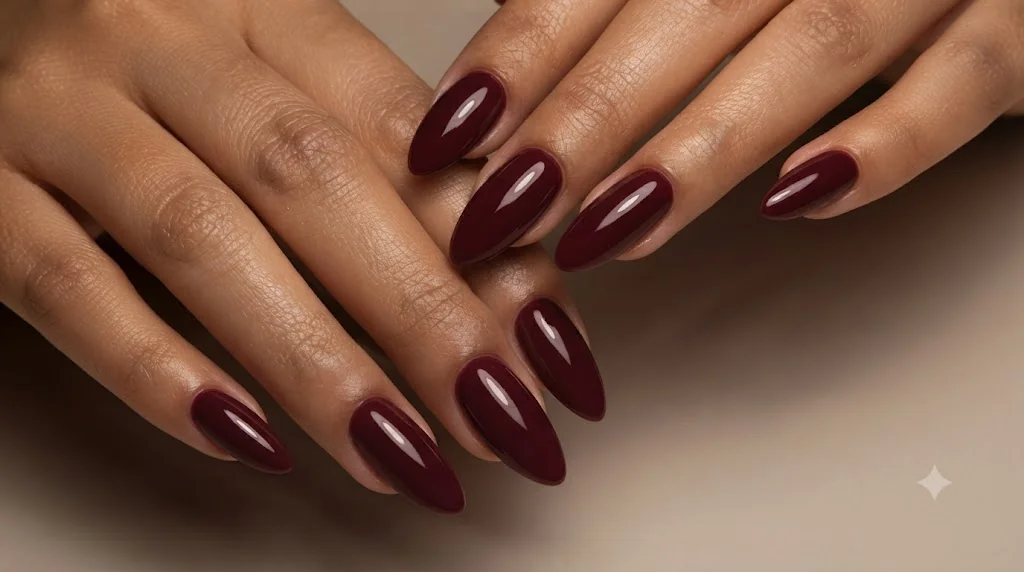
You have saved at least five different versions of korean glass nails to your phone. The shattered prism set from 2015 that started a movement. The nude magnetic gel with a vertical stripe of light. The one that shifted from lavender to pearl when the creator moved her hand. The aurora set that had 400,000 saves in two weeks. And maybe one more you cannot quite categorise. Here is the thing: they are all korean glass nails. They just belong to different chapters of the same story. This post maps every version where each one came from, which is having its moment in 2026, and how to know exactly which one belongs to you.

What are Korean glass nails, exactly?
Korean glass nails are a gel-based manicure finish defined by ultra-high shine, translucency, and a depth of light that mimics the surface of polished glass. The term covers several distinct techniques from the original iridescent cellophane film method to modern magnetic gel and chrome powder variants all unified by the same signature mirror-like quality and K-beauty aesthetic.
What separates them from other high-shine finishes is the base. Standard glitter and chrome sit on top of the nail; glass nail techniques create the illusion that the light is coming from inside it. The result is dimensional rather than flat, which is why the finish photographs differently from every angle.
The category sits within the broader world of korean nail art, which prizes translucency, light-catching finish, and minimalist precision over heavy colour or 3D embellishment. That shared DNA is why glass nails feel so distinctly Korean even across their many versions restraint is always part of the brief.

The original Korean glass nail: cellophane film and the Unistella technique
Korean glass nails were created by Park Eunkyung, founder of Unistella salon in Seoul, South Korea. She developed the original technique using shards of iridescent holographic film later called rainbow film set into gel to mimic the prismatic quality of abalone shell. The year was 2015. One post on Instagram and the nail world had a new vocabulary.
Unistella is a Seoul nail salon founded by Park Eunkyung, who developed the glass nail technique and has since become the manicurist for global style icons including Jennie from BLACKPINK and G-Dragon. Her client list matters here not as celebrity trivia but as signal: this is where K-beauty nail culture gets its direction.
Rainbow film is a thin iridescent cellophane material manufactured in Korea, originally used to create the glass nail effect by cutting it into small fragments and setting them into gel polish. Park initially worked with cellophane candy wrappers before sourcing a finer film from Japan the change in material is what produced that prismatic, almost abalone-like depth.
The original technique is layered simply. A base colour (or a sheer nude), small irregular pieces of rainbow film pressed flat into wet gel, then sealed under multiple layers of no-wipe top coat. The shard arrangement determines the look: packed tight for maximum shimmer, sparse for a more editorial, negative-space feel. According to Manucurist's glass nails technique breakdown, this stained-glass origin story is what gives the finish its characteristic depth fragments of film catching light at different angles simultaneously, rather than a single-surface shimmer.
The shattered glass aesthetic is still requested in salons today, though it now sits alongside the magnetic and chrome evolutions that have overtaken it in popularity. Knowing it exists helps clarify the terminology: when a pre-2020 source says "glass nails," this is what they mean.