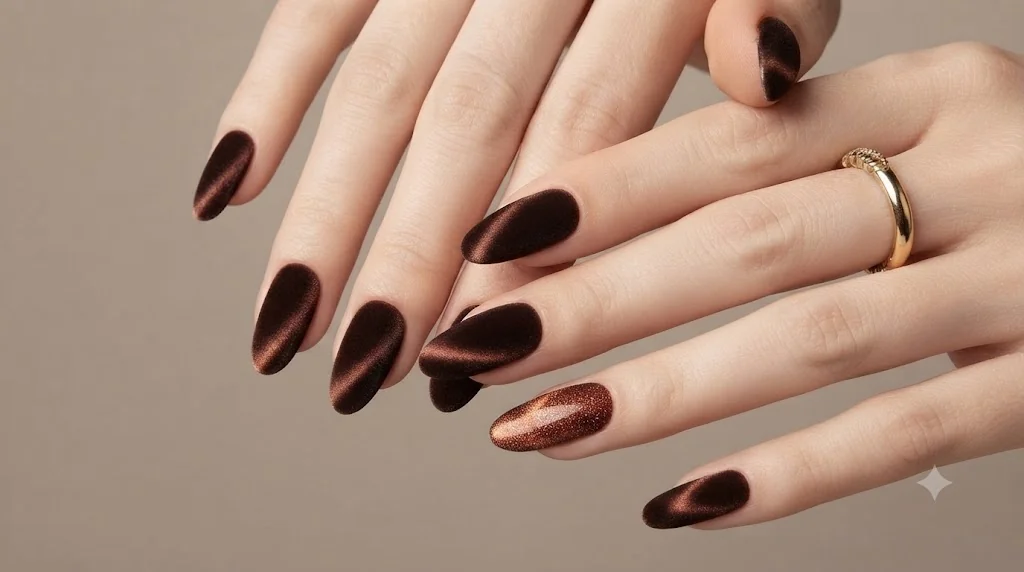
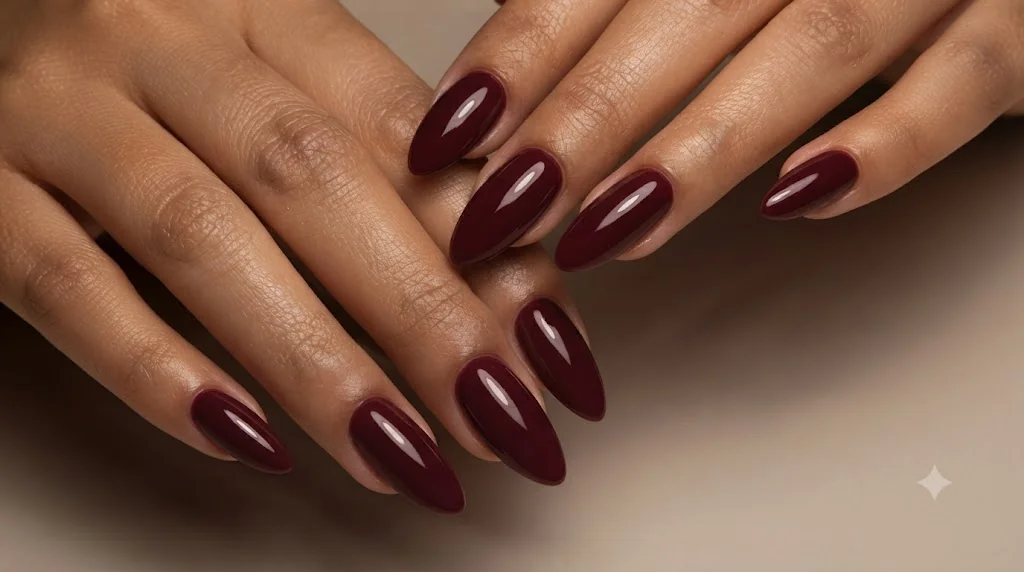
You have been saving korean nail art for months. The folder is full. And yet, if someone asked you to name the specific style of nail in each image, you would not be able to. Everything gets filed under "that Korean look" and left there. That is not a gap in your taste. It is a gap in information, and this post closes it. Korean nail art is not a single aesthetic it is a whole finish philosophy with distinct style families, each with its own vocabulary and visual logic. By the time you reach the end of this guide, you will be able to name every major style, identify which one you actually keep saving, and walk into any salon with the exact words to get it.
What actually makes a nail look Korean?
Korean nail art is a gel-first manicure tradition originating in Seoul that prioritises finish quality, translucent depth, and individual nail expression over structural drama or acrylic extension. That one sentence does a lot of work. Unpack it and you have the answer to everything that confuses people about this aesthetic.
The emphasis on finish is what separates it most clearly from the Western nail art tradition. In most Western salons, the design is the point the colour, the pattern, the embellishment. In Korean nail art, the finish is the design. How light moves through the gel. Whether it reads as wet or dry, matte or liquid. That translucent, layered quality you cannot replicate with regular polish is not an accident. It is the intended outcome, built through specific gel formulations syrup gels, jelly polishes, nail ink that Western gel brands have only recently begun to produce.
Gel-first is not a minor detail either. Korean salons moved away from regular polish to gel around 2012, years ahead of the global market. This means the entire design vocabulary of Korean nail art was developed for gel: the way light catches a chrome finish, the way syrup gel layers to create depth, the way a blush gradient blooms at the nail centre. These effects are not achievable with regular polish. They assume a gel substrate. That assumption is built into every Korean style you have ever saved.
And the individual nail expression aspect matters. Unlike Japanese nail art, which often works across the full hand as a cohesive decorative scheme, Korean nail art treats each nail as its own small canvas. A single accent nail in Japanese style might mean one very different finger; in Korean style, variation across nails is common, with different finishes, gradients, or levels of embellishment on each. It is why Korean sets photograph so well there is always a different angle, a different detail.
A quick note on the Korean versus Japanese confusion: korean nail art and Japanese nail art are distinct traditions. Japanese nail art leans toward structured 3D elements, kawaii motifs, and potted gel systems applied with precision brushes. Korean nail art leans toward finish quality, translucency, and soft gradients. Both are gel-dominant. Both produce stunning results. But they are not the same thing, and the conflation does a disservice to both. Leading K-beauty nail experts including Jin Soon Choi consistently describe the Korean approach as finish-forward rather than design-forward.

The Korean nail art finish spectrum from barely-there to full maximalist
Where do you sit on the finish spectrum? That is the real first question, and no one seems to ask it before presenting 20 images with equal weight. The Korean nail art finish spectrum runs from near-invisible to fully sculptural, and understanding where each style sits is what makes the rest of this guide actually usable.
At the minimalist end, you have glass nails and soap nails the barely-there, sheer-finish styles that look like extremely healthy, extremely polished natural nails. One level in from there: milky nails, syrup nails, and the clean-girl gel manicure. These still have significant transparency but carry more colour. The middle of the spectrum is soft gradients, aura nails, and blush nails where translucent base meets deliberate colour placement. Past the midpoint: chrome accents, reflective finishes, and nail ink designs that read bold from across the room but still feel polished rather than heavy. At the maximalist end: 3D nail art, sculpted charms, dewdrop gel, and the fully embellished idol-inspired sets that get thousands of saves on Pinterest.
Most people who describe wanting "that Korean look" are pointing to somewhere between the minimalist and middle ranges of that spectrum. The glass nail, the soap nail, the aura nail. These are the finishes that travel fastest online because they photograph beautifully and feel specific enough to be recognisable but wearable enough for everyday life. To see what is leading across the spectrum right now, the korean nail trends 2026 guide covers what is coming out of Seoul salons this season specifically.
The finish spectrum also maps loosely to technical complexity. Soap and glass nails are achievable at home with the right gel products. Aura and blush nails require either airbrushing or a blending technique with a dry brush. 3D nail art requires sculpting gel and professional practice. The finish you want determines not just the look but the route to getting there which is useful to know before you book or buy anything.

Korean glass nails: the mirror-finish style everyone's screenshot-ing
Glass nails are not a trend in the conventional sense. They are a finish philosophy. The name refers to the visual quality of the nail surface the way it catches light like actual glass, with a depth and reflectivity that regular gel polish cannot produce. At the minimalist end of glass, you get a near-invisible chrome or ultra-gloss finish that makes nails look naturally perfect and slightly liquid. At the more dramatic end, you get mirror-chrome finishes with a full metallic reflectivity.
The technique involves chrome powder rubbed over a no-wipe top coat that is still tacky before final curing. The finer the powder and the more precise the application, the more the glass effect reads as finish rather than metallic. In 2026, the most sought-after version of korean glass nails uses holographic chrome suspended inside a clear gel base creating what one Seoul studio describes as an "aquarium effect" where glitter appears to float at different depths. It reads as neutral and ethereal from a distance and technically complex up close.
Glass nails suit every skin tone, which is part of the reason they travel so well online. The chrome element picks up and reflects the skin's undertone rather than competing with it. On deeper skin, the contrast between the warm undertone and the cool chrome creates a particularly striking result. On lighter skin, it reads as soft and luminous. This is not coincidental the glass nail effect was developed in a culture where nail art is expected to complement the full hand.