Maximalist Nail Colours and Palettes That Work
The instinct with maximalist nails is to reach for every colour at once. Resist it. The strongest maximalist palettes actually work from restraint at the colour level, even while everything else on the nail gets louder.
A few approaches that consistently land:
- Tonal saturation. Pick one colour family, say jewel-toned reds through burgundy through berry, and let every nail live inside that range. The variation comes from finish and texture, not from adding unrelated hues.
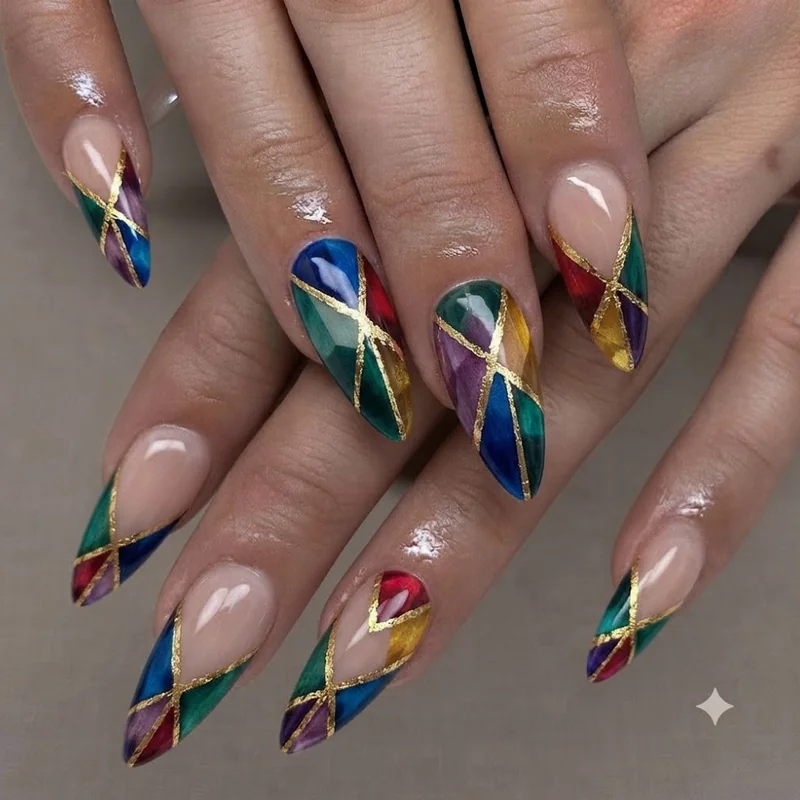
- Colour blocking with a connector. Two or three bold, contrasting shades assigned to different nails, tied together by a repeated motif, gem placement, or line detail that appears across all of them.
- One wildcard nail. Nine nails in a controlled palette, one accent nail that goes fully expressive. This is the fastest way into maximalism if you are used to simpler manicures.
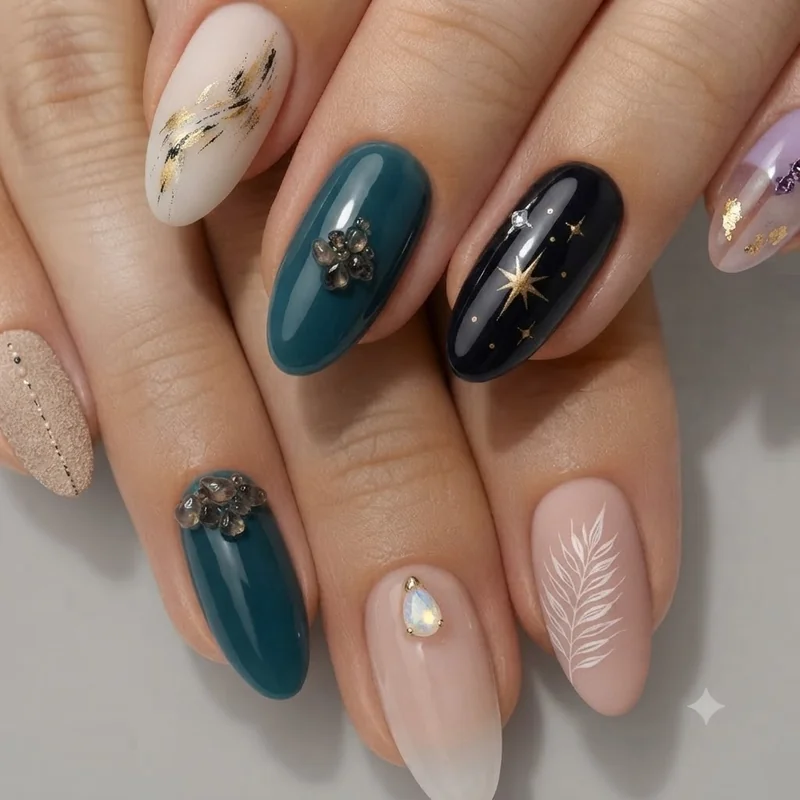
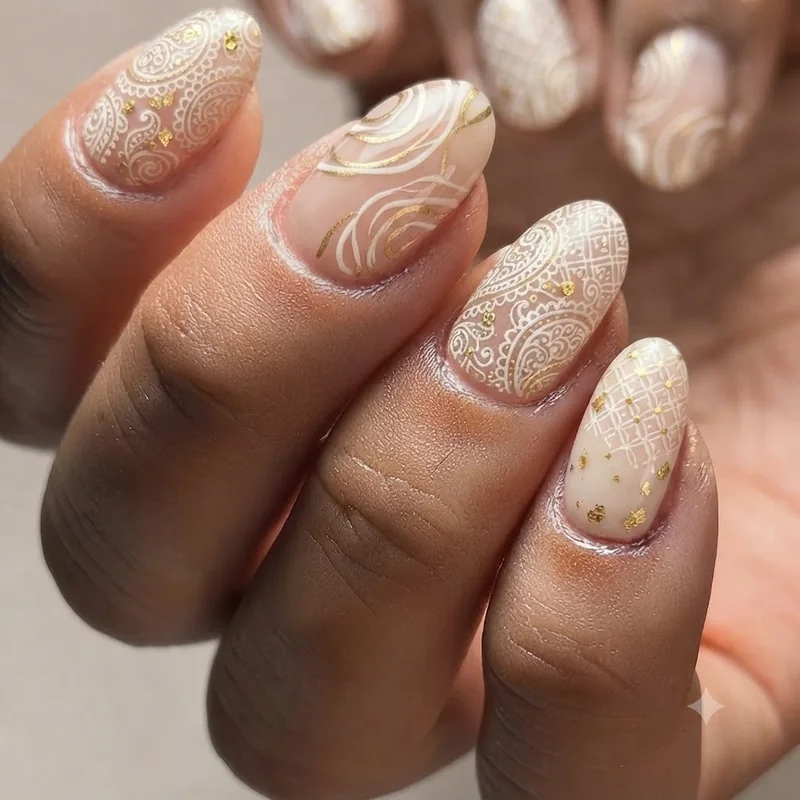
- Metallics as neutrals. Gold, silver, and chrome finishes act almost like a neutral base in a maximalist set, giving loud colour choices somewhere to rest visually.
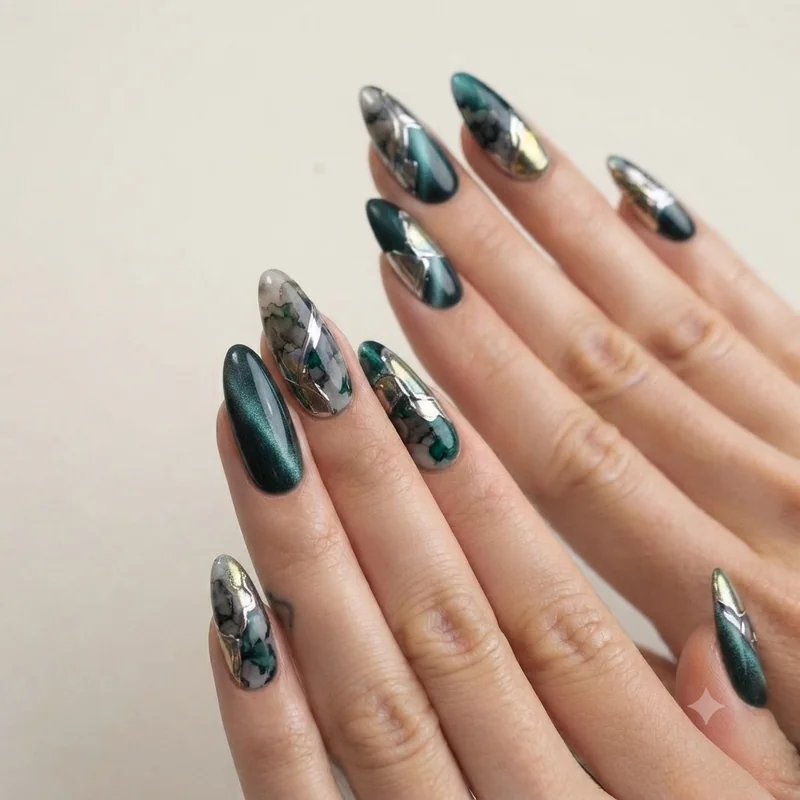
Animal print, abstract colour patterns, and jewel tones are all doing heavy lifting in current maximalist sets, but the palette choice always comes before the embellishment choice. Decide your colour story first. Everything else gets layered on top of it, not chosen independently.
A quick gut check before your appointment: if you can name your palette in three words or fewer, "burgundy, gold, chrome," say, you are ready to layer in texture and embellishment. If it takes a full sentence to describe, narrow it down first.
Textures and Finishes That Make Maximalism Pop
Colour gets a set noticed. Texture is what makes it feel current rather than dated, and it is where 2026's maximalist nails genuinely separate themselves from earlier maximalist moments.
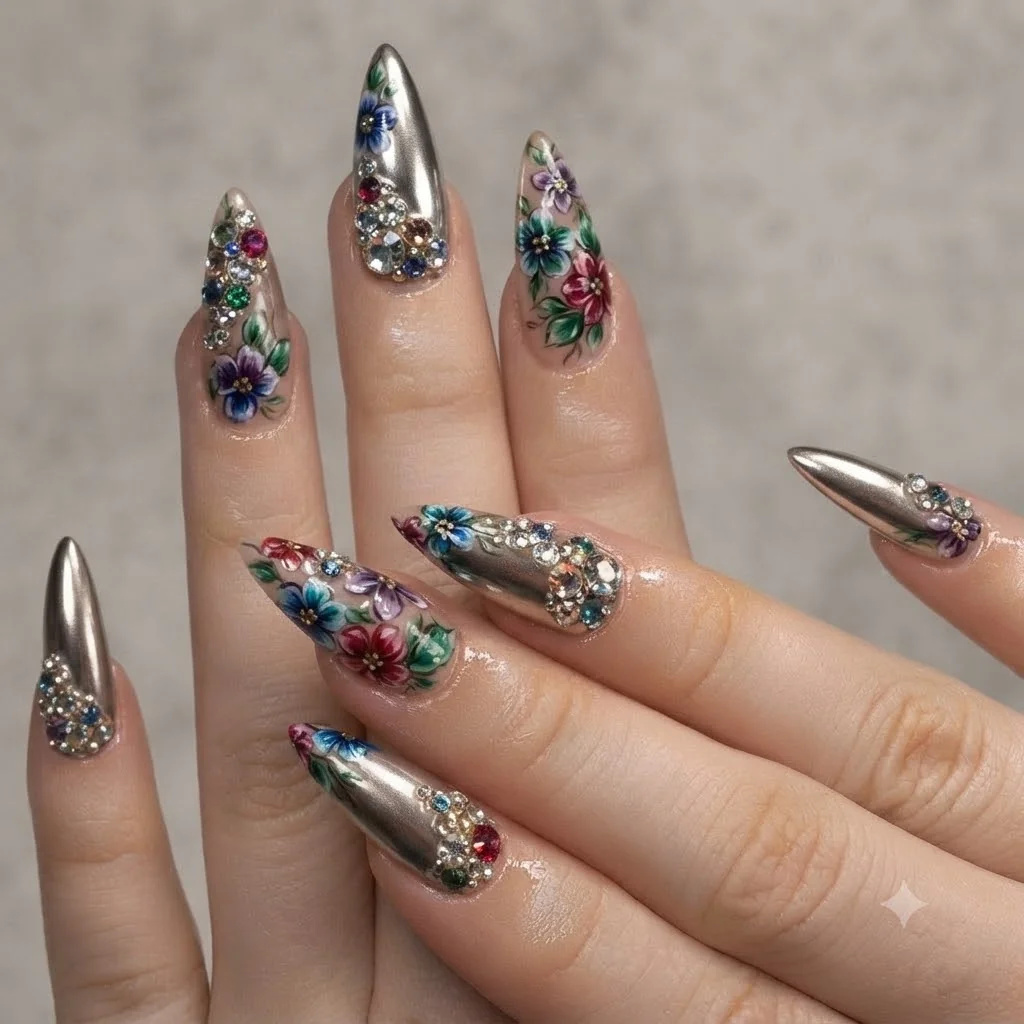
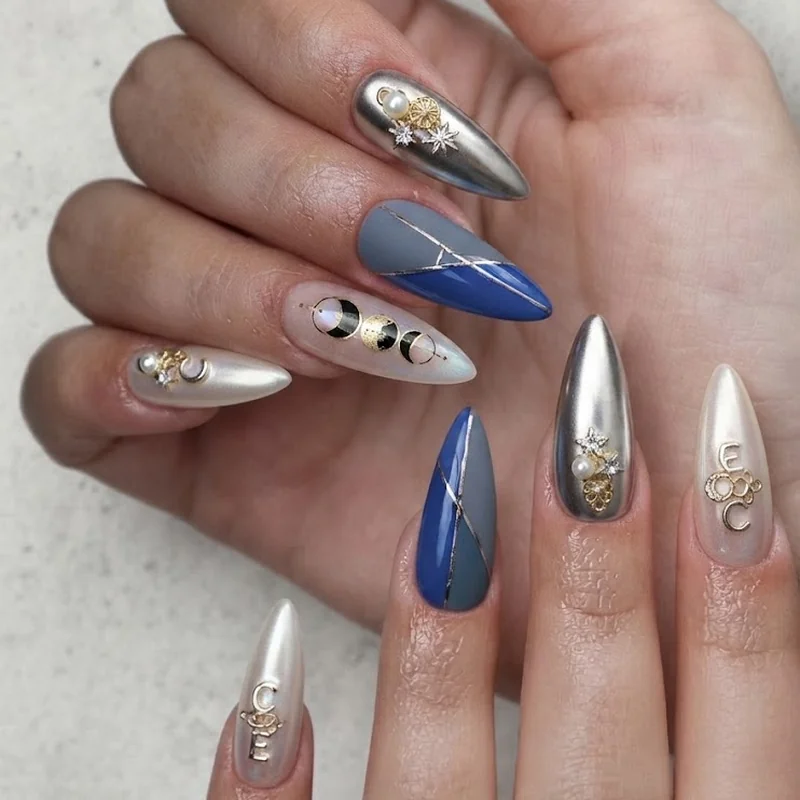
Chrome finish remains a foundational maximalist tool, giving a mirror or satin sheen that plays beautifully against matte or glossy neighbours on the same hand. Cat-eye gel adds a shifting, almost liquid dimension when the hand moves, which reads as far more sophisticated than a flat polish ever could. Blooming gel, where colour spreads organically through a clear base, has become one of the most requested textural effects of the year precisely because no two nails come out identical.
The real trick with maximalism, though, is mixing finishes rather than repeating one. A set that pairs a matte base on some nails, glossy on others, and chrome or cat-eye on the accent nail has more visual depth than nine nails at the same shine level ever will. Textured topcoats and gel-bonded charms round this out, adding tactile dimension that photographs as effortlessly rich.
Nail artist Katie Masters noted that clients still hesitate on full 3D charm sets, but that textured finishes give a way to add real dimension without going overboard. That middle ground, texture over full embellishment, is exactly where a lot of the best 2026 maximalist nails are landing.
3D Embellishments, Charms, and Gems Done Right
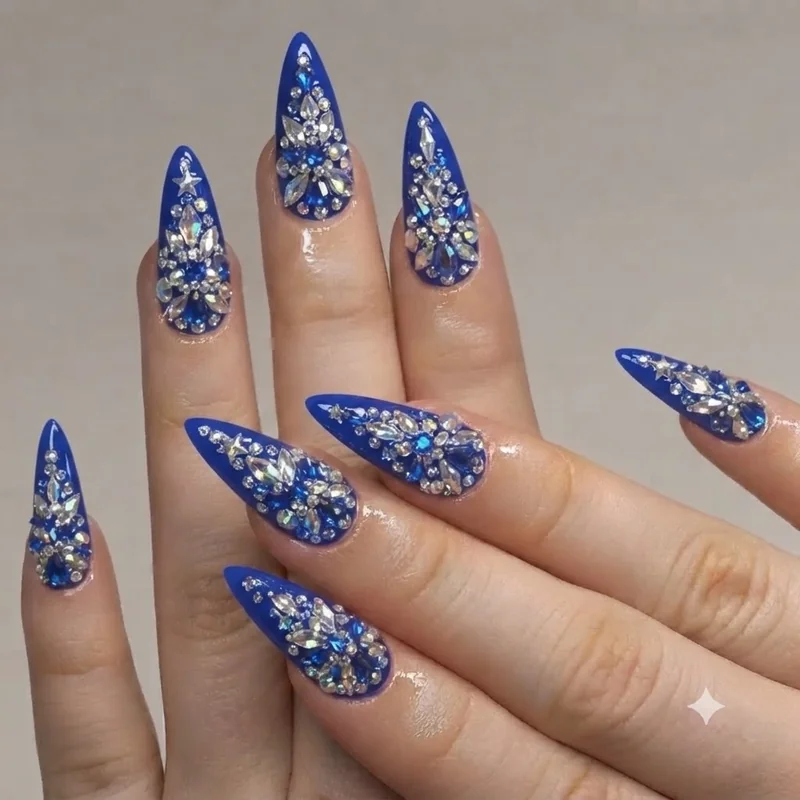
This is the part of maximalist nails that photographs the loudest, and also the part most likely to go wrong. 3D gel embellishment, gel-bonded charms, and rhinestone placement are the difference between "bold" and "dated" more than any other single element.
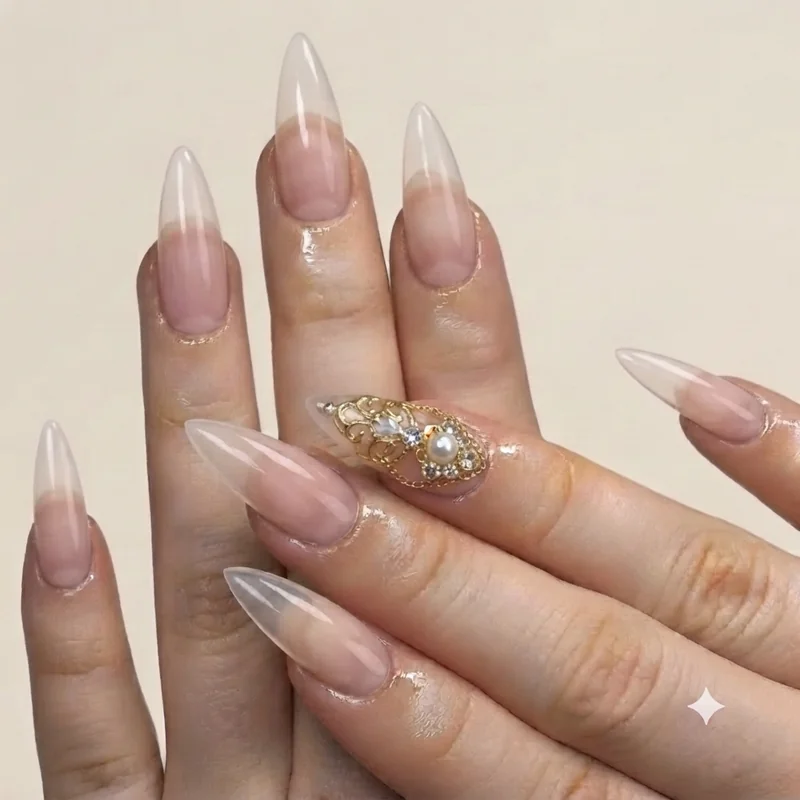
The rule that separates a well-executed maximalist set from what most people picture as junk nails is placement discipline. Charms and gems concentrated on one or two accent nails, with the rest of the set carrying a supporting finish, read as curated. The same embellishments scattered evenly and heavily across all ten nails start to tip toward the junk nails trend, which pushes embellishment to its rhinestone-covered extreme, where accumulation itself becomes the point rather than a chosen effect.
That distinction matters. Maximalist nails are built around an editing principle, choosing which elements serve the design and leaving the rest out. Junk nails lean into total accumulation as the aesthetic itself, rhinestones and charms covering nearly every surface with no single element required to justify its place. Neither is wrong, but they are different looks with different intentions, and knowing which one you are asking for changes what you tell your nail tech.
For gems specifically, size variation beats uniformity. A cluster of three different-sized crystals reads as more intentional than ten identical ones spaced evenly. Gel bonding rather than glue-on application is also worth requesting specifically, since it holds embellishment flush to the nail rather than raised and catching on everything.
Placement height matters too. Charms and gems clustered near the cuticle or in one corner give the eye a clear starting point. Spread evenly across the whole nail, the same elements lose that anchor and start competing with each other instead of working together.
How to Mix Patterns Without Looking Cluttered
Here is the fear point, named directly: maximalist nails done badly look chaotic and dated within a season. Done well, they look expensive and current. The gap between the two comes down to one skill, editing, and it is entirely learnable.
Cap technique count at two or three per set. Hand-painted florals plus a chrome accent plus a line detail is plenty. Add a fourth or fifth technique and the eye stops finding a focal point. This single rule solves most of what makes maximalism read as cluttered rather than curated.
Give every nail a shared thread. This can be a repeated colour, a consistent gem placement, a motif that shows up in different scales across the set. Without that connective tissue, ten independently interesting nails still look disconnected as a set, even when each one is well executed on its own.
Let some nails do less. A full maximalist set does not mean ten heavily embellished nails. The strongest sets almost always have quieter nails, a solid colour, a simple French line, that give the busier ones somewhere to stand out against. Negative space and simpler nails within an otherwise loud set are what separate "organised chaos," in the phrase enthusiasts actually use for this, from just chaos.
Scale matters as much as count. A large floral motif and a fine liner detail can share a nail without clashing, because they occupy different visual weights. Two elements of the same size and intensity fighting for the same space is what usually reads as busy rather than bold.
Maximalist Nails on Short Nails (Yes, Really)
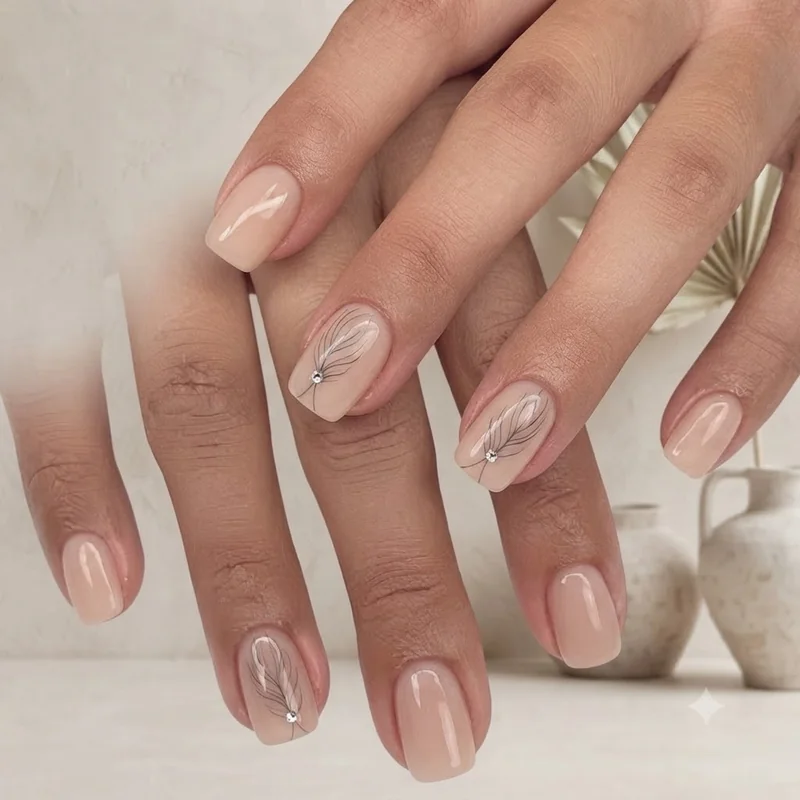
Can you do maximalist nails on short nails? Yes, and the myth that maximalism requires length is one of the most persistent misconceptions in nail art right now. Short nails handle bold, layered design just as well as long acrylics. What changes is scale, not possibility.
Birmingham-based nail artist Natasha Payne makes this point directly: the nail itself is the canvas regardless of length, and the design gets worked out together with the client rather than length being treated as a barrier. That is the whole short-nail maximalist approach in one sentence. You are not shrinking a long-nail design down. You are designing for the space you actually have.
Short nails come with one real advantage here: precision reads more clearly on a smaller canvas. A tiny cluster of gems, one hand-painted motif, or a single chrome accent nail has nowhere to get lost or overcrowded the way it might across four extra centimetres of extension. Celebrity nail artist Elle Gerstein makes a similar point about short nail design generally, that the smaller canvas forces more intentional detail rather than less impact.
Squoval and short round shapes are currently having a real moment in maximalist territory specifically because they give a slightly wider surface than a narrow almond tip without needing extension length at all. If your nail tech tells you maximalism means long nails only, that is outdated advice, not a technical limitation.
The practical adjustment for short nails is simple: scale down embellishment size, not the number of ideas. A single well-placed gem cluster or one detailed hand-painted nail does more work on a short set than trying to fit a design built for a long acrylic onto a nail a third of the size.