Milky White Nails: The Classic Version
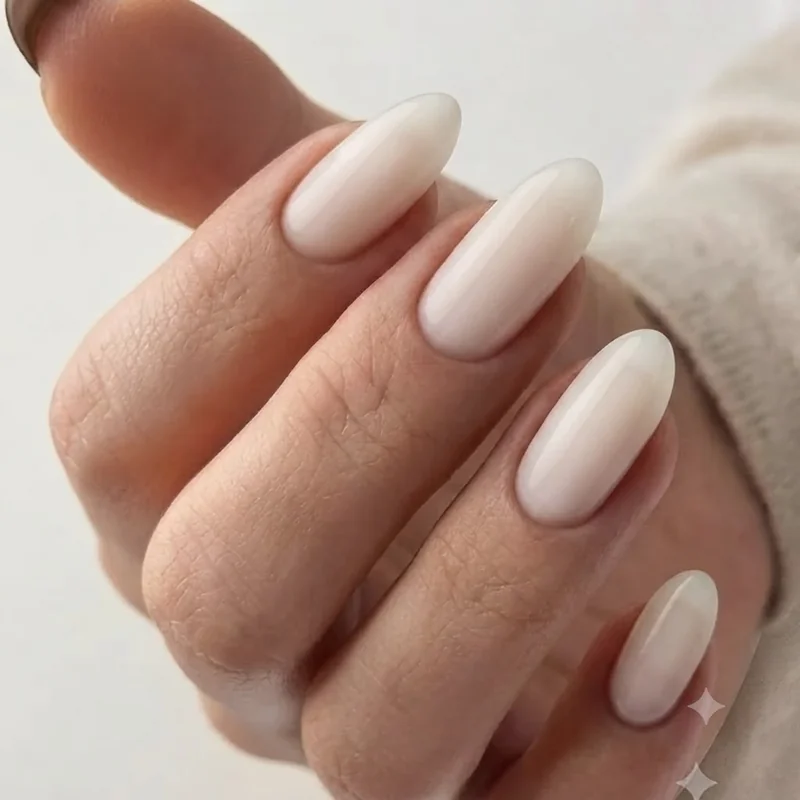
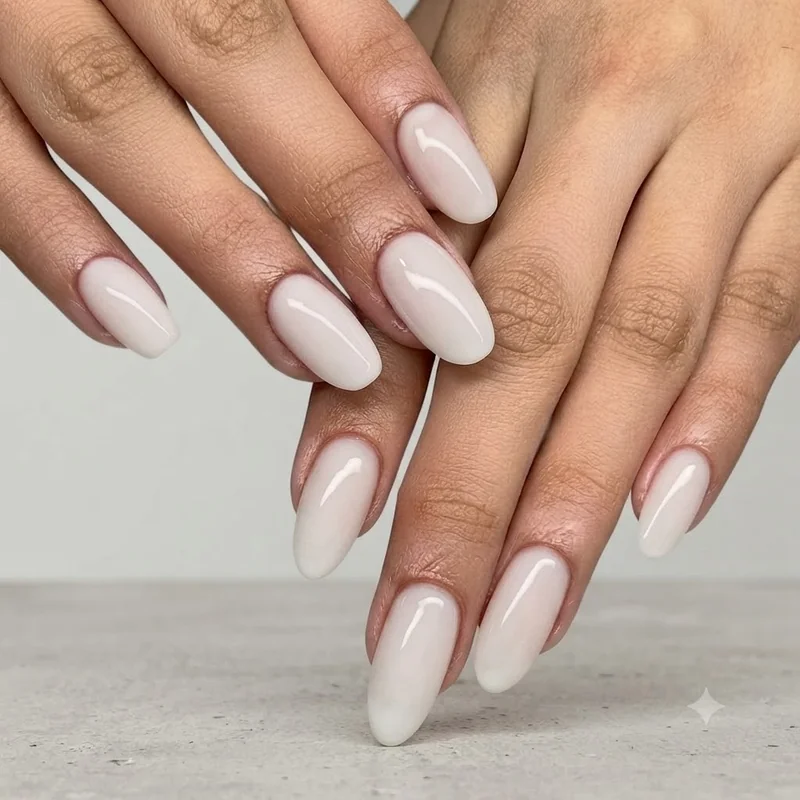
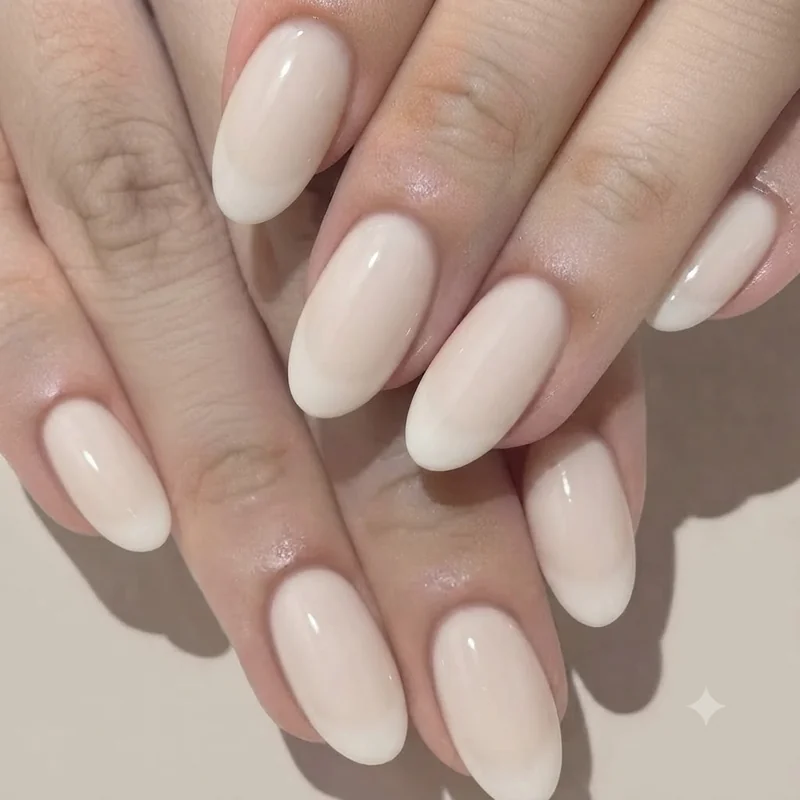
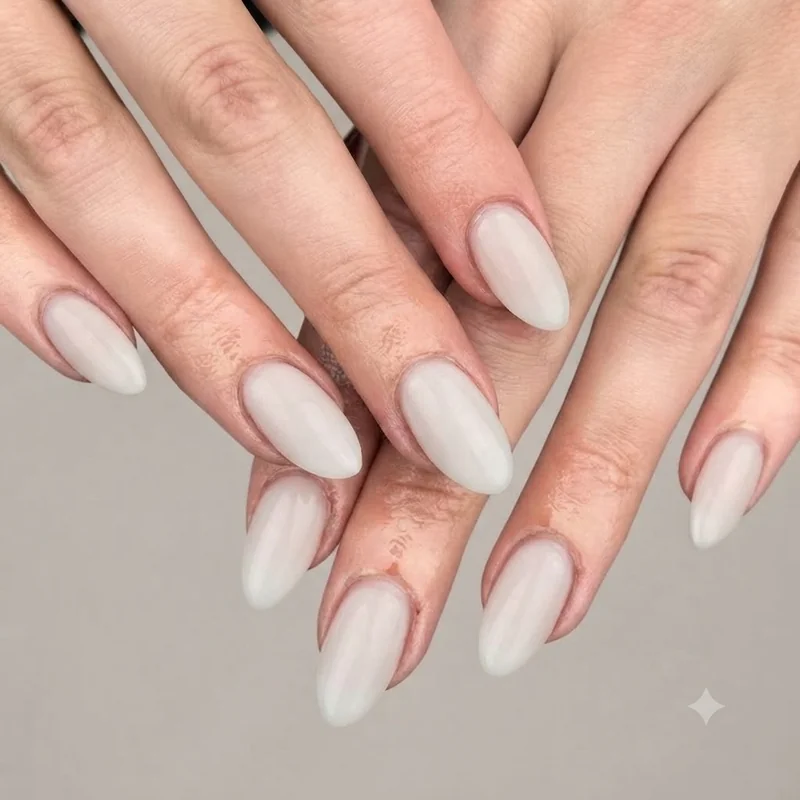
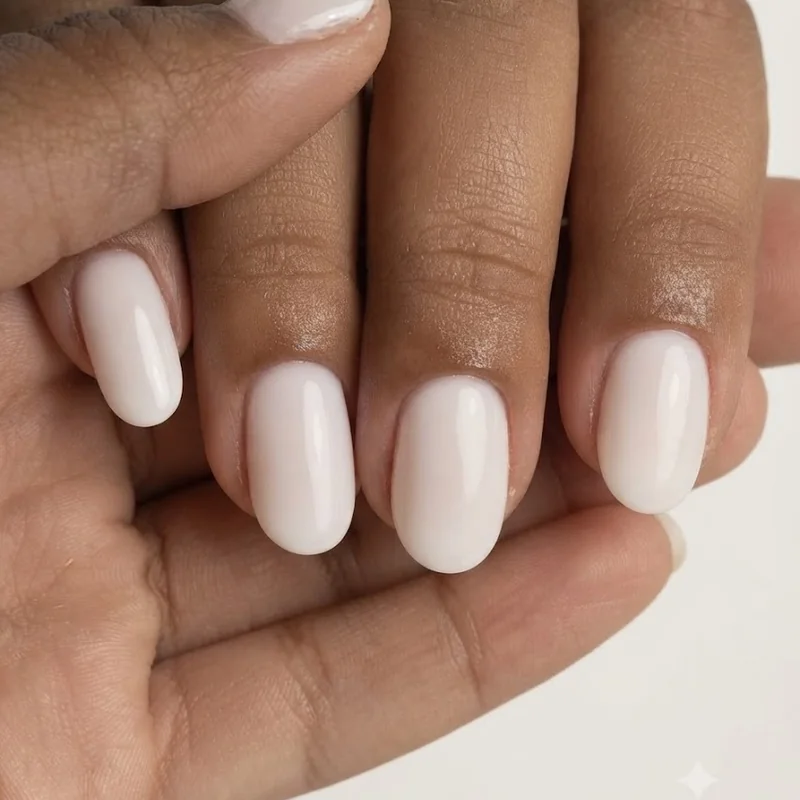
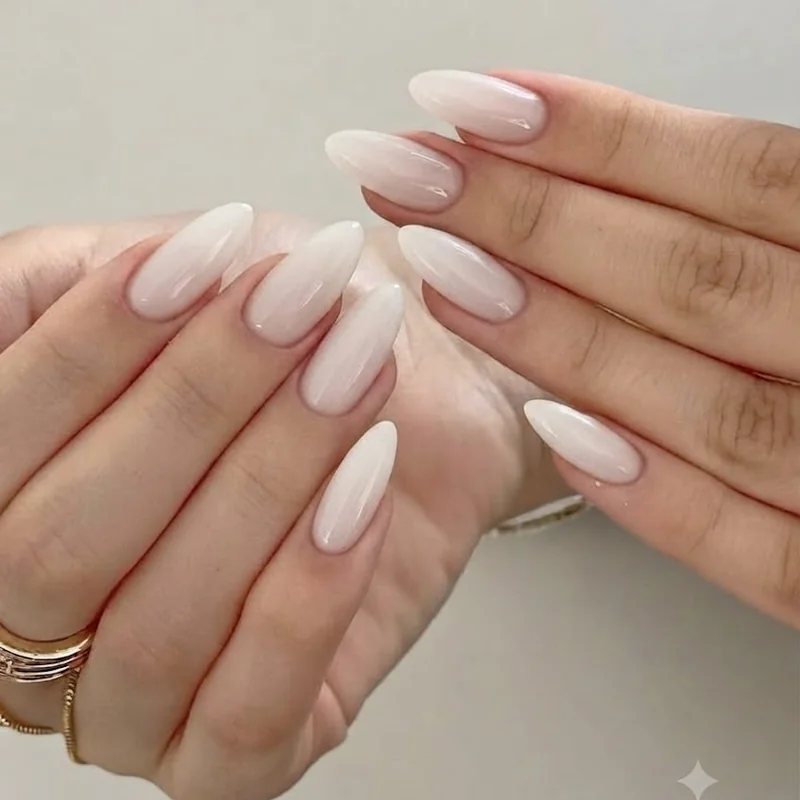
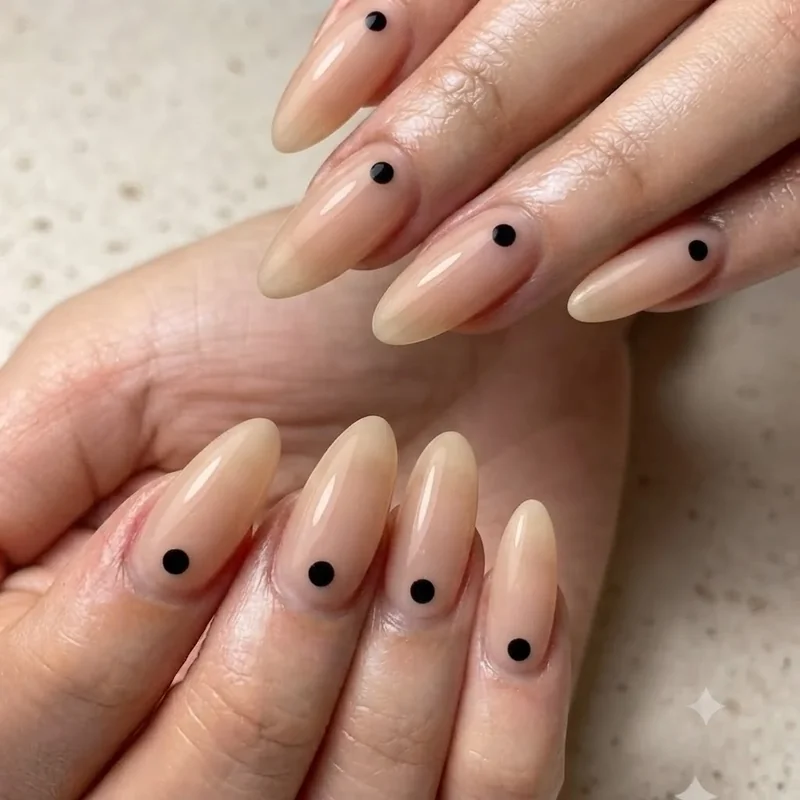
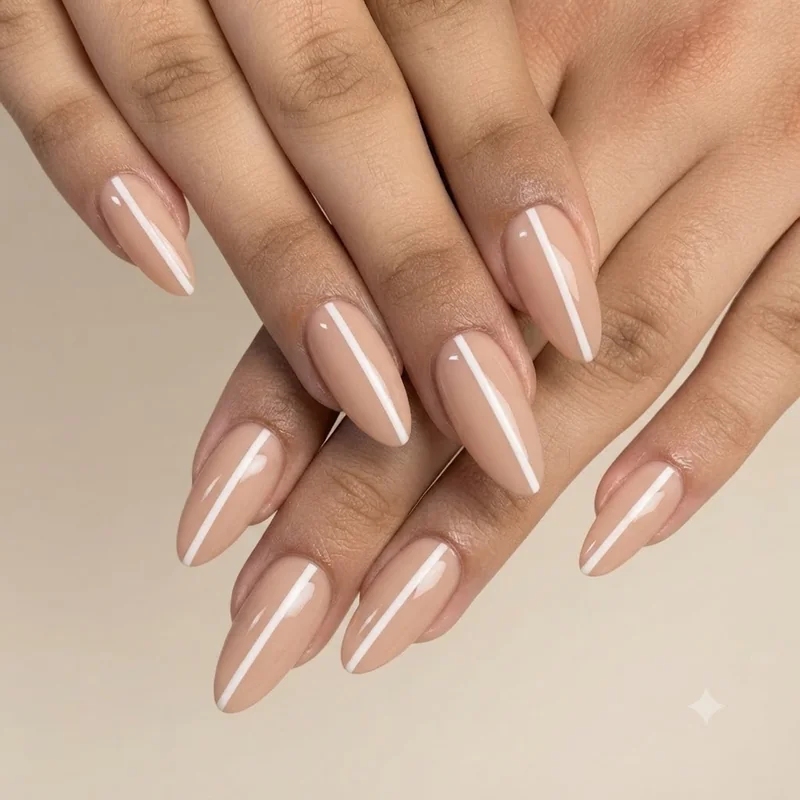
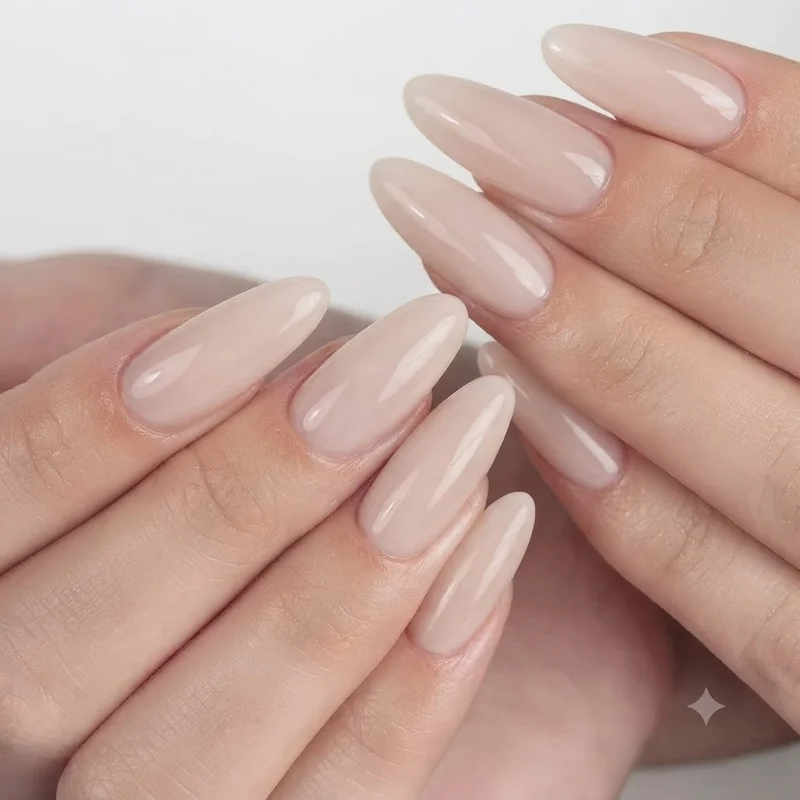
Picture the original: an almond or squoval nail, medium length, painted in two to three thin coats of sheer white that build into a soft, cloudy finish rather than a stark, dentist-office white. This is the version that started the whole conversation, and it remains the most requested milky shade by a wide margin, because it pairs with literally everything in a wardrobe.
Where the classic white shade differs from a plain white manicure is in that layering. A single heavy coat of white polish looks flat and opaque, closer to a French tip base than the milky effect. Building it in thin layers lets a little translucency survive through to the top coat, which is what gives milky its signature depth. If you want the single-shade approach without the milky-specific translucency rule, one colour nail ideas covers that broader territory well. For a deeper look at this exact shade family, nine milky white looks built around one iconic shade is worth a browse, since it is entirely dedicated to the specific polish most nail artists reach for when a client asks for classic milky white.
Strawberry Milk, Blueberry Milk & Lavender Milk Nails
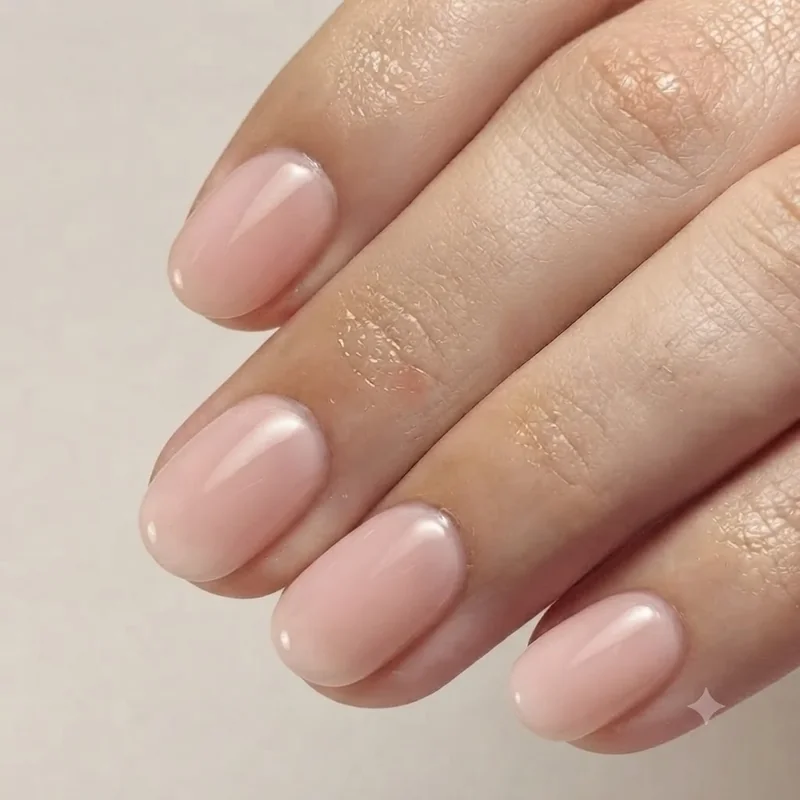
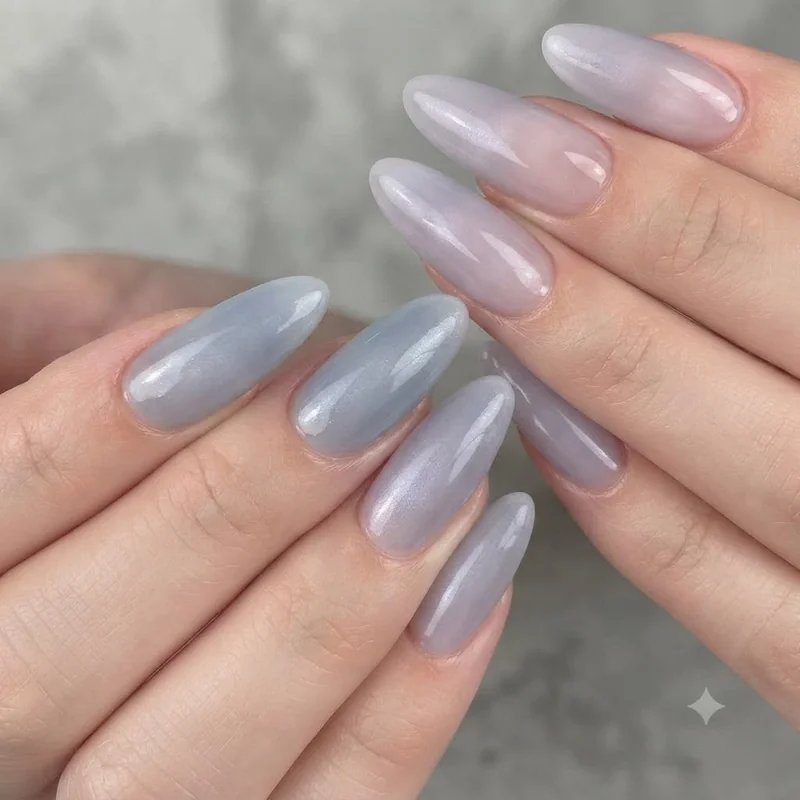
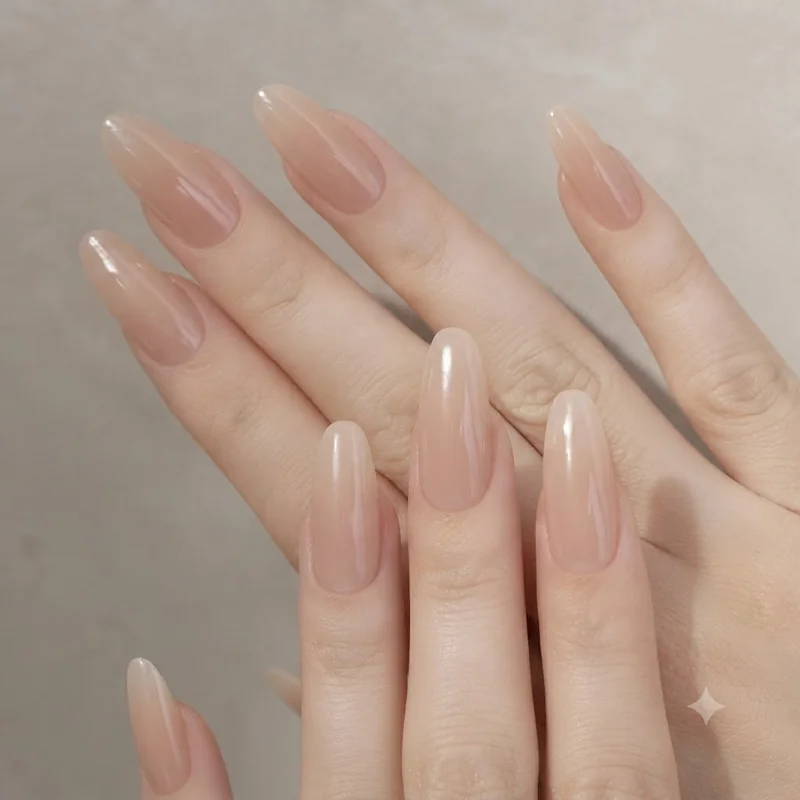
White was only ever the starting point. The milky nails family keeps growing, and strawberry milk, a sheer, milky pink, has become nearly as requested as the original white, especially for anyone who wants warmth without full colour commitment. Blueberry milk and lavender milk follow the same sheer, cloudy logic in cooler tones, and both read as considerably more distinctive than a plain pastel manicure because of that signature translucent build.
What ties the whole family together is the technique, not the pigment. Whatever tint gets used, the polish stays sheer enough to let a little of the natural nail show through, which is the entire point. A fully opaque strawberry pink is just a pink manicure. A sheer, milky strawberry pink is strawberry milk nails, and the difference is immediately visible side by side. Byrdie has documented the strawberry milk variation extensively as one of the trend's most requested colour offshoots, right alongside classic white.
Lavender milk tends to suit cooler undertones especially well, while blueberry milk leans a touch more versatile across skin tones because its dilution keeps the blue from ever reading as bold. None of these need a steady hand for intricate art. The colour alone does the work.
Milky French Tips
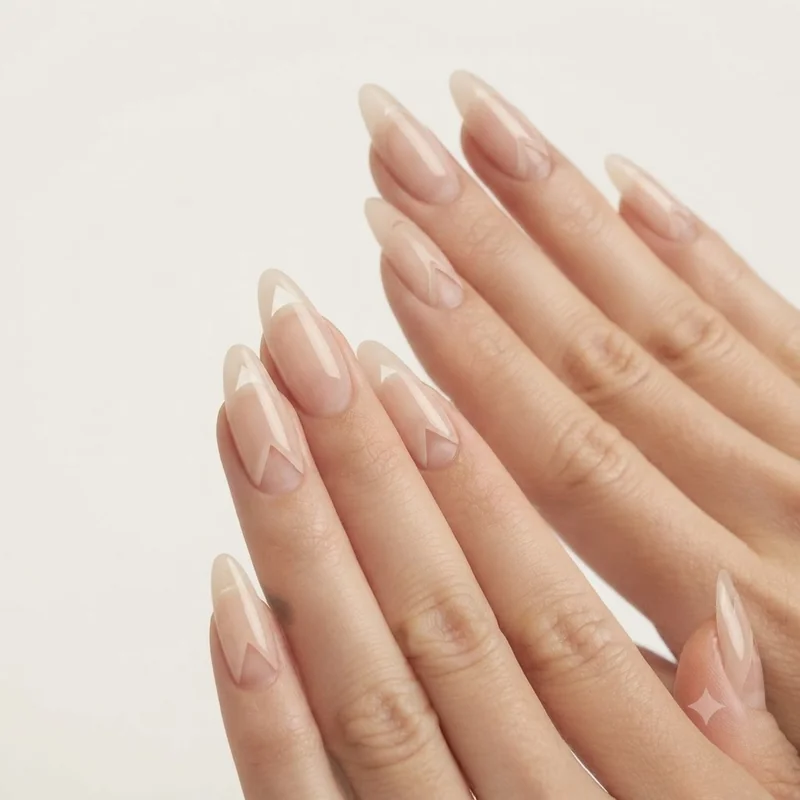
Milky French takes the classic French manicure and swaps the crisp white tip for a soft, diffused one, painted over a sheer milky base instead of bare or pale pink nail. The result keeps the French manicure's structure while losing its sharpness entirely, which is exactly why it has become the version brides and editorial shoots keep reaching for this year.
The technique softens both halves of a traditional French: the base coat gets the same thin, cloudy milky treatment as a solid milky manicure, and the tip itself gets blurred rather than lined, often with a sponge or brush feathering technique instead of a single clean stroke. It reads as polished without looking done, which is precisely the tension the whole milky category is built around.
How to Get Milky Nails at Home Without Streaking
Streaky milky polish is not a product problem. It is almost always an application problem, and the fix is simpler than it looks. Use two to three thin coats instead of one thick one, cure or dry fully between each layer, and finish with a high-gloss top coat that seals the translucency rather than flattening it. That sequence alone resolves the vast majority of at-home streaking complaints.
The mistake nearly everyone makes is trying to get full coverage in a single coat, because sheer white polish resists that instinct completely. One thick layer pools unevenly as it dries, leaving patchy streaks exactly where the brush pulled the polish thin. Two or three thin coats, by contrast, build translucency evenly, the same way milk looks more solid the deeper you look into a full glass than a shallow one.
Prep work matters just as much as the polish itself. A clean, buffed nail surface (not overly smooth, just free of ridges and oil) gives sheer polish something even to grip, which is half the battle with any pale, semi-translucent shade. Regular polish needs full drying time between coats, patience most people underestimate, while gel polish cures fast under an LED lamp and tends to forgive uneven application slightly better because of how the gel levels itself before curing. Either way, the base coat is not optional. Skipping it is one of the fastest routes to a patchy finish, since sheer colour shows every imperfection in the nail underneath.
Which Milky Shade Suits Your Skin Tone
Skin tone matters here, but not as much as most people assume, and the honest answer is that milky nails are genuinely flattering across the full range of skin tones when the undertone is chosen with a little intention. Cooler, stark whites tend to suit fair to medium skin with cool undertones, while a warmer, creamier milky white sits more naturally against deeper or warmer complexions, where a starker white can occasionally read as slightly chalky by contrast.
For strawberry and blueberry milk, undertone match works the same way jewellery does: warm-undertone skin generally pairs well with strawberry's pink warmth, while cooler undertones tend to favour blueberry or lavender's blue-based coolness. None of these are rigid rules. They are starting points, and the surest way to confirm your shade is to hold a swatch or reference photo directly against your hand in daylight before committing.