Negative Space Nail Ideas
A blank patch of nail is not a mistake. It is the entire point.
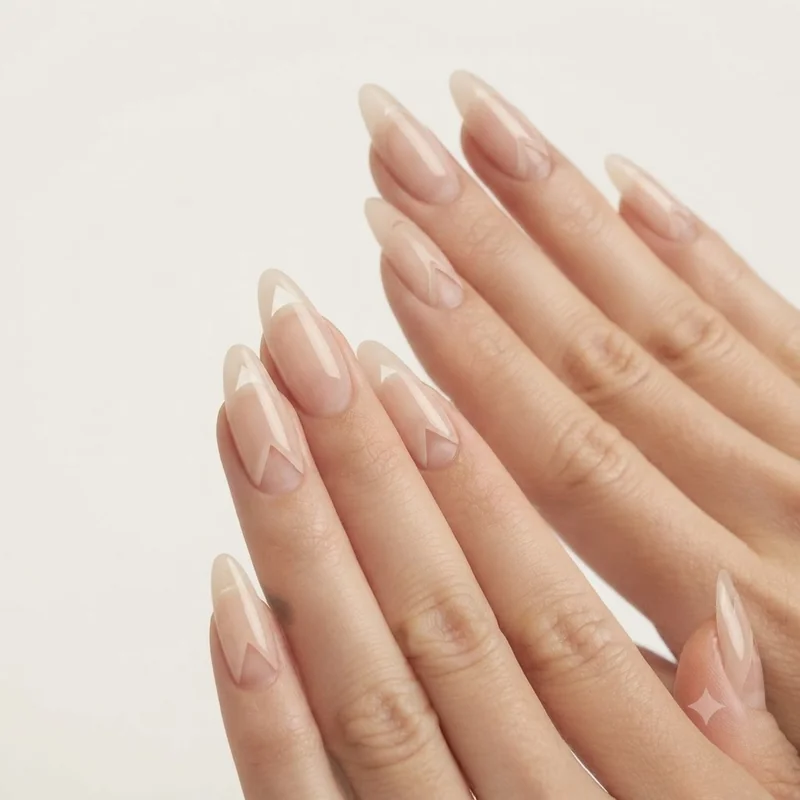
Negative space nail art uses the bare, unpolished nail bed as an active design element rather than something to cover. Polish is applied deliberately around a section left clear, so the natural nail itself becomes part of the composition instead of a canvas hidden underneath colour. That is the core mechanic, and it is what separates negative space from every other minimalist sub-style on this list: it is defined by what is left off the nail, not what is added to it.
The simplest version is a thin cuticle-line gap, a sliver of bare nail left between the polish and the cuticle, which reads as unstudied but actually demands the cleanest application of any minimalist style, since there is no room to correct a wobble. From there, negative space scales up: a geometric triangle cut into the centre of the nail, a crescent moon at the base, or a full half-and-half split where colour covers only one side of the nail plate. Pastel and nude polishes work particularly well here because the contrast between polish and bare nail stays soft rather than stark, letting the negative space feel intentional rather than accidental.
Skin tone plays a bigger role in negative space than in almost any other minimalist style, since the bare section is, by definition, your actual nail colour on display. Warmer polish undertones tend to blend more seamlessly against the exposed nail bed, while cooler, greyer polishes create a crisper, more graphic contrast. Neither is more correct. It comes down to which effect you are after. For a full breakdown of placement options, shapes, and the specific technique for a clean edge, the dedicated negative space nails guide goes considerably deeper than this overview can.
Minimalist Line and Dot Nail Art
Most people picture minimalist line work as difficult, something that needs a steady professional hand and a fine-tipped brush most home manicurists do not own. It is actually the most forgiving category on this entire list, once you understand why.
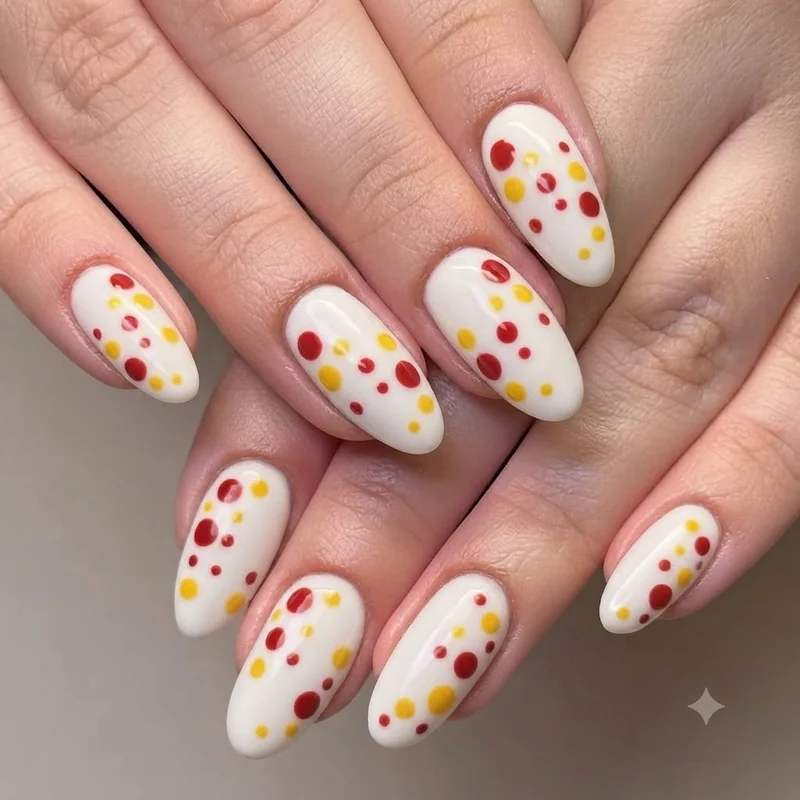
A single straight line is easier to correct than a full nail of solid colour. If it wavers, wipe it back with a cleanup brush and redo just that stroke, no full soak-off required. Dots are even more forgiving: a dotting tool, or even the rounded end of a bobby pin dipped in polish, produces a near-perfect circle with almost no skill required. The precision people associate with this style comes from placement and spacing, not from brush control, which is exactly why it photographs as far more intricate than it actually is to execute.
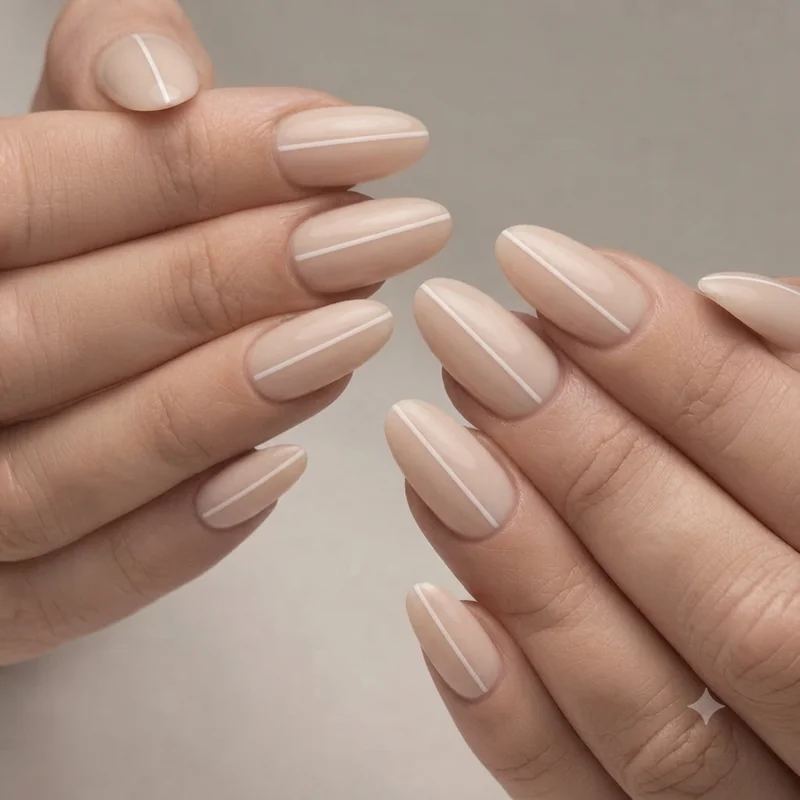
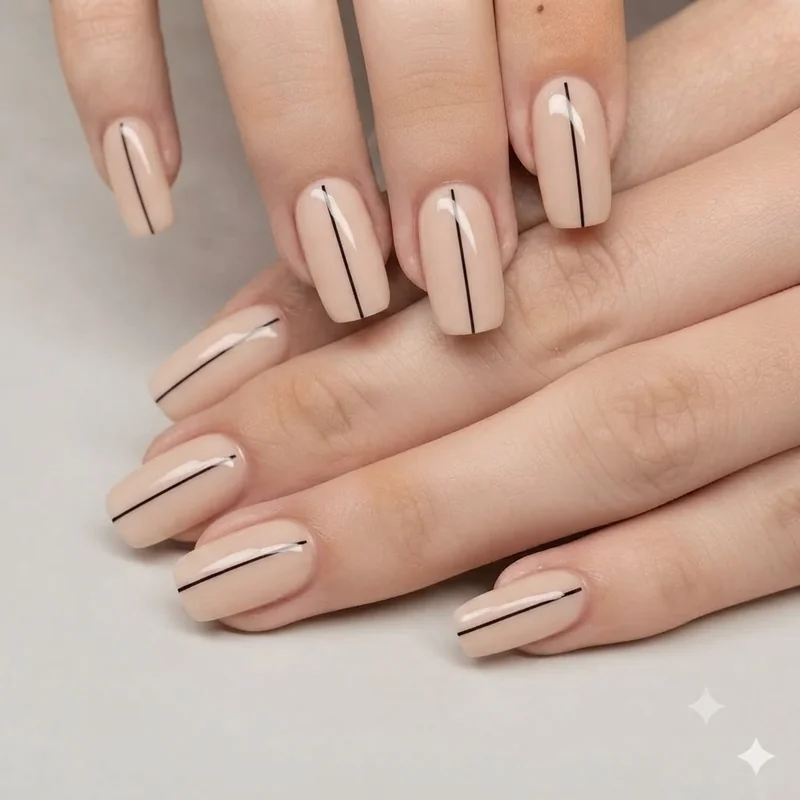
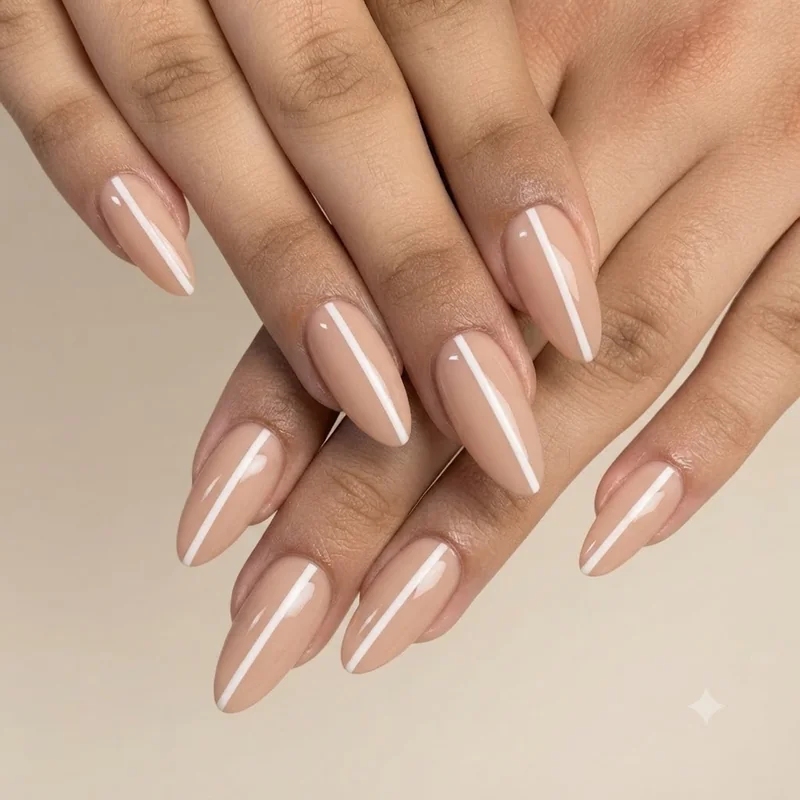
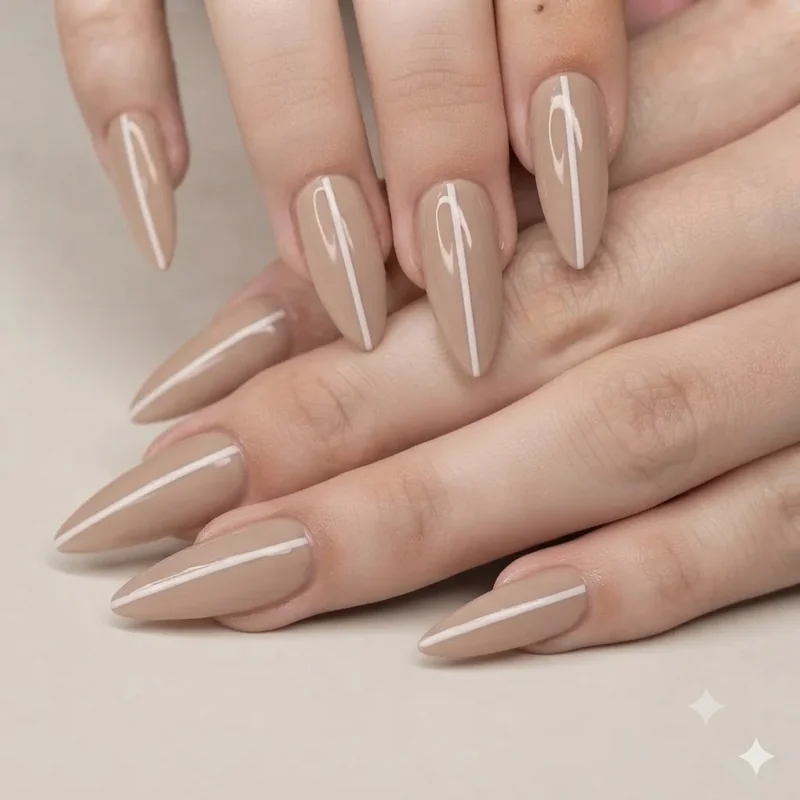
Line art on minimalist nails tends to fall into a few repeatable patterns: a single vertical line down the centre of the nail, a thin horizontal stripe near the base, or two or three fine parallel lines fanning out from one corner. Dot work leans toward micro dots, a cluster of three to five tiny dots grouped near the cuticle, or a single larger dot placed off-centre as a focal point. Both techniques rely on negative space around the mark itself, so the line or dot has room to read as deliberate rather than crowded. Geometric patterns, thin lines and negative space combine constantly in this sub-style, and mixing all three on the same set, one line, one dot cluster, one small cutout, is one of the most reliably elegant minimalist combinations there is.
For step-by-step technique on spacing, tool choice, and specific line-and-dot layouts, the line nail art ideas and minimalist dot nail art guides both build directly on what is covered here.
One-Color and Monochromatic Nail Looks
A monochromatic manicure applies a single polish shade across every nail, with no line work, no cutouts, and no secondary colour. It is the purest expression of minimalist nails, and the sub-style where colour choice, application quality, and finish do all of the talking.
That simplicity is deceptive. With nothing else on the nail to distract from an uneven cuticle line or a streaky second coat, a one-color manicure has zero room for sloppy application. Two or three thin coats, evenly applied, matter more here than in any other style covered in this guide, which is exactly why a well-executed monochromatic set reads as polished rather than plain.
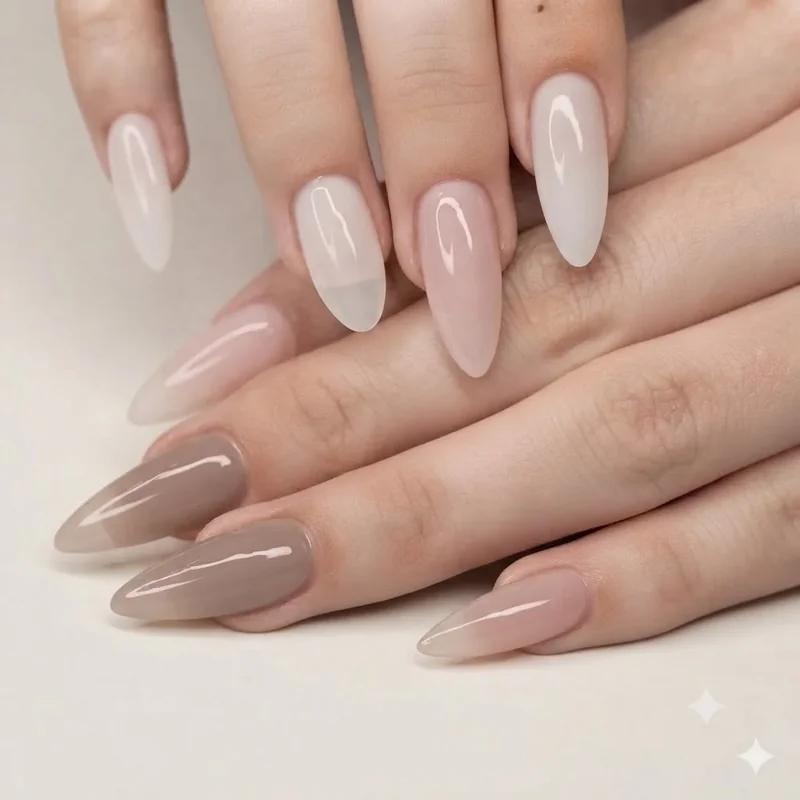
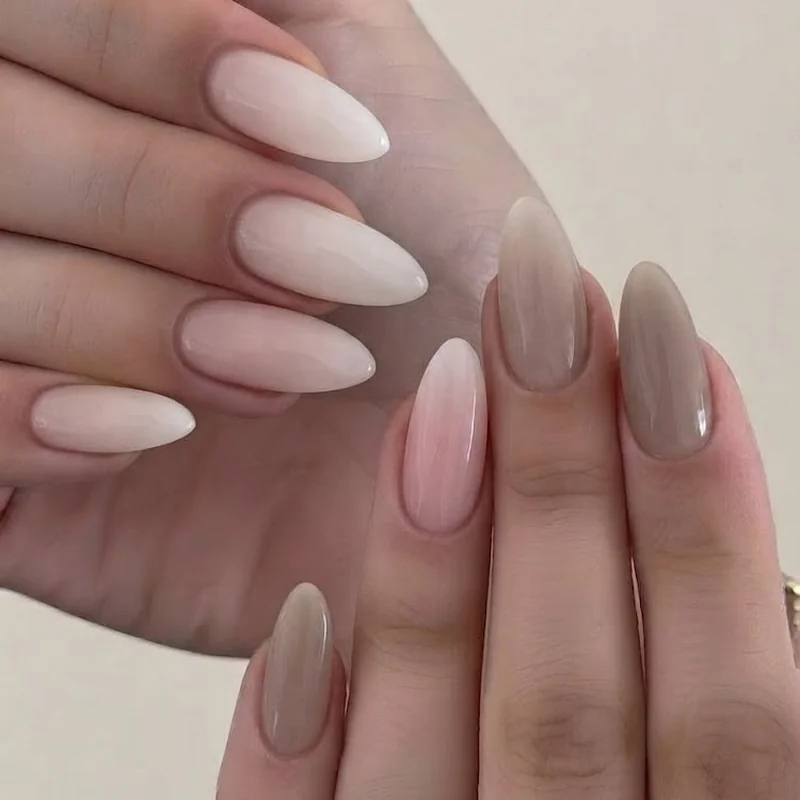
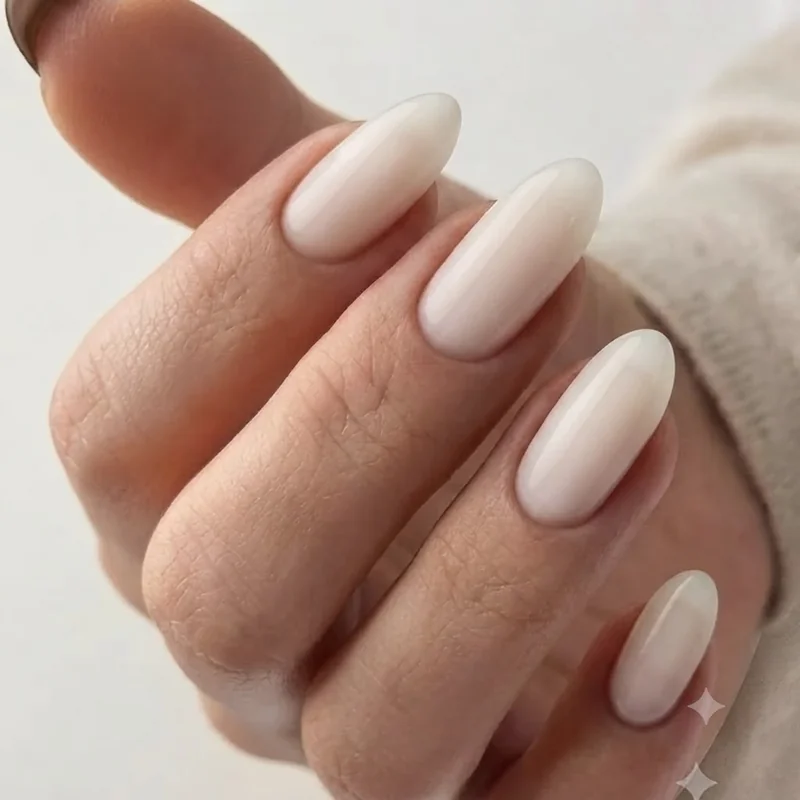
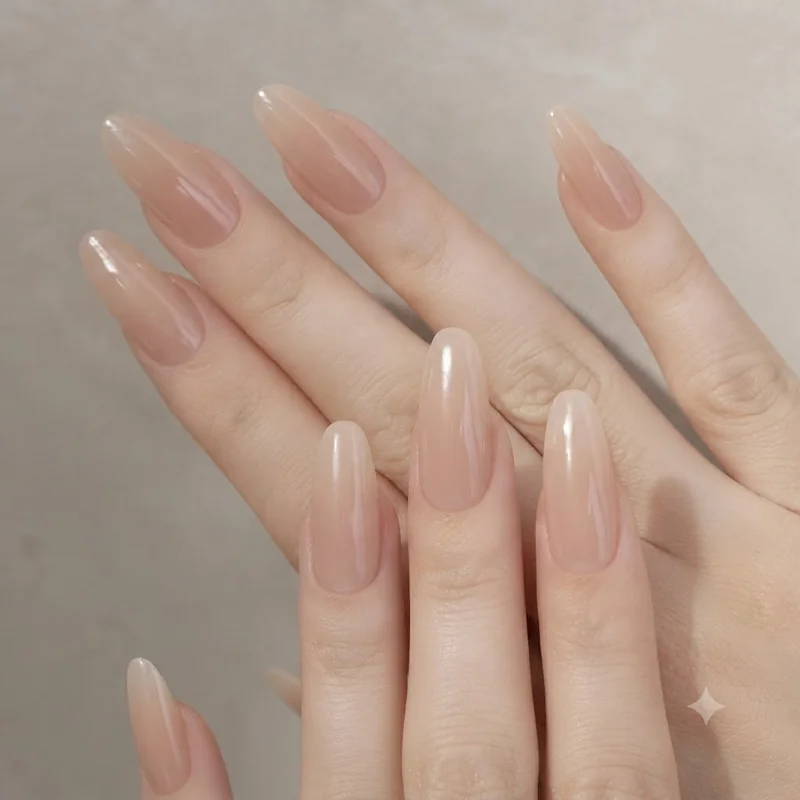
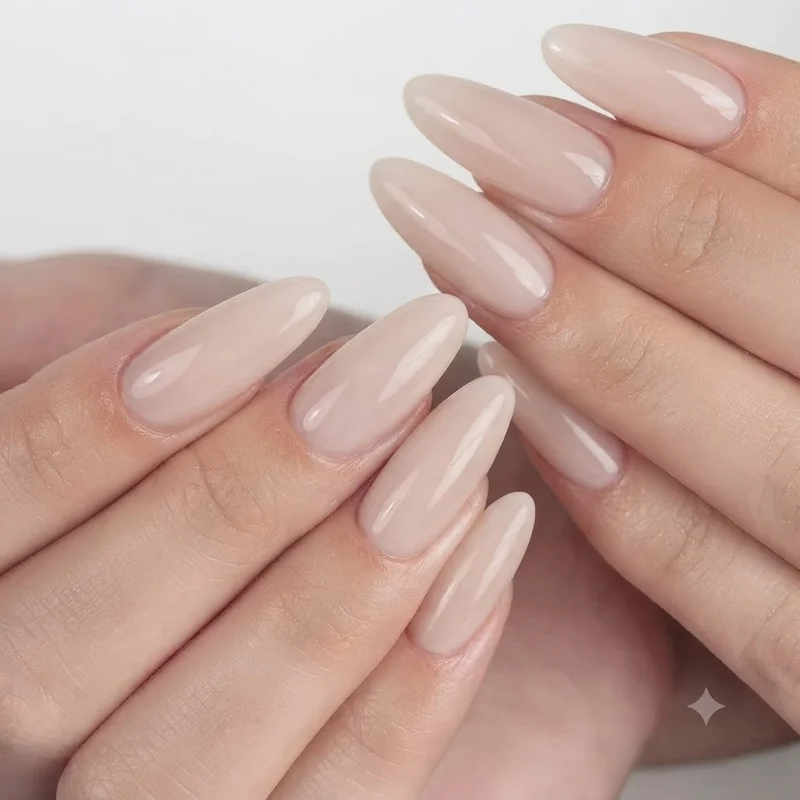
Finish changes the entire personality of a one-color look without changing the shade itself. A glossy topcoat over a milky white reads clean and almost translucent, catching light along the nail's curve. The same shade in matte drops the shine entirely and leans quieter, more velvet than glass. Sheer, jelly-style formulas let a hint of the natural nail bed show through even under solid colour, which is part of why milky and sheer nude shades have become so central to the wider minimalist palette this year. A single colour, worn correctly, is never boring. It is confident.
For a full run of shade and finish combinations built specifically around this technique, the dedicated one color nail ideas guide picks up from here.
Classic and Micro French Minimalist Designs
The French manicure never actually left. What changed is how thin the tip is allowed to be.
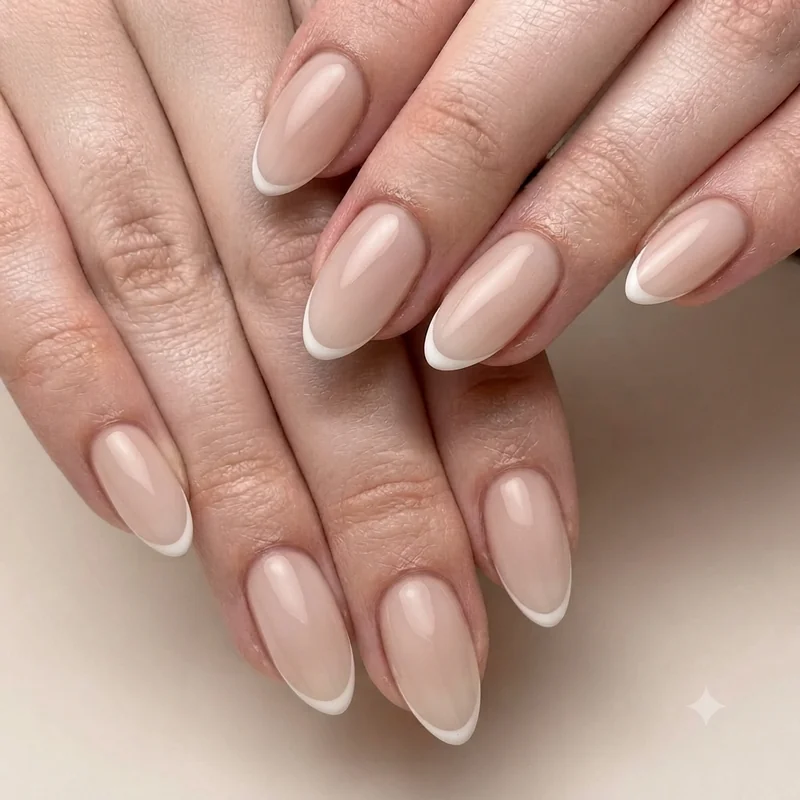
A classic French uses a wide, opaque white smile line over a nude or pink base, crisp and high-contrast by design. The minimalist evolution of that same idea shrinks the tip down to a hairline edge, sometimes in a barely-there off-white or even a translucent chrome, laid over a sheer or milky base rather than an opaque one. That single change, tip width, is what separates a traditional French from what is currently one of the defining looks of the season: micro French nails, spring 2026's defining minimalist trend.
Micro French is a French manicure variant where the white or coloured tip line is reduced to a barely visible edge rather than the traditional thick band, worn over a sheer or milky base. The thinner the line, the more precise the application needs to be, since there is less width to disguise a shaky hand. A striping brush or thin nail art brush, rather than the wider brush that comes with most French manicure kits, makes the difference between a crisp micro line and one that reads smudged.
Colour choice on the tip line matters more in the micro version than the classic one. Stark white against a milky base gives the highest contrast and the most graphic look. A soft grey, taupe, or pearl-toned tip against the same base softens the whole effect into something closer to quiet luxury than classic French. Both are minimalist. They just land in different registers.
Best Colors for a Minimalist Manicure
The best colours for a minimalist nails palette are milky white, sheer porcelain pink, soft taupe, muted grey, and warm nude, chosen by undertone rather than a fixed universal shade list. No single colour suits every skin tone equally, which is exactly why undertone, not a specific name on a polish bottle, is the more useful way to choose.
Cooler skin tones, those with pink or blue undertones, tend to read best in soft grey, porcelain pink, or a cool-toned taupe, since these shades sit close enough to the skin's own undertone to feel seamless rather than washed out. Warmer skin tones, with golden or peachy undertones, generally look more flattering in peach crème, warm beige, or a golden-tinted nude, which echoes rather than fights the skin's warmth. Deeper skin tones carry rich chocolate, warm caramel, and deep taupe exceptionally well, tones that would read as flat or chalky on paler skin but bring real depth here. The through-line across all three: match the polish's underlying warmth or coolness to your own, not the specific shade name on the bottle.
Milky white deserves its own mention, since it currently anchors more minimalist looks than any other single shade. It is not a stark, opaque white but a soft, creamy near-translucent finish that lets a hint of the natural nail bed show through, which is precisely why it works across almost every skin tone rather than just one. If milky nails specifically are what brought you to this guide, the dedicated milky nails trend piece covers formula and application in far more depth.
Occasion shifts the calculation slightly. Office and interview settings favour the quietest end of the palette, sheer pinks, soft taupe, milky white, since nothing on the nail should compete for attention. Evening and event looks can push toward a richer, deeper minimalist shade, a warm caramel or a deep grey, and still stay within the category, since colour depth alone does not undo minimalism. Restraint in design does that.