Most nail guides have a small-hands section. It runs about four sentences. It says "try almond or oval" and moves on. The person with petite hands, the reader who typed "nails for small hands" into a search bar specifically because she already knows the generic advice doesn't answer her questions, arrives and leaves with nothing new.
Nails for small hands deserve more than a footnote. Small hands have their own flattering logic specific shapes, specific length rules, and a press-on sizing problem that nobody else is writing about clearly. This post is that guide. By the end of it, you'll know exactly which shape to ask for at your next appointment, how to measure for press-ons that will actually fit your nails for small hands, and why the shapes you thought were "too much" might be the most flattering thing you've tried. For a broader look at how hand type, finger length, and nail bed width all interact, the best nail shape for your hands pillar guide covers the full framework this post is the small-hands chapter within it.

Small Hands vs. Small Nail Beds: What's Actually Going On?
The best nail shape for small hands is almond, oval, or squoval shapes with a taper or soft curve that create a vertical visual line along the finger, making each digit appear longer and more defined. Square and very blunt round shapes have the opposite effect, emphasising width over length.
That said, "small hands" is not a single category. Three distinct things get grouped under this phrase, and each one points toward slightly different choices.
Small hands means compact overall palm and finger proportions. The hand reads as petite relative to the body, but nail bed width may be average or even normal-sized. The main concern is length proportion: how much free edge before nails start looking exaggerated relative to the hand's scale.
Small nail beds is a separate situation. The nail plate itself the visible pink area rooted at the cuticle is narrow or short, regardless of finger length. Nail bed proportion is what determines which shapes work at which lengths. It is also what makes press-on sizing so difficult, since most standard kits are built around an average-width nail bed.
Small fingers refers to finger length specifically, distinct from both hand size and nail bed width. This is its own question if you're navigating that separately, the guide to nails for short fingers is worth reading alongside this one.
Knowing which of these describes your hands is the most useful thing you can do before choosing a shape. Not sure? Start at how to find your nail shape for a quick self-assessment.
The nail bed proportion rule: a nail shape looks balanced when the free edge does not exceed roughly the same length as the nail bed. On a wider nail bed, you can push slightly longer before things look disproportionate. On a narrow one, a shorter free edge keeps everything in scale.
Almond Nails: The Most Flattering Shape for Small Hands
Most people gravitate toward almond and then talk themselves out of it. They assume it requires long nails, dramatic length, or a certain kind of hand. None of that is true.
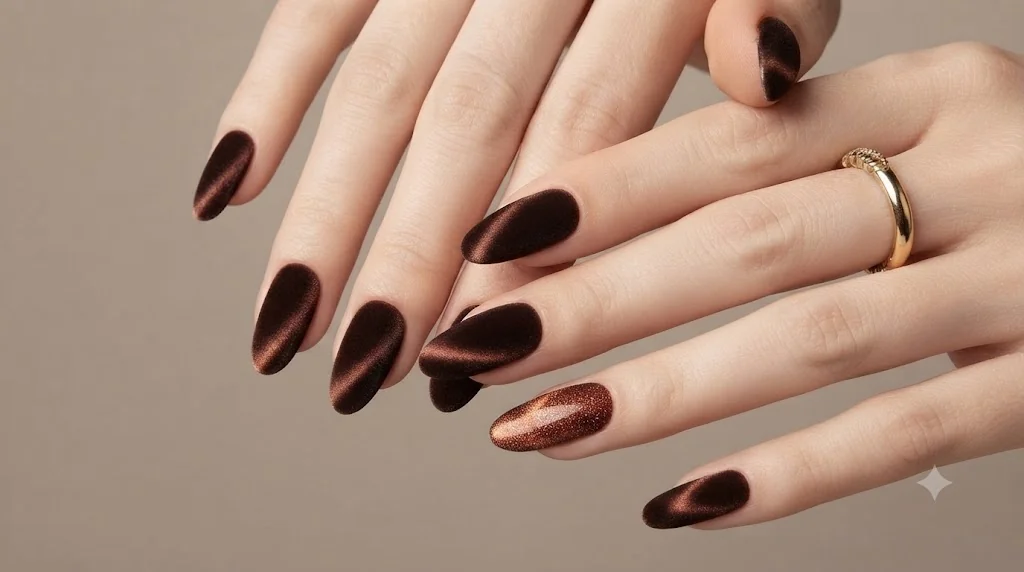
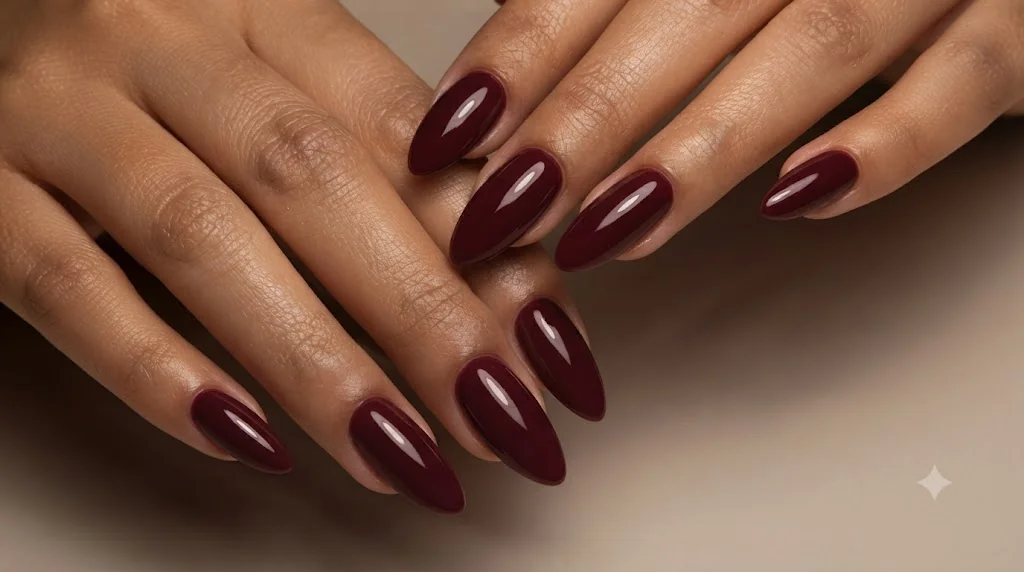
Almond nails work for small hands because of how the taper functions. The sidewalls are filed inward toward the tip, creating a narrowing silhouette that draws the eye along the finger rather than across it. The visual result is elongation not because the nail is particularly long, but because the line it creates makes the finger look longer than it is.
For small hands specifically, this is the strongest shape available. The taper compensates for a shorter free edge. A medium-length almond on a small hand looks intentional and refined. A short-length almond, once enough free edge exists to support the filing, still reads as elegant. The shape does the work that length would otherwise do.
What almond does not require: long natural nails. Extensions and gel-X allow any nail bed width and length to achieve the shape properly. If you're working with natural nails, you need at least a small free edge roughly 3 to 4mm for the filing to be visible. Below that, oval is a better starting point while nails grow.
One care note: the taper creates a narrower stress point at the tip compared to squoval or oval. Almond nails need a little more attention a nail oil habit, gloves for cleaning, and a rebalancing appointment every three weeks rather than four.