Oval nails for short fingers: the universally flattering option
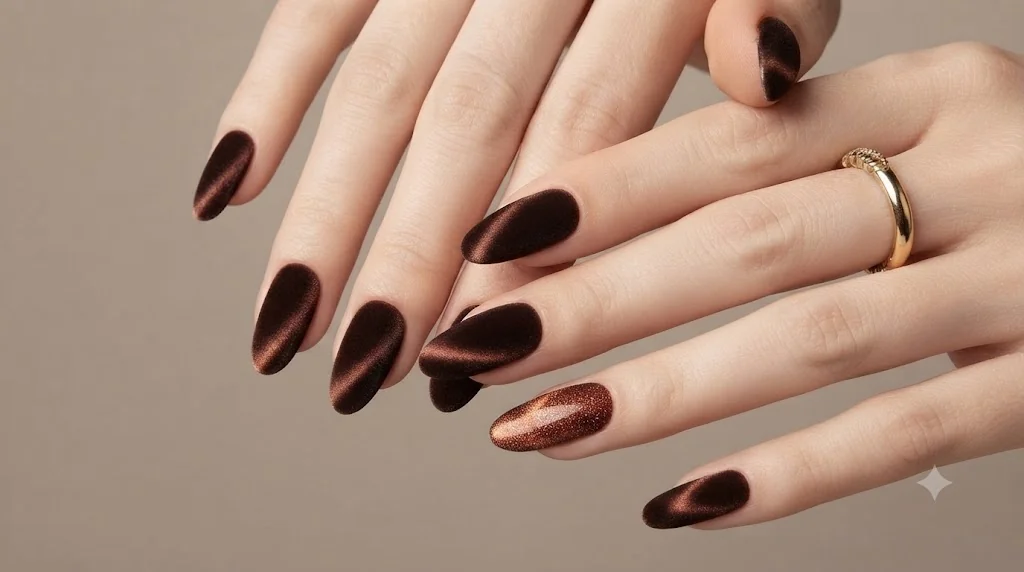
Picture a nail filed so the sides curve inward gradually from the cuticle, narrowing all the way to a rounded point, no straight edges anywhere. That's oval, and on nails for short fingers it is the shape with the lowest failure rate of anything on this list. It works on almost every hand shape, every nail bed width, and almost every length, which is rare for a single recommendation to hold true across that many variables.
What makes oval specifically good here is that the curve starts early. Round only curves at the very tip and keeps the sides straight, which is why round and oval get confused constantly despite producing different results. Oval's earlier, more gradual narrowing is what reads as length. It's the shape equivalent of a tapered trouser leg rather than a straight one.
Oval is also forgiving of imperfect filing. The curve has room in it. If one side comes out very slightly more rounded than the other, it rarely shows the way it would on a sharper shape like almond or stiletto. That makes it the shape to start with if you're DIYing rather than booking a salon appointment for your first attempt at something other than square or round.
Almond nails for short fingers: do they actually work?
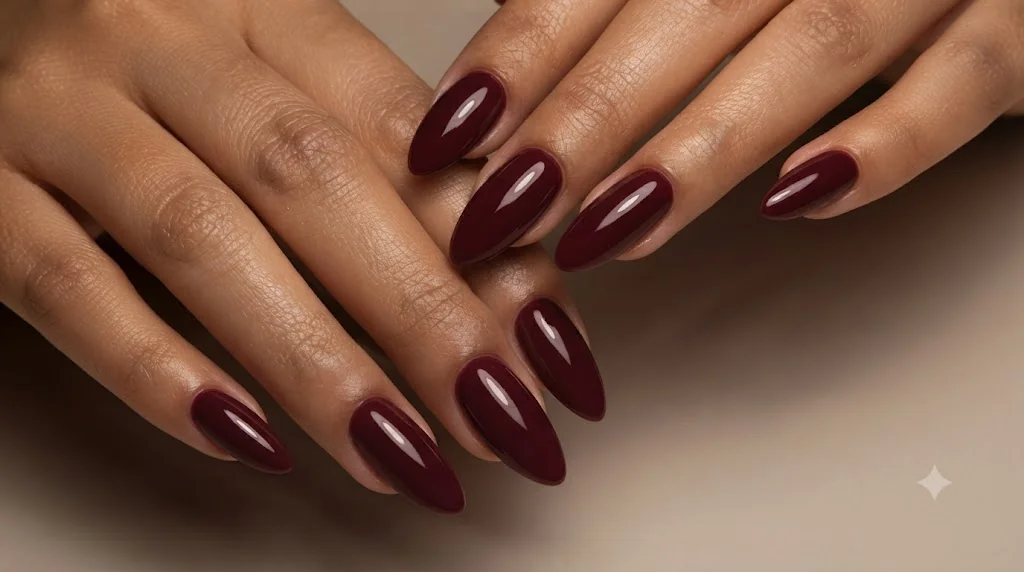
Almond is not off-limits for short fingers. That's the assumption worth dismantling first, because almond has a reputation as a "long fingers only" shape, and that reputation is mostly wrong. It just comes with one real condition.
Yes, almond suits short fingers, provided there is enough free edge for the taper to register. The free edge is the portion of the nail that extends beyond the fingertip, the part that actually gets filed into shape. For almond, a minimum of 2 to 3mm of free edge is required for the taper to register. Even a baby almond shape, just 2 to 3mm past the fingertip, creates the elongating taper effect without needing dramatic length. Extensions make every length of almond accessible if your natural nails won't grow that far on their own.
Baby almond, also called micro almond, is the name for an almond shape on a very short free edge, typically 2 to 3mm past the fingertip. The taper is subtle but visible, and it reads polished rather than plain, which is exactly the gap most short-fingers guides leave open: they treat almond as all-or-nothing when a smaller version exists. We've covered why short almond nails are one of the most flattering choices for shorter fingers in full detail if you want the complete picture, including filing angles and maintenance.
The one almond mistake worth naming: filing the taper too aggressively on a short nail bed leaves almost no nail surface left at the sides, which can look pinched rather than elongated. A softer taper, more gradual, less severe, solves this without giving up the shape.
Round, squoval, and coffin: the honest verdict
Round earns a careful yes. It softens the finger without adding the taper that oval or almond provide, so it won't actively elongate, but it also won't widen the way square does. Round is the safe middle choice for someone who wants a soft, low-drama shape and isn't chasing maximum elongation.
Squoval gets an enthusiastic yes for a specific reason: it holds most of oval's tapering effect while keeping a flat tip that's far more forgiving to file and far more resistant to chipping at the corners. For anyone who wants the elongation without the upkeep almond demands, squoval for short fingers is consistently underrated.
Coffin is a conditional yes, and length is the condition. A coffin shape needs at least 2 to 3mm of free edge to read clearly as coffin rather than square. At that length, the taper does create a genuine elongating effect on short fingers, narrowing toward a flat tip rather than a point. Below that length, coffin collapses visually into square, which defeats the entire purpose. Extensions remove the length barrier entirely, so coffin becomes accessible the moment you're working with gel or acrylic rather than natural growth alone.
Square itself doesn't make this list as a recommendation. It's mentioned here because the honest verdict on round, squoval, and coffin only makes sense next to the shape they're all being measured against, and square's straight sides and sharp corners are precisely the visual width that the other three are built to avoid.
Short fingers and wide nail beds: the specific combination most guides ignore
Most shape guides pick a lane. They address short fingers, or they address wide nail beds, rarely both at once, which leaves the reader doing the averaging herself. That's the gap this section closes.
For short fingers that are also wide, almond is the single most flattering shape. The taper narrows the visual width at the same time as it elongates the finger, solving both problems with one decision rather than two competing ones. Oval is the second choice, offering a gentler version of the same narrowing effect for anyone who finds almond's point too sharp for their taste. Squoval works if you prefer a lower-maintenance option and are willing to trade a small amount of narrowing for easier upkeep.
What doesn't work here is anything with straight sides. Square and most coffin shapes, unless filed with real taper and adequate length, keep the visual width exactly where it is, sometimes emphasising it, because there's no inward angle to counteract the nail bed's natural shape. If your concern is also the width of your fingers specifically, rather than the wide nail bed itself, nails for chubby fingers addresses that combination directly. And if the nail bed itself is wide rather than the finger, nails for wide nail beds covers every shape worth knowing for that specific proportion.