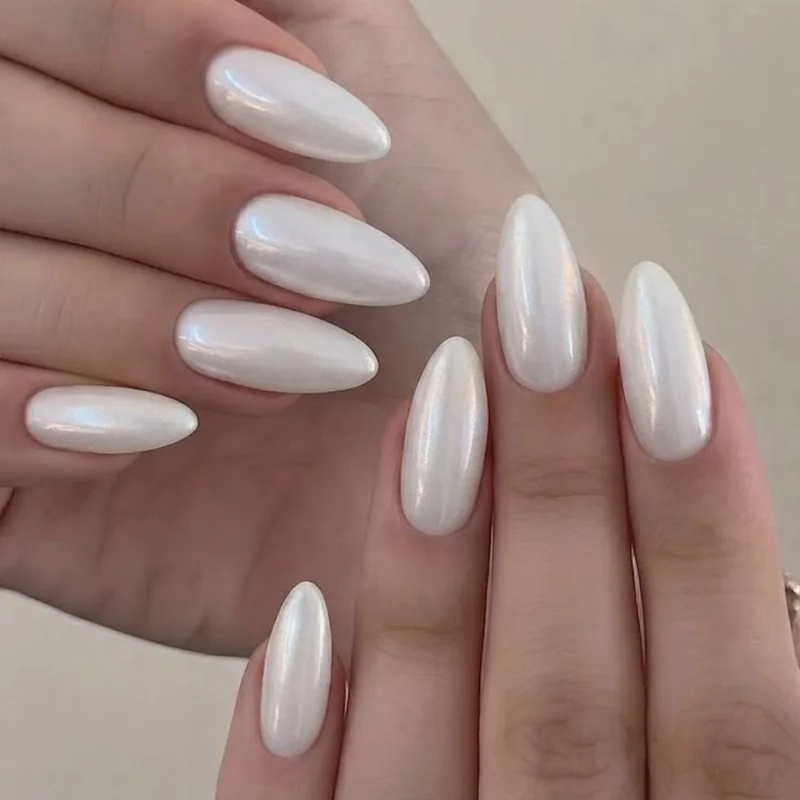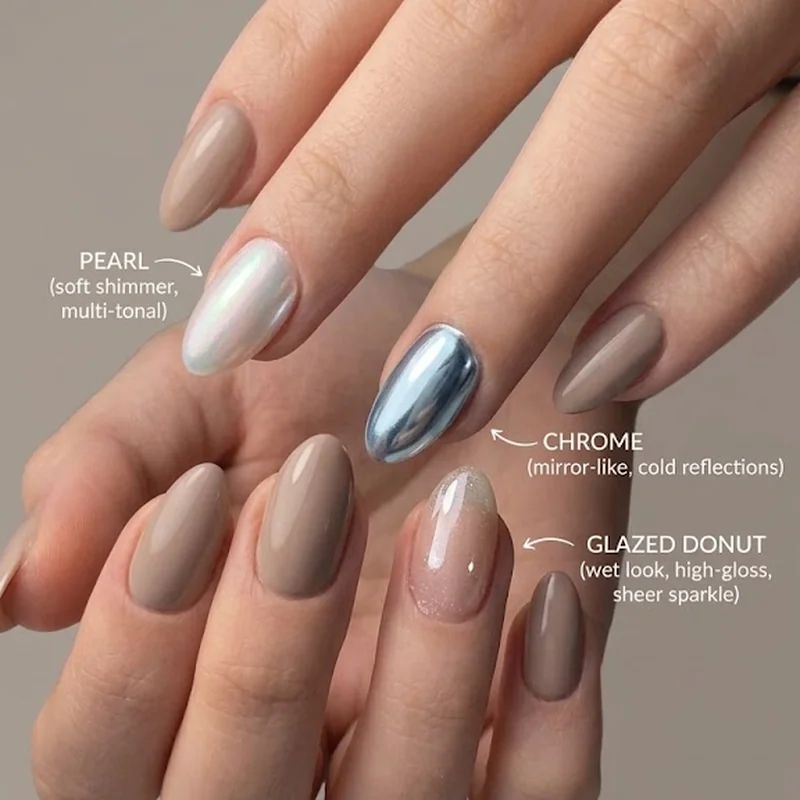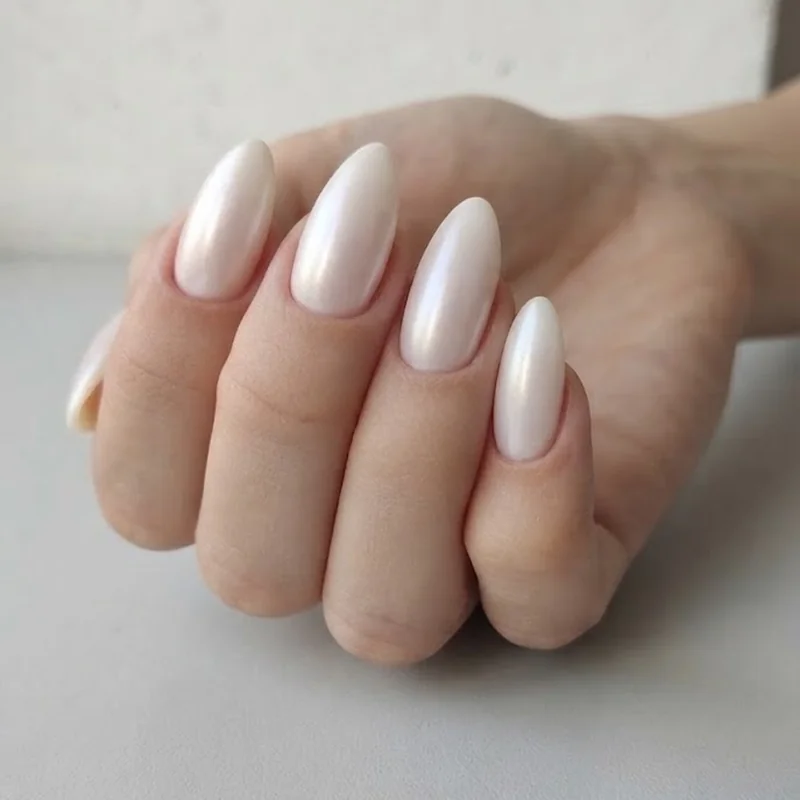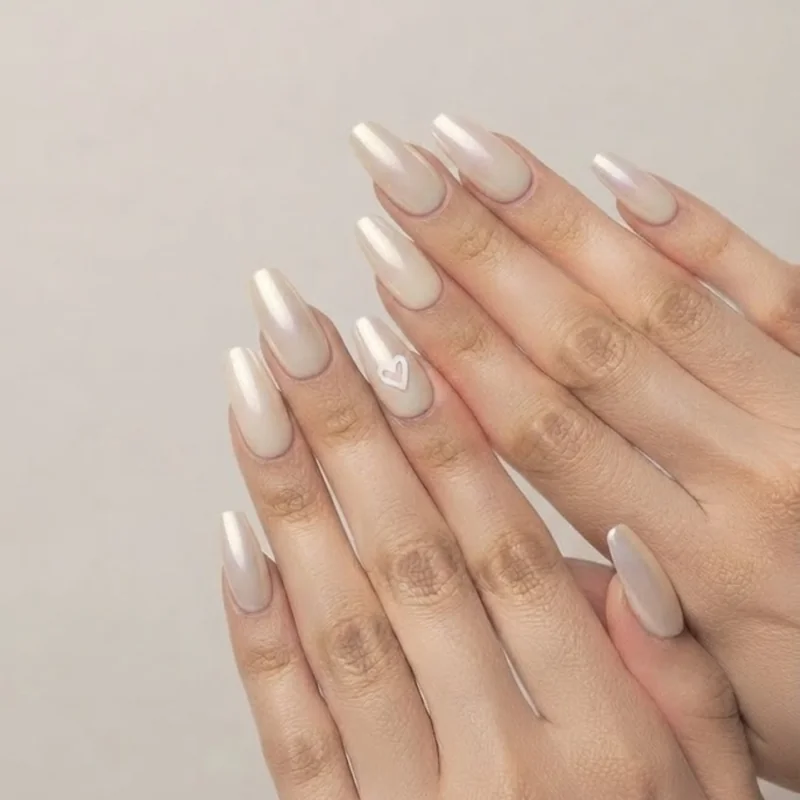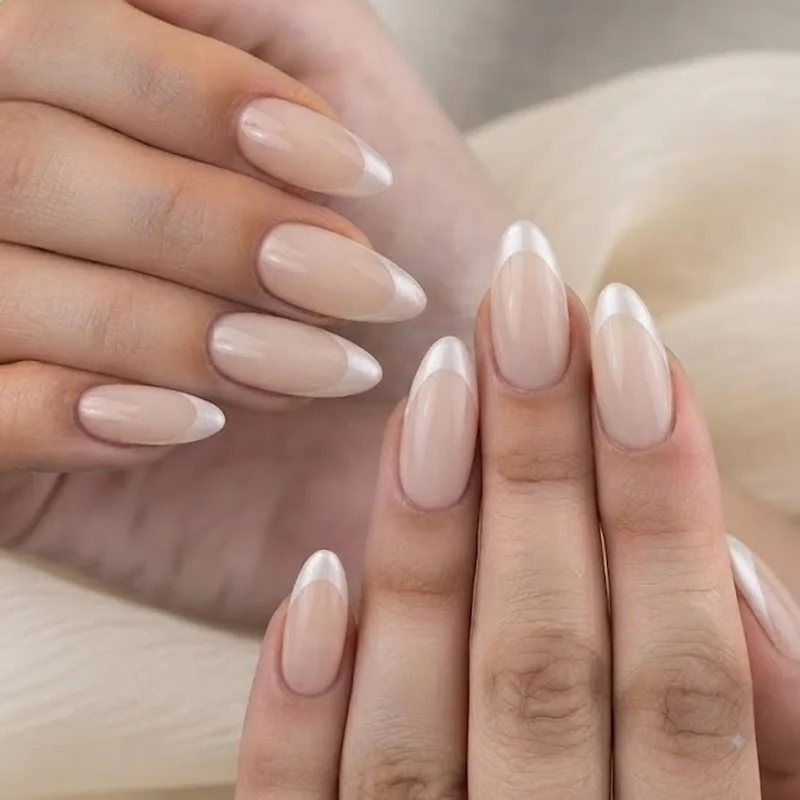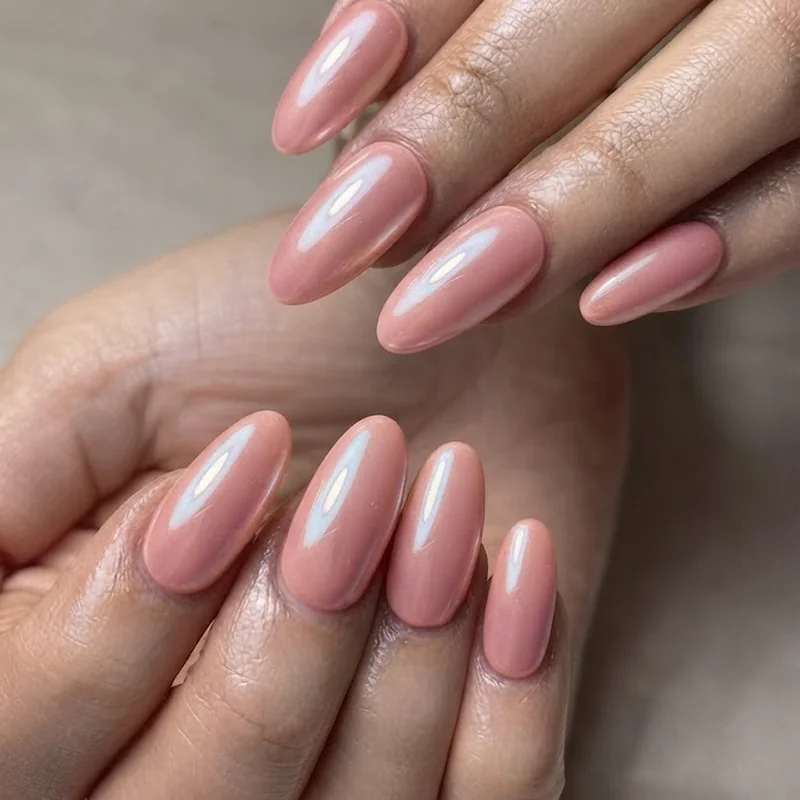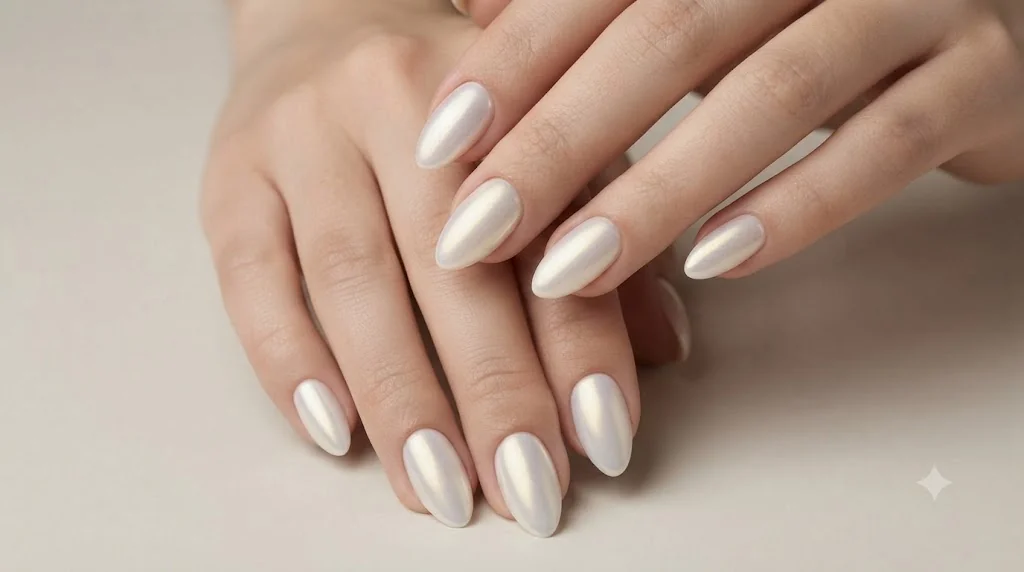
Pearl nails are the manicure trend that moved from spring runway shows straight onto red carpets this year, and they are not slowing down. The look uses an iridescent chrome powder pressed into gel polish to create a soft, glowing shine that shifts color as it catches the light, closer to the inside of a shell than a shiny metallic finish. If you have seen the term floating around and want to actually understand it before your next salon visit, or you are ready to try it yourself, this is the real breakdown. Pearl nails read as expensive without trying too hard, which is exactly why editors keep reaching for them season after season.
Multiple Fashion Week shows this spring sent models down the runway with pearlescent manicures, and the look followed straight into awards season, appearing on more than one Oscars red carpet this year. That kind of range, from backstage at a runway show to a formal red-carpet moment, is not something most nail trends manage. Ahead, twenty pearl nails design directions to save, plus what actually separates pearl from chrome, and how to recreate the effect at home if you are the DIY-curious type.
What Are Pearl Nails?
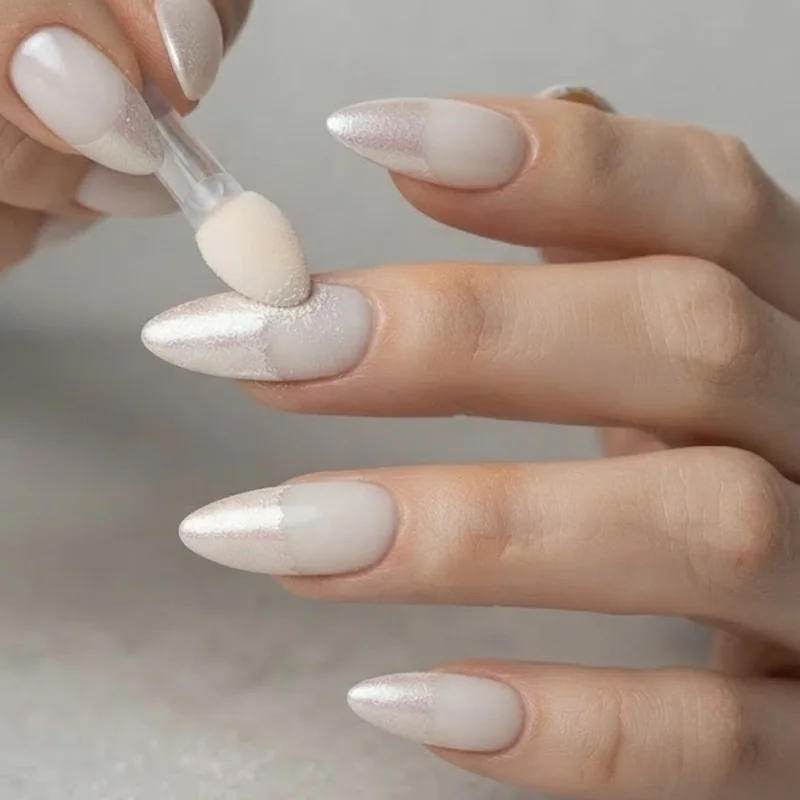
Pearl nails are a manicure finish created by applying pearlescent chrome powder over a milky white or sheer gel base, producing a soft, opalescent shine that shifts between white, pink, and silver tones depending on the light. The effect mimics the inside of an oyster shell rather than a flat, mirror-bright metallic look. It is buffed on top of cured gel polish using a silicone applicator or sponge.
The timing lines up with real momentum, not just algorithm luck. Runway stylists reached for pearl nails as a quieter alternative to the high-shine chrome that dominated a few seasons back, something that photographs beautifully under studio lighting without looking like foil. That same quality made it an easy pick for red-carpet manicures this year, where a soft glow reads better under flashbulbs than a full mirror finish. The base is usually white, cream, or sheer pink, since lighter colors let the iridescent shift actually show up. On darker bases, the pearl effect still exists but shows as more of a subtle sheen than a true glow.