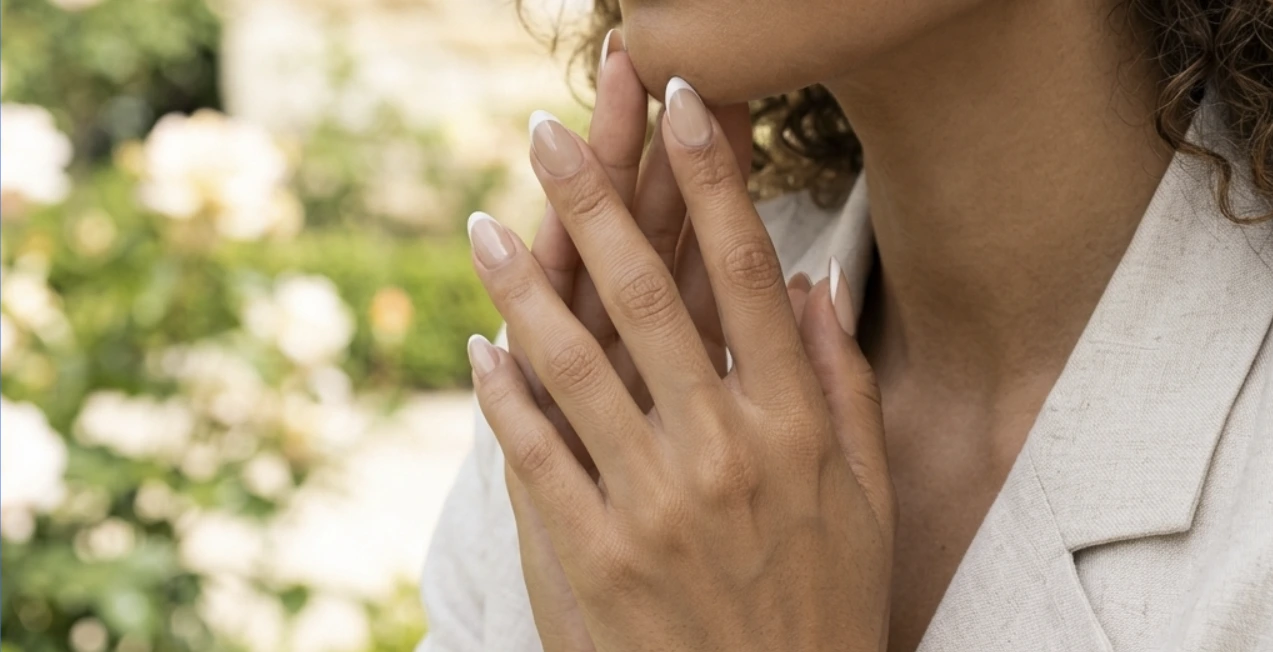
Why Press-On Nails Have Become a Real Salon Alternative
Nobody who loves nails is pretending that a press-on set and a skilled nail technician are the same thing. They are not. A good salon manicure still wins when you want detailed nail art, builder gel, extensions, reshaping, cuticle work, or the pleasure of letting someone else handle it.
But many manicures are not that complicated. Sometimes the brief is simply: I want my hands to look neat this week. I have dinner on Friday. I broke a nail before a trip. I want a clean French tip without blocking out half a day.
That is where press-on nails as a salon alternative have become much harder to dismiss.
The category has grown up. The better sets are thinner at the cuticle, more flexible, better sized, and more believable on the hand than the old plastic-looking versions many people remember. They offer a practical answer to a common beauty problem: how to look polished when time, cost, or nail condition makes the salon routine less appealing.
The salon habit is lovely, until it becomes admin. A salon manicure sounds like one appointment, but it often becomes a small chain of tasks. Choose a slot. Travel there. Wait. Remove the previous colour. Sit through the service. Pay. Then remember that the same thing needs to happen again in a few weeks and so on and so forth.
For people who enjoy the ritual, that can be part of the pleasure. For others, it starts to feel like maintenance work.
The biggest benefit is not only price. A salon colour can feel oddly permanent. Choose burgundy, chrome, long almond nails or a strong French tip, and you are probably wearing that choice for two or three weeks. That is fine when you love it. Less fine when your plans change, your outfit changes, or you realise by Wednesday that the colour felt better in the salon chair than it does at your desk.
Press-ons make style easier to treat as a choice rather than a commitment. Short square nails for work. A soft pink set for everyday wear. Red for a dinner. French tips for a wedding. Adhesive tabs for a one-night look. Glue for a longer hold.
How Long Do Press-On Nails Actually Last?
Press-on nails typically last anywhere from a few hours to around three weeks, and the adhesive is what decides which end of that range you land on. Adhesive tabs hold for one to seven days, while nail glue can carry a set through ten to fourteen days, sometimes stretching to three or four weeks with careful application and good prep.
That range feels wide because it is. The honest answer is that wear time is mechanical, not random. It comes down to a handful of factors that are entirely within your control.
Tabs are built for short, low-commitment wear. They go on fast, peel off cleanly, and suit events, photos, travel days, or a one-off look you do not want to keep. Glue is the better choice when the goal is something closer to a salon manicure that survives daily life, washing up, and typing all week.
A few things shorten wear time faster than people expect. Oil or lotion left on the nail before application is the most common one, since it sits between the adhesive and the nail plate and weakens the bond from the start. Sizing matters just as much. A press-on that is slightly too wide tends to lift at the edges first, while one that is too narrow puts pressure on the sidewalls until it pops off early. Long shapes also create more leverage on the adhesive, so a shorter almond or square set will generally outlast a long stiletto in everyday wear.
Water is the other big factor, though not in the way people assume. A press-on manicure can absolutely survive showers and washing up. The risk is prolonged soaking, especially in the first hour after application, before the adhesive has fully set. Pat the hands dry rather than rubbing, and avoid long hot soaks for the first few hours.
If you want a deeper breakdown of exactly how each of these variables interacts, this guide on how long press-on nails last and how to make them last longer goes through the mechanics in more detail.