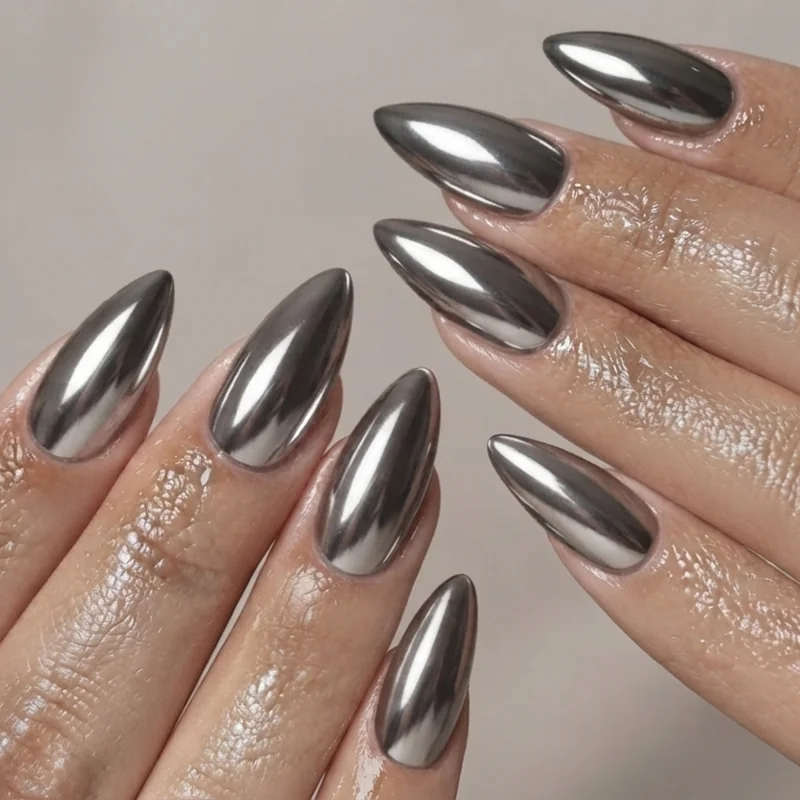
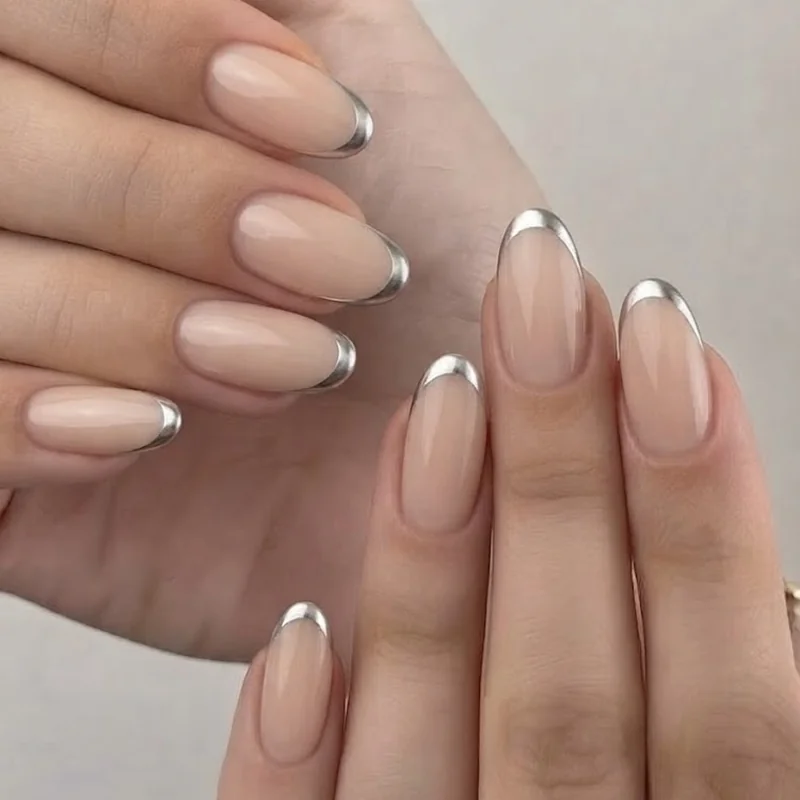
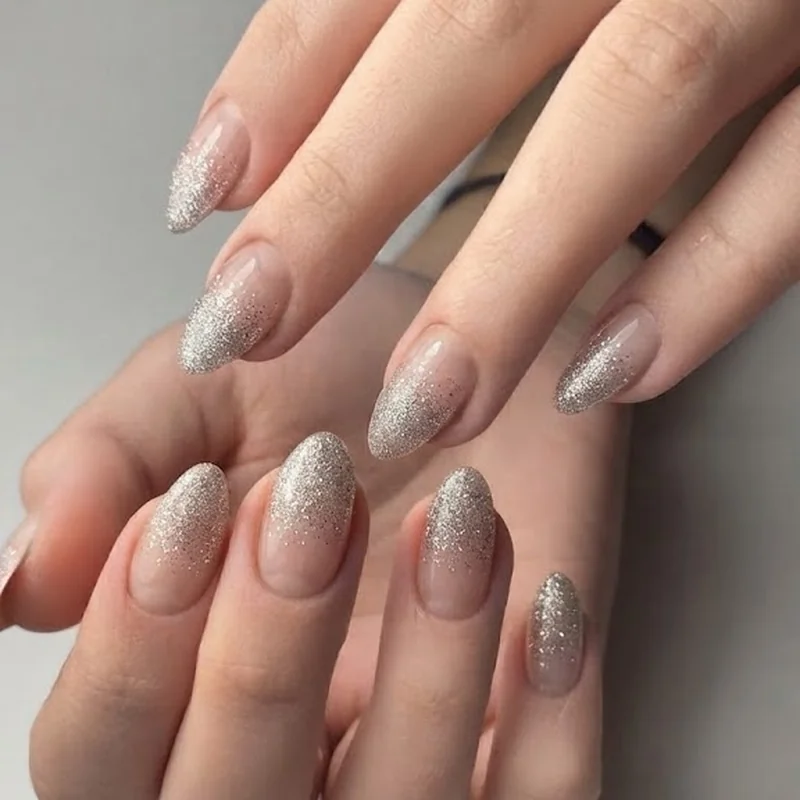
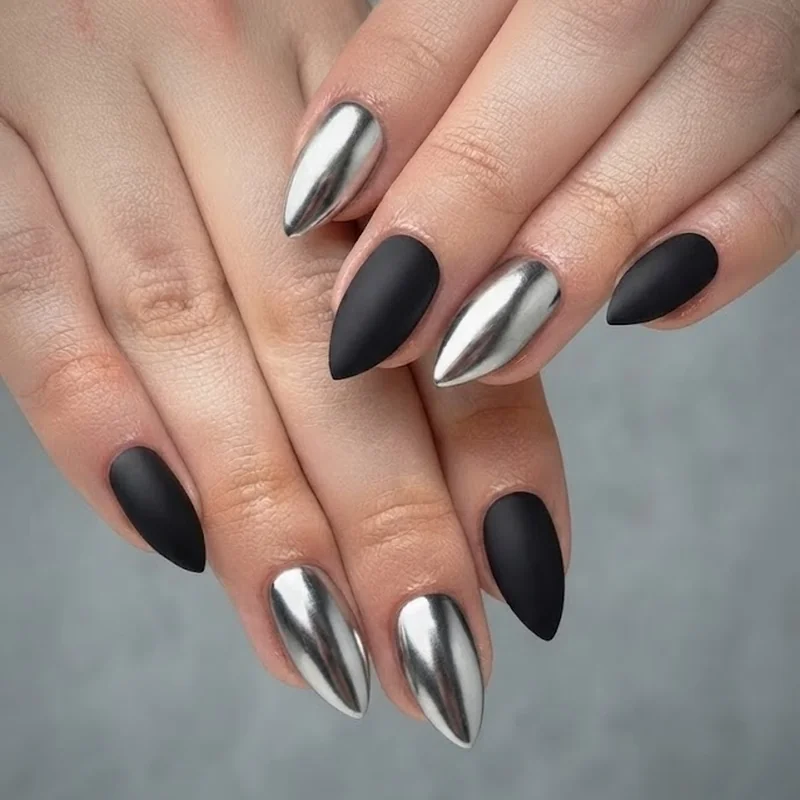
Does silver nail polish actually suit every skin tone, or is that just something the trend pieces say? It does, and the reason comes down to finish rather than fear. Cool-toned silver nails read differently against warm, deep, and fair undertones depending on whether you choose full mirror chrome, fine glitter, or a soft duochrome shimmer, and there is a version of this manicure built for each one. That's the whole premise of this roundup: not another flat gallery of silver nails, but twenty ideas organized so you can find the one that was built for your hand.
The hesitation is fair. Silver has a reputation for looking either incredible on someone else's Pinterest board or slightly costume-y on your own hand, and nobody wants to find out which one applies to them after they've already booked the appointment. What changes the outcome is matching finish to skin tone, shape, and occasion instead of picking the first chrome photo that stops your scroll. Chrome, glitter, French tip, mixed media: four finish families, twenty looks, and a clear read on which ones flatter which undertone before you commit to a single one.
Does Silver Nail Polish Really Suit Every Skin Tone?
Yes, silver nail polish suits every skin tone. The finish you choose determines how it reads, not the color itself. Warm undertones look best in glitter or duochrome silver, which softens the cool cast, while cool and neutral undertones can wear full mirror chrome without any adjustment needed.
This is where most silver hesitation actually starts, and it's rarely about the color. It's about one bad reference photo, usually a pale, icy chrome on a pale hand, mistaken for the only way silver can look. On deeper skin tones, chrome doesn't wash out. It intensifies, because darker skin provides more contrast for the mirror effect to bounce against. On warm undertones, a straight silver can occasionally read a touch cool next to gold jewelry or warm makeup, which is exactly why the glitter and duochrome families exist: they carry warmth inside the metallic instead of fighting it. Fair, cool undertones are the easiest match for a true mirror chrome, since there's minimal warm pigment underneath to compete with the reflective finish. None of this is a workaround. It's the actual mechanics of how metallic finishes interact with skin, and it's why this list opens with finish families instead of a flat photo dump.
Silver vs. Chrome vs. Metallic: What's the Actual Difference?
Chrome nails and metallic nails are not the same thing, and the difference matters more than most people realize before they book. Silver chrome nails use a specific powder pigment buffed onto a tacky gel base to create an unbroken, mirror-like reflection. Metallic nail polish, by contrast, is a standard lacquer with light-reflecting particles mixed in, applied like any regular polish.
Chrome powder is a reflective pigment applied over a tacky gel base coat to create a mirror finish, and it requires that gel base to bond correctly, which is why chrome can't simply be brushed on from a bottle the way metallic polish can. Metallic polish gives a soft shimmer you can layer in two coats over lunch. Chrome gives an actual mirror, and it demands a slightly more involved process: gel base, cure, powder application, buff, seal. Holographic sits in its own category again, using a finer, rainbow-shifting pigment rather than a single mirror tone. Knowing which one you're actually looking at, before you screenshot it for your nail tech, saves a confused conversation in the chair.