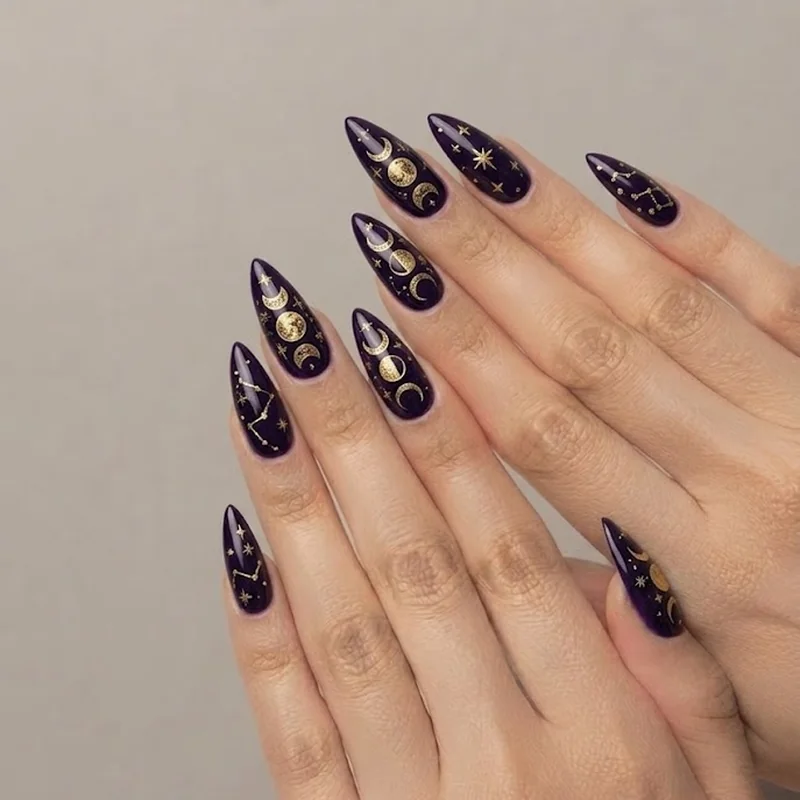
Most galleries claiming to cover gothic stiletto nails recycle the same five looks: one spiderweb, one skull, one black lace French, repeated across a dozen sites with different stock photos. That is not a gothic stiletto resource. It is a single Pinterest board wearing thirty different URLs.
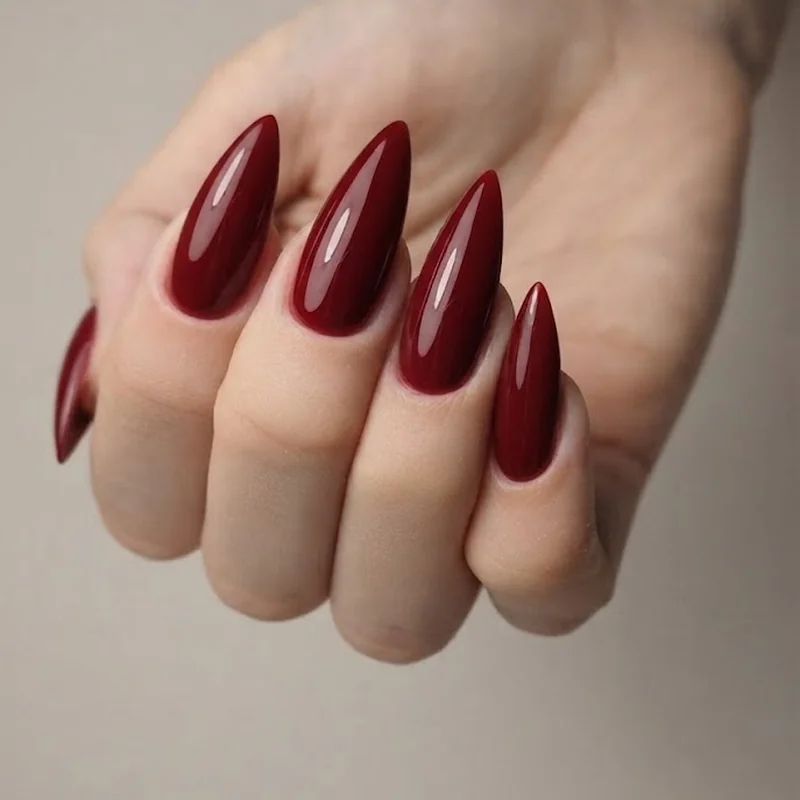
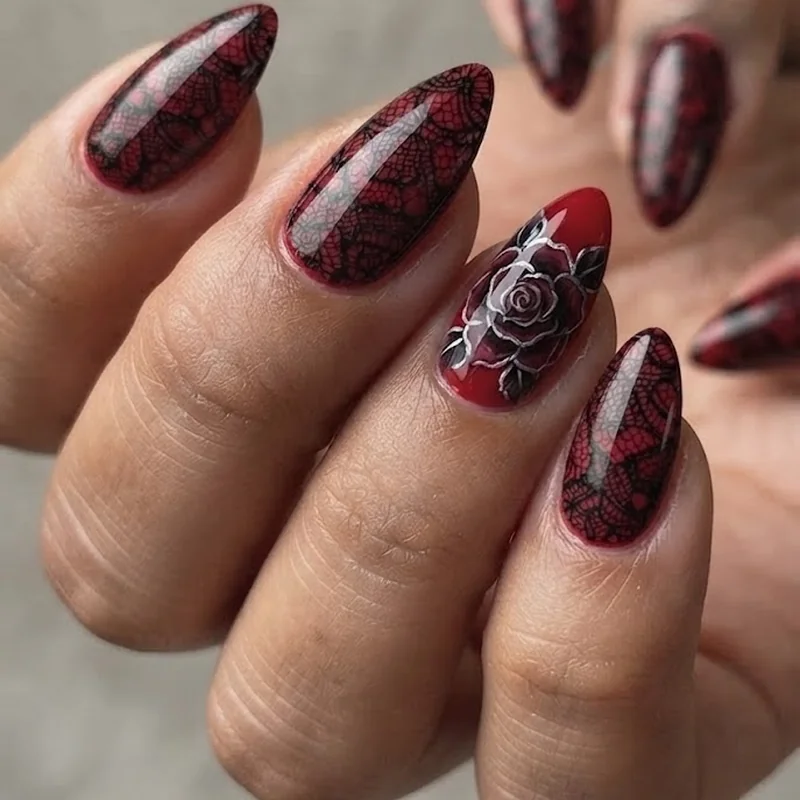
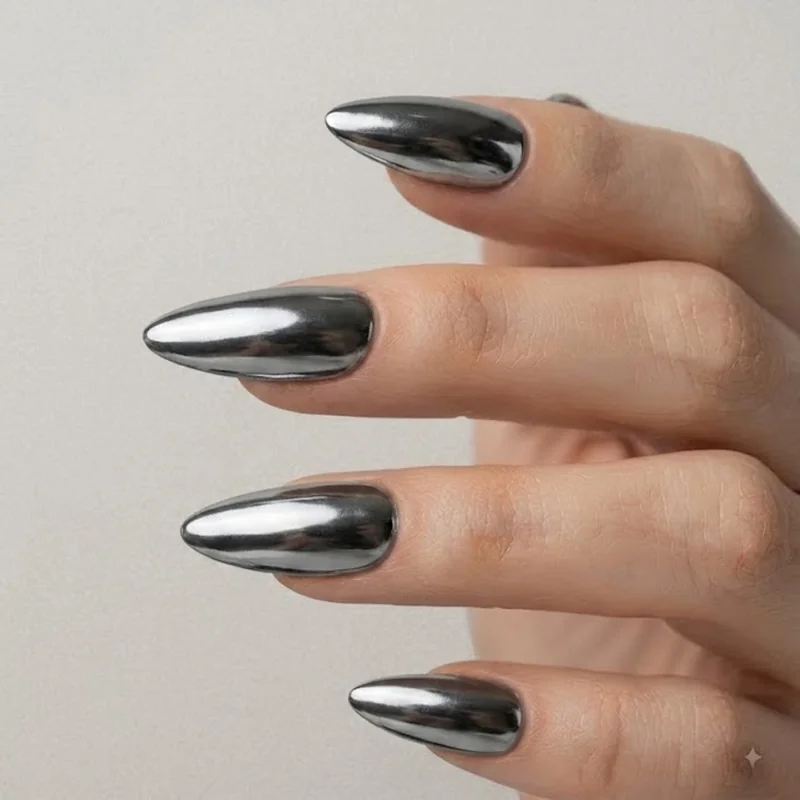
Gothic stiletto nails are dark, symbol-driven nail art applied to the sharpest of the classic nail shapes, and the aesthetic runs far past black polish and a stray cobweb. Occult symbolism, blood-deep reds, lace-heavy romance, chrome and gunmetal finishes, and celestial detailing all belong under the same umbrella, and each reads differently depending on what a person actually wants their hands to say. This roundup sorts more than 30 designs by mood instead of by color, because that is how this aesthetic actually gets searched for and pinned. Occult first, since that is where the range genuinely starts.
What Makes Stiletto the Most Gothic Nail Shape
Why does stiletto read as more gothic than almond or coffin before a single design is even applied? The point itself does the work. A stiletto tip is aggressive by geometry alone, drawing the eye upward and outward like a blade rather than settling into a soft curve, which is exactly the visual language gothic style already speaks in jewelry, architecture, and silhouette.
Gothic stiletto nails combine that sharp, elongated shape with dark color stories and symbolic detailing, from occult imagery to Victorian-inspired lace, to produce a manicure that reads as intentional rather than simply "dark-colored." A rounder shape carrying the same black polish and the same spiderweb accent nail reads softer, almost cute. The point changes the entire sentence.
That sharpness is also why stiletto shows up constantly across dark academia, witchy, and vampire-adjacent aesthetics rather than staying in one narrow lane. It is not just a Halloween shape borrowed for October. The stiletto guide covers how the shape compares to almond, coffin, and every other option if the point isn't a settled decision yet, but for anyone building a genuinely dark manicure, it is worth understanding that stiletto is not one gothic option among equals. It is the shape gothic nail art was, in a sense, always waiting for.
This is one lane of a much wider aesthetic. For readers who want the full range, the complete guide to every gothic nail shape and aesthetic covers how the mood translates across coffin, almond, and square as well.
Occult and Symbolic Gothic Stiletto Designs
Skulls get all the credit for "gothic," and it is time that stopped. The occult symbol vocabulary this shape can carry runs far wider, and it is the category with the deepest, most search-validated range of any motif cluster in this whole aesthetic.
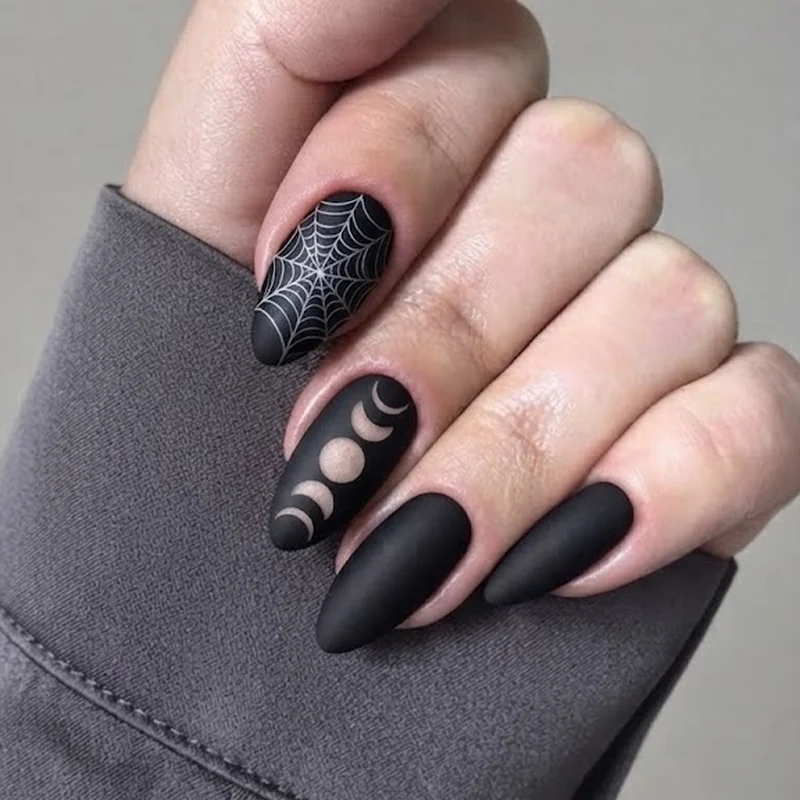
Negative space technique leaves sections of the natural nail or a sheer base bare within a design, and it is the backbone of nearly every occult-inspired look here, since bare space reads as shadow and absence in a way solid polish never can.
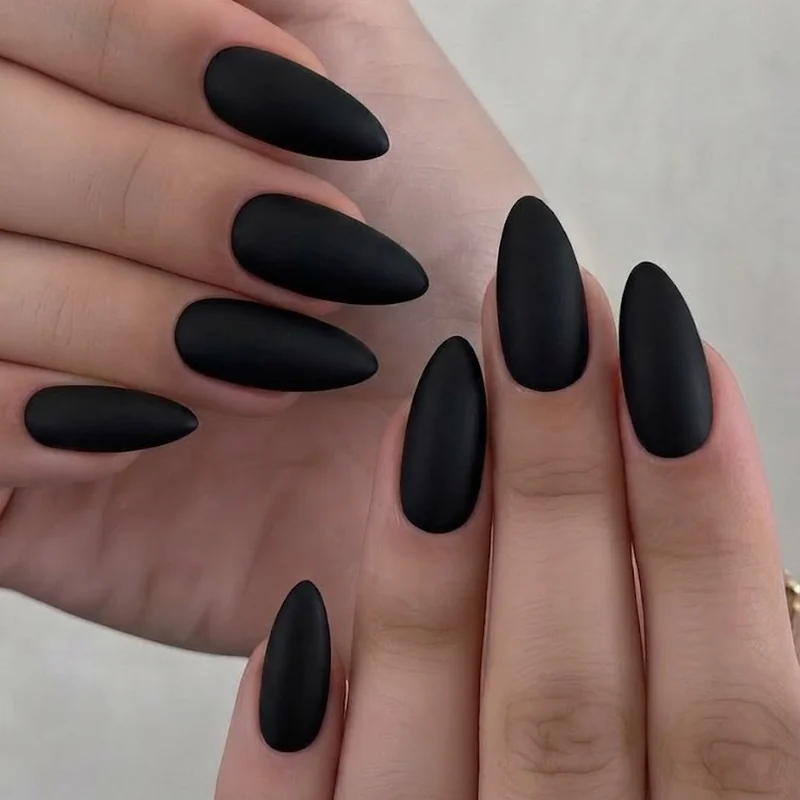
Spiderweb detailing across a matte black base remains the anchor design, done fine and architectural rather than cartoonish. Pentagram accent nails, usually one per hand rather than all ten, keep the symbolism deliberate instead of overwhelming. Moon phase sequences running down a single stiletto point translate a witchy element into something wearable. Sigil work, hand-drawn or stamped, brings a personal symbol into the design in fine gold or silver linework against black. Memento mori detailing, small hourglasses or wilting florals rendered in negative space, leans into the reflective, romantic side of the aesthetic rather than anything costume-like. Tarot-inspired accents, a single card motif on one nail, pair well with a matte base and glossy topcoat on the symbol itself for contrast.
The through-line across all of it: fine linework and negative space over heavy, cartoonish imagery. That distinction is what separates elegant occult nail art from something that reads as a Halloween costume prop.