You have seen it dozens of times on your feed, on someone's hand at a restaurant, in a TikTok you bookmarked but never returned to. But every time you've searched for an explanation, you've ended up more confused than when you started.
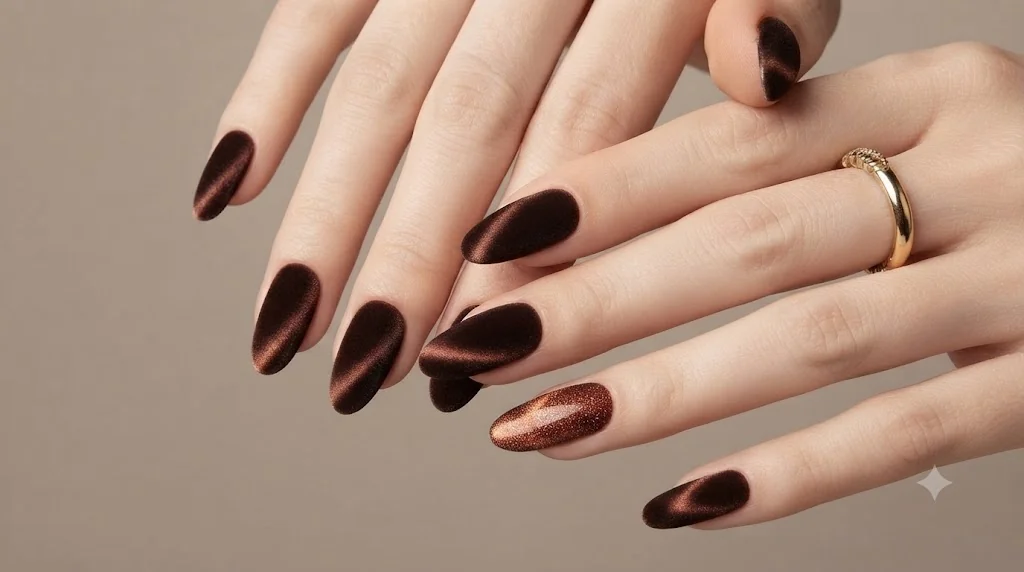
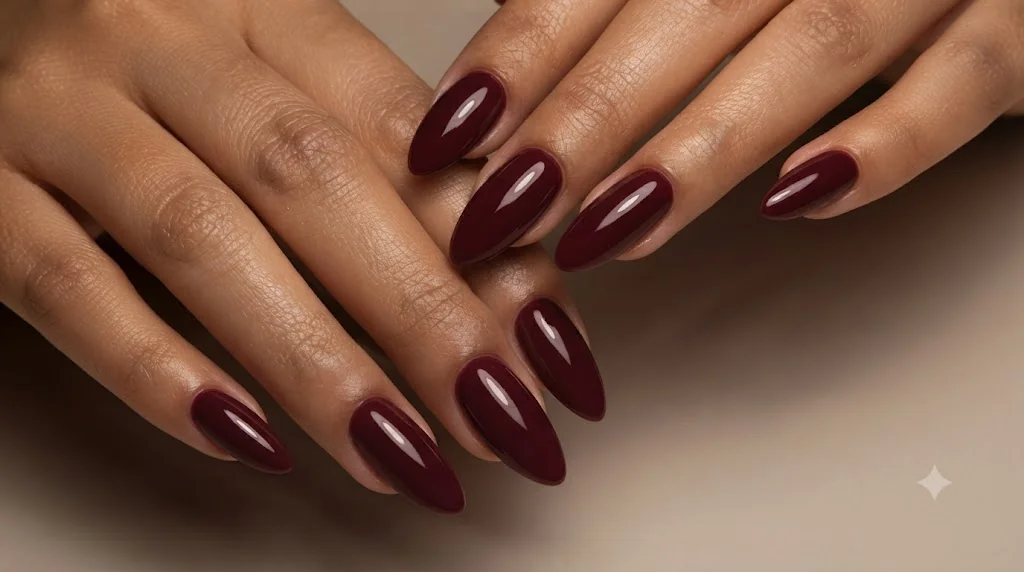
Syrup nails are one of those looks that seems almost impossibly simple on screen and mysteriously elusive in real life. The finish is like nothing else: translucent, ultra-glossy, slightly pooled at the tips, the colour appearing to melt through the nail rather than sitting on top of it. And yet half the internet insists it's just jelly nails with a rebrand, your local nail tech looks slightly blank when you say the word "syrup," and you still don't know whether you need a UV lamp, a specific gel brand, or four coats versus two.
This post is the one that actually answers those questions. What the look is. What makes it different from every other sheer manicure. Which colours give you quiet luxury versus which ones give you children's party. And whether the syrup nail trend is still worth booking in 2026 because the answer is more interesting than a simple yes.

What Makes Syrup Nails Look Different From Every Other Sheer Manicure
Three things set a syrup nail apart from every other translucent finish and all three have to be present at once for the look to actually land.
The first is the finish. Not just glossy, but wet-looking the kind of high-gloss surface that makes the nail appear freshly dipped. The second is the colour behaviour: syrup nail colour doesn't sit flatly across the nail. It pools. It deepens slightly at the tip and thins out towards the base, which is what gives the look its signature gradient even when no deliberate ombre technique has been used. The third is nail bed visibility. A properly done syrup nail lets the natural nail structure show through the lunula, the slight translucency of the free edge because that visibility is what makes the whole thing look alive rather than painted.
This is why you can apply a sheer pink and get a syrup nail. You can also apply a sheer pink and get nothing remotely like one. The formula, the layering technique, and the topcoat all determine which outcome you get.
The look originated in Seoul, where nail artists started using a product category known as syrup gel a slightly thicker, self-levelling gel formula that produces that characteristic pour-and-pool effect without effort. You can read more about the Korean syrup and jelly nail trend and how it crossed from Korean nail studios into global salon menus. The product came first. The name followed.

Syrup Nails vs Jelly Nails: The Difference Actually Matters
Most people treat these as interchangeable. Most people are wrong and the confusion is costing them accurate salon results.
Jelly nails are defined by their candy-like translucency and vibrant finish. Think stained glass. Think hard boiled sweet. The colour is saturated enough to be bold while still remaining see-through, and the effect tends to be consistent from cuticle to tip. Jelly nails prioritise colour pop. They are cheerful, eye-catching, and unapologetically sweet.
Syrup nails are quieter. Where jelly nails push colour forward, syrup nails pull it back the colour melts into the nail rather than decorating it. The gradient is the point. The sheerness is deliberate, not just a side effect of the formula. A syrup nail at its best looks like the colour is inside the nail, not on it.
The product distinction matters too. Jelly gel polish is a broad category bright, translucent shades in a standard gel formula. Syrup gel is a specific product type: a self-levelling, slightly viscous formula with a built-in gradient-friendly consistency that pools naturally at the tips. You can approximate a syrup finish with jelly gel polish, but the effect requires more deliberate technique to replicate what syrup gel does on its own.
The short version, if you're heading to a salon: asking for "jelly nails" will likely get you a bold, uniform translucent colour. Asking for "syrup nails" should get you something more gradient, more diffused, and more quiet. Bring a photo regardless.