The Western Nail Motifs Everyone's Wearing Right Now
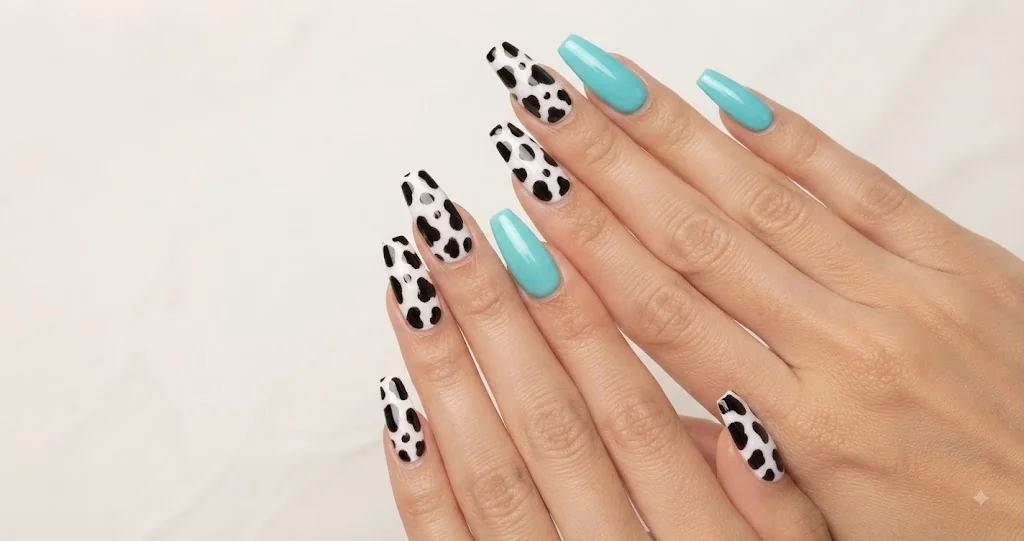
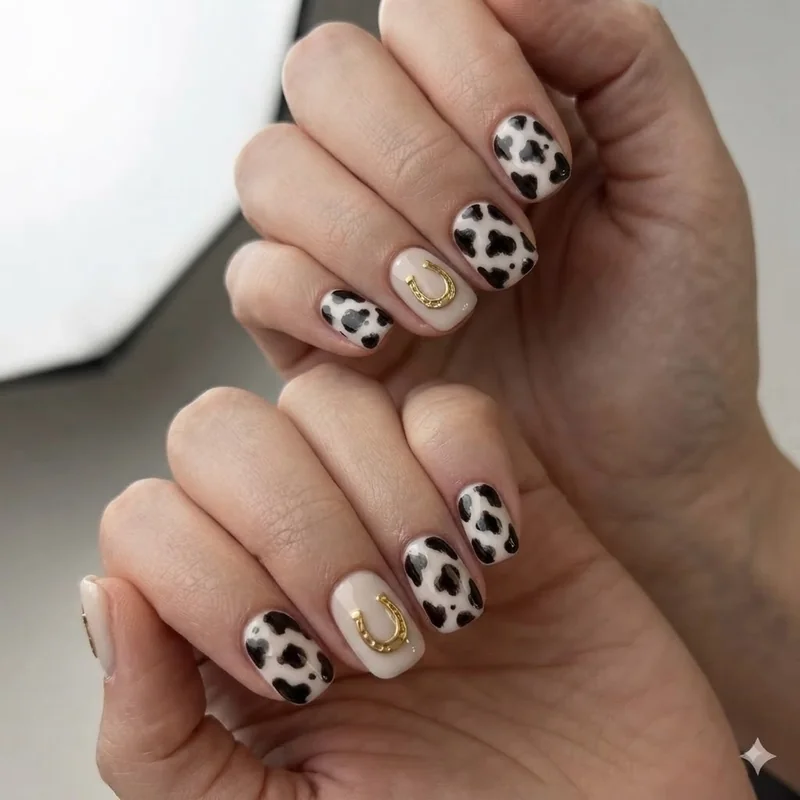
Six motifs are doing almost all of the work in western nail designs this year, and they don't all read the same way. Cow print is the boldest and most recognisable. Cow print nails are a manicure motif built from irregular black or brown patches painted or stamped over a white or cream base, meant to mimic hide markings. It's the design most people picture first, and it's the one most likely to tip into costume territory if you put it on all ten fingers instead of one or two.
Turquoise sits at the other end. A single stone-effect accent nail, painted or applied as a small gem, carries the whole reference without shouting it. It pairs easily with neutral bases, which is why it shows up constantly in the "quiet western" searches competitor content barely touches.
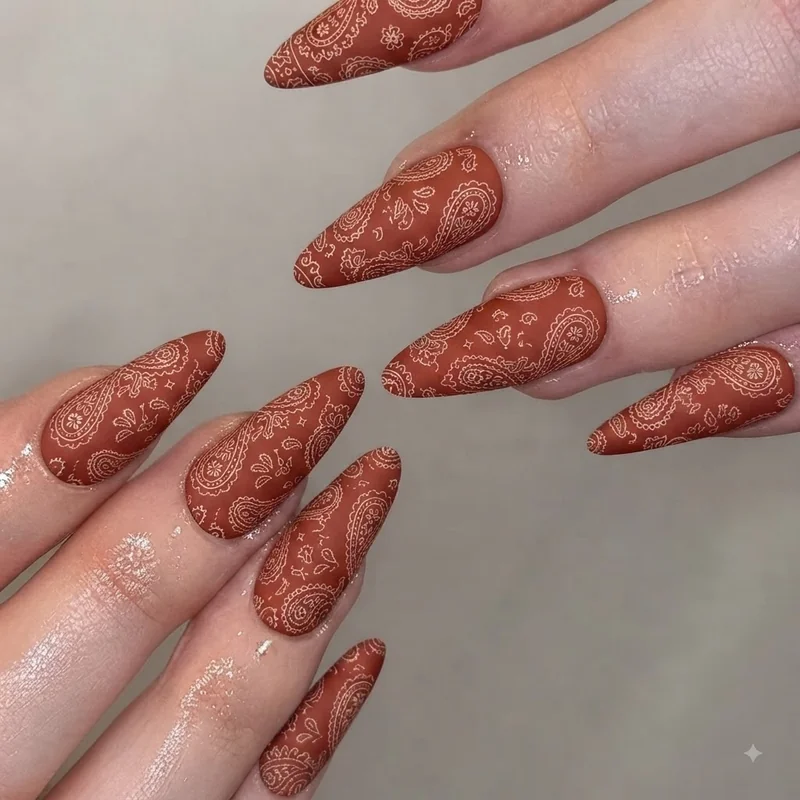
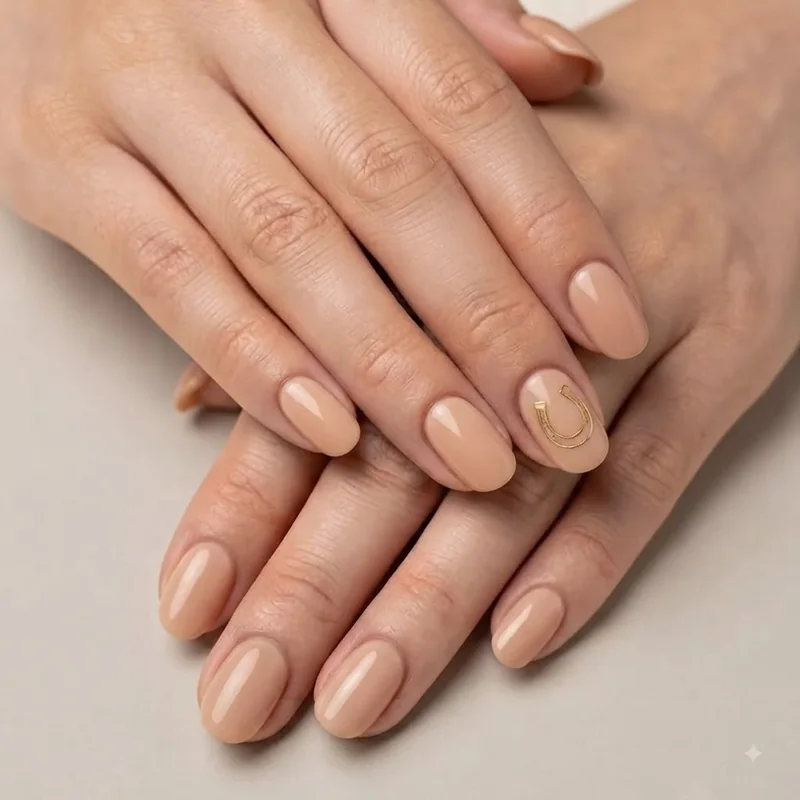
Horseshoe nails use a simple curved outline, usually gold or silver on a matte nude, and read as a subtle nod rather than a statement. Bandana print leans on paisley detailing in deep reds or blues, ideal if you want pattern without animal print. Cactus nail art, small green silhouettes on an accent finger, works better for shorter, playful sets than for anything formal. Desert sunset gradients, blending rust into gold into a soft pink, give you the palette of the whole trend without a single literal icon anywhere on the hand.
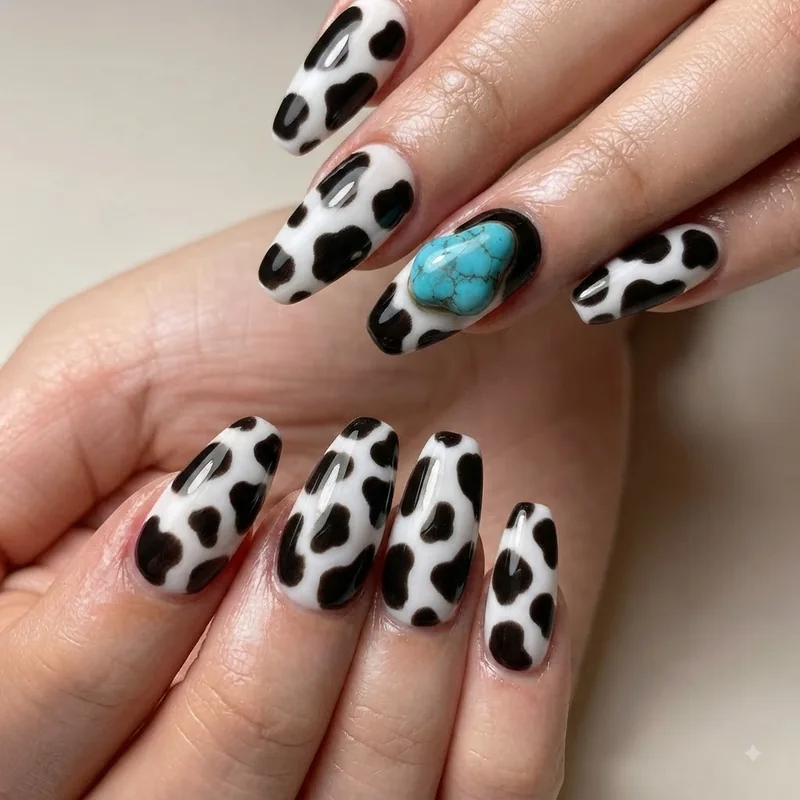
The mistake most people make is treating these six as a checklist instead of a menu. Byrdie's own roundup of the trend features looks that stack multiple motifs across a single set purely for visual variety in a gallery format, which works for a scroll but not for a manicure you'll actually wear. Pick one lead motif. Let a second one support it, if it supports it. Explore 25 cow print nail looks, from classic black-and-white to elegant if that's the motif calling your name loudest, it's worth its own deep dive.
Bandana print deserves a specific mention here because it's underserved everywhere else. Most galleries treat it as a footnote to cow print, when it's actually the softer, more everyday-wearable option of the two.
Best Nail Shapes and Lengths for Western Designs
Most western nail content defaults to long coffin or acrylic sets, as if that's the only option. It isn't, and for several of these motifs, it's actually the wrong call.
Short squoval and short almond shapes hold small, detailed motifs, horseshoes, stitching lines, tiny paisley curls, more clearly than a long coffin nail does, because the surface stays flat and close to the eye rather than curving away at length. A working nail tech cited in recent competitor research flagged short and squoval as the most-requested shape for exactly this reason, even though almost every gallery still defaults to long acrylic imagery.
What nail shape is best for western nail designs? Almond and squoval, in short to medium lengths, are the strongest match. Almond's tapered tip suits turquoise accents and gradient sunset palettes especially well, since the shape mimics the rounded silhouette of a polished stone. Squoval, flatter and more square at the tip, is the better canvas for anything with a straight-line detail: bandana geometry, stitching, horseshoe outlines.
Can you do western nail designs on short nails? Yes, and for cow print or bandana specifically, short nails often look cleaner than long ones. The pattern reads as considered rather than sprawling when it isn't stretched across extra length. If you've been holding off on this trend because you don't have long nails, that was never actually a requirement.
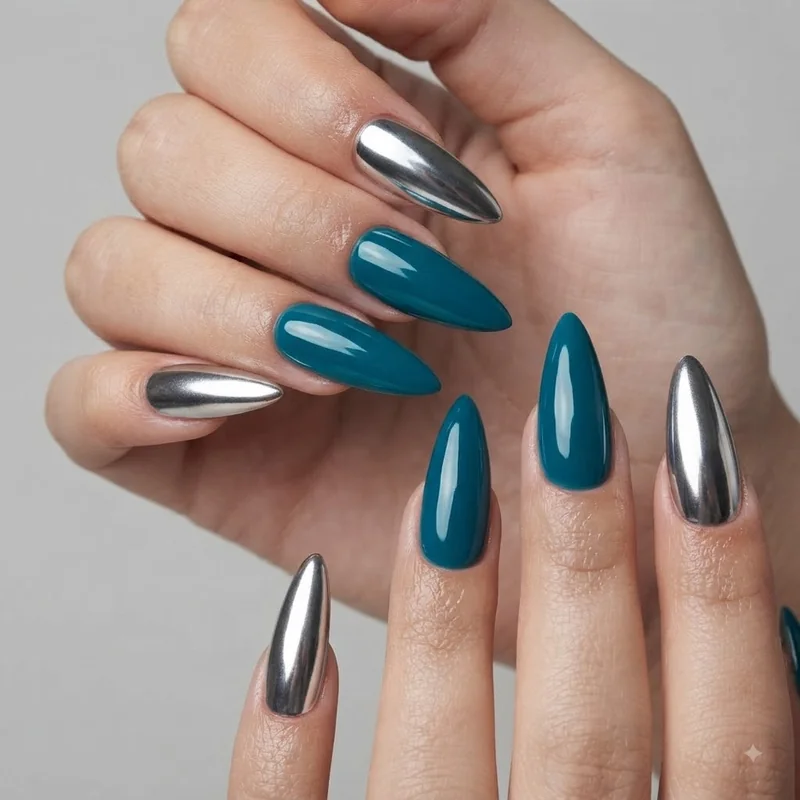
Coffin and stiletto shapes aren't wrong, they just serve a different version of the trend, the bolder, more festival-leaning end. Save them for full cow print sets or chrome-heavy rodeo looks where the extra length gives the motif more room to be dramatic.
The Western Nail Color Palette That Actually Works
A random assortment of brown, turquoise, and white does not automatically read as western nail designs. The palette needs a logic to it, or it starts looking like a colour test strip instead of a manicure.
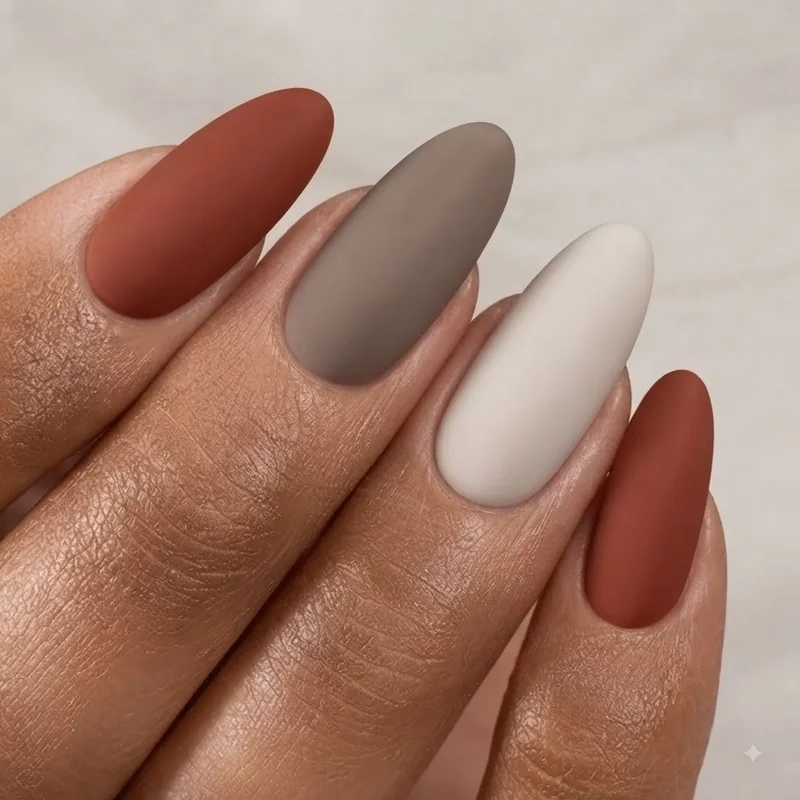
Earthy neutrals carry most of the weight: rust, taupe, bone, and saddle-tan form the base layer almost every strong western set is built on. These are the colours that make a design feel grounded rather than costume, because they're the shades actually found in leather, desert soil, and sun-worn denim, not a cartoon version of them. Turquoise is the one accent colour that gets to break the neutral rule, used sparingly against a rust or bone base rather than as the dominant tone across the whole hand.
How to pick the right turquoise shade for your skin tone matters more here than in most manicures, since turquoise is doing double duty as both colour statement and motif reference.
Desert sunset gradients (rust fading into gold, gold softening into a pale blush) give you a full palette moment without leaning on a single literal icon anywhere. It's the option that reads most "quiet western," the underserved minimalist end of this trend that most competitor content skips entirely in favour of bold, costume-adjacent looks.
What colors are traditionally used in western nail art? Rust, taupe, bone, saddle-tan, and turquoise form the core palette, occasionally paired with a deep denim blue for bandana-style detailing. Avoid true primary colours here. They flatten the look into costume territory almost instantly, which is the opposite of what makes this palette work.
How to Do Western Nails at Home
How do you do western nail designs at home? Start with a neutral gel base in rust, taupe, or bone, apply your chosen motif on one or two accent nails using a dotting tool for cow print patches or a fine detail brush for freehand lines, then seal with a matte top coat for the rustic finishes or a standard glossy top coat for turquoise and chrome looks. The whole process takes under an hour for most designs, no salon visit required.
Cow print is the most forgiving motif for a first attempt. Paint your base, let it fully cure, then use a small detail brush (not the polish brush) to add irregular black patches, uneven edges look more authentic than clean ones here. A dotting tool is a small ball-tipped nail art tool used to create precise dots, circles, and rounded shapes freehand, and it's just as useful for the rounded corners of horseshoe outlines as it is for cow print spotting.
Turquoise accents are arguably easier still. A turquoise gel polish with a textured or crackle top coat mimics stone without any freehand skill required at all. Bandana paisley is the one motif genuinely worth a nail stencil or decal if freehand paisley curls feel intimidating, the repetition is what makes it look intentional, and a stencil guarantees that consistency on a first try.
For the full walkthrough on the trend's most-searched motif specifically, the full at-home cow print tutorial with a dotting tool breaks down the patch-and-blend technique step by step.