Why White Nails Don't Upstage the Bride
No, white nail polish is not disrespectful for a wedding guest to wear. It doesn't compete with the bride's dress in scale, visibility, or context, and nobody reasonably mistakes a manicure for bridal attire. The concern doesn't hold up once you look at how each is actually seen.
Think about what "upstaging" actually requires. It requires something visible enough, at a big enough scale, to pull attention away from the bride in a moment that's supposed to center her. A dress does that instantly, from across a room, in every photo. A manicure requires proximity. Someone would need to be holding your hand, or standing close enough during a toast, to even notice the shade you chose.
This is the reframe worth sitting with: the things that upstage a bride are things that operate at her scale, and nails simply don't operate at that scale. Editors who cover wedding guest etiquette professionally keep landing on the same point, because it's structurally true, not because it's a convenient thing to say to nervous guests.
There's also the matter of context. A white dress reads as bridal because dresses are the garment associated with the bride at that specific event. White nail polish doesn't carry that same singular association, since plenty of guests wear white nails to events that have nothing to do with weddings. Nobody clocks a French manicure and thinks "bridal," the way they would with a white gown.
If you've had a nail tech or a friend raise an eyebrow at a white polish choice, it's worth knowing that reaction is usually about general caution, not a specific etiquette violation. The caution is well-meaning. It's just not describing a rule that actually exists once you check it against real guidance.
When You Should Reconsider (2 Real Exceptions)
If you're going to be in a lot of close photos with the bride, particularly hand-in-hand shots or bridal party lineups, a softer or non-white shade is worth considering instead of stark white. This is the one scenario where proximity and framing genuinely change the visual math, even though the general rule above still holds for most guests.
That's the first exception, and it's specific: not "will there be photos," since there always will be, but whether your hands will be framed directly beside the bride's. Bridal party members, maid of honor, anyone holding the bouquet during the ceremony. In those frames, two white manicures side by side can visually blend, which isn't the crisp, intentional look either of you wants in a keepsake photo.
The second exception is more direct: if your own outfit is white or ivory. This is the actual overlap case competitors rarely name outright, and it's worth naming clearly. If you're already wearing a white or off-white dress, whether as a second-wedding guest, at a destination wedding with a resort-casual dress code, or simply because that's your color, adding white nails on top compounds a look that's already sitting close to the etiquette line your outfit is drawing. One white element is a detail. Two starts to read as a pattern.
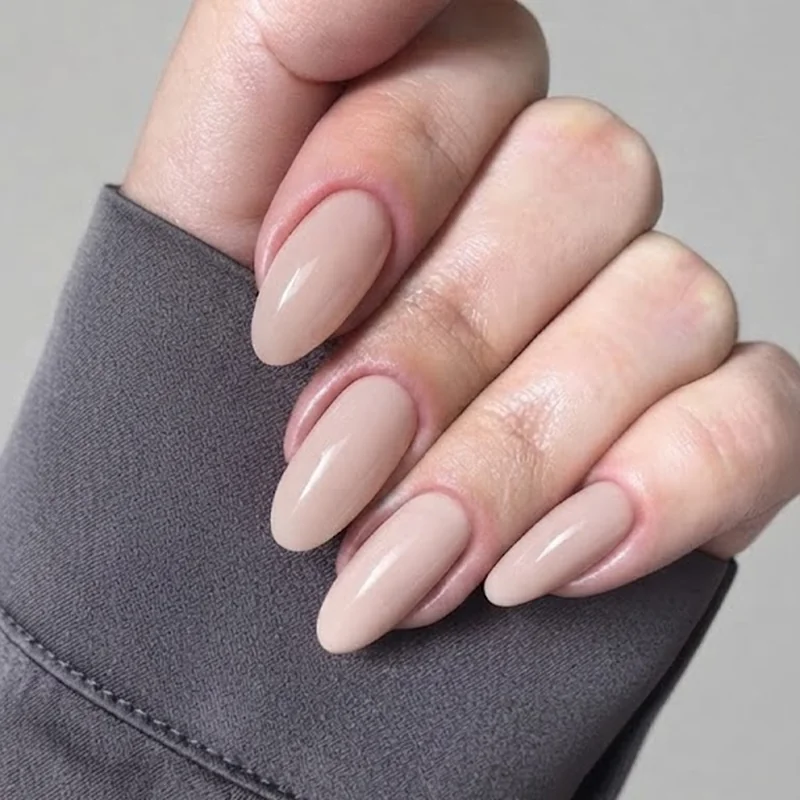
Neither exception means you're stuck defaulting to something bland. A soft blush or nude reads elegant in every lighting condition, works with any outfit color, and carries zero bridal association whatsoever. It's the reliable fallback, not a downgrade.
Outside of these two specific situations, the general rule from the sections above still applies in full. Most guests are neither in the bridal party's tightest photo lineup nor wearing white themselves, which means most guests can book the white manicure they wanted without a second thought.
Milky White vs. Stark White: Which Reads Safer
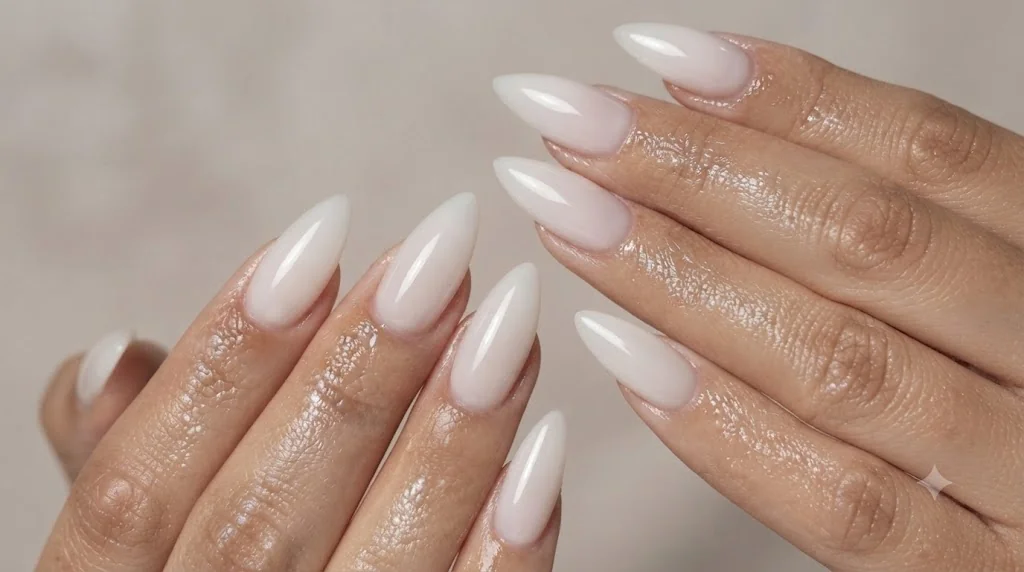
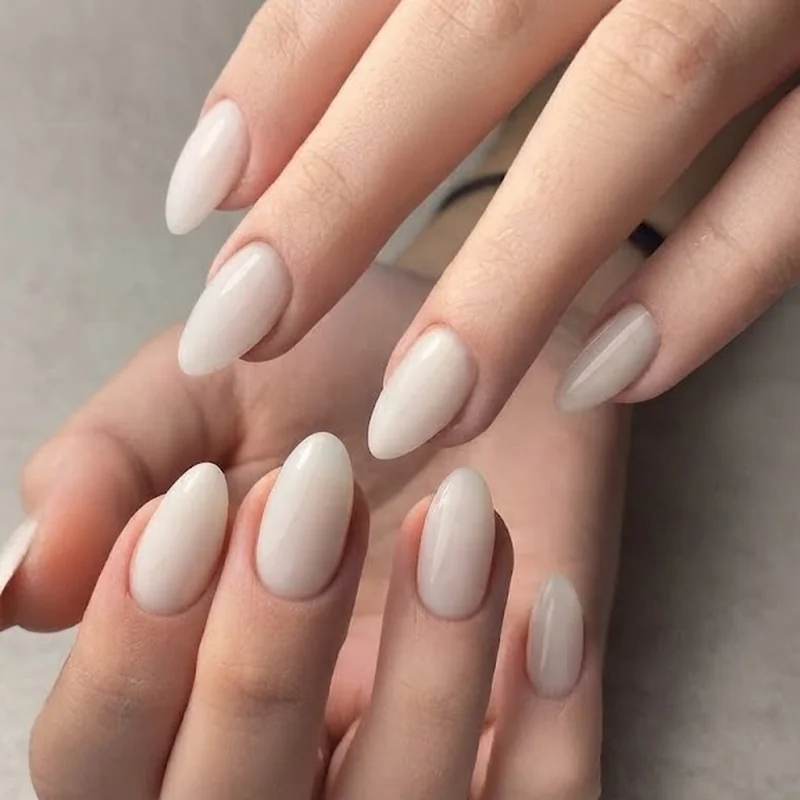
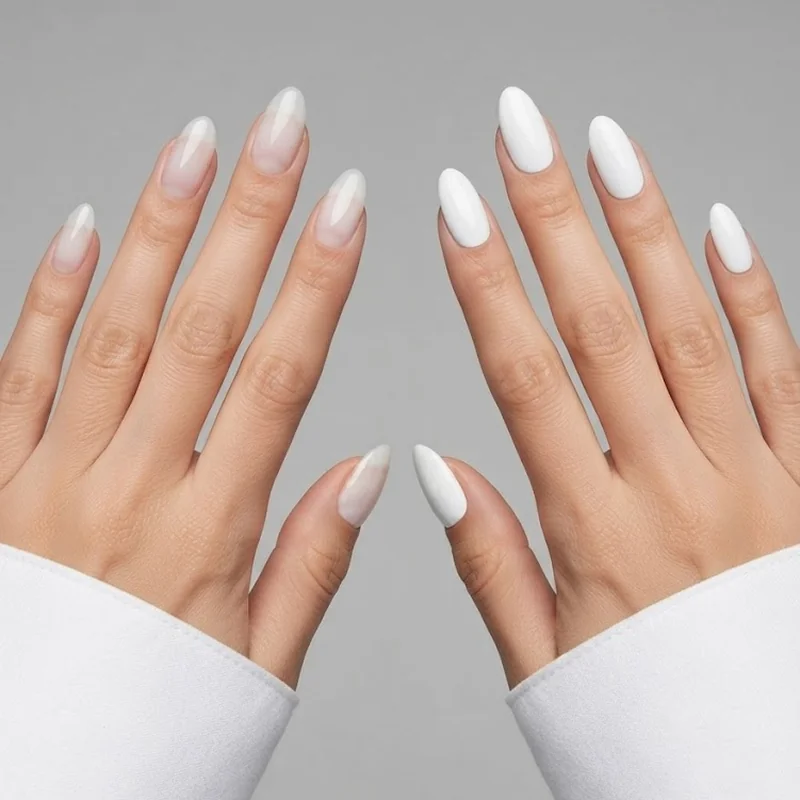
Milky white nail polish is a sheer, translucent white finish, not a fully opaque one. It lets a hint of natural nail show through underneath, which softens the overall look considerably compared to a flat, opaque white gel. That translucency is the entire reason it reads as safer for guest wear.
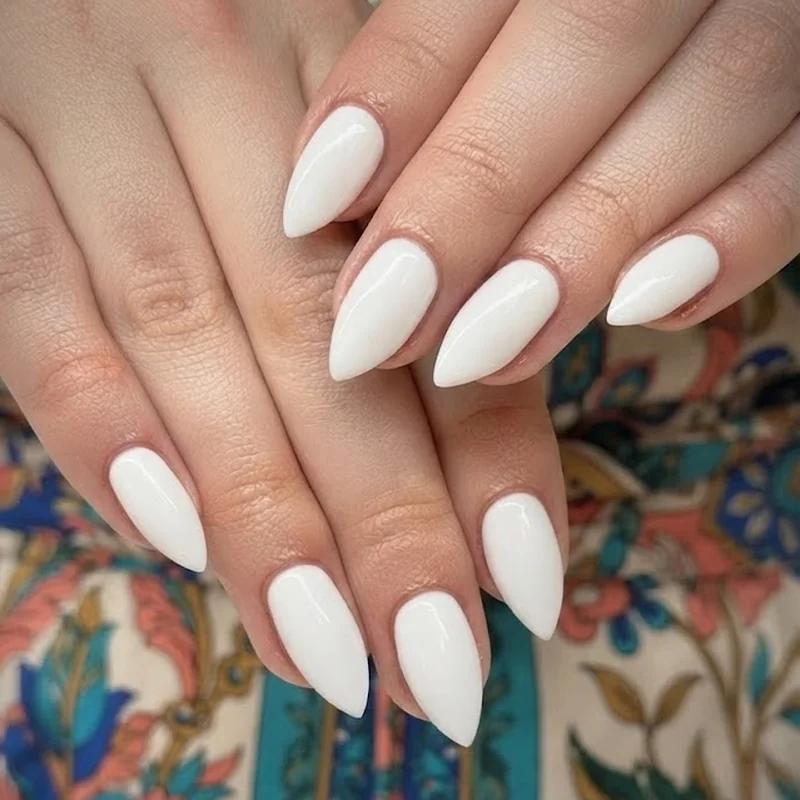
The distinction between milky and stark white isn't cosmetic trivia. It changes how the color behaves at a distance and up close. Stark white, the fully opaque version, has more visual weight. It reads crisper, more graphic, closer to the kind of white you'd associate with a bridal manicure specifically, since brides frequently choose exactly this finish for their own hands.
Milky white sits in a different category entirely. Because it's sheer rather than opaque, it photographs softer and looks closer to a natural, healthy nail with a subtle glow than to a deliberate white statement. Guests who are nervous about the color choice generally feel more at ease with milky finishes precisely because the "white" reads as an enhancement rather than a bold color decision.
If you fall into either exception case above, milky white is the shade to lean toward rather than avoiding white entirely. It gives you the aesthetic you wanted without the crisper, more bridal-adjacent read of a stark opaque finish. For anyone in close bridal-party photos, or wearing white themselves, this is the version worth requesting at the salon, and it's the shade most white nails wedding guest searches ultimately land on once the exceptions are ruled out.
see how to get the milky white nail look at home or in the salon if you want the exact technique breakdown, since getting the sheer effect right depends on product choice and application, not just picking "white" off a color wall.
Stark white still has a place. For guests with no overlap concerns at all, an opaque white can look genuinely striking, especially paired with a French tip or a chrome finish. The point isn't that stark white is off-limits. It's that milky white is the more universally safe choice when you're weighing shade options against either exception.
Best White Nail Styles for Wedding Guests
A few white nail styles consistently work well for wedding guests, and they share a common thread: restraint. The most reliable options are the classic French tip, a milky sheer finish, and a soft pearl or chrome-white for evening and formal weddings, all of which read polished rather than statement-making.
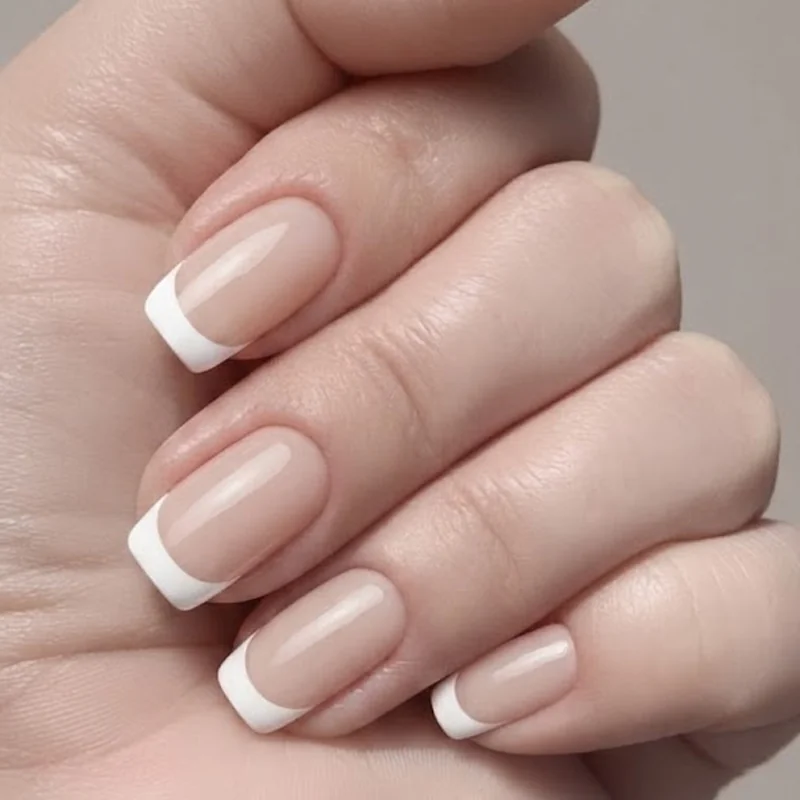
The French tip remains the safest, most universally flattering option on this list. A short-to-medium length with a clean white tip against a natural or sheer pink base reads timeless at any wedding, formal or casual, and it has zero overlap risk with a bride's own manicure since it's a completely different visual structure than an all-over white.
A full milky white manicure is the next most reliable choice, for all the reasons covered in the previous section. It's soft, it photographs well, and it gives you the "white nails" aesthetic guests are actually searching for without tipping into stark, opaque territory.
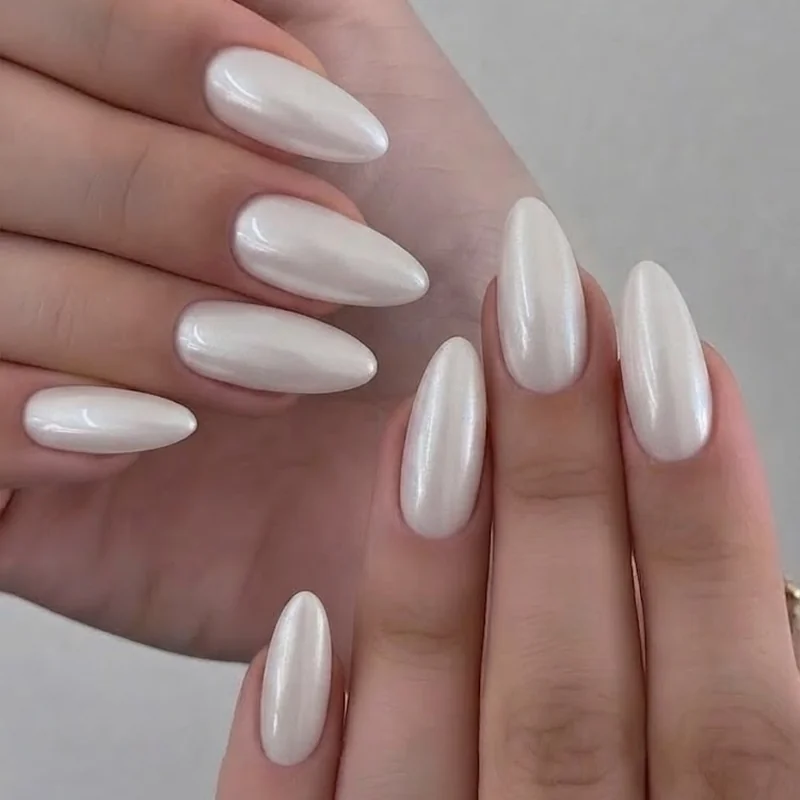
For evening or black-tie weddings specifically, a pearl or chrome-finish white brings a formal-appropriate shine that a flat polish doesn't. This works particularly well under evening lighting and in photos, where the subtle shimmer catches light in a way that reads intentional rather than plain.
Length and shape matter here too. A shorter, rounded shape reads more polished for daytime and garden weddings, while a slightly longer almond shape suits evening formality better. Whatever style you land on, a clean shape and a deliberate finish do more work than the exact white shade you choose.
browse more wedding guest nail ideas by dress code and season for a fuller range of options beyond white, organized by the kind of wedding you're actually attending.