Best Toenail Shape to Pair With a Short French Pedicure
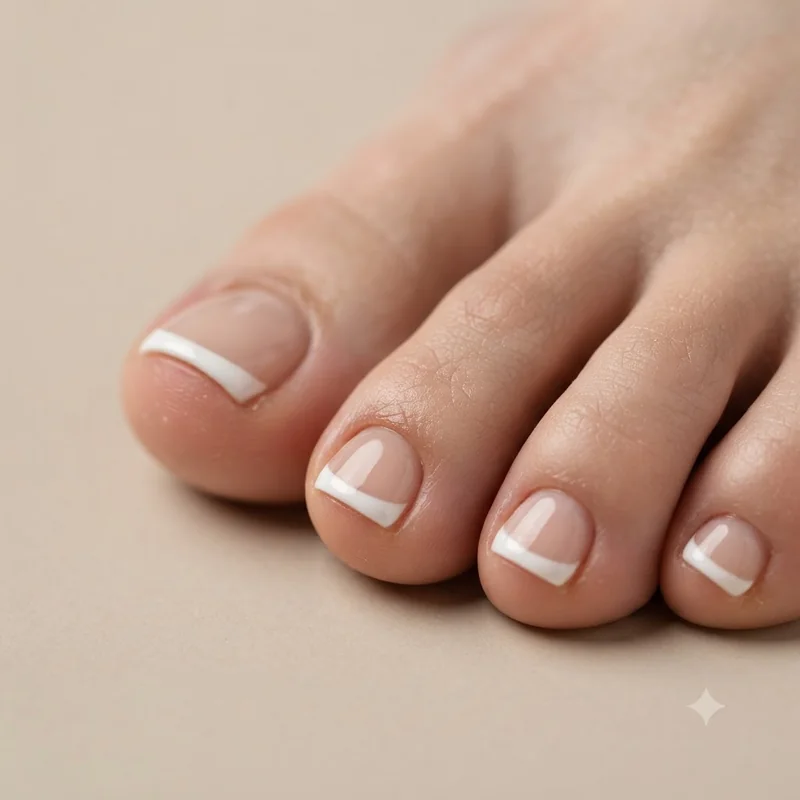
Shape is not a limitation here. It is the thing that makes the tip line possible in the first place. Soft square and squoval give a straight, defined edge for the white line to follow, which is exactly what a short nail needs when there is not much free edge to work with.
A fully rounded shape curves inward from both sides, which shrinks the usable edge even further and can make an already-short toe look more compact rather than less. Squoval softens the corners just enough to still look natural in sandals, while keeping enough of a straight line across the front for a crisp, even tip. If the toenail is naturally quite narrow, a soft square shape with gently rounded corners tends to be the most forgiving option, since it gives both the micro line and the ombré fade a clean, consistent edge to sit against, no matter which of the small toes it is being applied to.
How to Ask Your Nail Tech (Or DIY It Yourself)
This is achievable at home, on short nails, without acrylic or extensions. The one thing that changes the outcome, at the salon or on your own bathroom floor, is being specific about width rather than relying on the word "thin," which means something different to every technician.
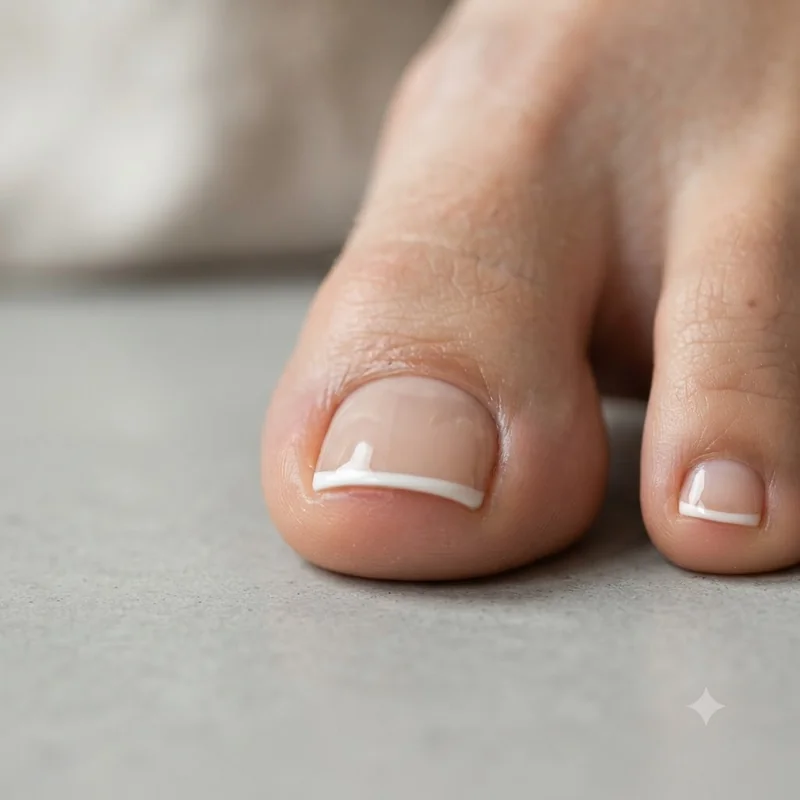
At the salon, ask for a micro or skinny French tip, one to two millimetres, on a soft square or squoval shape, and bring a reference photo if you have one. Naming the width removes the guesswork entirely and tends to get a far more consistent result than describing the vibe you are after. For a full step-by-step walkthrough of the base coat, tip application, and sealing process, how to do a french pedicure at home covers the technique in detail.
At home, a thin detail brush matters more than a steady hand, since a wide brush will fight you into painting a thicker line than intended no matter how carefully you apply it. Toe separators keep the smaller toes from smudging each other while the tip is still wet, and painting the big toe last, once you have found your rhythm on the smaller ones, tends to give the cleanest result on the nail that shows the most. Either route, salon or DIY, gets you to the same french pedicure short toenails result.
Occasion Styling: Sandals, Vacation, Everyday Wear
A french pedicure short toenails look does not need an occasion to justify it, but it happens to suit almost every one that comes up. In sandals, the thin tip and soft base keep feet looking put-together without competing with an outfit, which is most of what a good pedicure needs to do day to day.
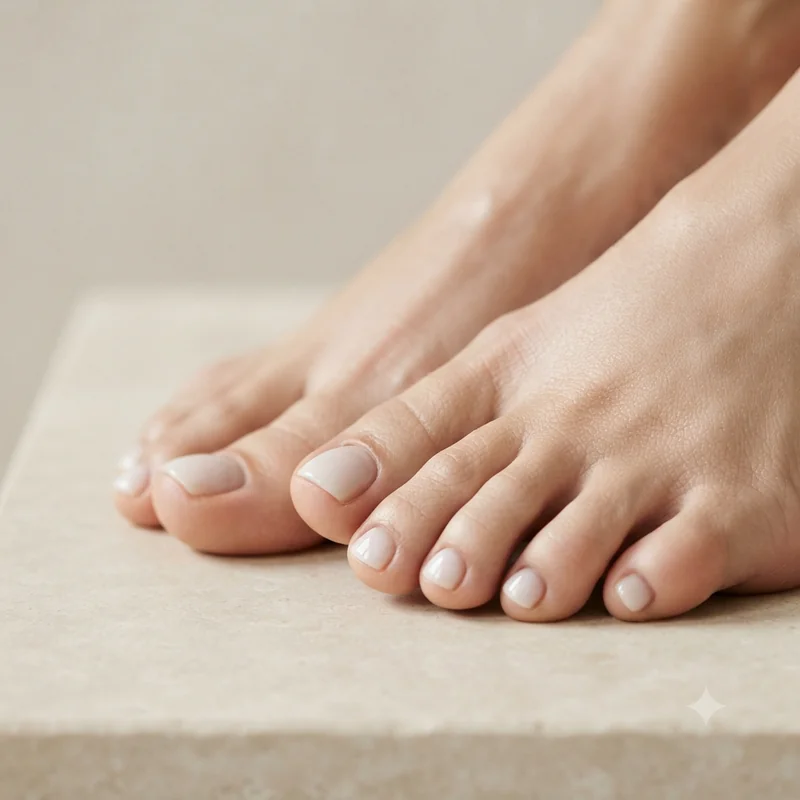
For vacation or poolside wear, the milky or nude base underneath a micro tip resists showing chips as obviously as a stark white pedicure would, since there is less contrast for a small nick to stand out against. For anything slightly dressier, a Frombré fade reads as more polished than a plain nude pedicure while staying quieter than a full colour. Whichever variation you land on, the proportion rule holds across every setting: keep the tip in line with the nail you actually have, and the pedicure looks intentional in every context it shows up in.
Short toenails are not a workaround for this style. They are arguably the better canvas for it, since a fine tip and a soft gradient were always going to look more considered than a thick band with room to spare. Once the width matches the nail, the whole "does it work on short toes" question stops being a question at all. What is left is a french pedicure short toenails look that reads as chosen on purpose, not adjusted to make do, and that is the version worth booking or painting on yourself this week.
french pedicure inspiration gallery