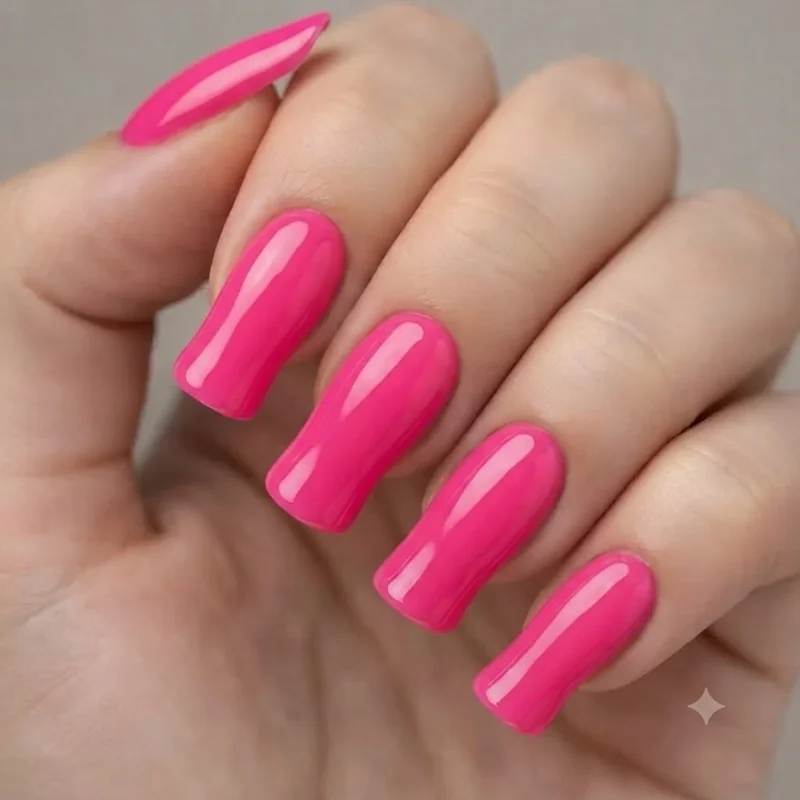
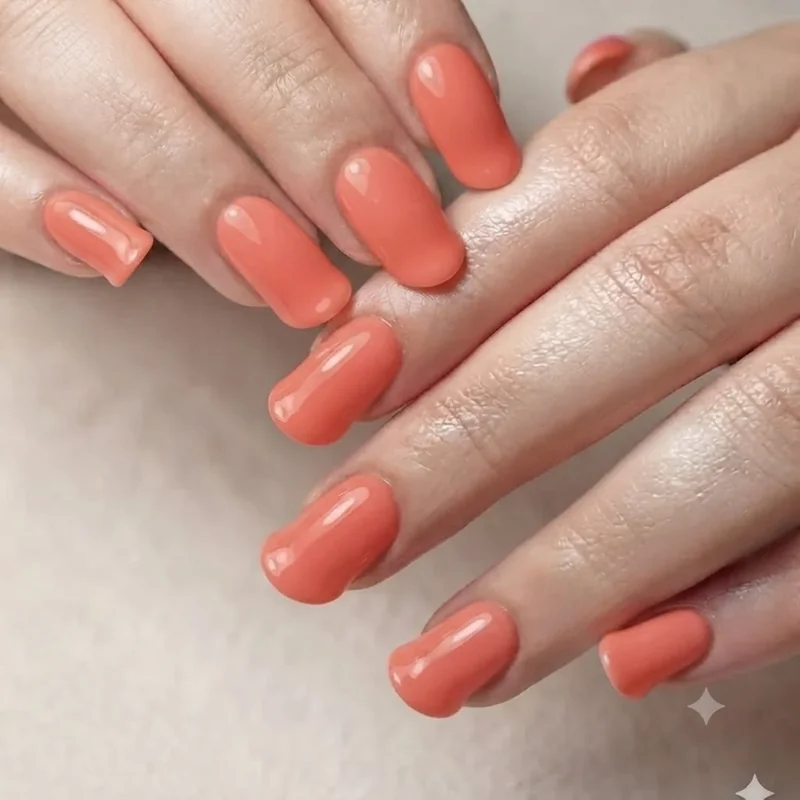
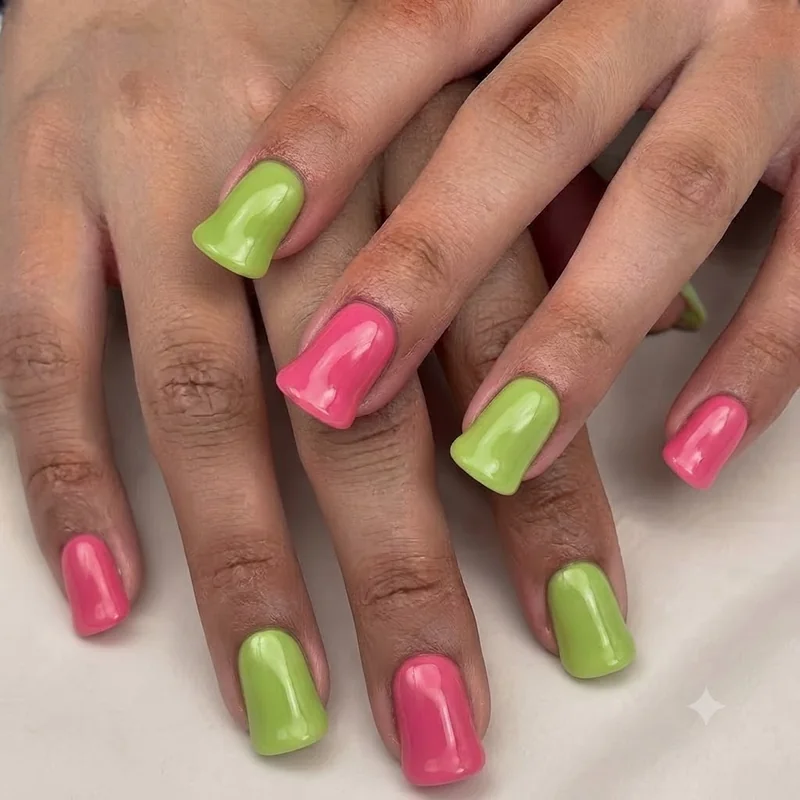
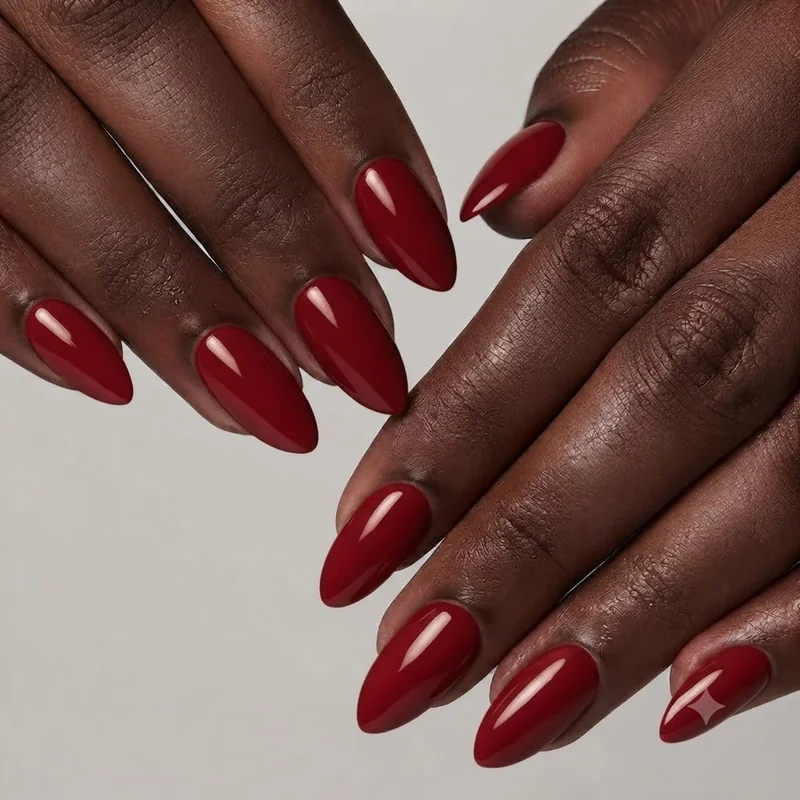
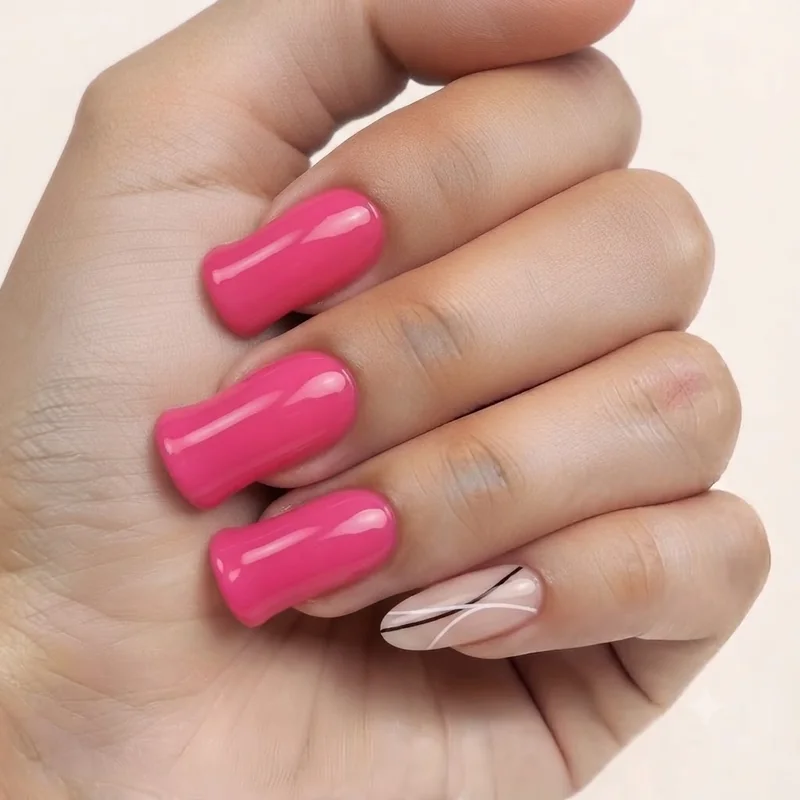
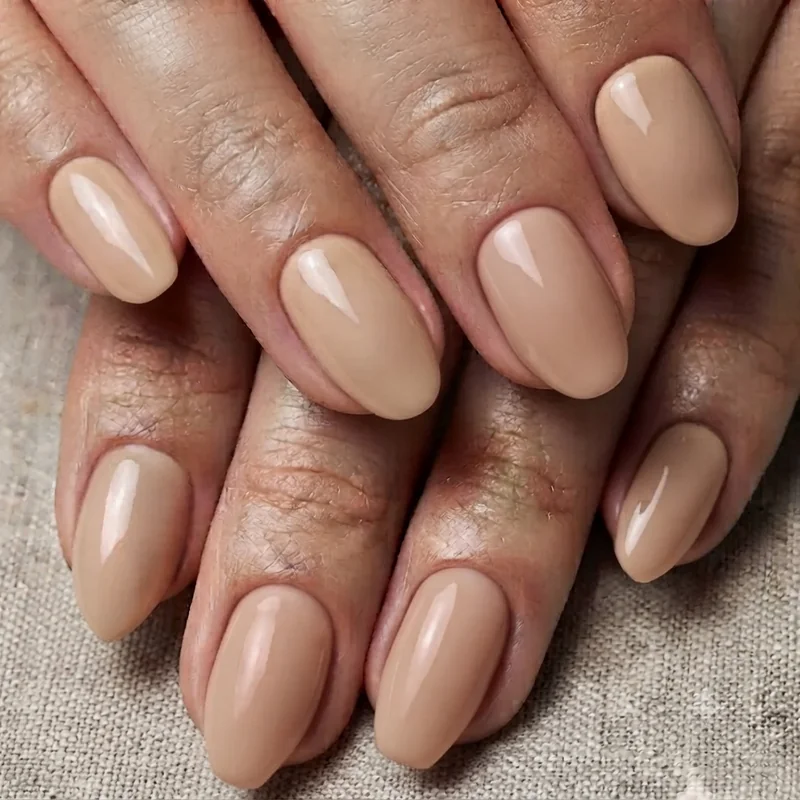
Duck nails are back on your feed, and this time they've brought company. Duck nails are the acrylic or gel-x shape where the free edge flares out wider than the nail bed, curving outward from around the midpoint of the nail like a duck's webbed foot. This piece covers that shape alongside its two closest cousins, lipstick nails and flare nails, because right now they're all resurfacing together and most explainers only tackle one at a time.
You've seen it captioned something like "DUCK NAILS ARE BACK." Maybe it's nostalgic. Maybe it looks completely alien to you. Either reaction is fair, and this is the post that sorts out which shape is which before you decide anything. Duck, lipstick, and flare get lumped together constantly, and for good reason, they share DNA, but they're not identical, and knowing the difference changes what you ask for at the salon.
Consider this the one-stop version of the three separate posts you'd otherwise have to piece together. What each shape actually is, why it's named that, and whether it holds up outside a TikTok clip. No pressure to love it. No judgment if you don't.
What Are Duck Nails, Exactly?
A duck nail is not subtle, and it isn't trying to be. The structural rule is simple: sidewalls run relatively parallel from the cuticle to roughly the midpoint of the nail, then flare outward so the free edge ends up noticeably wider than the nail bed itself. That widening is the entire shape. It's what separates duck from every tapered silhouette, almond, coffin, stiletto, where the tip narrows instead of spreading.
This sits within a much bigger family of nail shapes, and if you want the full landscape, Mirellé's complete nail shapes chart lays out how duck fits against the more familiar options. But duck is doing something the standard shapes don't attempt. Byrdie's own shape roundup describes it plainly: duck nails flare outward at the tips just like their namesake, a divisive, Y2K-inspired category that instantly stands out. Celebrity manicurists Julie Kandalec and Jin Soon Choi, both cited in that same roundup, treat it as one of the more structurally demanding shapes to execute cleanly, precisely because that flare has to be built with intention, not just filed loosely wide.
Achieving the shape almost always requires an enhancement, acrylic overlay, hard gel builder, or gel-x tips, since natural nail rarely grows with enough length and strength to hold a dramatic flare on its own. A nail tech builds the sidewall structure first, keeping it tight and controlled near the cuticle, then shapes the outward flare into the free edge using the nail form as a guide. Get that midpoint transition wrong and the shape reads as messy rather than deliberate, which is exactly why this one is worth booking with someone who has actually done it before.
The visual effect is unmistakable once you know what you're looking at. Wide, flat, geometric, with a free edge that genuinely resembles webbed feet. It's also the shape most likely to spark a "wait, why would you want your nails this flared" comment from someone unfamiliar with it, and that reaction is basically part of the trend at this point.
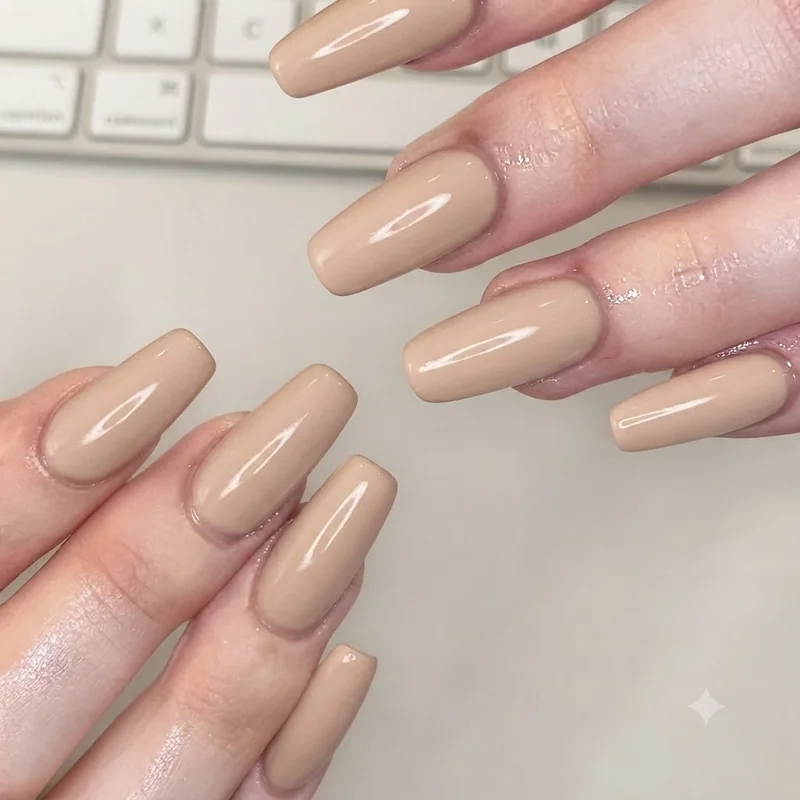
Why Are They Called Duck Nails (and Jersey Nails)?
What are duck nails called and why? The name comes directly from the silhouette. A duck's foot is narrow near the leg and widens into a broad, webbed shape at the base, and that's precisely the outline this nail shape traces. Some circles also call it Jersey nails, a regional nickname tied to the shape's early-2000s popularity in New Jersey, popularised largely through Jersey Shore.
That second name isn't a coincidence or a stretch. Nicole "Snooki" Polizzi wore duck nails throughout her Jersey Shore years, and the association stuck hard enough that the shape and the region became shorthand for each other in beauty coverage. The style had already been circulating for years before that, reportedly with roots in Black nail artistry going back decades, but Jersey Shore's mainstream spotlight is what cemented the "Jersey nails" nickname specifically.
The shape made its mainstream debut in the early 2000s and held on through the early 2010s before fading, the way most maximalist trends eventually do. It sat dormant for close to a decade, occasionally resurfacing on individual creators, before finally breaking through again as part of the wider Y2K beauty revival currently pulling everything from low-rise silhouettes to chunky highlights back into rotation. Duck nails returning now isn't really a new trend. It's an old one meeting an audience that missed it the first time.
The terminology gets murkier from there. Fan nails describes essentially the same flare, just used more casually and sometimes for a slightly less extreme version. Parrot nails shows up occasionally as another nickname, likely riffing on the same bird-silhouette logic. None of these are separate shapes so much as different names circling the same structural idea, which is exactly the confusion this post exists to untangle.