Why the Growth Numbers You've Seen Don't Match
Here is the actual reason. Every BLS growth figure belongs to a specific projection window, and most sites still quoting 33%, 22%, or 12% are pulling from windows that closed years ago: 2016 to 2026, 2018 to 2028, and similar outdated cycles. The current, authoritative figure is the 2024-2034 projection under SOC code 39-5092, and it sits at 7%.
None of those older numbers were fabricated. They were accurate for their own decade. The problem is that growth rates compound and recalculate with each new BLS cycle, and a site that has not updated its source since 2019 is still technically citing "BLS data," just several projection windows out of date. That is the entire explanation for the confusion, and it is worth knowing so you can spot it yourself the next time a career-advice page throws out a big, unsourced percentage.
Once you are working from the current window, the picture stops being confusing. Growth is real, it is measurable, and it is consistent with how the broader personal care services sector has performed for years.
What's Actually Driving Nail Tech Demand
Grooming has become routine, not occasional, and that shift is the real engine behind nail tech job outlook demand. Manicures and pedicures are widely treated as a low-cost, recurring service rather than a special-occasion splurge, which keeps client visits frequent and predictable rather than seasonal.
A few forces are compounding that baseline demand. Mobile and mini-session services have opened up entirely new booking patterns, letting clients get a quick manicure between errands instead of blocking out an hour at a salon. Nail art and specialty finishes, driven hard by social platforms, have turned a basic service into something clients actively seek out and pay more for. And a steady wave of retirements and career changes within the existing workforce keeps creating fresh openings on top of pure growth.
None of this is speculative. It shows up directly in the annual openings figure, and it connects to something worth knowing before you commit further: what nail technicians really earn as demand for their time continues to climb.
Will AI or Robots Replace Nail Technicians?
No. Robot manicure machines currently handle one narrow task, a quick single-coat polish application, and cannot shape nails, remove old polish, perform cuticle care, or create nail art. The skilled, judgement-heavy side of the job stays firmly human.
Companies building these machines have said as much themselves. The people behind robot manicure kiosks describe them as express add-ons for quick touch-ups, not substitutes for a full-service appointment, and industry commentators have compared the idea of a robot replacing a nail tech to a vending machine replacing a chef. Every client who walks in with old polish to remove, damaged nails to assess, or a specific design in mind still needs a trained person making real-time judgement calls, not a machine running a fixed routine.
What automation is actually doing is narrower and less alarming than the fear suggests: absorbing express, low-margin polish jobs so human techs can spend more time on the higher-skill, higher-paying work that machines cannot touch. That is a shift in how the job is structured, not a threat to whether it exists.
Is the Nail Tech Market Oversaturated?
It depends entirely on where you are looking, and treating "the market" as one single, national thing is the mistake. Some dense urban areas do have a high concentration of nail salons competing for the same local client base. Plenty of other regions, suburbs, and smaller cities are genuinely underserved.
Saturation, where it exists, tends to be hyperlocal rather than industry-wide. A neighbourhood with five nail salons on one block can feel crowded while a town twenty minutes away struggles to find enough licensed techs to fill open chairs. National annual openings data would not keep climbing the way it has if the whole market were genuinely full.
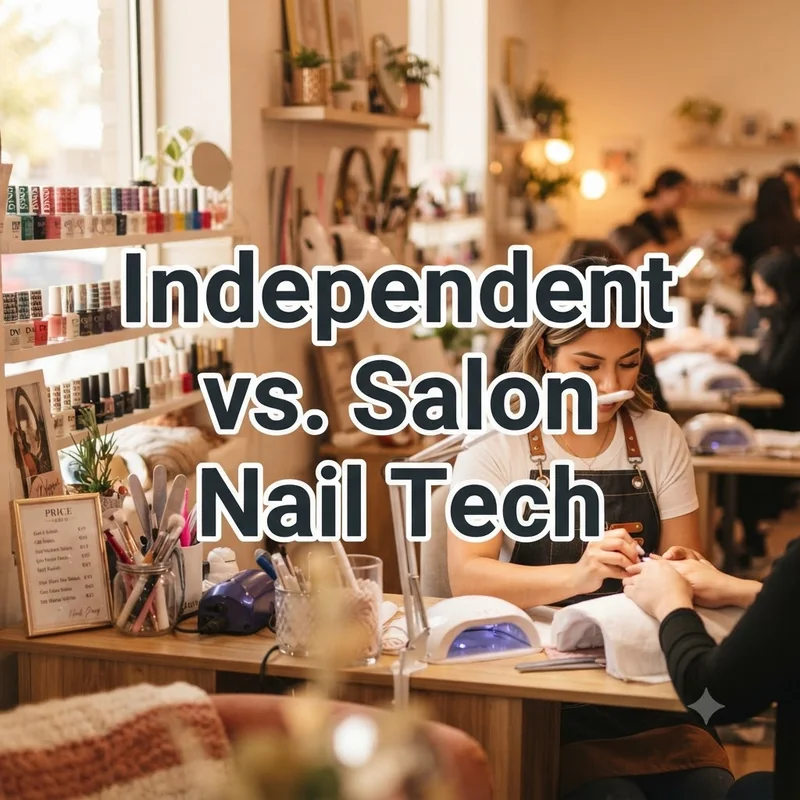
If your specific area does feel saturated, that is a location problem, not a career problem, and it has a practical fix. Going mobile or building an independent nail tech vs working in a salon client base lets you sidestep local salon competition entirely by bringing the service to clients rather than waiting for them to choose your chair over the one next door.