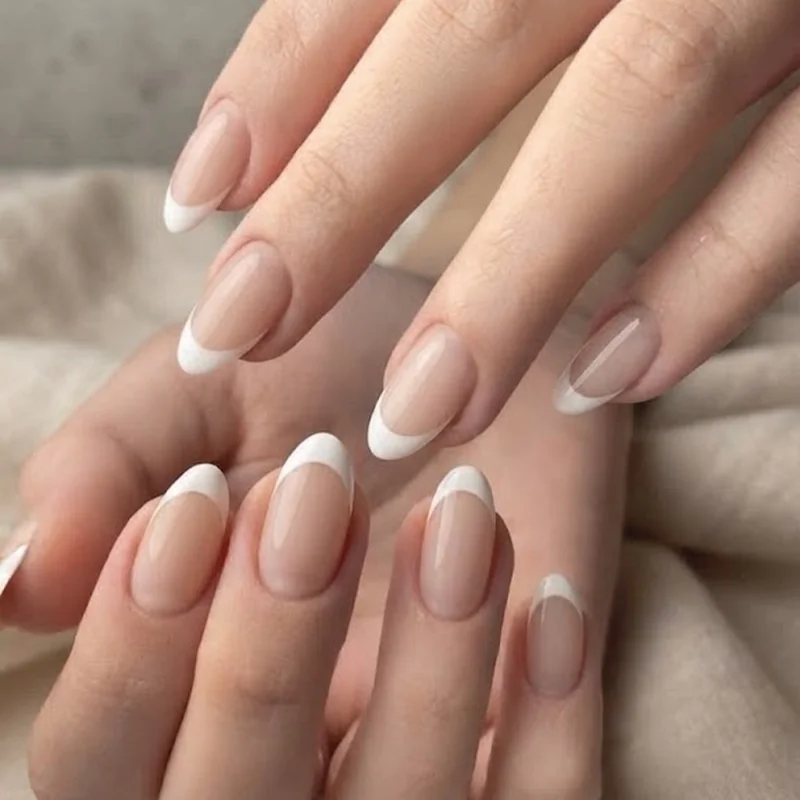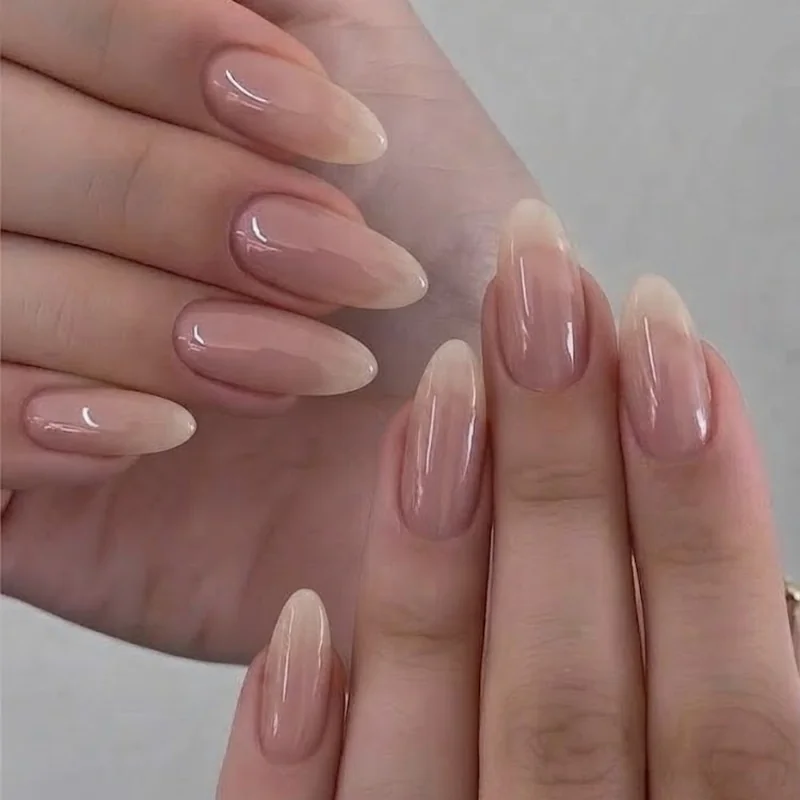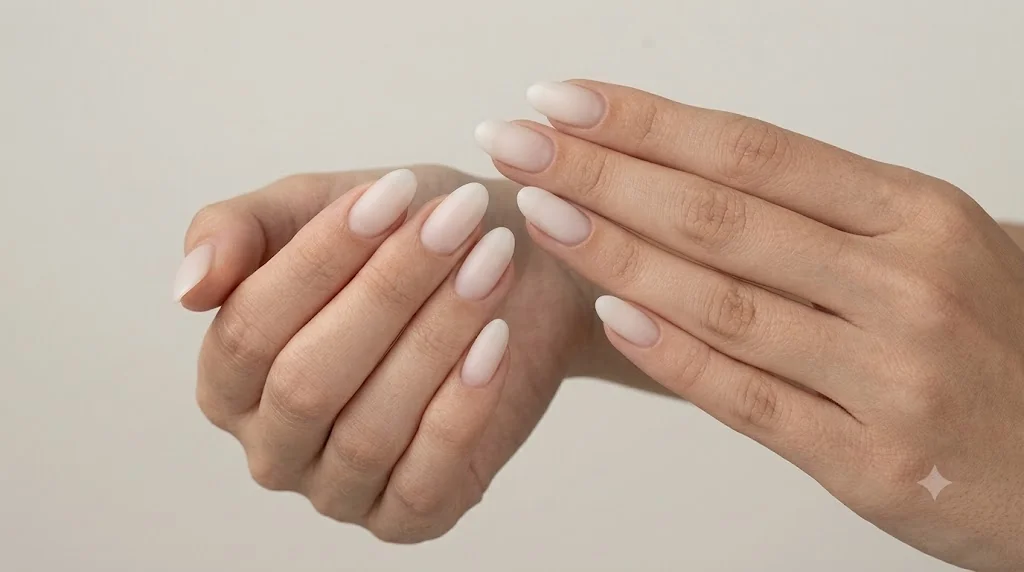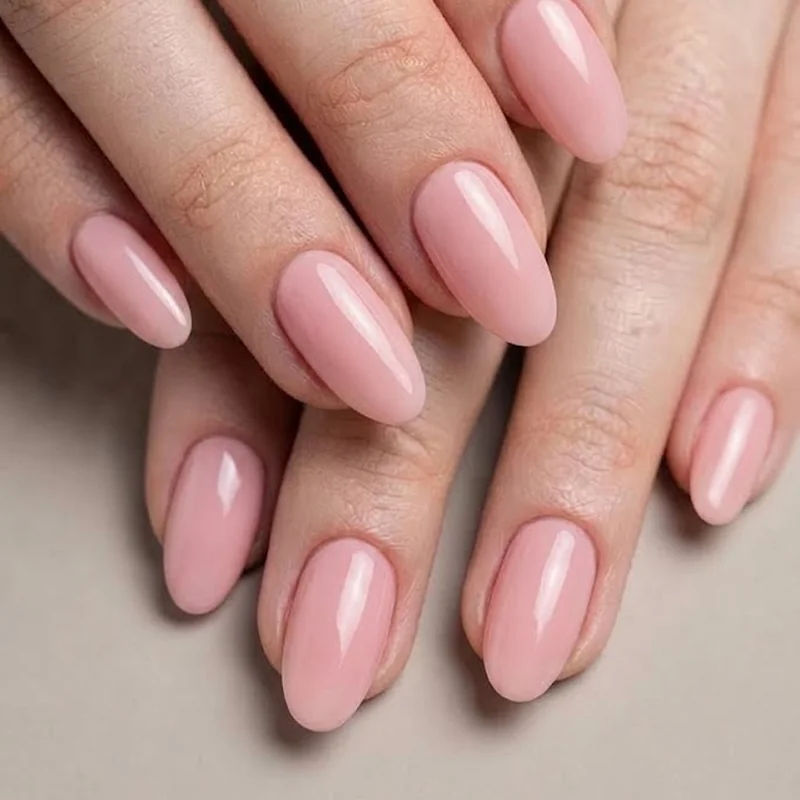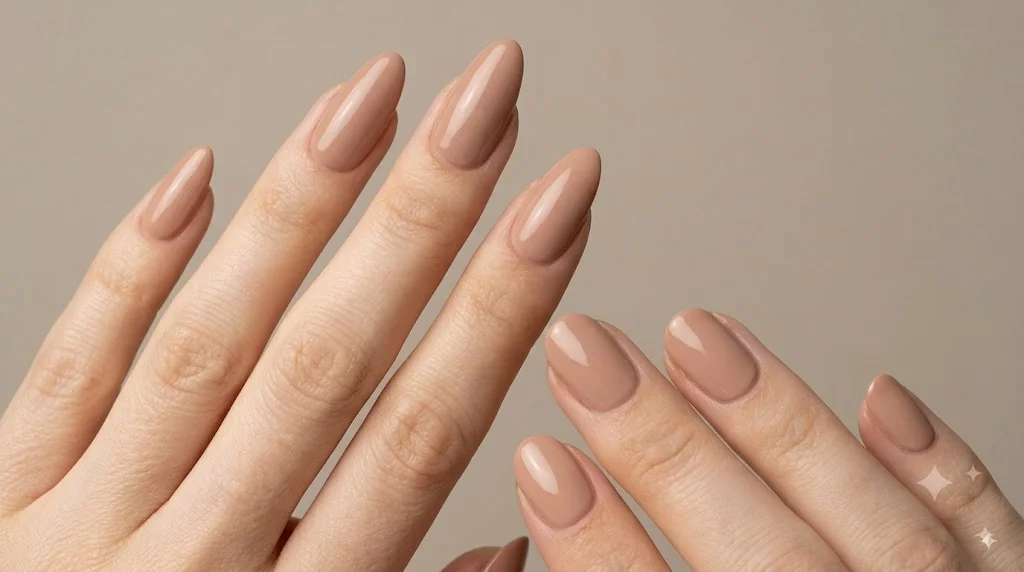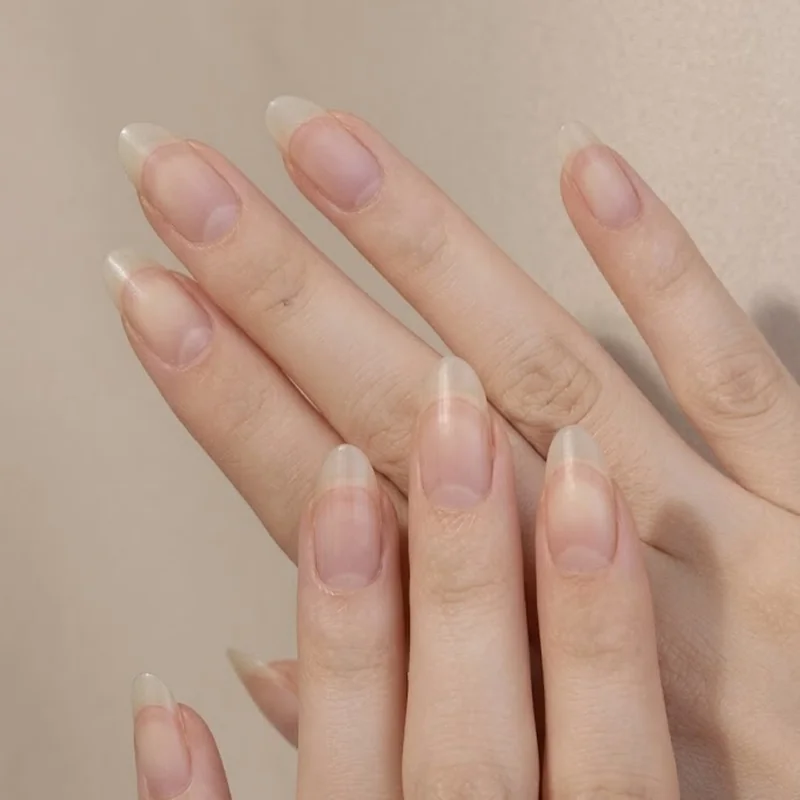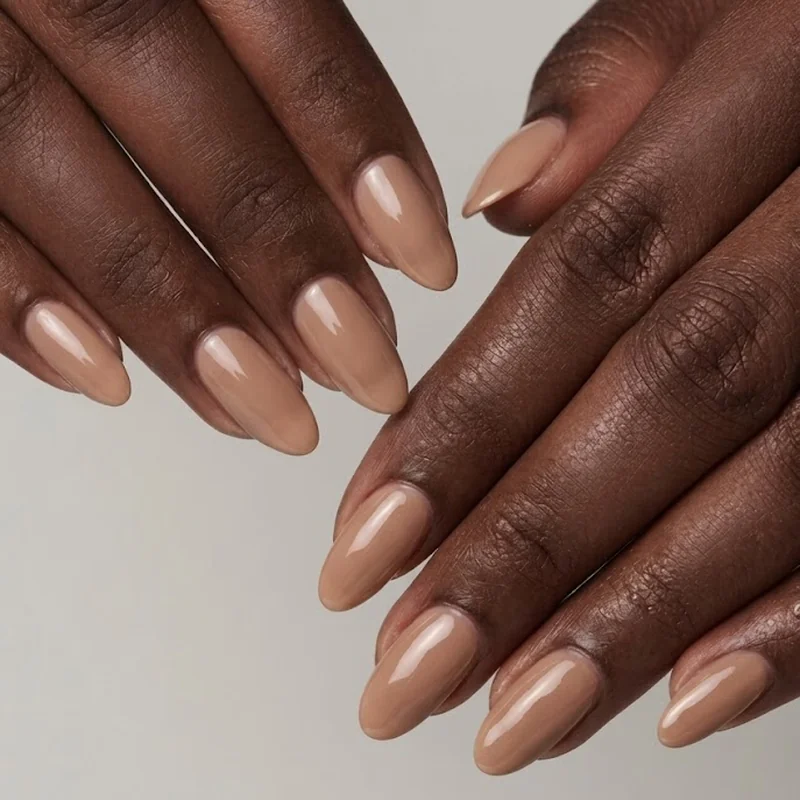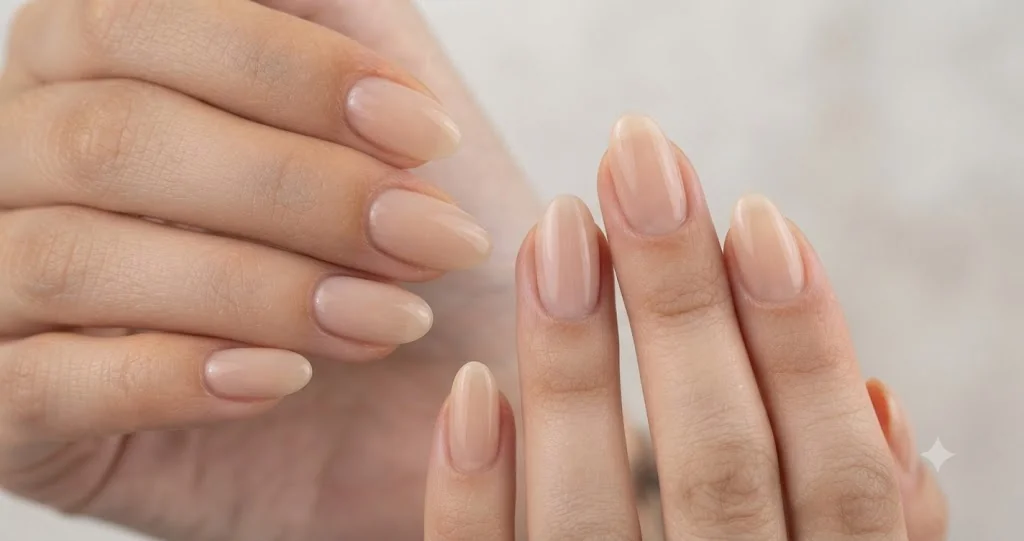
Oval nails are the shape you get when you round off every corner of a square tip and gently taper the sides, landing somewhere between a soft round and a pointed almond. If you have been staring at nail shape names trying to figure out which one actually describes what you picture in your head, that confusion ends here. This guide to oval nails will walk through exactly what the shape is, how it compares to round, almond, and squoval, who it flatters, and what it looks like in 2026's best designs, so you can decide with confidence instead of guessing.
Most people land on this question after scrolling past a dozen manicure photos and realizing the shape names all sound interchangeable. Curved. Tapered. Rounded. They are not the same thing, and getting them mixed up is the fastest way to ask your nail tech for one shape and walk out with another. This guide sorts the terminology, gives you an honest look at the trade-offs, and shows real styling so the decision feels less like homework and more like picking something you will actually love wearing.
What Are Oval Nails?
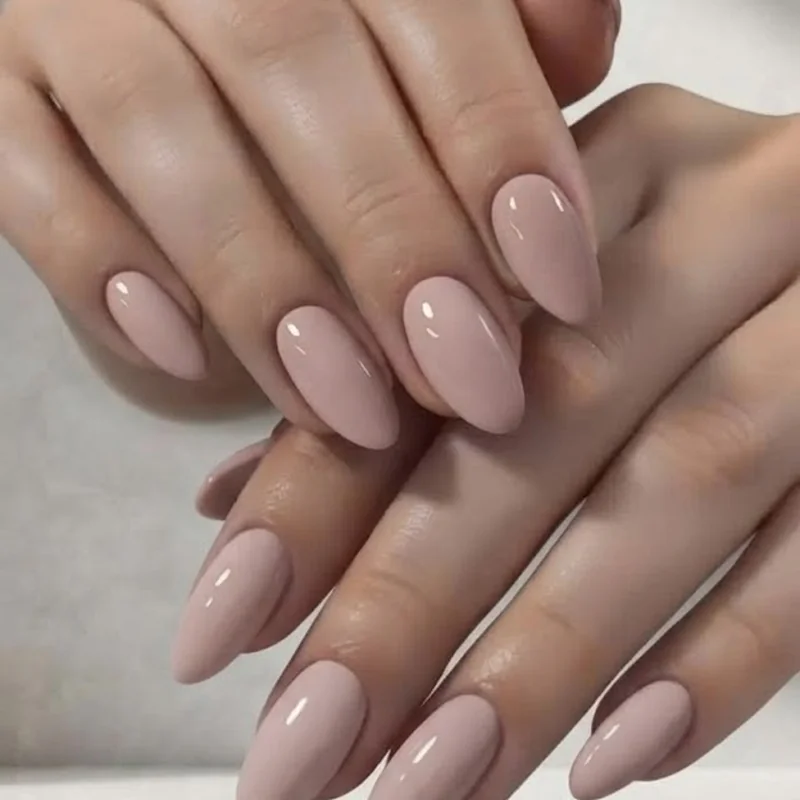
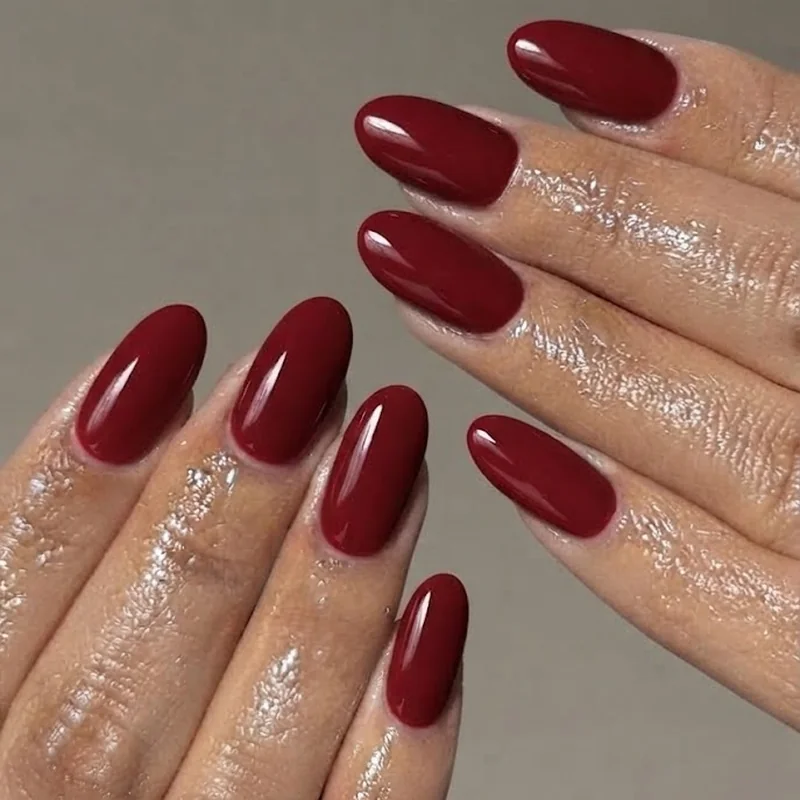
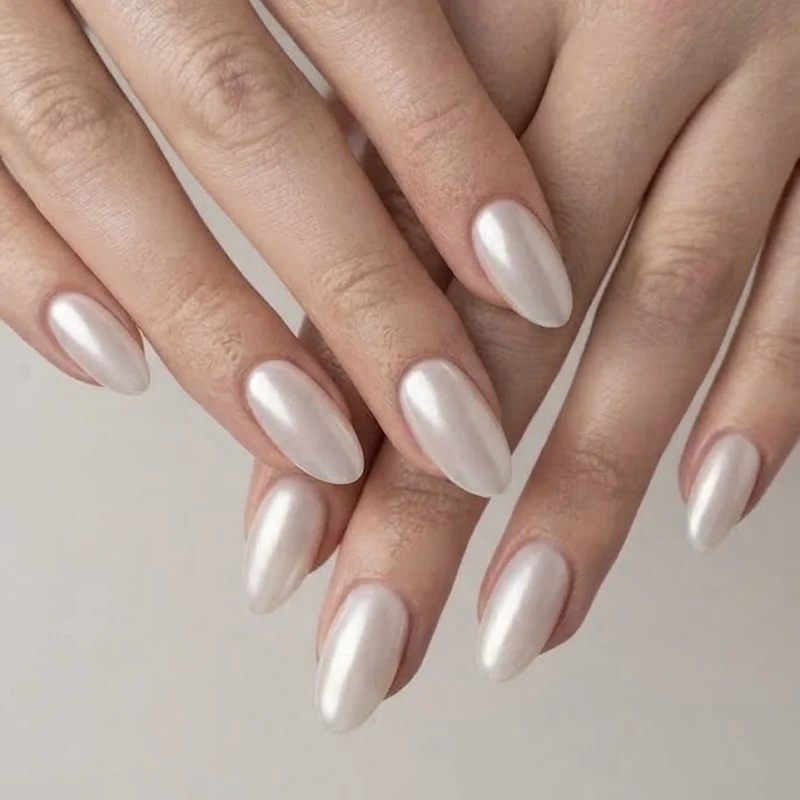
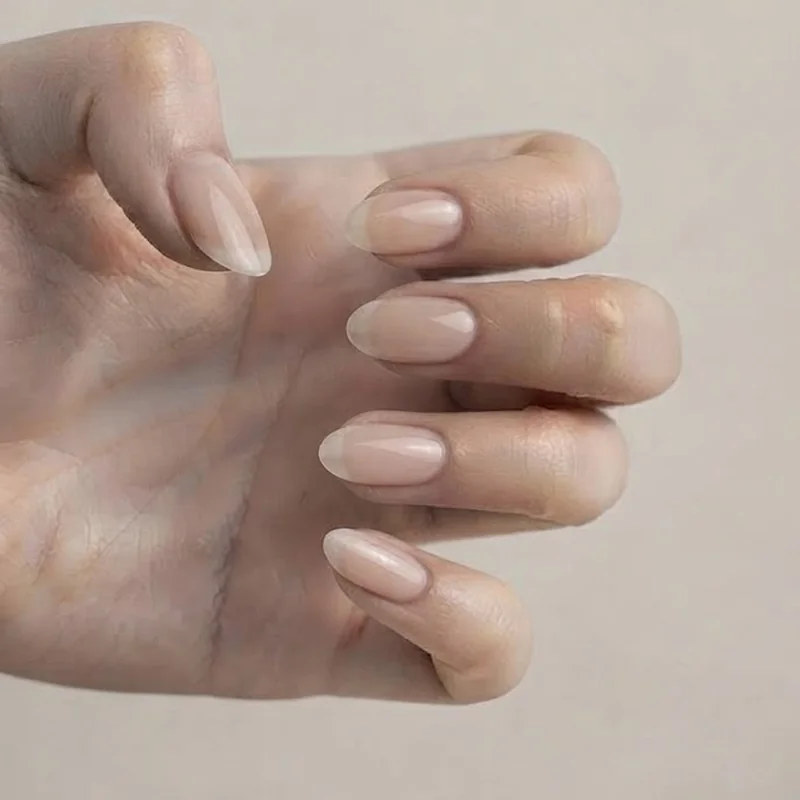
The oval nail shape is a nail filed with a fully rounded tip and sides that taper gently inward from the cuticle to the free edge, with no flat edge or point anywhere along the top. Think of an egg standing on its end, or a round nail that has been stretched slightly. That single visual is the fastest way to hold the shape in your head.
An oval nail shape is defined by its continuous curve. Unlike round nails, which stay wide and rounded along their entire length, oval nails narrow as they extend, which is what creates the elongating effect. The curve starts at the sidewall and sweeps smoothly to the center of the free edge, with no straight sections and no corners at any point.
This is a shape that reads as put-together at almost any length. Short oval looks tidy and low-key. Medium oval, generally the sweet spot for showing off the taper, reads polished without trying too hard. It is also one of the more forgiving shapes to file, since there are no sharp angles to keep symmetrical between hands.
Oval vs. Round, Almond, and Squoval: How to Tell Them Apart
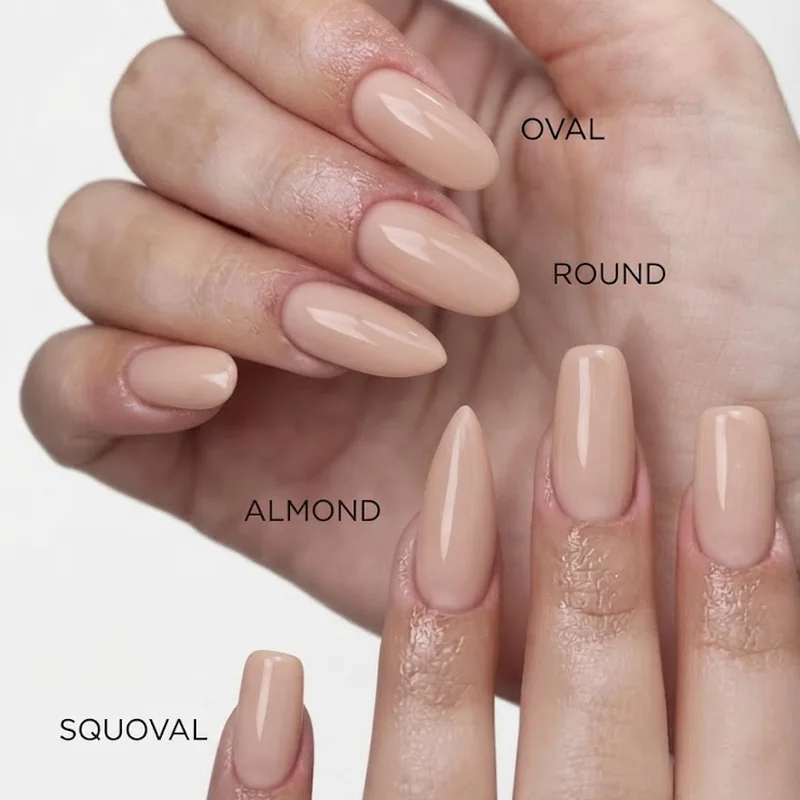
Nail shape names get thrown around like they are interchangeable, and they are not. Here is where oval nails sit on the spectrum, and how to tell the four most confused shapes apart at a glance.
The difference between oval and round nails comes down to taper. Round nails stay wide from base to tip and simply curve at the very end, mirroring the natural shape of the nail bed. Oval nails narrow gradually along the entire length before rounding off, which makes the finger look longer. Round is the shape you get if you barely file the sides at all. Oval takes deliberate shaping.
Place them side by side and round looks compact, almost circular at the tip. Oval looks stretched, with the narrowing doing most of the visual work. If your nail tech says "we'll just round the corners," that is round, not oval.

The difference between oval and almond nails is degree, not category. Almond takes the same tapering principle and pushes it further, narrowing the sides more aggressively until the tip comes closer to a point rather than a full curve. oval vs round nails comparison covers this side of the spectrum in more depth if round is the shape you are actually torn between.
Squoval sits at the opposite end from almond. A squoval is a square nail with just the two top corners softened, so the free edge stays mostly flat with rounded edges rather than curving continuously like oval does. If you can draw a straight line across the top of the nail and it is mostly flat with soft corners, that is squoval. If the entire top is one continuous curve, that is oval.
Lined up together on the spectrum, it runs round, then oval, then almond, then stiletto, with each shape narrowing and lengthening the taper a little more than the last. Squoval branches off separately, closer to square than to any of the tapered shapes.