The Dark Academia Winter Color Palette
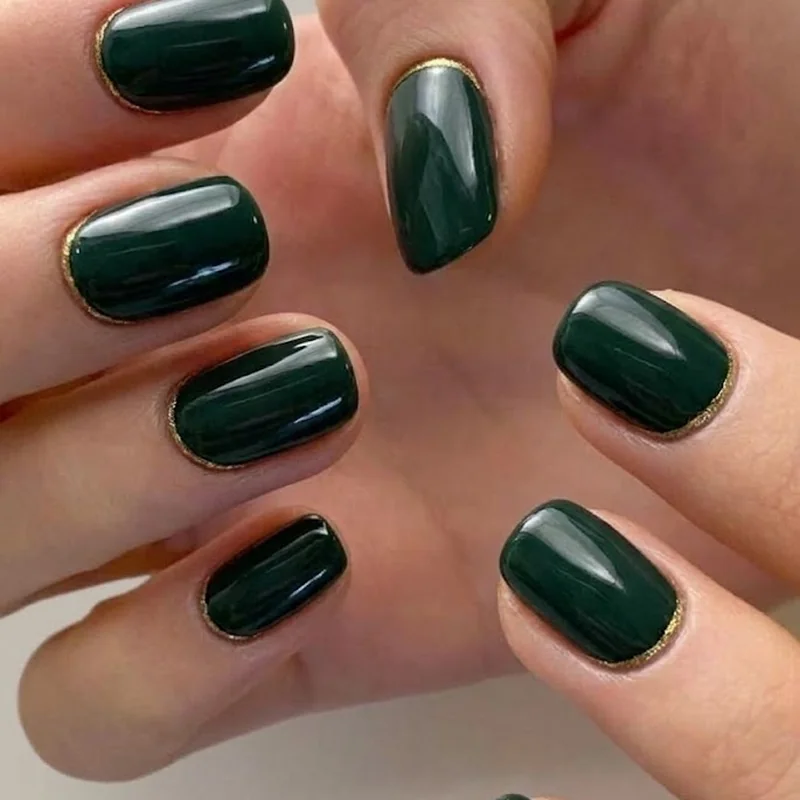
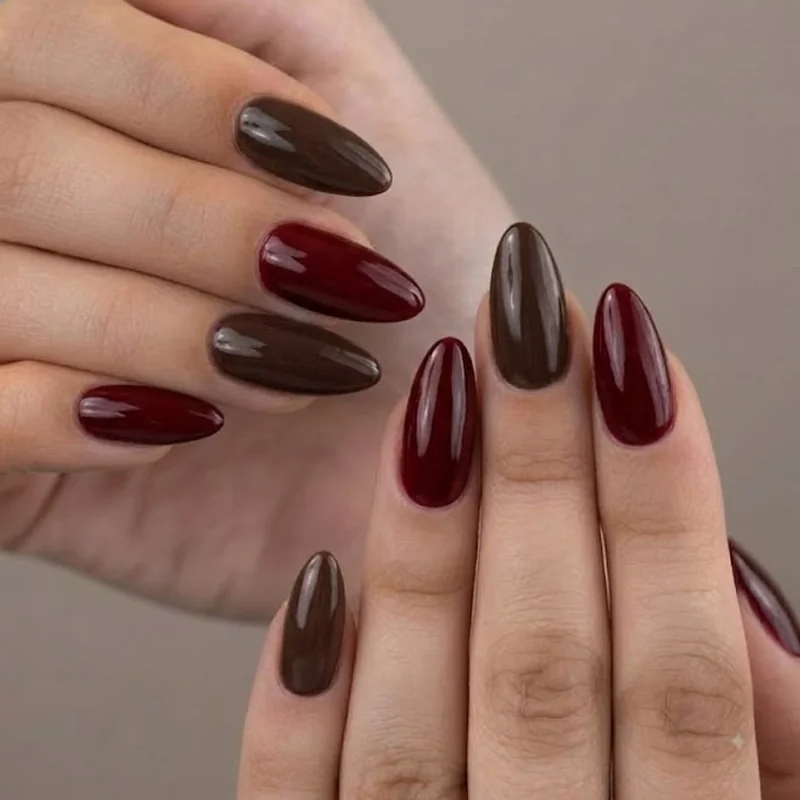
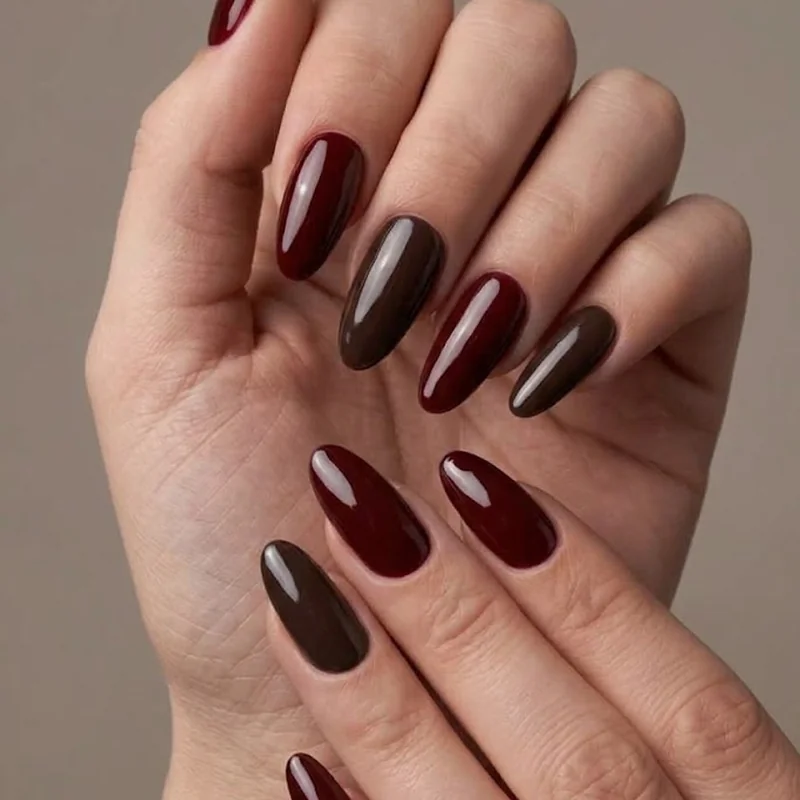
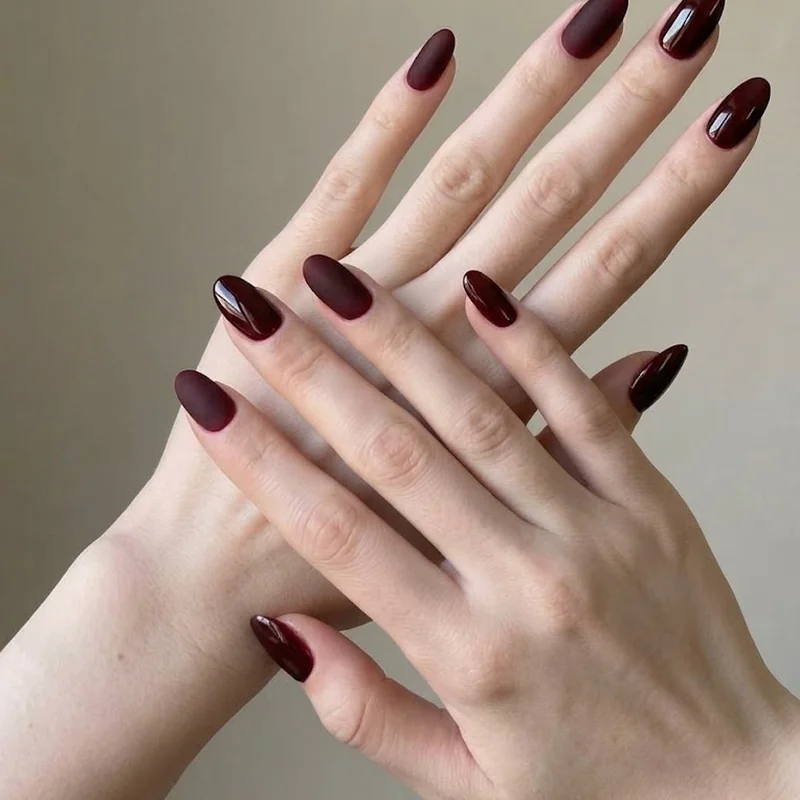
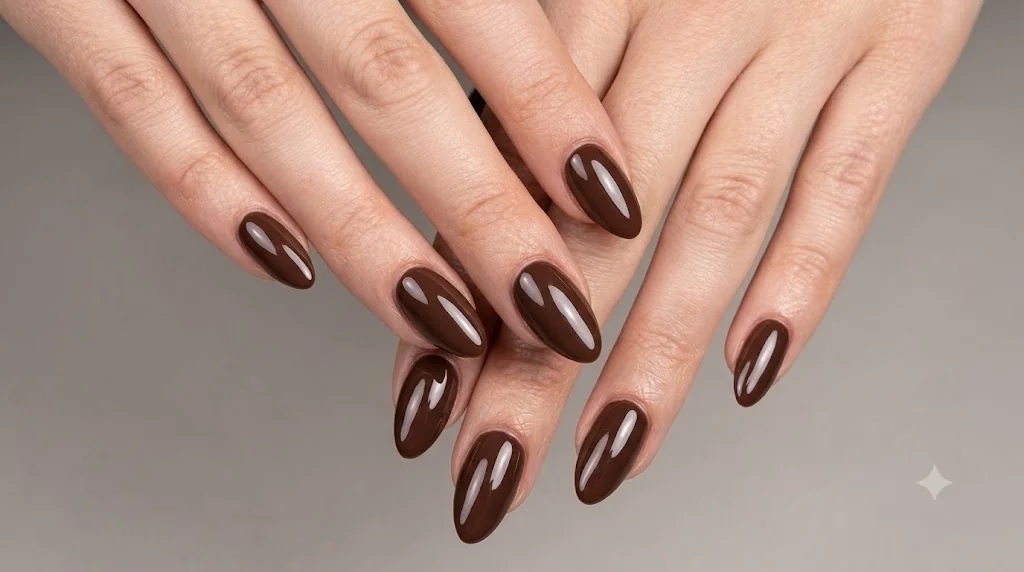
What colors are dark academia nails? The core palette running through dark academia nails winter looks is oxblood, espresso brown, forest green, deep burgundy, and cherry mocha, occasionally accented with gold foil or ivory for contrast. These are the shades that show up across tweed jackets, leather book covers, and brass hardware, which is exactly why they translate so cleanly into a manicure.
Picture the scene this whole aesthetic is built around: worn leather armchairs, a single candle burning low, ink pooling at the tip of a fountain pen. Every color in this palette has a material reference point, and that is what keeps the choices feeling deliberate instead of arbitrary for a dark academia nails winter set. Oxblood is the color of an old library chair. Espresso is the color of a book spine that has seen decades of handling. Forest green is the color of a reading lamp's shade.
Cherry mocha nail polish belongs to the same warm-brown-red family as oxblood and espresso, sitting closer to a deep reddish-brown than a true burgundy. It has become one of the standout winter-specific picks within this palette because it carries more warmth than a flat red, which keeps it from tipping into holiday-red territory. A gel couture formula in cherry mocha holds its richness under both matte and glossy top coats, which matters if you are choosing between finishes later.
Forest green earns its place here too, and it is the color most often skipped by generic "dark nail" roundups. It reads as academic rather than goth when paired with a warm brown or oxblood accent nail, the kind of green found on an old hardcover rather than a Christmas tree.
For anyone drawn to the browner end of this palette specifically, chocolate brown winter nail ideas go deeper into espresso, mocha, and latte-adjacent shades on their own, useful if espresso brown is the direction you want to build a full set around rather than pairing it as an accent.
Gold foil and ivory show up sparingly, usually as a single accent nail or a fine detail line rather than a base color. Too much gold tips the look toward glam instead of academic. A little goes further than it sounds like it should.
Tortoiseshell and Marbled Nail Looks
How do you create tortoiseshell nails at home? Start with a warm amber or honey base coat, then use a fine detail brush to add irregular blotches and streaks of dark brown and black, working in small clusters rather than even stripes. Once the pattern is dry, a glossy top coat seals it and gives the mottled effect the depth of real shell.
The tortoiseshell nail technique is a mottled, layered application of amber, honey, and dark brown polish designed to mimic the natural pattern of tortoiseshell material, most commonly seen on vintage eyewear and furniture inlay. It is the single most requested pattern within dark academia nails winter looks, and for good reason: no other technique carries the "old library" reference point as literally.
The pattern lives or dies on irregularity. Even, symmetrical blotches read as a print rather than a texture, so the brush strokes should vary in size and never repeat in a predictable rhythm. Working wet-on-wet, adding the darker tones before the amber base fully sets, blends the edges just enough to avoid harsh lines while still keeping distinct color zones visible.
Marbled swirl nail art works from a similar logic but trades tortoiseshell's warm amber base for a cooler mix, often two dark tones like espresso and black, or oxblood and burgundy, swirled together using a marbling tool or thin brush dragged through wet polish. The result reads more abstract and less literal than tortoiseshell, closer to ink dropped in water than a material reference.
Both techniques photograph best on an accent nail rather than a full set. One tortoiseshell nail against four solid oxblood or espresso nails lets the pattern read as a deliberate detail instead of overwhelming the whole hand, and it is considerably more forgiving for a first attempt.
Plaid, Houndstooth, and Preppy Patterns
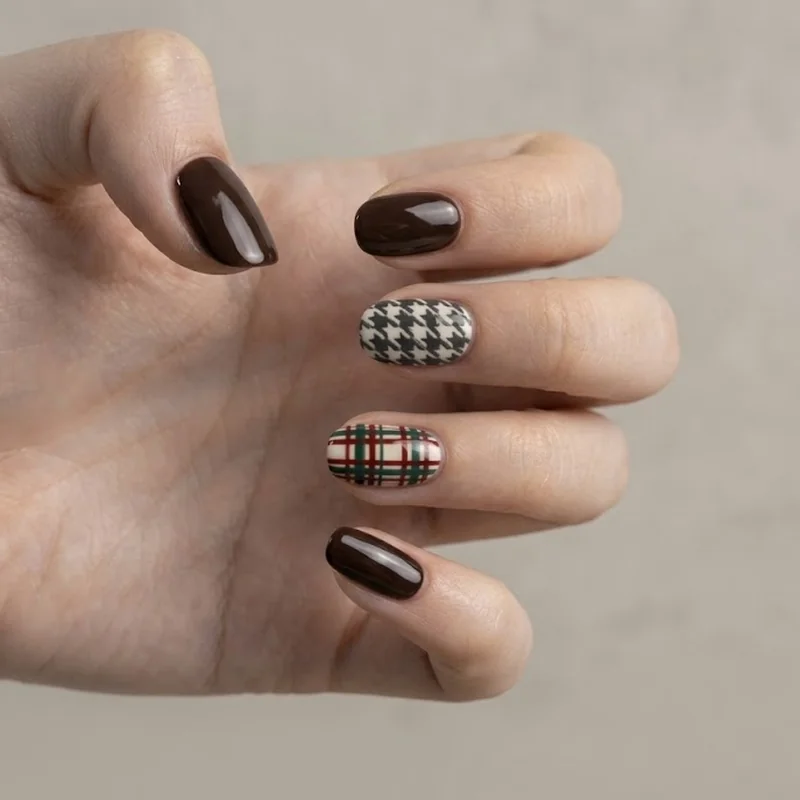
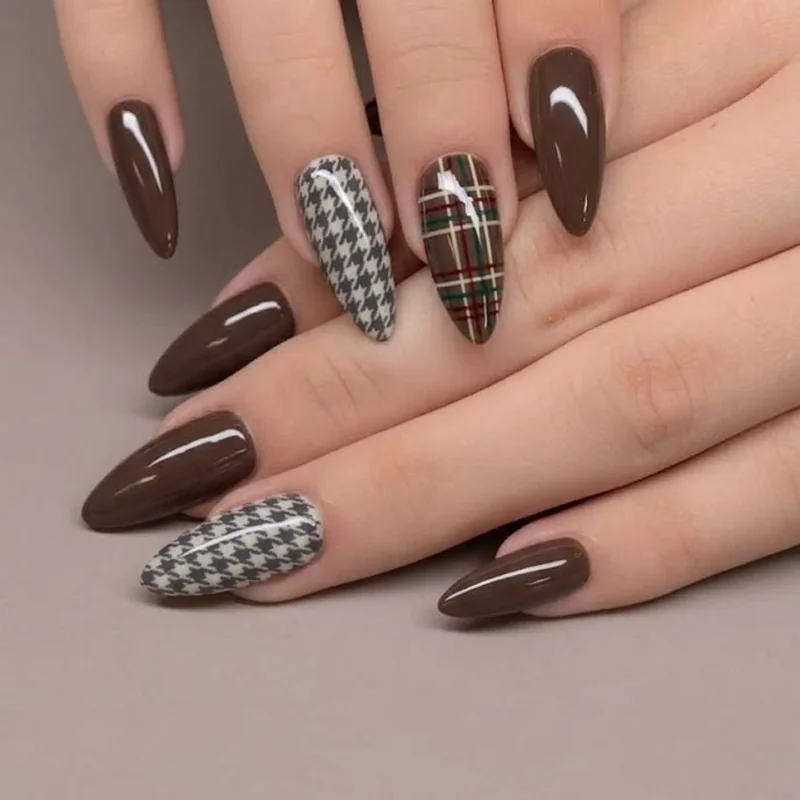
Plaid and houndstooth carry the prep school half of dark academia's "boarding school meets goth" identity, and they read as the most instantly recognizable pattern choice within the aesthetic. Where tortoiseshell references the library, plaid references the uniform, and pairing the two across a single set is a common way to hit both notes at once.
How do you do plaid nail art? It is a fair question, since most existing content only shows the finished look. Start with a solid base coat in your core shade, oxblood or forest green work well, let it cure fully, then use a fine detail brush or thin striping tape to add horizontal lines in a second color, followed by vertical lines in a third. The lines go on last and sit on top of the cured base, which keeps them crisp instead of bleeding into the color underneath.
Houndstooth is more advanced but has become popular for a reason: it is instantly recognizable even in miniature, which makes it read clearly on a single accent nail from across a room. The pattern uses small, jagged four-pointed shapes alternating between two colors, typically a dark base with a lighter contrast, and is easiest to attempt with a nail art stamping plate rather than freehand for a first try.
Neither pattern needs to appear on every nail. A full set of plaid can look busy fast, so the most common and most wearable approach uses one or two accent nails in plaid or houndstooth against a set of solid oxblood, espresso, or forest green. This is also the version most nail techs can execute quickly if you are requesting it rather than doing it yourself.
Both patterns pull directly from tweed and flannel, the actual fabrics associated with the aesthetic's academic wardrobe references, which is part of why plaid and houndstooth read as immediately legible dark academia nails winter details even to someone glancing at your hands for two seconds.
Celestial and Literary Nail Art Details
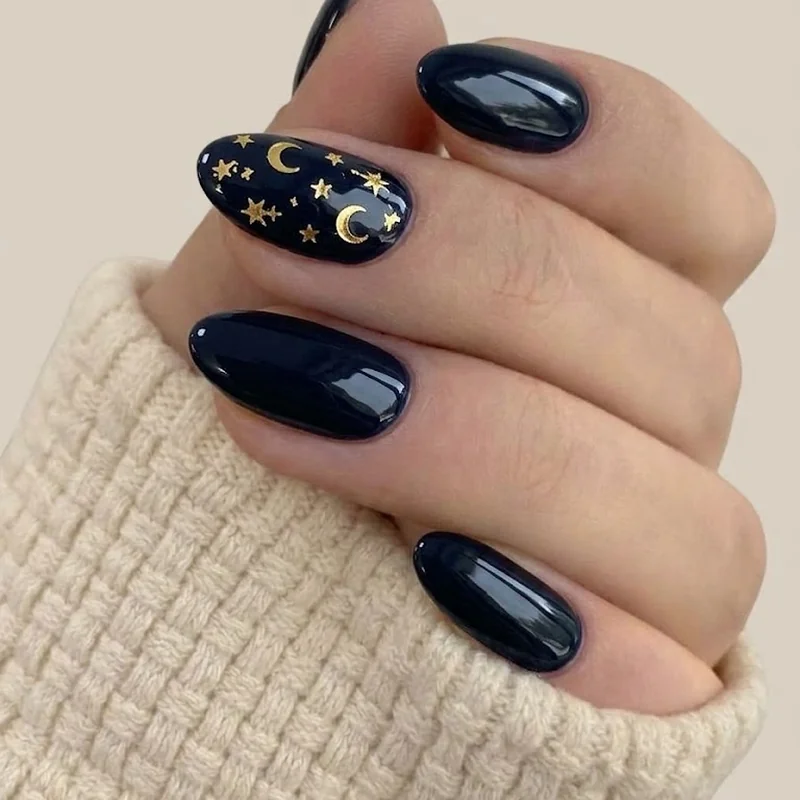
You would expect a dark academia nails winter set to stay entirely earth-toned, all brown and burgundy and forest green. It also makes room for celestial detail, thin gold constellations, tiny crescent moons, a scattering of stars across a single accent nail, and that inclusion is not a contradiction.
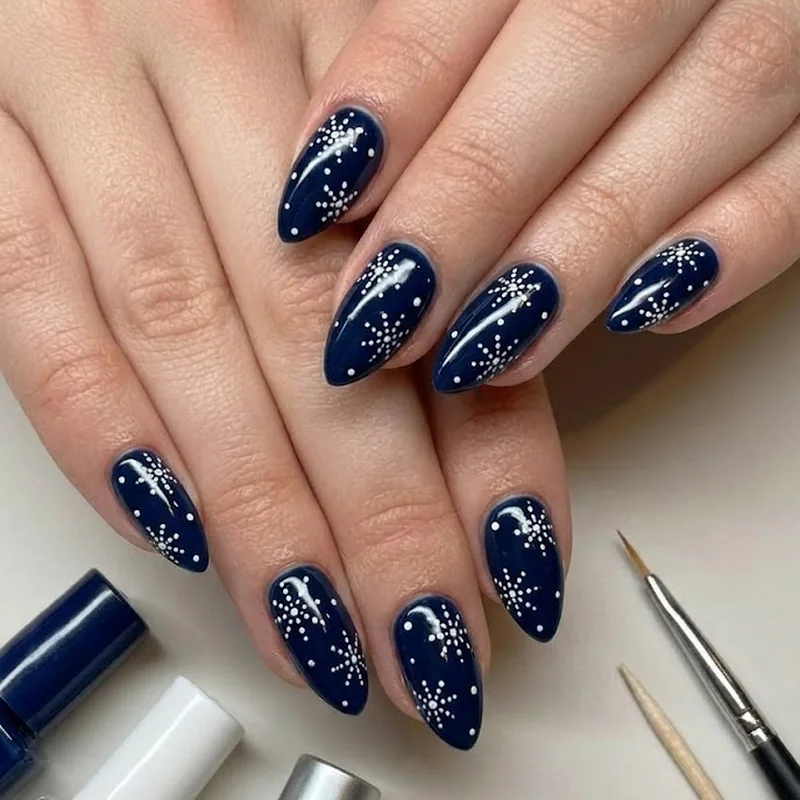
Celestial motifs connect to the aesthetic's astronomy and mythology reference points, the star charts tucked into old textbooks, the moon phases sketched in margin notes. A single moon or a small cluster of stars, painted in fine gold or ivory line work against a dark base, adds detail without pulling the look away from its core palette.
Literary detail works the same way, in restraint rather than volume. A tiny painted feather, a fine line meant to suggest a fountain pen's ink trail, sits on one nail while the rest of the set stays solid. The goal is a hint, not an illustration. Overloading every nail with celestial or literary imagery tips the look toward novelty nail art rather than the understated identity statement this aesthetic is built on.
Gold foil flakes pressed into wet polish achieve a similar effect with less precision required than freehand line work, useful if a detail brush is not something you are confident with yet. Applied sparingly over an oxblood or espresso base, foil catches light the way candlelight catches a brass picture frame.