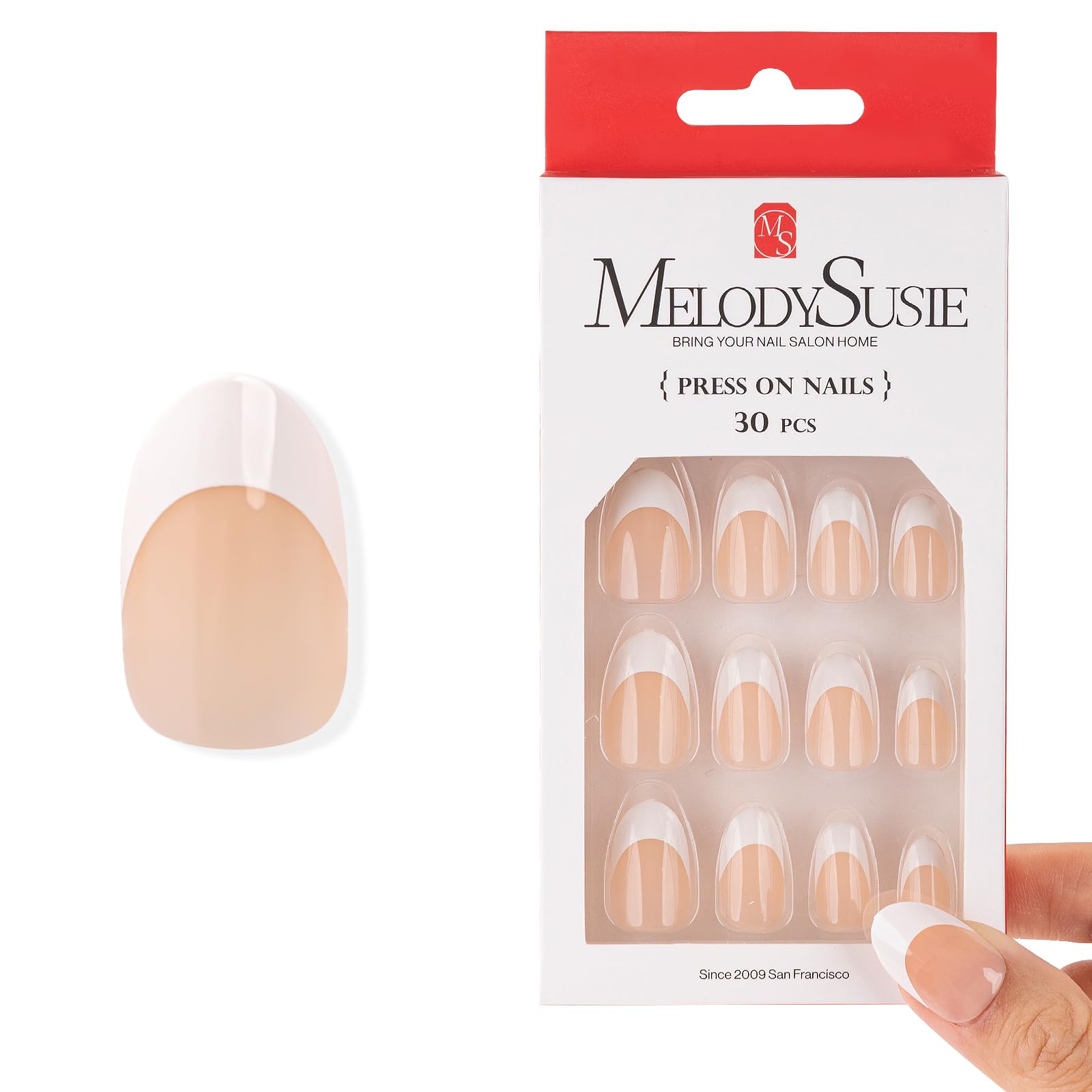
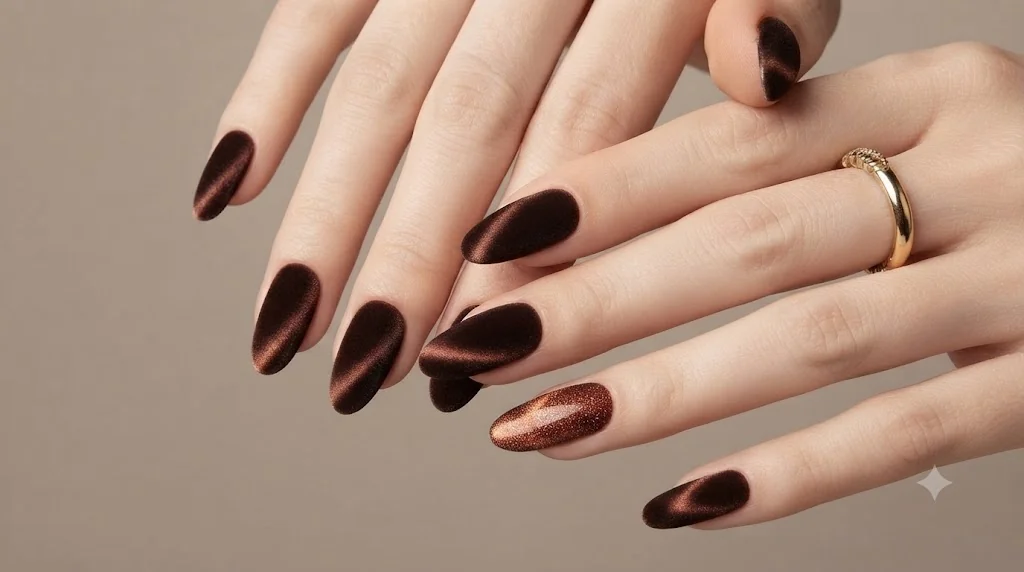
Non-toxic nails for moms means two things at once: polish free of formaldehyde, toluene, and dibutyl phthalate, and a shape short and rounded enough that it cannot scratch delicate newborn skin or break off into a baby's mouth. Every guide you've read so far probably covered the first half and stopped there. Non-toxic nails for moms is not just a chemistry question. It's also a physical one, and nobody's answering that part.
You want your hands to feel like yours again. Not a checklist of what to avoid, not another 10-free product roundup, just a real answer you can act on today. The gap is real: search for postpartum manicure safety and you'll find plenty about avoiding "the toxic three," and almost nothing about the fact that a sharp edge can scratch a newborn's paper-thin skin, or that a chipped nail can end up in a mouth during a feed. This post covers both. What's in the bottle, and what happens when that bottle meets a baby.
What Makes a Nail Polish Actually Non-Toxic (And What to Avoid)
A genuinely non-toxic polish excludes formaldehyde, toluene, and dibutyl phthalate, the three ingredients most consistently flagged for reproductive and respiratory concerns. These are the "toxic three," and their absence is what most X-free labeling is actually measuring.
5-free and 7-free aren't marketing fluff. 5-free means a polish skips formaldehyde, formaldehyde resin, toluene, dibutyl phthalate, and camphor. 7-free adds xylene and ethyl tosylamide to that list. The number tells you exactly which chemicals were engineered out, nothing more, nothing vague.
Formaldehyde is a hardening agent that's also a known irritant and suspected carcinogen at high, repeated exposure. Toluene keeps polish smooth on application but has been linked to headaches and, at industrial exposure levels, nervous system effects. DBP was once standard for flexibility and chip resistance, phased out across most major brands after research tied it to hormone disruption. None of these show up in trace amounts on your skin at a level that's been proven dangerous to a nursing infant, but avoiding them is a low-effort, zero-downside choice, and it's the one thing every top-ranking guide gets right.
Check the label for the exact free-count, not just the word "natural." Brands vary wildly in what "clean" means to their marketing team, and the free-count is the only claim that actually tells you what's excluded. This is the ingredient half of non-toxic nails for moms, the half every competitor covers well.

Is It Safe to Get Your Nails Done While Breastfeeding?
Yes. Standard nail polish application while breastfeeding is considered safe by the same logic that applies during pregnancy: the amount absorbed through skin or inhaled during a manicure is small, and choosing X-free formulas reduces that further. Nothing about lactation changes the chemical exposure math in a way that makes a manicure newly risky.
Here's what most sources miss: they treat pregnancy-safe and breastfeeding-safe as interchangeable, then only ever talk about pregnancy. They're closely related but not identical questions, and if you're months postpartum and still nursing, you deserve an answer written for your actual stage, not a leftover paragraph tacked onto a prenatal guide. Non-toxic nails for moms has to cover both stages, not just the one that gets the most search volume.
The practical guidance stays consistent. Choose 5-free or 7-free polish. Work in a ventilated space, whether that's a salon with good airflow or your own kitchen table with a window open. Skip acetone-heavy removers where you can, since they're drying more than dangerous, but repeated exposure adds up on hands that are already washing constantly. None of this requires pausing nursing or pumping and dumping. That precaution belongs to substances that actually transfer into milk in meaningful amounts, and polish worn on the outside of a nail isn't one of them.