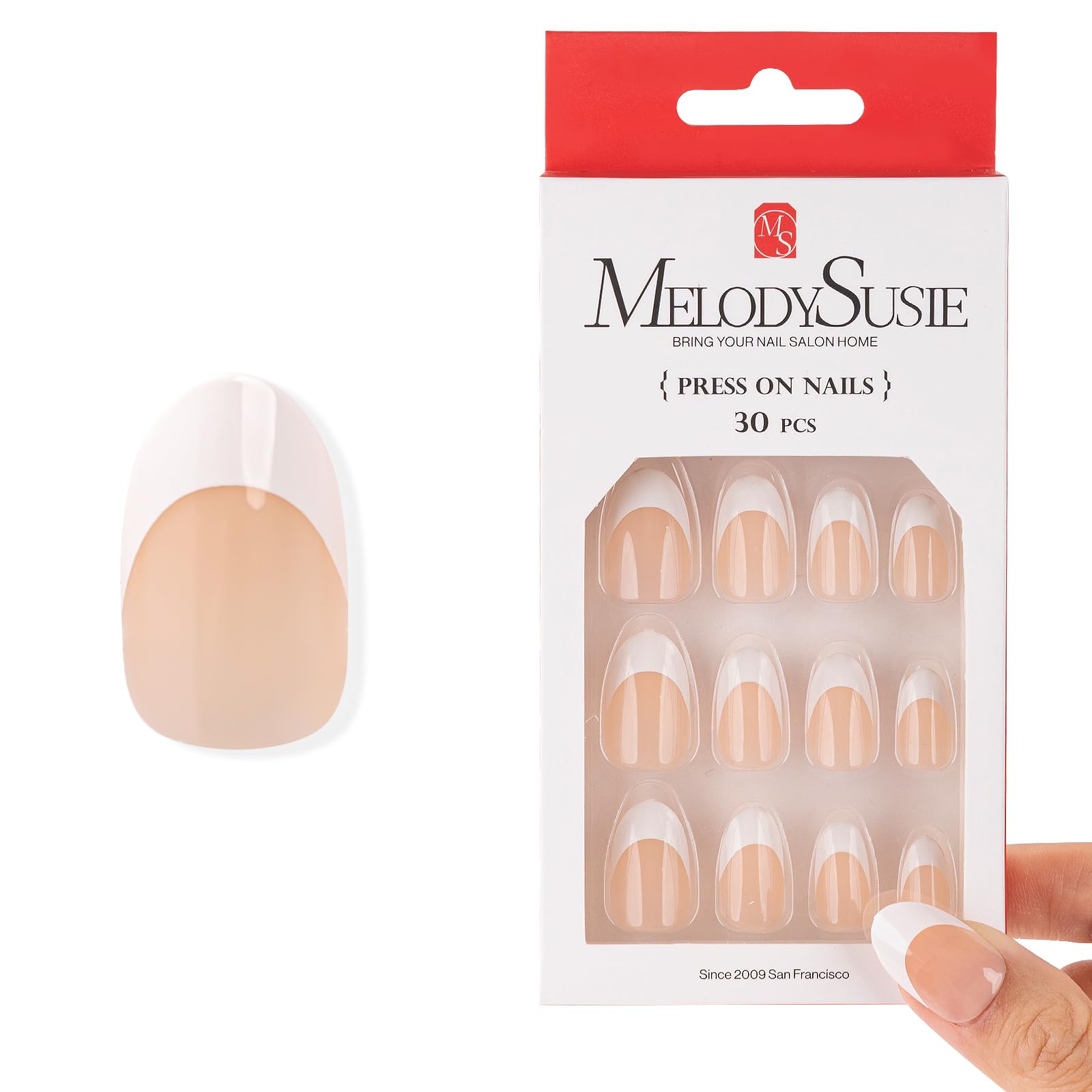
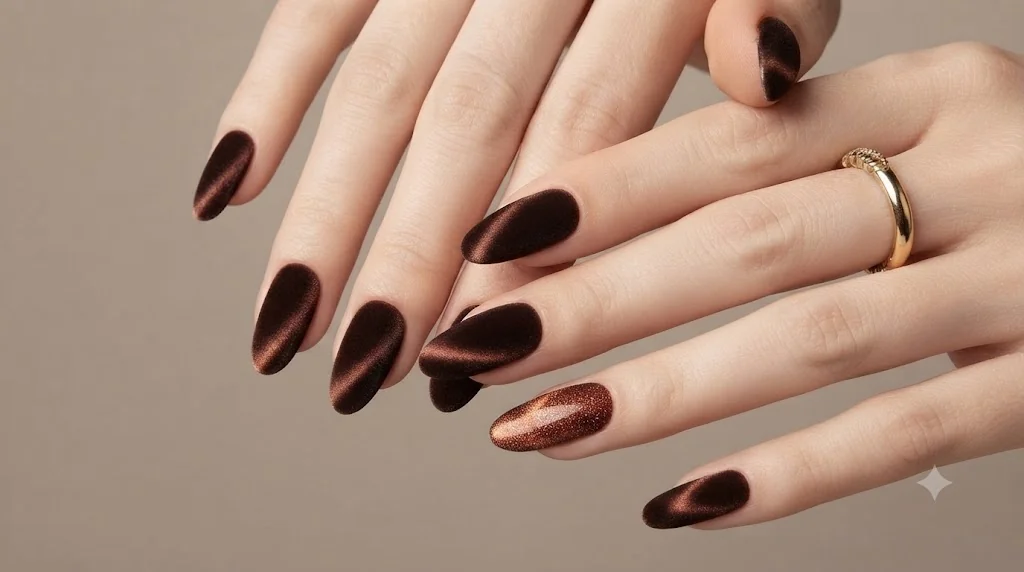
You feel it before you see the typo. A nail catches the edge of a keycap, the finger skids half a millimeter off home row, and what should have been "the" comes out "rhe." The best nail shape for typing is short almond or squoval kept to 3-5mm past the fingertip, because both give you a flat, forgiving contact surface where the nail meets the key. It's not about giving up length or shape entirely, it's about picking the geometry that survives an eight-hour typing day. The best nail shape for typing question isn't really a style question. It's a physics question, and once you understand why some shapes fail at the keyboard and others don't, the fix stops feeling like a compromise.
This isn't a lecture to cut your nails down to nothing. You didn't book a fresh set of acrylics to spend the next three weeks typing like you're wearing oven mitts, and nobody's asking you to. The fix here is mechanical, not aesthetic: the right shape, the right length, and a small adjustment to how your fingers actually hit the keys. Get those three right and the clacking, the snagging, the mid-sentence typos, they stop being a daily tax on your work. What follows is the actual breakdown, ranked shape by shape, with the length rule and the technique fix that make the rest of it stick.
Why Nail Shape Actually Affects How You Type
Yes, nail shape changes typing speed, and the reason comes down to contact geometry: the angle and surface area where your nail tip meets the keycap the instant before your finger pad lands. A pointed or heavily tapered shape makes contact almost like a pin, concentrating force on a tiny area and increasing the odds it catches an edge instead of gliding onto the key. A flatter, broader tip spreads that same contact over more surface, which means less catching and less deflection off the intended key.
Think about what actually happens in the half-second of a keystroke. Your finger comes down, the pad wants to land flat on the key, but if there's several millimeters of nail extending past that pad, the nail arrives first. Where it lands, and how much of it touches down at once, decides whether the stroke registers cleanly or skids sideways into the next key over. A squared or rounded tip touches down like a small paddle, distributing the impact. A pointed tip touches down like a needle finding a crack, concentrating it into a single point with nowhere forgiving to go. That's the entire mechanism, and it's why some shapes stay typing-friendly at almost any reasonable length while others fail even at moderate length. Nail contact geometry isn't a cosmetic detail, it's the physical variable behind every "this shape types better than that one" claim you've seen.