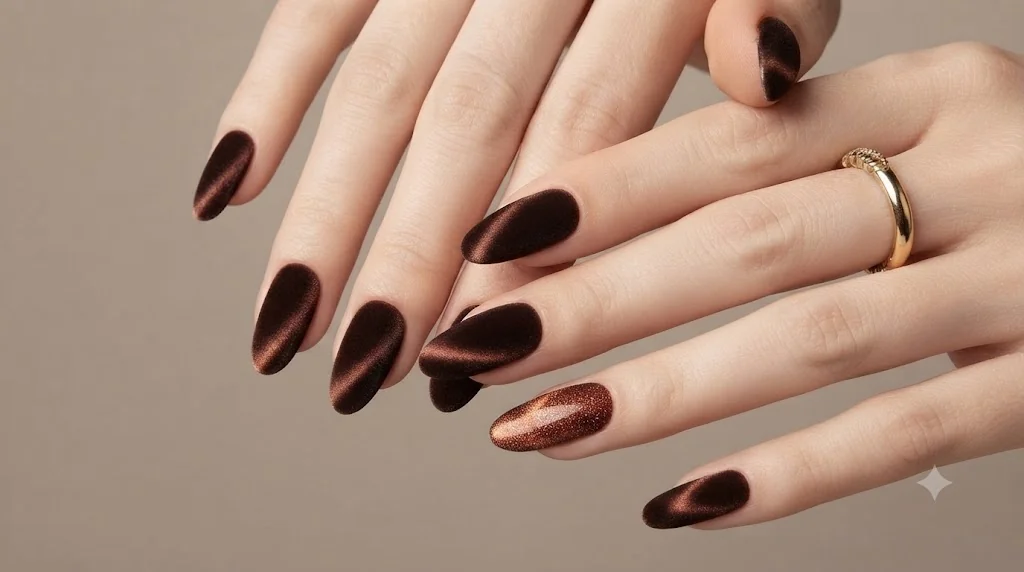
Japanese 3D nail art is not one look. It is an entire category of dimensional nail design with at least six distinct styles sitting inside it and the difference between a hand-sculpted gel rose and a kira-kira rhinestone cluster is roughly the difference between oil painting and jewellery. Both are japanese 3d nail art. Neither is interchangeable with the other.
That matters because most people searching for this style land on posts that either show them the most extreme sculptural sets imaginable (and quietly terrify them off the idea) or mix 3D designs into a general Japanese nail roundup that doesn't isolate what they're actually looking for. This post does neither. It maps the full spectrum from a single flower accent that works on short nails in an office, to full figurative sculptural sets that are genuine wearable art so you can arrive at your next appointment knowing exactly which direction is yours.

What Sets Japanese 3D Nail Art Apart From Everything Else?
Japanese 3D nail art is dimensional nail design in which sculpted or applied elements rise above the nail surface rather than sitting flat on it. It originated in Japanese nail salons, where gel technology allows technicians to hand-sculpt flowers, gems, and figurative shapes directly on the nail. The result is a finished set that has physical depth petals you can feel, crystals that catch light from an angle, bows with actual volume.
Most nail art, even detailed nail art, is two-dimensional. A hand-painted rose sits flat on the nail. A stamped geometric pattern lies flush with the surface. What separates the Japanese approach is that the design architecture exists in three dimensions: the flower actually projects upward, the rhinestone has genuine height, the bow casts a small shadow on the nail surface beneath it.
The gel technology is central to this. Western nail work has historically leaned on acrylic for dimensional elements, which produces a harder, thicker result with a distinct artificial smell and a more demanding removal process. Japanese gel particularly soft-formula gels applied from pots with fine brushes, and hard sculpting gels for 3D structural work allows for far more precision, gentler application, and designs that sit closely to the natural nail rather than extending far from it. As Nailpro's coverage of Japanese gel nail salons documents, the influence of this technique on the global salon industry has been substantial and continues to grow.
This is also why japanese 3d nail art sits in its own lane within the broader family of japanese nail art the gel foundation and the elevation of dimensional design as a craft discipline are specific to this tradition in a way that makes it genuinely distinct from other approaches to embellished nails.
Sculpted Gel Flowers: The Signature Japanese 3D Design
Sculpted gel flowers are not just a popular Japanese 3D design. They are the design category that defined the aesthetic as a global style the thing people picture when they first hear the phrase "japanese 3d nail art flowers," and the technique that separates skilled Japanese nail specialists from general gel technicians.
Japanese 3D nail art in the flower category is created using either sculpting hard gel, builder gel, or specialised Japanese products such as Nail Town Icing Gel a rubbery paste-like medium that holds its shape when hand-formed before curing. As Vogue SG documents in their editorial on Japanese nail art techniques, small pieces of this pliable material are shaped into petals, leaves, or three-dimensional forms and then cured under UV or LED light to lock them permanently.
Blooming gel is a separate but related technique worth knowing. Blooming gel is a slow-set Japanese gel formula that causes coloured gel art pigments to diffuse outward in soft, floral patterns when placed on the wet surface creating an organic, watercolour-like floral effect without hand-painting individual petals. The result is flat, not dimensional, but it frequently appears in Japanese flower nail sets alongside raised sculpted elements to add tonal depth to the base.

Cherry blossom is the single most requested flower in this style the full sakura nails edit covers every variation of that specific design in depth. Beyond cherry blossom, roses are the second pillar of the sculpted flower category, usually rendered in soft pastel shades blush, white, lavender, or barely-there peach with petals built up in layers and curled slightly at the tip to give them genuine dimensionality. Chrysanthemums are the third, particularly popular in more maximalist autumn-themed sets with a deeper jewel-toned palette.
The size of the sculpted element is one of the most important decisions in this category. Single-bloom accent nails one or two flowers on the ring finger, the rest of the set in a complementary milky gel sit close enough to the nail surface to be entirely wearable daily. Full-coverage petal sets, where flowers overlap across multiple nails, require more consideration for practical wear but photograph with extraordinary impact.