Sakura Nails for Weddings and Special Occasions
What version of sakura nail ideas fits a formal occasion? The wedding and event lane leans toward white, ivory, or pale blue blossoms with restrained metallic accents, trading the everyday pastel for something closer to a bridal palette while keeping the same negative-space structure.
A bride wanting florals without a literal floral print finds her answer here. White sakura petals on a sheer or ivory base echo the symbolism of the flower, which carries its own meaning around new beginnings and transience, without competing with a veil, jewellery, or a bouquet. For a formal event rather than a wedding, gold-accented sakura with a slightly heavier petal cluster reads as occasion-appropriate without tipping into costume territory.
The Japan-trip booking and the hanami-season appointment fall into a similar bracket. Readers searching "sakura nails for my Japan trip" tend to want something that feels considered rather than novelty-themed, which points toward the same restrained white or pale palette rather than the brighter, more saturated pink that suits an everyday spring refresh. Occasion, more than season, ends up being the better filter for choosing a direction here.
The 2026 Sakura Nail Techniques Setting Them Apart
The difference between a sakura nail and a great one usually isn't the colour, it's the technique underneath it. Three upgrades define the 2026 version: blooming gel for watercolour petal effects, cat-eye shimmer bases, and 3D sculpted gel petals on accent nails, each setting these designs apart from the flat-painted versions that dominated previous seasons.
Blooming gel is a slow-curing clear gel medium that lets coloured gel spread organically before it sets, creating the soft watercolour bleed that makes a petal look like it's actually dissolving into the base rather than sitting flat on top of it. A technician applies the clear gel, drops in colour, and times the cure to control how far the bloom spreads before locking it in place. The result is the misty, slightly out-of-focus petal edge that separates an elevated set from a basic hand-painted one. For the full step-by-step on the technique, the full spring floral nail design landscape including blooming gel and 3D sculpted flowers covers it in depth.
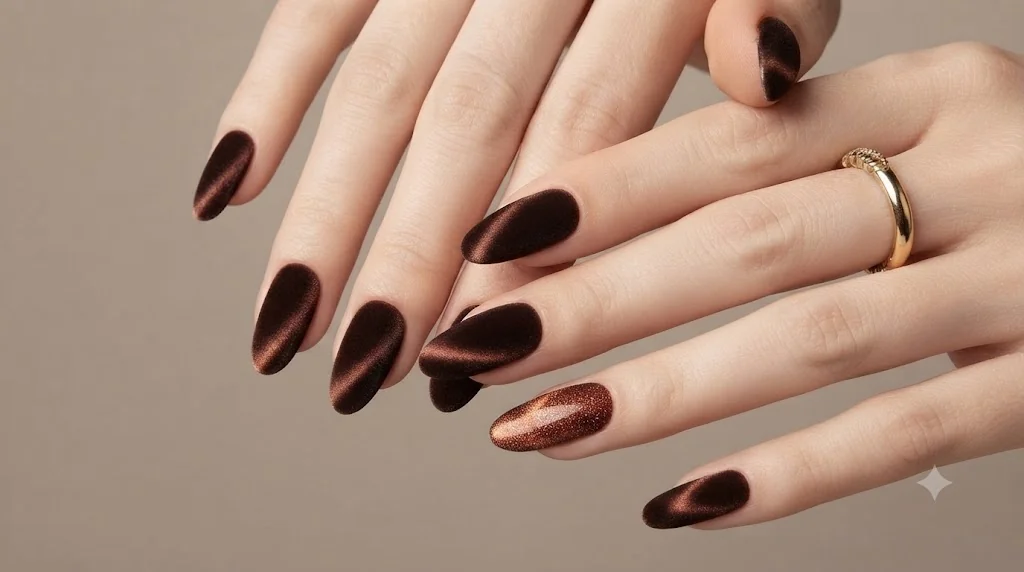
3D sculpted petals push the design into actual texture, with tiny raised gel blossoms built up on one or two accent nails rather than painted flat. It's a heavier commitment than blooming gel, but it photographs with genuine dimension. Anyone wanting to go further into sculptural work should look at japanese 3D nail art, which maps the full range of raised and gem-set techniques beyond just the floral motif. Cat-eye shimmer, meanwhile, swaps the flat sheer base for a magnetic polish that shifts under light, giving even a simple petal cluster a more expensive finish without adding any extra design work.
How to Tell Your Nail Tech Exactly What You Want
Showing up with a single generic Pinterest pin and hoping for the best is how most sakura appointments go sideways. A nail tech can't read placement, scale, or colour intent from a screenshot alone, and the gap between "I saved this" and "this is what I got" usually comes down to missing detail, not skill.
Bring three things to the appointment: the reference image, your preferred base colour even if it differs from the photo, and a note on density, whether you want a full branch or a single accent bloom. Saying "I want sakura nails but with fewer petals than this" or "same placement, but in mint instead of pink" gives a technician something actionable rather than an image to approximate from scratch.
It's also worth naming the technique if you know it. Asking specifically for blooming gel, hand-painted detail, or 3D sculpted petals tells your tech which method to plan for, since each one requires different prep and timing. If you'd rather attempt the look yourself than book it, how to do japanese nail art at home walks through the at-home version of these techniques step by step.
Sakura nails were never meant to be one pink gallery repeated thirty times. The motif carries enough range, in colour, shape, occasion, and technique, to outlast a single spring trend cycle, and 2026 is the year that range finally got mapped properly. Pick the version that matches your actual nail shape and your actual occasion, not the one that happened to rank first on your last Pinterest scroll. Screenshot it, bring the three details to your appointment, and book the set that's specific to you rather than generic to the search term.