You have noticed something off about one of your fingernails. Maybe it has gone slightly yellow. Maybe it is thicker than it used to be, or the edge has started to crumble. You have read that fingernail fungus is relatively uncommon, which makes you second-guess what you are seeing. And most of the content you find is about toenails, not hands, leaving your actual question unanswered.
This post is specifically about fingernail fungus: how it differs from what happens on toenails, what causes it, what it looks like, and what recovery realistically involves. If your concern is a hand nail, the toenail information most sources lead with is not especially useful. The differences are real, and they matter for how you respond to what you are seeing.
What Fingernail Fungus Actually Is
Fingernail fungus is a fungal infection of the nail plate, nail bed, or both, medically known as onychomycosis. The umbrella condition covers all nail fungal infections regardless of location, and the broader types of nail fungus include several distinct clinical patterns that behave differently depending on where they appear.
Distal subungual onychomycosis is the most common fungal nail infection type, occurring in both fingernails and toenails but far more frequently on toes. It begins at the free edge of the nail and progresses inward toward the nail matrix. On a fingernail, it presents as a whitish or yellowish discolouration under the tip, often with mild thickening.
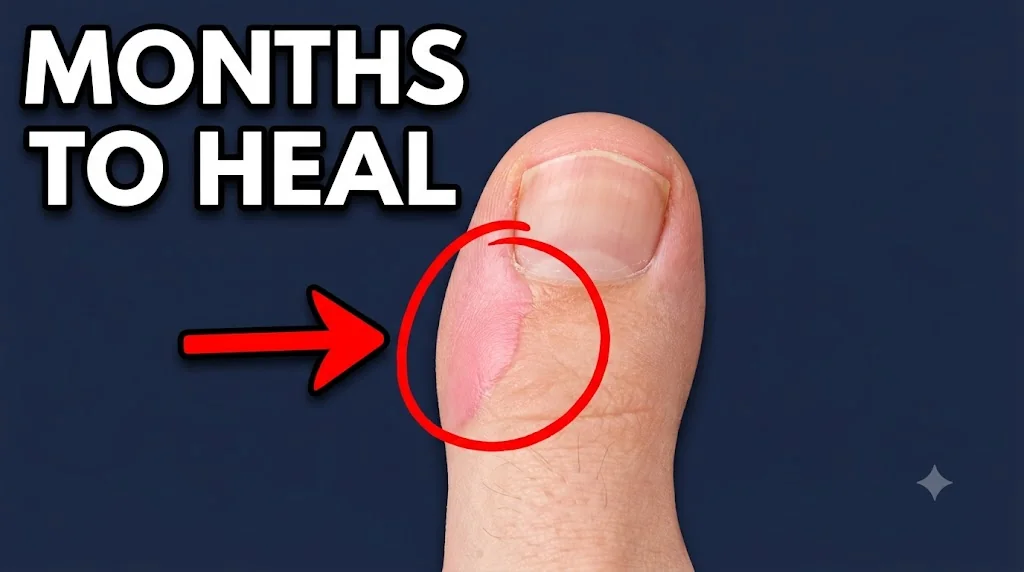
Candidal onychomycosis is a yeast-driven fungal nail infection more likely to affect fingernails than toenails. Rather than entering from the nail tip, it typically begins at the nail folds, the skin surrounding the nail, and is associated with swelling and redness around the nail itself. This is a meaningful distinction from toenail infections, where yeast involvement is less typical.
What both types share: they do not resolve on their own. Without antifungal treatment, the infection progresses, and the nail continues to deteriorate.
Why Fingernail Fungus Is Less Common Than Nail Fungus on the Toes
Fingernail fungus is less common than its toenail equivalent because of two compounding factors: the conditions each nail lives in and how fast it grows. Podiatrist Dr. David Williams, DPM, of El Paso Feet explains the first factor:
You absolutely can get nail fungus on your fingernails, but it is not nearly as common as getting toenail fungus. Usually, the people that complain about fingernail fungus are people that work with their hands, such as mechanics, people that work construction, or do manual labor. These jobs routinely lead to chronic nail injuries, and fungal infection follows. Additionally, fingernails have a harder time growing fungus because of the sun and UV exposure, dryness, and heat — that's not true with toenail fungus. Fungus loves moisture, warmth, and darkness, and those are exactly the three things your toenail encounters when it is in a shoe all day.
That contrast is why toenail infections are far more prevalent: sunlight and dryness work against the fungus on a hand, and a shoe works for it.
Fingernails also grow roughly four times faster than toenails. The average fingernail grows about 3 millimetres per month; toenails grow closer to 1 millimetre. Faster growth means the nail replaces infected tissue more quickly, which makes fingernails somewhat more resilient to establishing deep infections and significantly faster to clear once treatment begins.