Nail psoriasis vs fungus is the bind you are in when one nail matches both photos and the fear is spending months treating the wrong one. Pitting, salmon-colored spots under the nail, and skin plaques lean toward psoriasis; a thick, yellow-brown, crumbling nail that crept in from the tip leans toward fungus. A lab test decides what appearance cannot. This guide covers the signs that separate the two, what to do when they will not separate, and how to settle nail psoriasis vs fungus before you commit to a treatment.
Most photo galleries fail at exactly this point. Early psoriasis and fungus can both leave a thick, discolored, lifting nail, and a photograph cannot show what is happening underneath it. So this guide leans on patterns instead: where the change starts, how many nails are involved, what sits under the nail plate, and what the skin nearby is doing. Then it covers what most pages skip, which is what a doctor actually tests, why one negative result does not always close the case, and what happens when a fungal treatment is aimed at an inflamed nail. Read it as a way to see which direction your nail leans. It is not a diagnosis, and no article can be one.
How Can You Tell Nail Psoriasis From Nail Fungus at a Glance?
Nail psoriasis usually shows pinpoint pitting, salmon-colored oil spots under the nail, and changes on several nails at once, while a fungal nail infection usually thickens and yellow-browns a single nail from its tip, often with an odor. Skin plaques elsewhere on the body add weight toward psoriasis, and a lab test settles the cases that stay unclear.
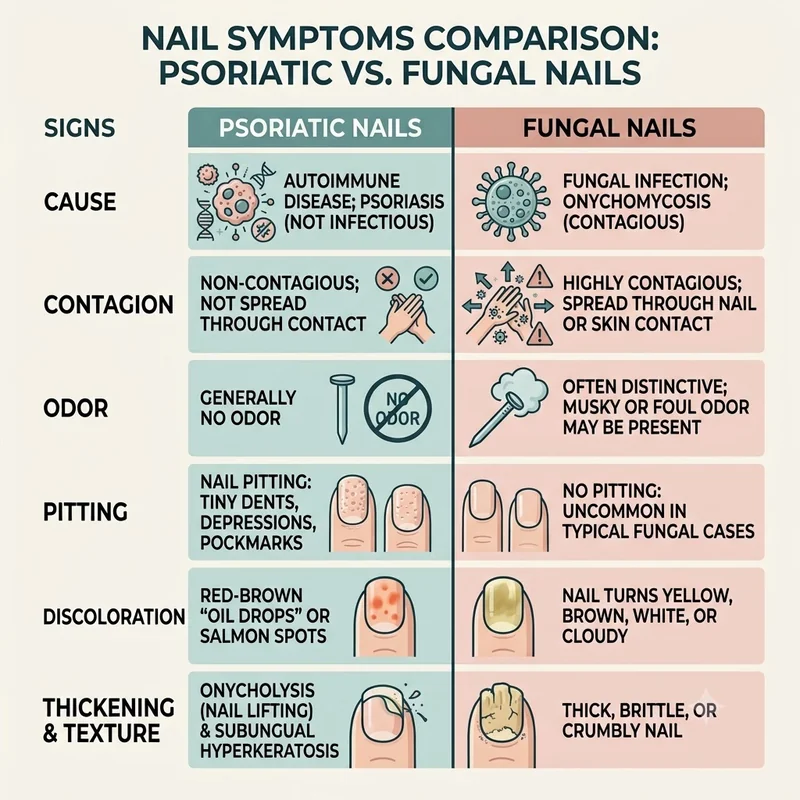
Six signs do most of the sorting when it comes to nail psoriasis vs fungus, and none of them holds up alone.
| Sign | Nail psoriasis | Fungal nail infection |
|---|---|---|
| Cause | Autoimmune inflammation | Infection, usually a dermatophyte |
| Contagious | No | Yes, it can spread |
| Nails affected | Often several | Often one to start |
| Fingers or toes | Fingernails more often | Toenails far more often |
| Odor | Rarely | Often musty or foul |
| Typical tells | Pitting, oil spots, jagged lifting | Thick yellow-brown debris, crumbly edge |
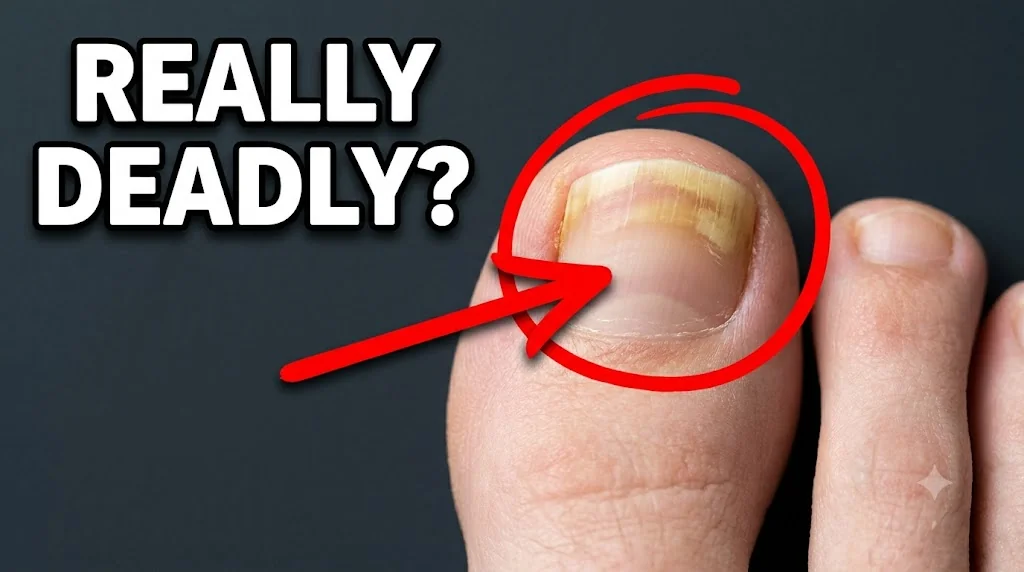
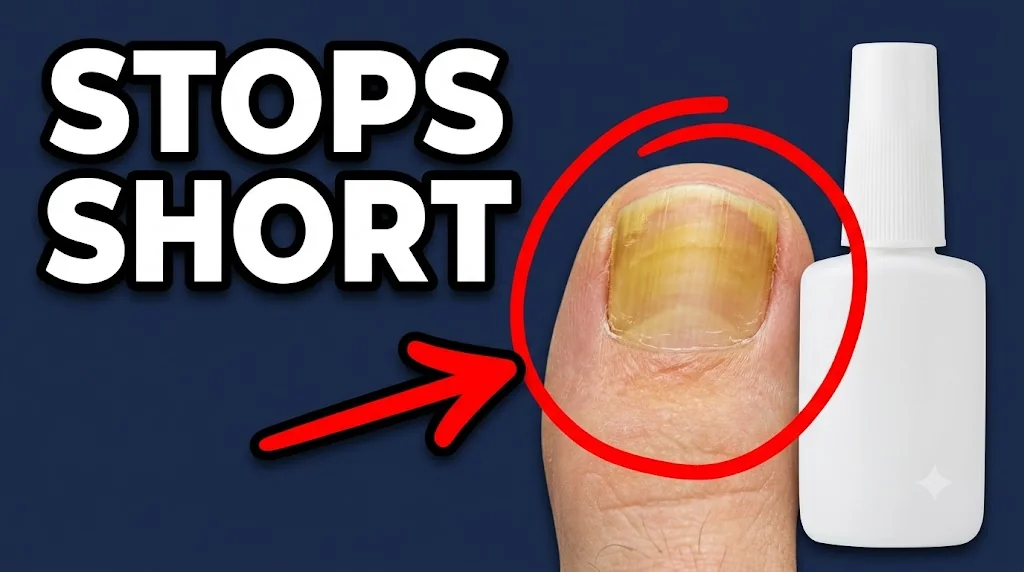
For a fungal nail infection (onychomycosis), Dr. Rokhsar describes the usual course: "Onychomycosis usually starts at the free edge or side of the nail and creeps toward the cuticle gradually over months, turning the nail yellow-brown with crumbly, thickened debris underneath, and it typically doesn't hurt." That slow creep from the tip is the most dependable fungal tell, and the full guide to what nail fungus actually looks like shows each stage.
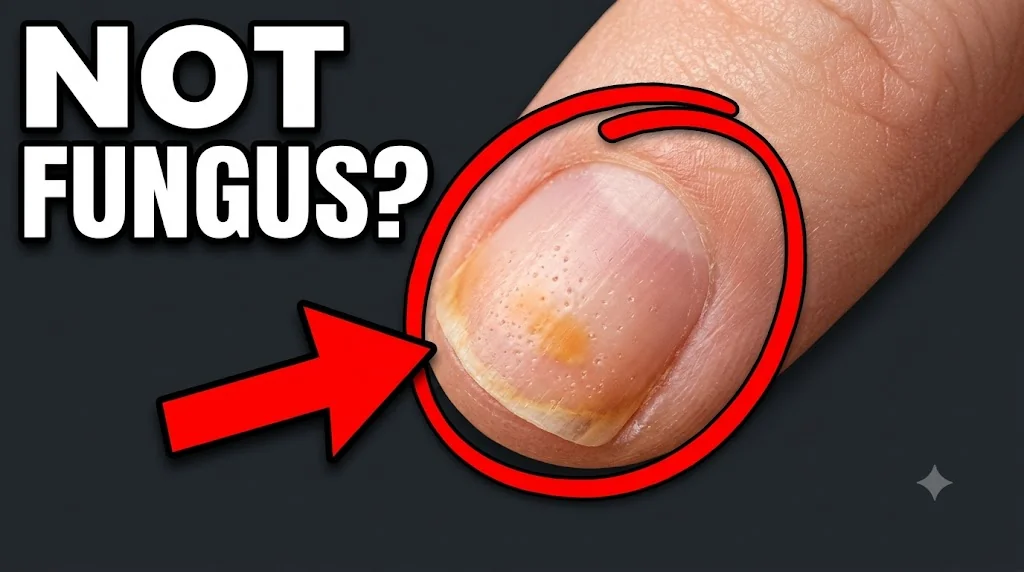
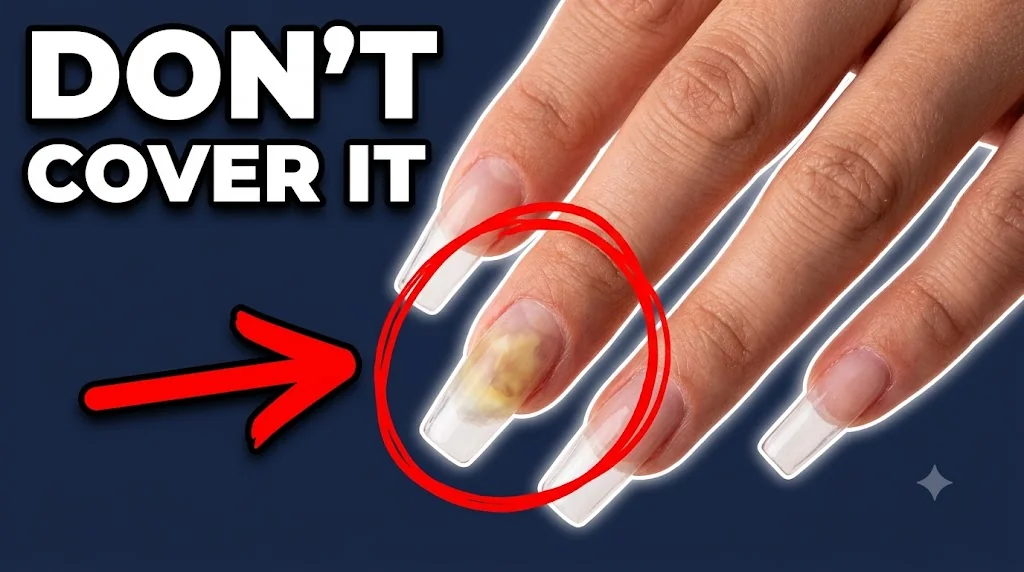
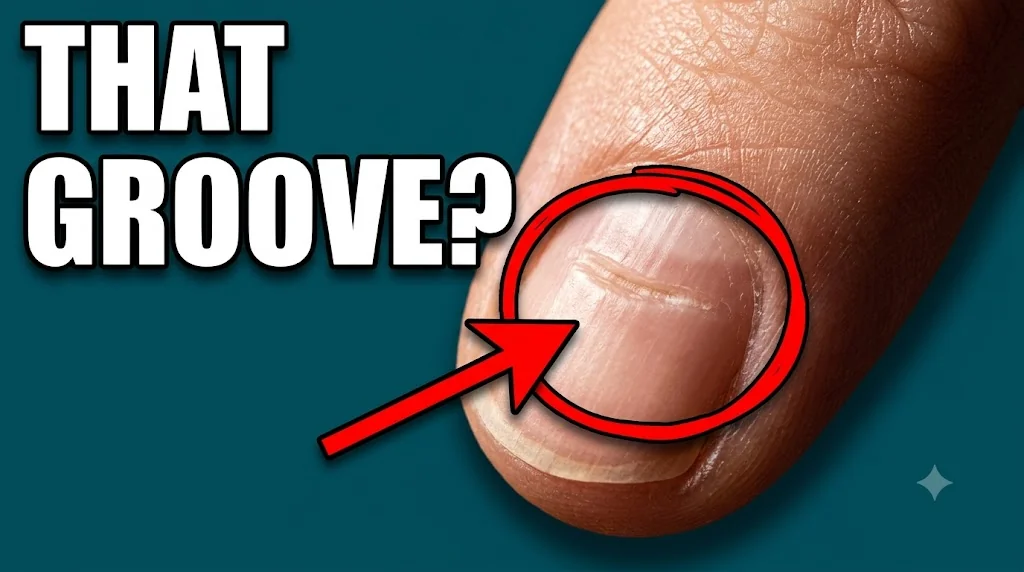
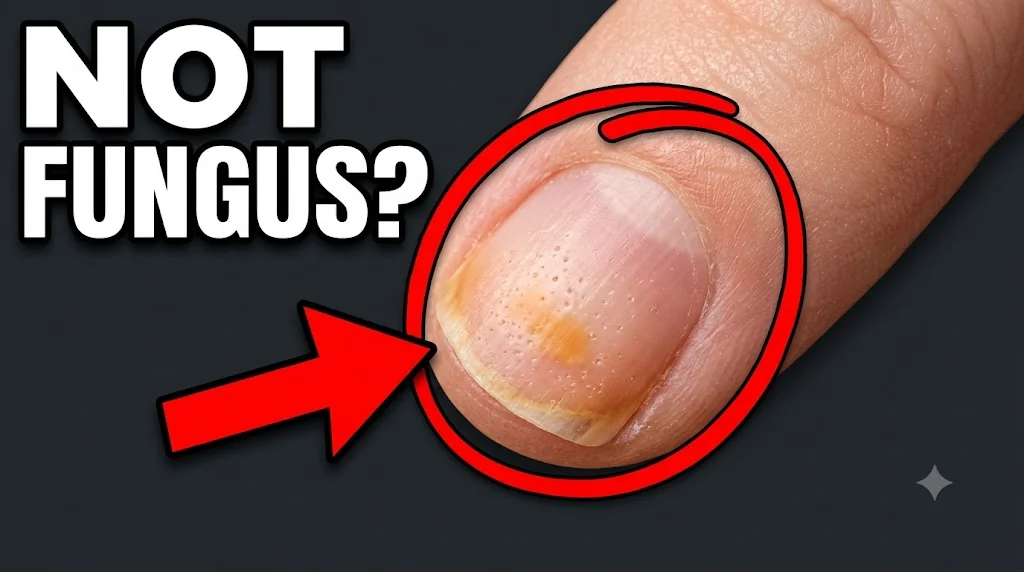
Psoriasis leaves different marks. The oil drop sign, also called a salmon patch, is a translucent yellow-pink patch under the nail plate that resembles a drop of oil beneath the surface. It appears where psoriasis inflames the nail bed, and it is among the more specific visual signs of psoriatic nail disease. Dr. Rokhsar describes the full pattern this way: "Nail psoriasis has its own signature, pinpoint pitting across the nail surface, salmon-colored 'oil spots' under the nail plate, and lifting with an irregular, jagged border rather than the smoother separation fungus tends to cause." Pitting feels like a thumbtack pressed lightly into the nail. Fungus typically thickens and discolors a nail rather than dotting it with dents, so pitting points away from fungus.
Nail psoriasis typically does not smell. A musty or foul odor points toward fungus or a bacterial infection, because debris trapped under an infected nail holds moisture. Nail psoriasis is not contagious, because it comes from the immune system rather than a germ, while a fungal nail infection can spread between nails and, through shared damp surfaces, between people.
Location adds one more clue. Fungus is far more common in toenails than fingernails, so a fingernail that looks fungal is often psoriasis, eczema, or nail damage instead. As Cleveland Clinic's dermatology guidance on telling the two apart explains, a single affected toenail is more likely fungus, and psoriasis that shows up only in the nails is uncommon. If your problem sits in one toenail, the full toenail fungus vs nail psoriasis comparison goes deeper on that exact case.