Gel vs Dip Powder vs Russian Manicure vs Shellac: The 3-Week Verdict
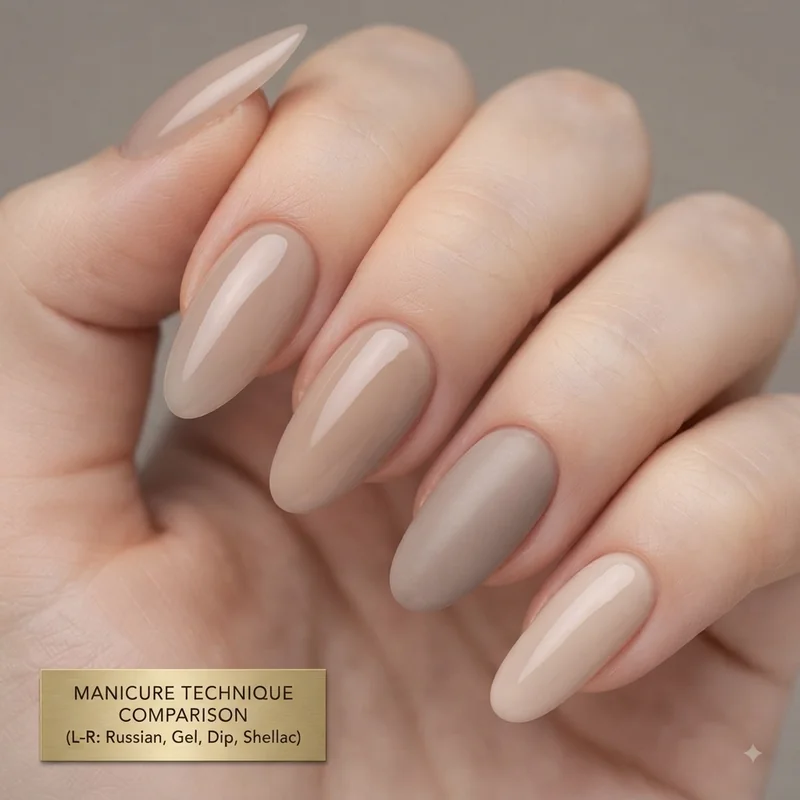
Dip powder and Russian (builder) gel are the two manicure types that most reliably clear three weeks without chipping, with dip typically holding 3 to 4 weeks and Russian gel often reaching 3 to 5 weeks. Regular gel polish and shellac both sit in the 2 to 3 week range and need near-perfect prep to consistently cross the three-week line. If a manicure that lasts 3 weeks is the only outcome you care about, dip and Russian gel are the two formats worth booking.
Here's the format-by-format breakdown, side by side, against the three-week bar specifically:
Dip powder builds a thick, resin-bonded layer by dipping the nail into coloured powder rather than curing thin coats under a lamp. That density is exactly why it resists chipping longer than gel. Most well-applied sets hold 3 to 4 weeks before a fill becomes necessary.
Russian (builder) gel uses a hard gel system layered over meticulous dry cuticle work, no soaking, an e-file instead of water. The structured, slightly domed apex it creates is genuinely stronger than a standard gel polish coat, which is why this format regularly stretches to 3, sometimes 5, weeks.
Regular gel polish is thinner and more flexible than either of the above, which gives it that glossy, natural feel, but also means it has less structural bulk to resist impact and lifting. A skilled application with full cure time comfortably reaches 2 to 3 weeks. Getting past 3 weeks consistently is possible but asks more of the prep than the other two formats do.
Shellac, technically a hybrid gel-polish system, behaves close to regular gel in wear time, generally 2 to 3 weeks, with the same sensitivity to prep quality and coat thickness.
None of this means gel or shellac are bad choices. It means if your last manicure chipped in under a week and you're specifically chasing the full three-week mark, dip and Russian gel start with a structural advantage the other two have to work harder to match. For readers weighing this decision purely on speed rather than staying power, the gel vs press-on vs regular polish time comparison covers that trade-off separately.
What Makes Dip Powder the Most Durable Option
Dip powder is a resin-and-powder nail system that skips UV or LED curing entirely, instead layering a bonding resin and finely milled colour powder to build a dense, chip-resistant shell around the natural nail. That density, not the colour or the brand, is the entire reason it outlasts gel.
Where gel polish is a thin coat cured in stages, dip is closer to a construction process. Resin goes on, the nail is dipped into powder, that layer is sealed, and the sequence repeats two or three times before a final top coat locks everything in. Each pass adds thickness. Dip powder's thicker, resin-bonded layers are what give it the edge in impact resistance that thinner gel simply cannot match, coat for coat.
That thickness matters most at the point of daily contact, typing, opening jars, unloading a dishwasher, all the small impacts a manicure absorbs without you noticing. A thin gel coat flexes and can crack under repeated micro-stress. Dip's denser structure shrugs most of that off, which is the real, unglamorous explanation for why a dip set delivers a genuine manicure that lasts 3 weeks while a gel manicure from the same week has already started lifting at one corner.
The trade-off is removal. Dip requires filing down before a proper acetone soak, a slightly longer process than a straightforward gel soak-off. For someone who has been burned by early chipping twice already, that extra ten minutes at removal is a fair exchange for three extra weeks of wear.
Why Gel Chips Faster Than You'd Expect (Even When Applied Well)
You watched a gel manicure fail by day four despite a technician who seemed careful and thorough. Gel's thinner structure means it has less margin for error than dip or builder gel, so even small prep shortcuts, ones that would barely register on a thicker format, show up as visible chipping within days.
Gel polish bonds to the nail through photopolymerization, a chemical reaction where UV or LED light hardens the liquid methacrylate resin into a solid, cross-linked layer. How gel polish actually cures and bonds to the nail depends entirely on that reaction completing fully, coat by coat. Cut the cure time short, even by ten or fifteen seconds under a busy salon's lamp, and the layer underneath stays slightly soft. It looks identical to a fully cured coat. It chips like a manicure half its actual age.
Thickness compounds the problem. Gel cures from the surface down, so a coat applied too thick can look glossy and finished on top while the layer beneath the surface never fully sets. That's manicure that lasts 3 weeks territory undone by a single overloaded coat on one or two nails, the ones you'll notice lifting first.
Then there's the free edge, the tip of the nail where gel meets air most directly. Early chipping is almost always a prep issue, and capping that edge, running the brush lightly across the very tip during each coat, is the step most likely to get rushed when a salon is moving fast. Skip it and water works its way under the layer within days, not weeks.
None of this makes gel a weaker choice than dip or Russian gel by definition. It makes gel a format with a smaller margin for shortcuts, which is exactly why it's the format most people report chipping early on.
The Prep Steps That Decide Whether Any Manicure Lasts
Every manicure format in this comparison lives or dies on five prep steps, and they're the same five regardless of whether you're getting gel, dip, or Russian gel. Skip one and the format almost stops mattering.
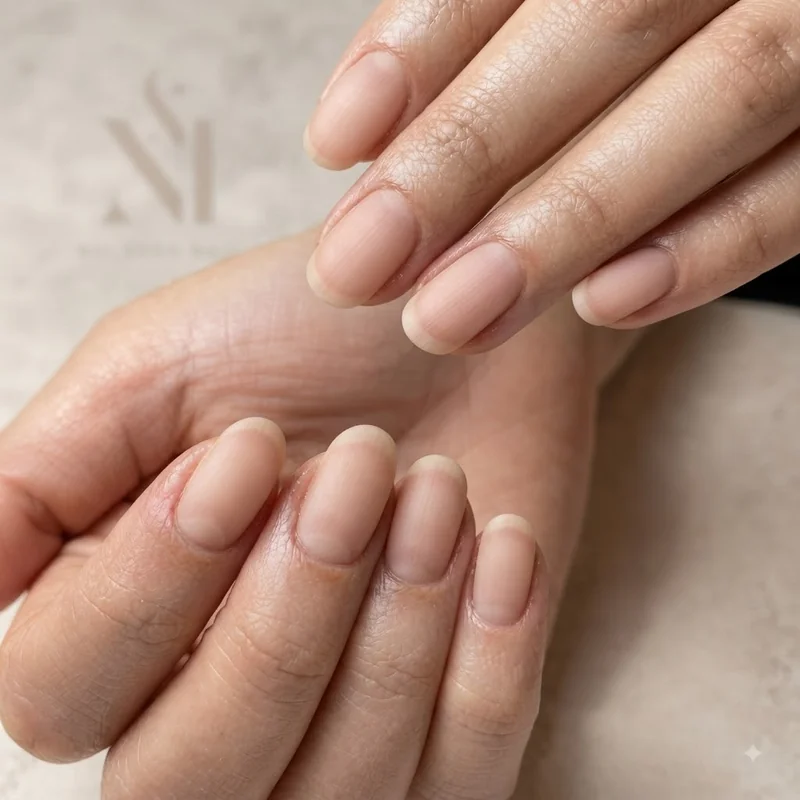
Nail plate buffing comes first. Your natural nail has a light, glossy oil layer on the surface, invisible to the eye, and polish of any kind does not bond to gloss. A quick pass with a fine buffer creates the texture the product needs to grip. Without it, you're sealing colour onto a surface it was never going to hold onto past day three or four.
Dehydrating follows, usually a wipe with a dedicated nail dehydrator or acid-free primer that strips remaining oil and moisture the buffer alone doesn't fully remove. Oily nail beds are one of the most common, and most overlooked, causes of early lifting, particularly for anyone whose skin runs naturally oily. This single step is often the difference between a manicure that lasts 3 weeks and one that chips within days.
Cuticle work matters more than most people assume. Dead skin that's grown onto the nail plate itself creates a weak spot invisible at a glance, and colour applied over it bonds to skin instead of nail, guaranteeing lifting right at the base within the first week.
Coat thickness and cure time are the fourth and fifth steps, and they're really one discipline: thin, even layers, each one fully cured before the next goes on, never rushed to hit a faster appointment slot. A tech, or you, working carefully through these five steps in order is doing more for longevity than any single product choice in this entire comparison.