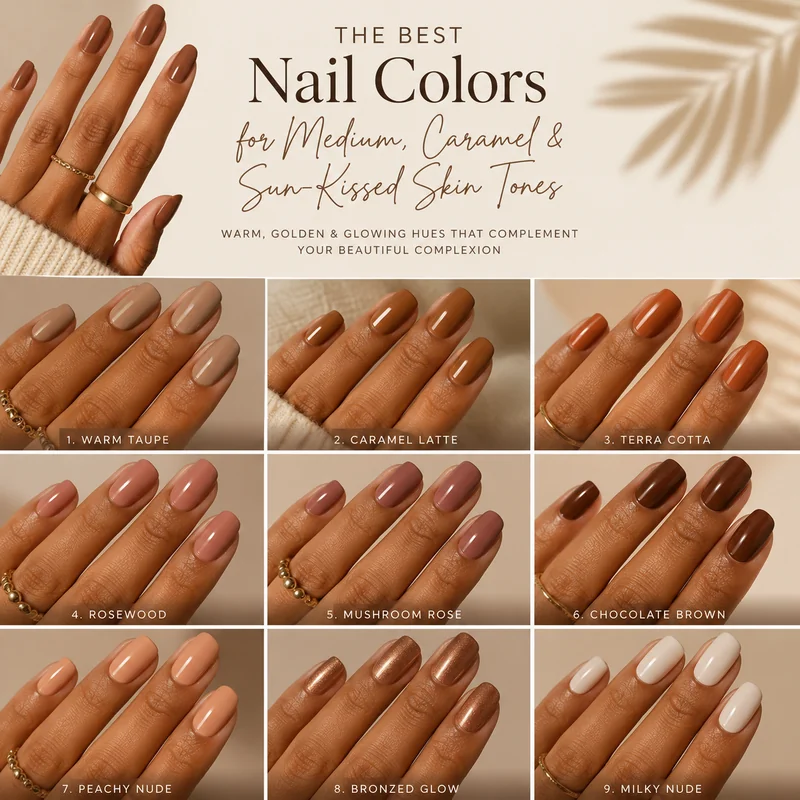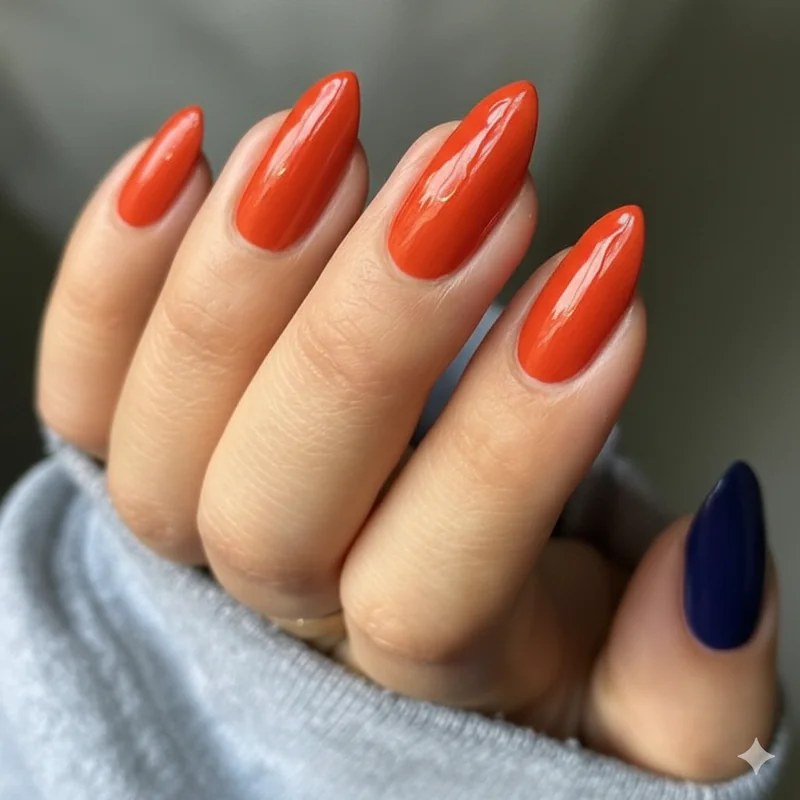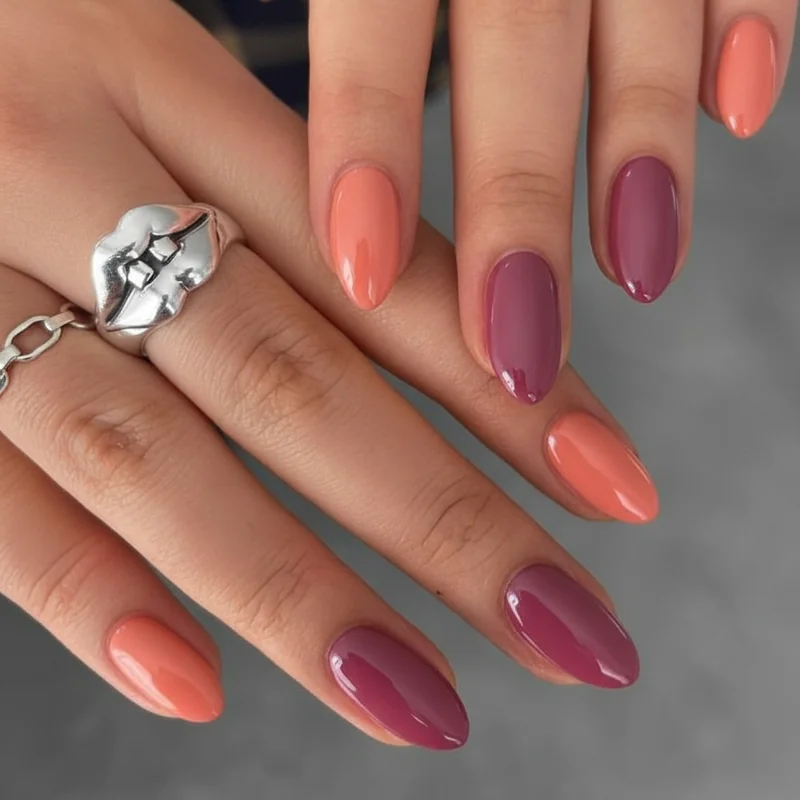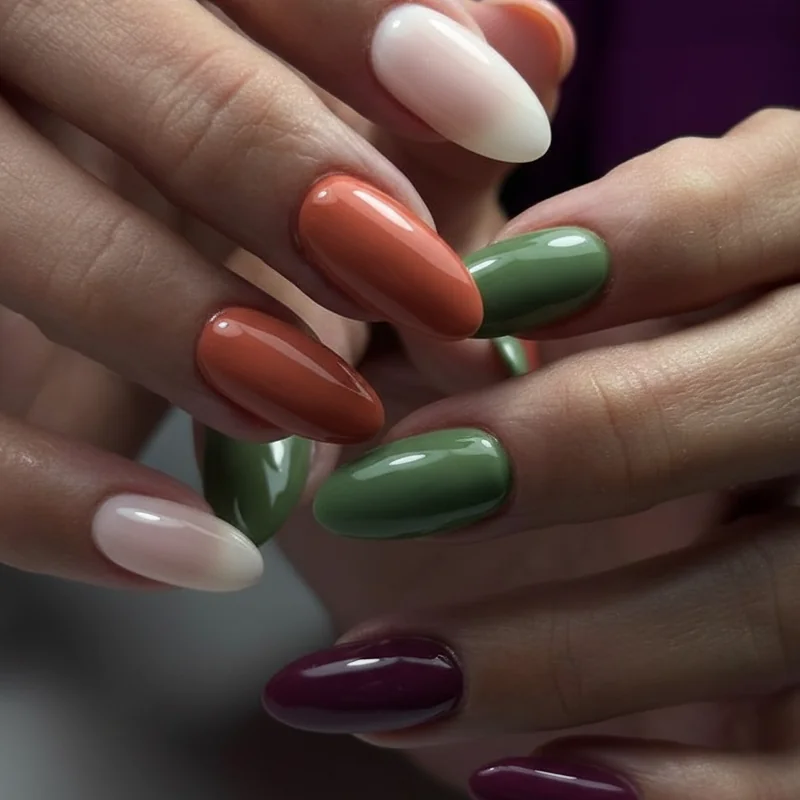
Every guide says jewel tones. Every guide says terracotta. Every guide has let you down at least once.
Nail colors for olive skin are not difficult to find. They are difficult to find explained. The shade is only half the story. Why it works on your specific undertone, at what depth, in what finish. That is the part most guides skip entirely. This one does not.
Whether you have warm golden-green olive, neutral olive that sits somewhere in the middle, or the cool-leaning olive that almost every mainstream guide ignores, the recommendations here are built around how colour actually behaves on your complexion. The Complete Guide to Nail Colors for Every Skin Tone covers the broader picture. This post goes deep on olive specifically.
Why Olive Skin Is Actually the Hardest Complexion to Match Nails To
The grey cast problem is real, and it has a name: tonal collision. When a nail colour sits too close to your skin's underlying green-grey frequency without enough contrast or warmth to separate, it does not complement your hands. It competes with them. You end up looking flat. The polish looks different than it did in the bottle. Your hands look, somehow, greyer than before you painted your nails.
Olive skin carries a yellow-green undertone that sits underneath the surface, not visible as a flat colour, but present as a cast that interacts with everything you put near it. That interaction is what makes nail polish for olive skin more nuanced than for fairer or deeper complexions. A pale peach that looks fresh on pink-toned skin reads chalky on olive. A terracotta that looks earthy and rich in the bottle blends entirely into a warm olive hand at mid-saturation. A nude that photographs beautifully on the swatch card looks like bare skin. The wrong kind of bare. The kind that makes people ask if you bothered painting your nails.
None of this means olive skin is hard to dress. It means olive skin rewards understanding.

Not All Olive Skin Is the Same: Warm, Neutral, and Cool Olive Explained
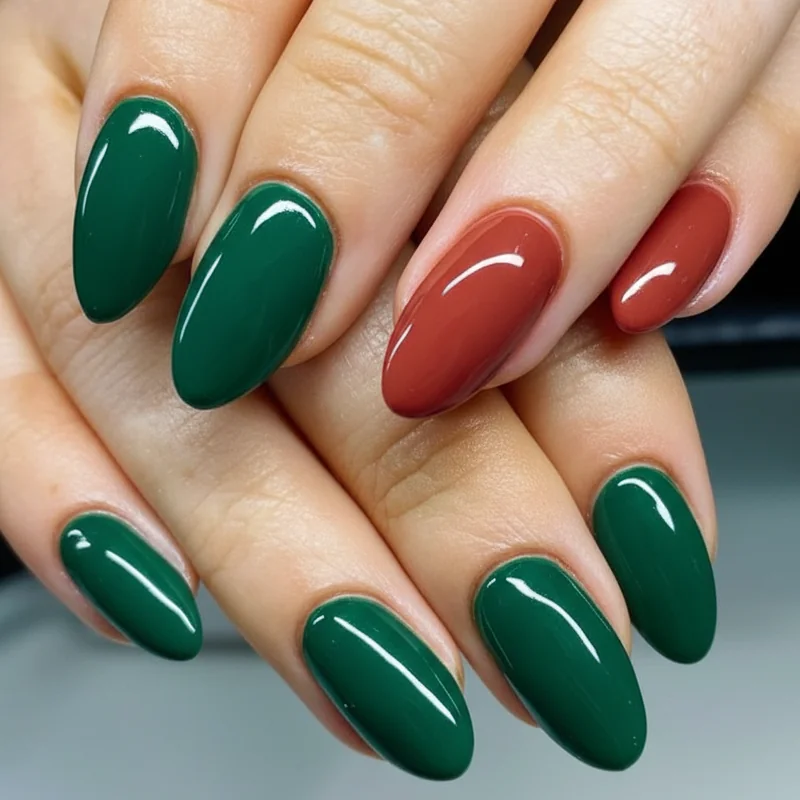
Three coats of the same emerald green. Three entirely different results, depending on whether the hand is warm olive, neutral olive, or cool olive.
Most guides treat olive as a single category with warm undertones. That assumption is wrong. It is why a significant number of olive-skinned women have tried "all the right shades" and still found themselves underwhelmed. Olive is a descriptor of the skin's surface cast, that slightly greenish, sometimes greyish veil. Not a fixed undertone category.
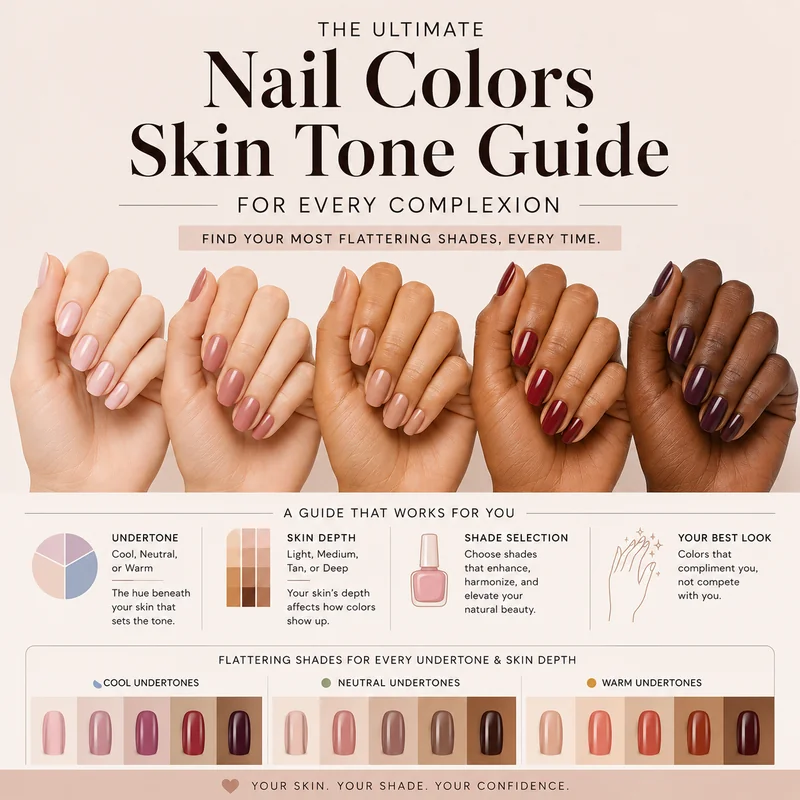
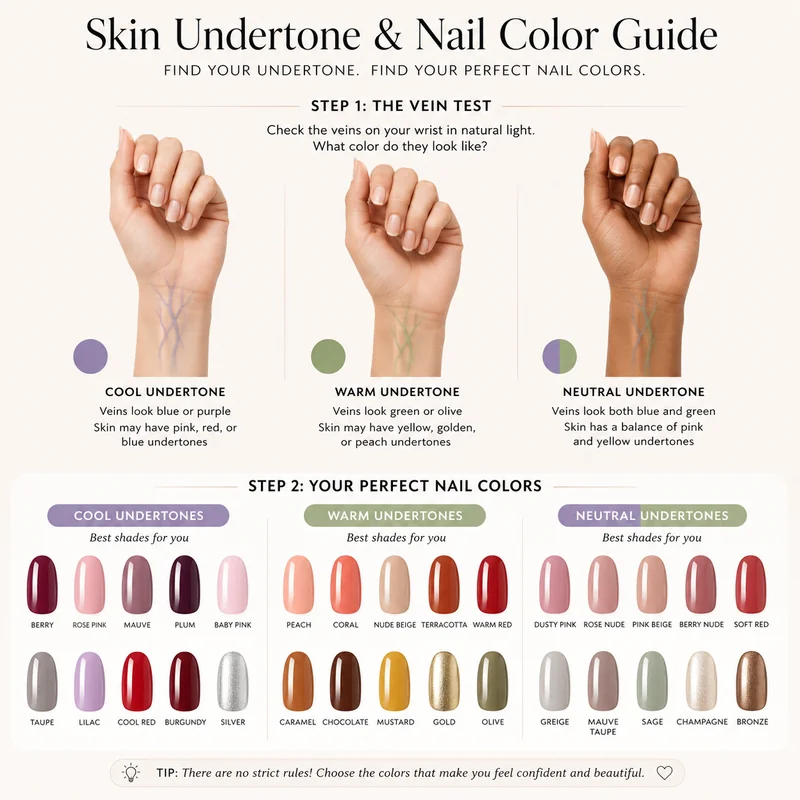
Warm olive carries golden-yellow beneath the green cast. Gold jewellery glows. Veins read greenish. Warmth in a colour is everything for this group. Shades that resonate with that golden base glow; shades that ignore it flatten.
Neutral olive sits in the middle. Both gold and silver work. More flexibility across the board, though deep, saturated shades still outperform pale or ashy ones.
Cool olive has blue or purple-toned veins despite the greenish surface cast. Mila Kunis is the reference most cited. Standard warm-leaning advice does not apply here. Cool-toned jewel tones and blue-based reds are the direction.
If you are unsure which you are, How to Find Your Skin Undertone covers the vein test, the white shirt test, and the jewellery test in full. The Ultimate 2026 Skin Tone Matching Guide covers undertone identification across all complexions. And if your skin leans more tan or caramel than true olive, Best Nail Colors for Medium Skin Tone is the more relevant starting point.

The Jewel Tones That Make Olive Skin Look Like It Was Made for Bold Nails
Olive skin does not just wear jewel tones well. It was made for them.
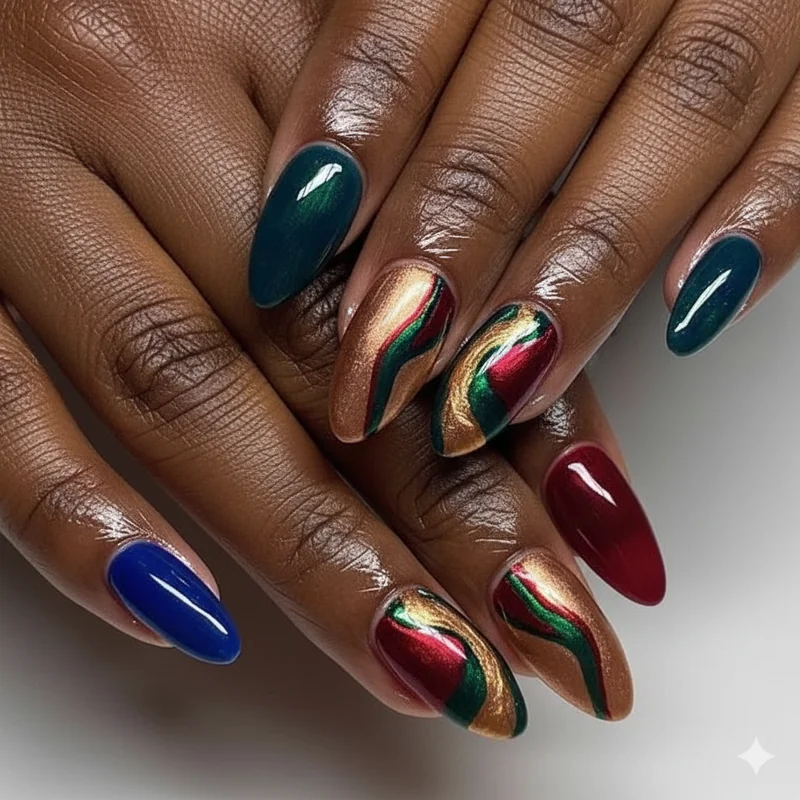
The reason is contrast and resonance working together. Deep emerald, rich sapphire, and saturated amethyst all carry enough chromatic depth to sit distinctly against olive skin. Jewel tones amplify the warmth and golden quality in olive without competing with its green-grey cast. They speak the same tonal language, but louder.
Emerald green is the strongest of the group. The green-to-green resonance sounds like it should clash, but it pulls the skin's best qualities forward. Look for deep, saturated emerald rather than bright or neon. On cool olive, a slightly teal-shifted emerald performs better.
Sapphire and cobalt blue create dramatic contrast. The blue sits far enough from olive's yellow-green to create clean visual separation. This works across all three olive undertone types.
Deep plum and amethyst are strongest for cool and neutral olive, where the purple's blue base complements rather than clashes. For warm olive, shift toward a red-toned plum or wine.