The honest answer to how long for nails to recover from gel or acrylic is four to six months for a fully new fingernail, with real improvement showing up within weeks. If your nails bend under a fingertip and peel in thin layers, it looks permanent. It is not. Below is the week-by-week version of how long for nails to recover from gel or acrylic, so you can check your own nails against it instead of guessing.
Most guides hand you one vague range and then a shopping list. This one gives you checkpoints.
Fingernails grow roughly 3 millimeters a month, give or take, and the damage from gel or acrylic lives in the nail plate you already have. New nail grows in behind it and carries the damaged section toward the tip, where you trim it away. Picture a conveyor belt that runs at one speed and cannot be hurried. The damaged section is never repaired, only replaced, and that is why the count runs in months rather than days.
Where you sit on that belt depends on how the set came off, how much filing happened, and what your nails were like before. The sections below sort out which case is yours.
How long does it take nails to recover after gel or acrylic?
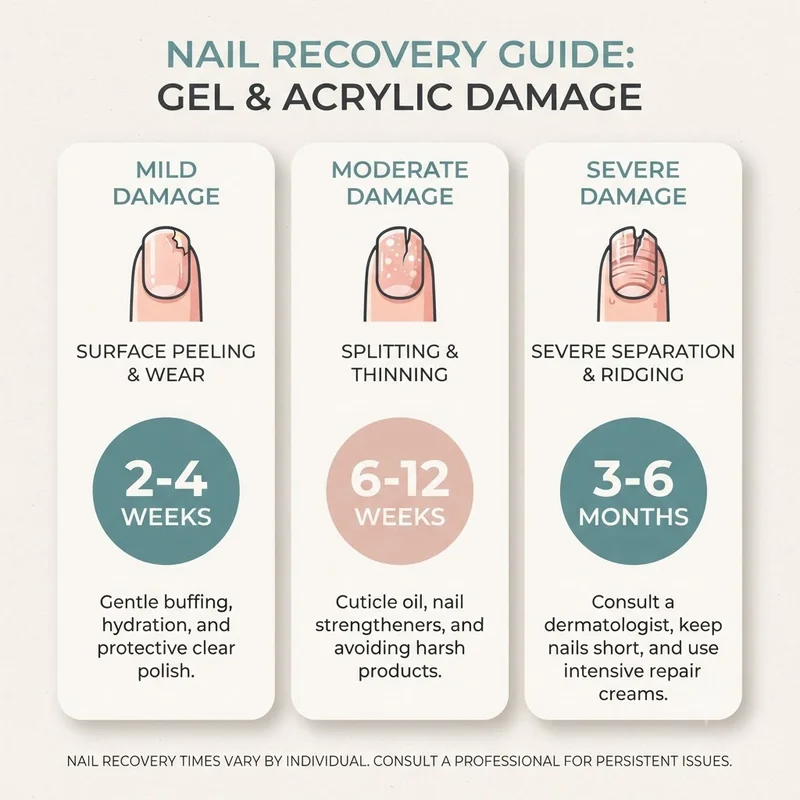
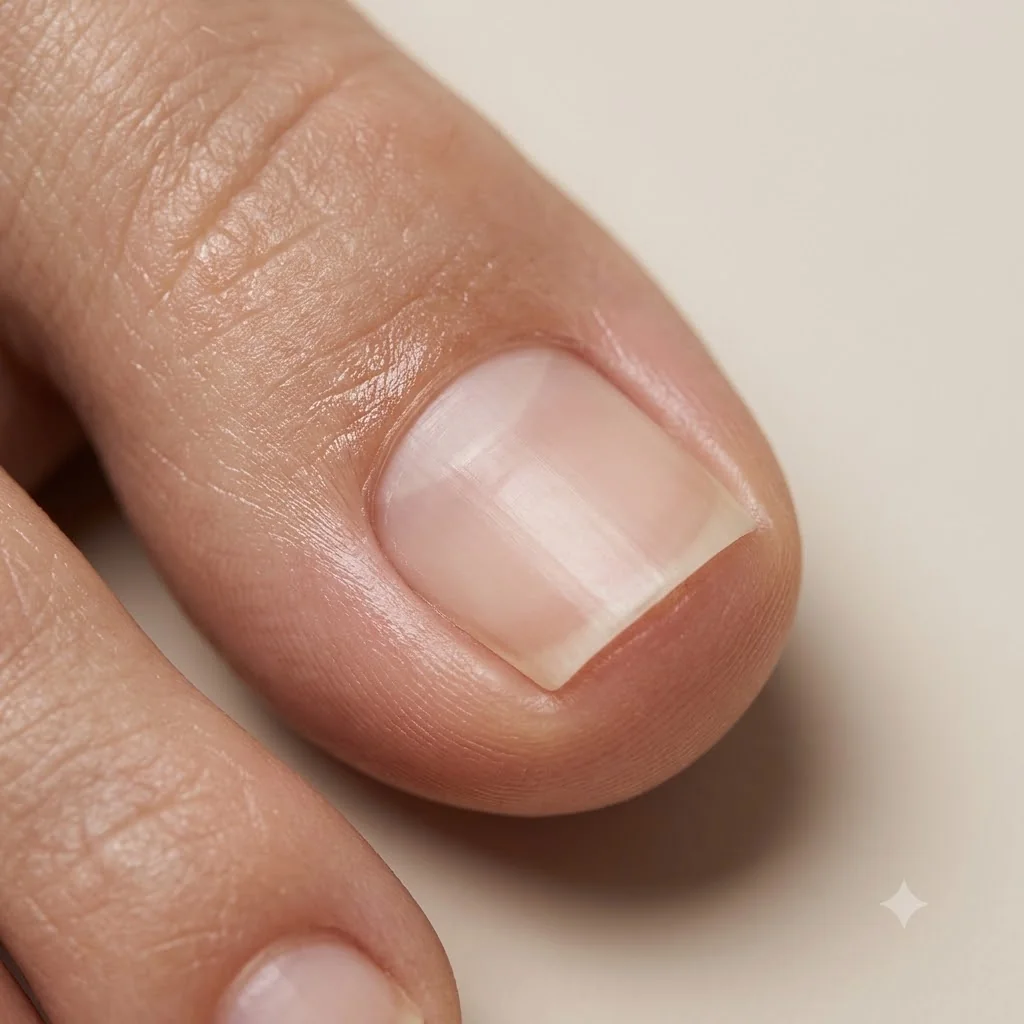
Four to six months is how long a fingernail takes to replace the plate that gel or acrylic damaged, though the first improvement usually shows within three to eight weeks. The nail plate, the hard, translucent keratin surface you see and polish, is made of dead cells and cannot repair itself. Recovery is the growth of a new plate from the base and the trimming away of the old one as it reaches the tip.
That growth rate is the logic behind how long for nails to recover from gel or acrylic. Fingernails grow somewhere between 2 and 4 millimeters a month, depending on age, health, and season, and a plate needs several months of that to turn over completely. Published estimates run from three to six months for exactly that reason. Fast growers finish early, slow growers late.
Two things hold for everyone. The plate you have now will not regain lost thickness, because it is finished tissue. And re-covering the nails early costs time, because each new set and removal thins the plate again.
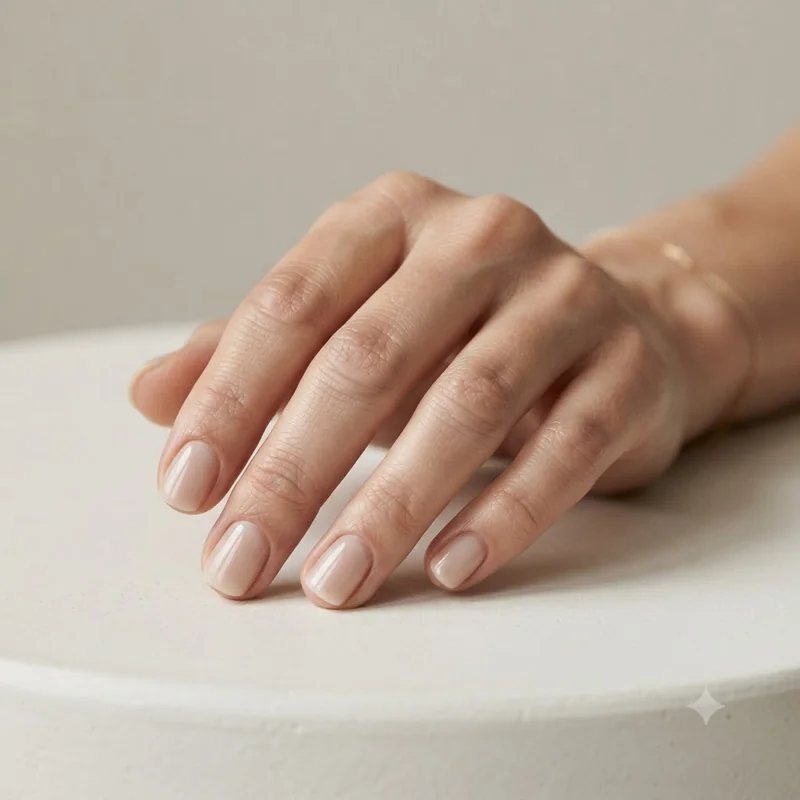
The week-by-week nail recovery timeline
You check your nails every morning, and every morning they look the same. Recovery is real, but it moves in steps you can only see across weeks, so a fixed set of checkpoints is more useful than daily inspection. The stages below describe a typical pattern, not a clinical schedule, and faster or slower growers will shift each one.
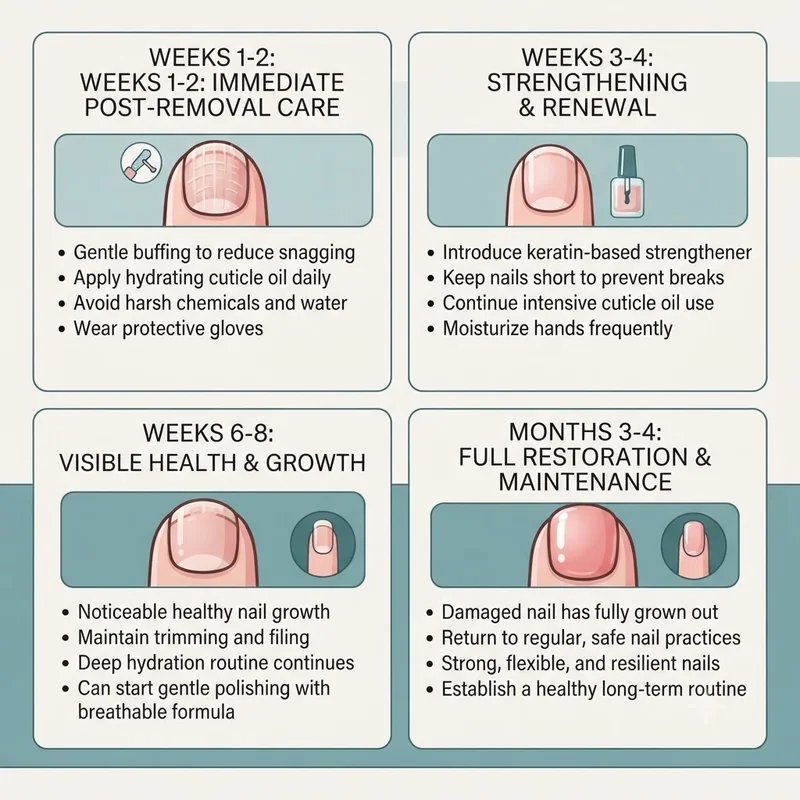
Weeks 1 to 2: the low point
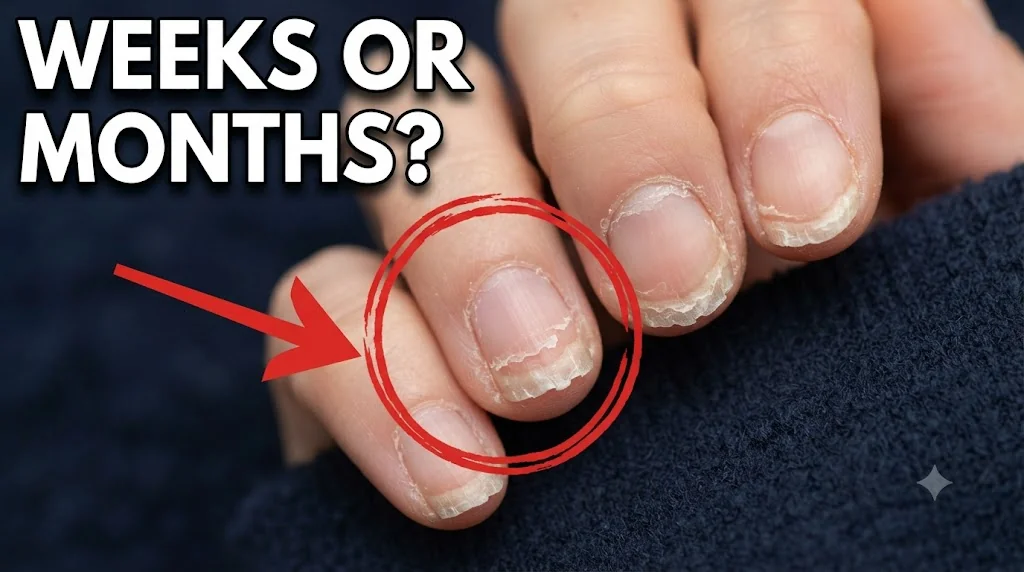
Nails are at their thinnest and most flexible right after removal. The buffing and filing that prepped and removed the set took thickness off the plate, and acetone pulled moisture out of what was left, which is why nails feel paper-thin and the tips bend. Peeling at the free edge is common here. None of it means the nails are getting worse. It means the damage is visible for the first time.
Weeks 3 to 4: the first firmness
This is where the first change tends to appear. A licensed nail technician puts the timing this way: "You can usually notice a visible improvement in as little as three weeks." Read that as the earliest sign, not the finish. The tips flex a little less and the peeling loses momentum, though the nail is still damaged.
Weeks 6 to 8: a visible line of new nail
A band of clearer, firmer nail now sits at the cuticle, several millimeters wide, with a faint grow-out line where it meets the older plate. Peeling should be occasional rather than constant. Layers still lifting at the week-two rate at this point are a reason to read the section on slow recovery below.
Months 3 to 4 and beyond: the damage reaches the tip
Most of the damaged section has now traveled to the free edge, so trim it as it arrives. Each trim leaves a stronger nail behind. A fully new fingernail is usually in place somewhere between month four and month six.