Why the nail blocks almost every drugstore treatment
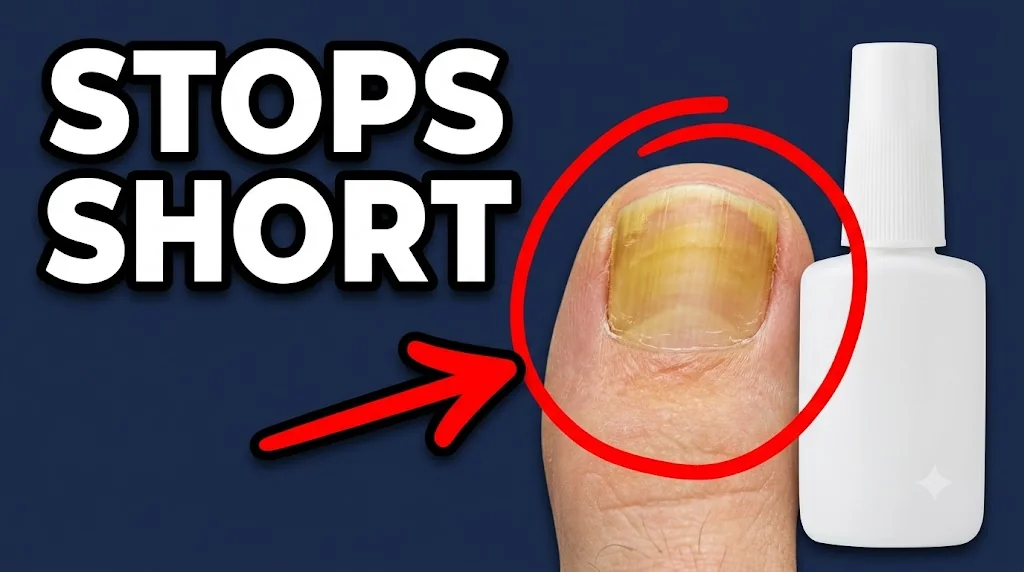
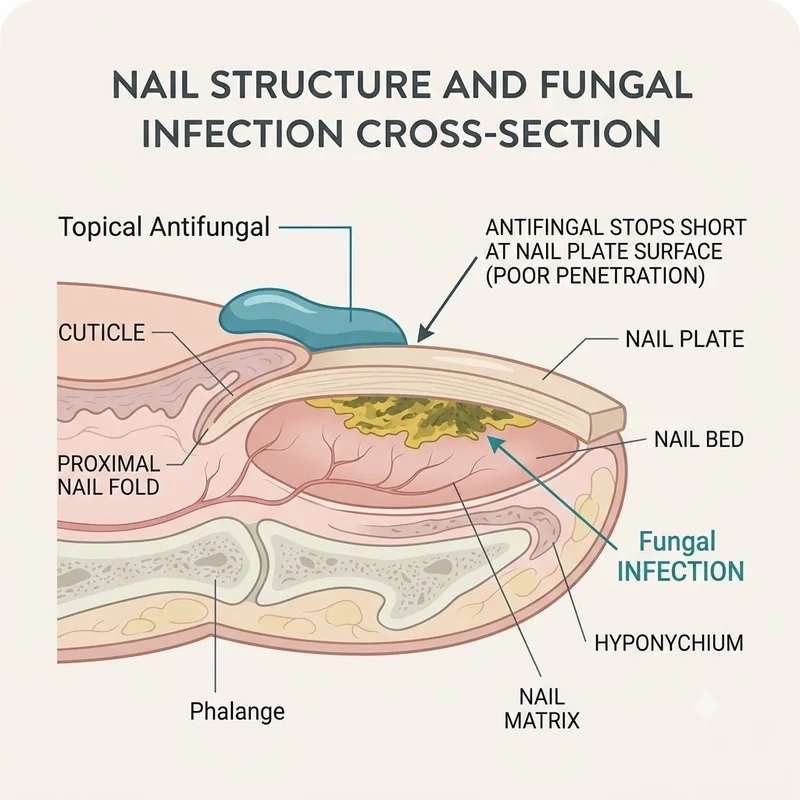
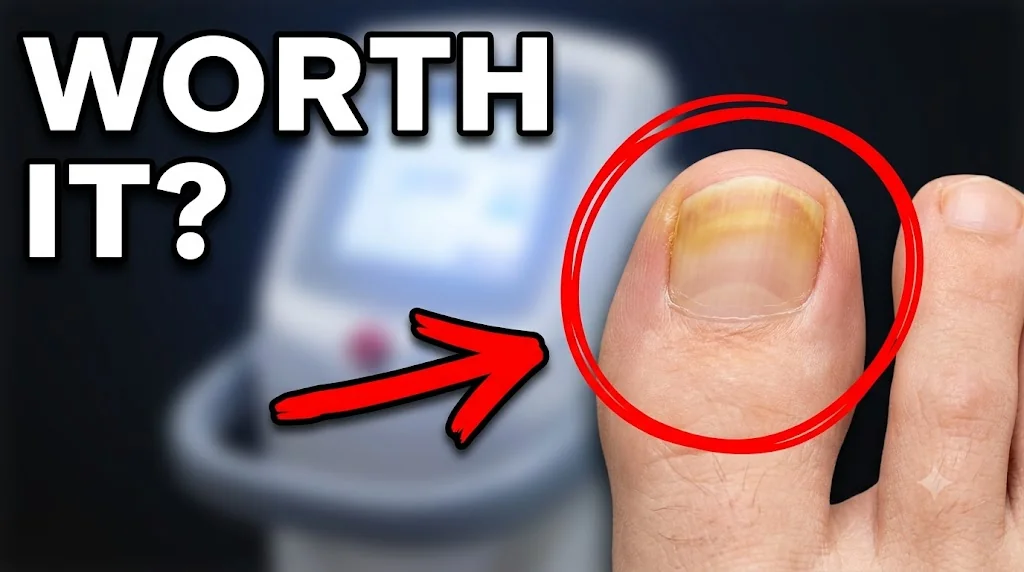
The nail is a barrier, and drugstore products were never built to cross it. OTC nail fungus treatments fail because the fungus lives inside and beneath the nail, while the product sits on top of it.
The nail plate is the hard, translucent layer of keratin you can see and file. The nail bed is the skin underneath it, and the infection settles in the plate and under it. Treating that from the top is like painting the outside of a fence post to stop what is eating it from within.
One nail health expert describes the mechanism plainly: "When fungus infects a nail, it lives within and underneath the nail. In order for any treatment to kill nail fungus, it needs to penetrate through the nail."
Thickness makes it worse. An infected nail often thickens, which puts even more keratin between the product and the fungus. A thin film of liquid on that plate is close to the opposite of penetration, and every version of do OTC nail fungus treatments work ends at the same wall, whatever the brand or the promise on the box.
What each OTC ingredient actually does (and doesn't)
The most effective OTC active is not the one with the loudest packaging. It is terbinafine 1%, which is fungicidal, and in drugstore form it is still a cream built for skin.
A fungicidal ingredient kills fungus. A fungistatic ingredient only stops fungus from multiplying. The answer to do OTC nail fungus treatments work shifts a little by ingredient, but no ingredient removes the plate problem.
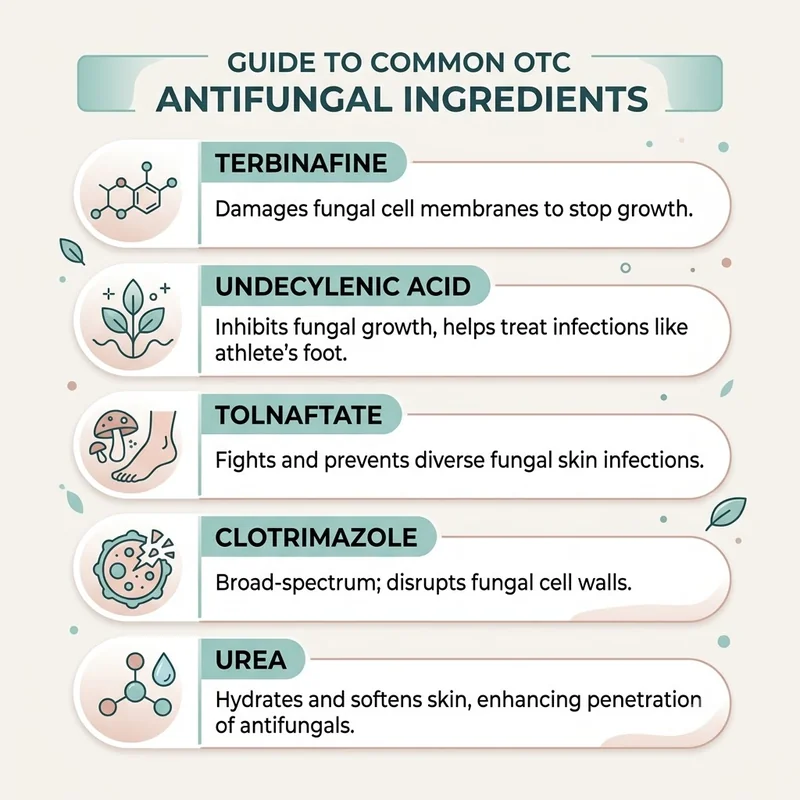
Terbinafine 1% (Lamisil AT)
Terbinafine is fungicidal, and Lamisil AT contains it at 1%. It works on athlete's foot, where the fungus sits in skin. On a toenail it hits the keratin wall described above, so the cream that clears skin rarely reaches the infection in the nail.
Undecylenic acid (Fungi-Nail)
Undecylenic acid is fungistatic, and Fungi-Nail is built around it. Slowing a fungus is not the same as clearing it, and a fungistatic product on a nail it cannot penetrate has little left to slow.
Tolnaftate and clotrimazole
Both are skin-level antifungals designed for athlete's foot and similar surface infections. They offer little once the infection sits in the nail plate.
Urea
Urea, commonly sold at 40% strength, softens and thins thick nail. It does not kill fungus by itself, so treat it as a preparation step that may help another product make contact, never as the treatment.
Medicated lacquers and nail fungus liquids package actives like these in a brush-on form. That changes the application, not the barrier. Folk fixes are a separate question, covered in which home remedies for nail fungus actually work.
When an OTC treatment is worth trying
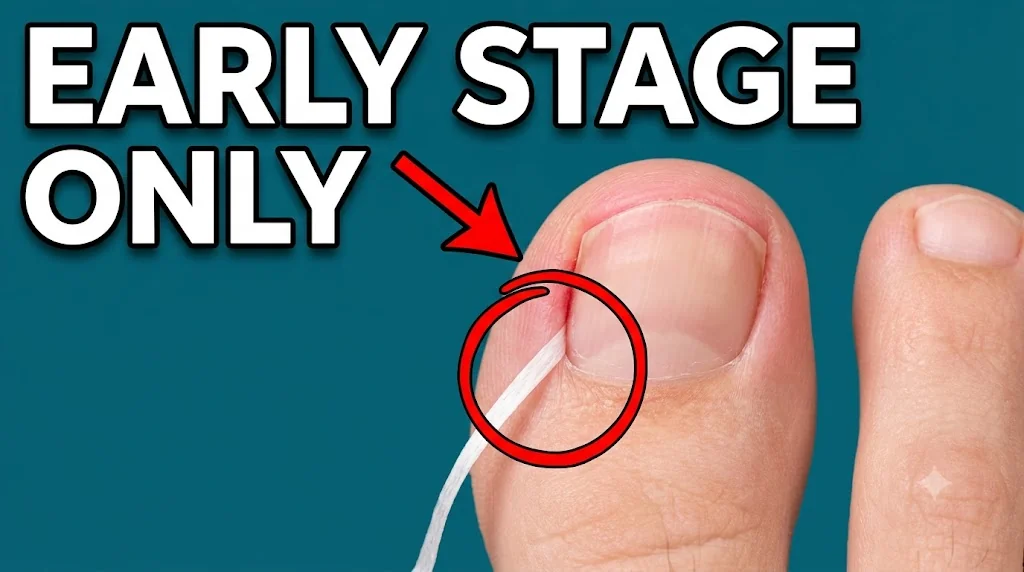
An OTC bottle is a reasonable first move in exactly one situation: a small, early infection confined to the surface of the nail, usually near the tip. In that case, OTC treatment clears it roughly 10% to 30% of the time by the clinic estimate above, which makes a timed trial fair and a guarantee impossible.
So the fair reading of "do OTC nail fungus treatments work" is sometimes, early, and only on the surface. Cheap products tempt because the shelf price looks small, but the real cost is the months, not the bottle.
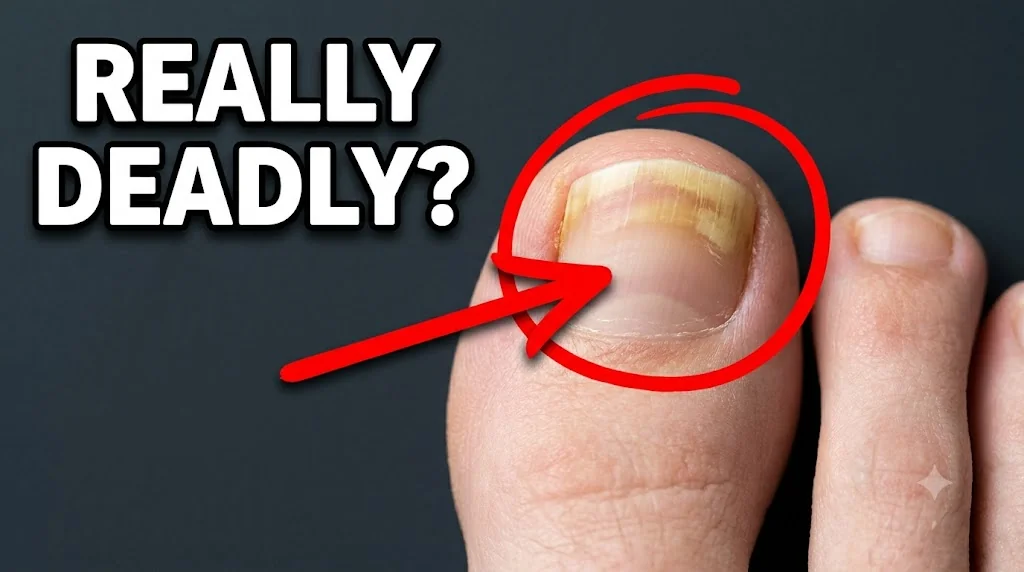
Skip the trial and go straight to a doctor if the nail is thick, crumbling, lifting from the skin, or painful, or if you have diabetes. Those nails have moved past what a surface product can reach, and each month spent testing one is a month the infection stays untreated.
How to use OTC treatments so they have a fair shot
Failure with an OTC product usually gets blamed on the formula, yet a poorly prepped nail defeats even a good one. Filing helps because it thins the plate, which gives the product less keratin to cross.
- Wash the foot and dry it completely, including under the free edge of the nail.
- File the top surface of the affected nail gently to thin it, using a file reserved for that nail and kept away from healthy ones.
- Apply a thin, even layer over the whole nail and under the free edge, following the product label.
- Repeat every day without skipping, and let the nail dry before pulling on socks.
A fair test of "do OTC nail fungus treatments work" on your own nail depends on that daily repetition, and even a working treatment leaves the nail many months from clear, which is covered in how long it takes a nail to clear once treatment works.