Why Sources Disagree About Testing Gel on Your Skin
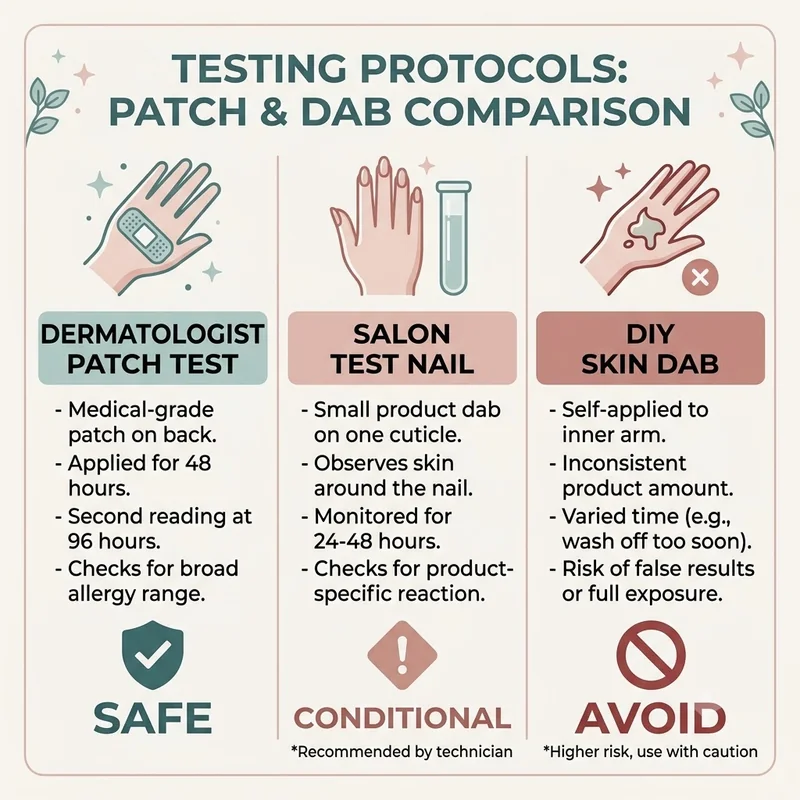
Dabbing gel polish on your skin is not a safe way to test for an allergy. Uncured gel contains reactive monomers that can sensitize skin, which is why dermatologists work with diluted, standardized allergens instead of your bottle. Nail education sources that warn against DIY skin testing call it a dangerous shortcut for exactly this reason.
Sensitization is the process by which the immune system learns to treat a substance as a threat, usually with no symptoms at first. Once it happens, later contact can trigger a reaction, so the risk is less the rash you see this week than the allergy that may follow.
Much of the collision between "always test" and "never test" comes from one phrase covering three procedures. The safe version of a nail patch test happens in a clinic. A test nail is a single nail finished with the full service, gel, cure, and all, so you and your tech can watch for a reaction before committing to a full set. It shows how that nail behaves over several days, but it cannot name an allergen, and a delayed reaction can stay quiet through a first exposure.
Some salons offer a test nail. Only a clinician can run a true nail patch test.
Who Actually Needs a Nail Patch Test?
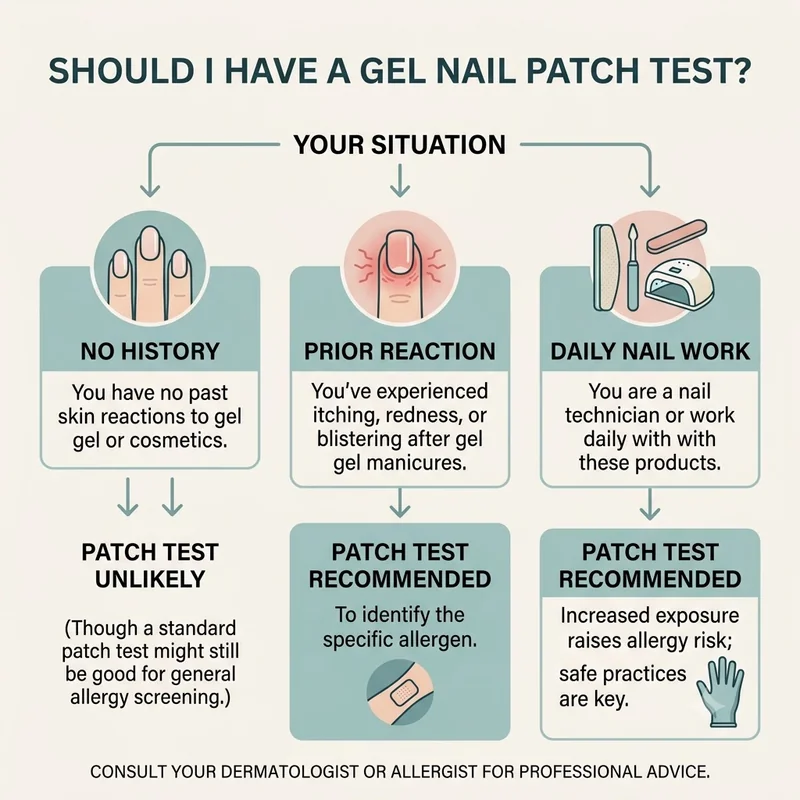
You need a nail patch test if you have already had a suspicious reaction to gel or acrylic, want to restart gel after a reaction, or work in the nail industry with daily exposure. Everyone else can skip formal testing and watch for early signs instead.
Caution is not the same as testing, and one dermatologist draws that line plainly: "For someone with no symptoms and no history of a reaction, formal patch testing is overkill." The reasoning is practical. A workup costs a visit, two days of patches, and follow-up readings, which is a heavy ask when most regular gel users are not affected.
The same dermatologist explains when that changes: "Patch testing becomes genuinely worthwhile once someone has already had a suspicious reaction, is choosing between products before resuming gel manicures after a reaction, or works in the nail industry with daily high-frequency exposure."
Watching is the plan for everyone else. Itching, redness, or peeling around the nail fold that returns with each new set is the pattern to notice, and the early symptoms of a HEMA allergy show what that looks like for gel wearers, while acrylate allergy symptoms in acrylic nails covers the same ground for acrylic.
What a Real Dermatologist Patch Test Involves
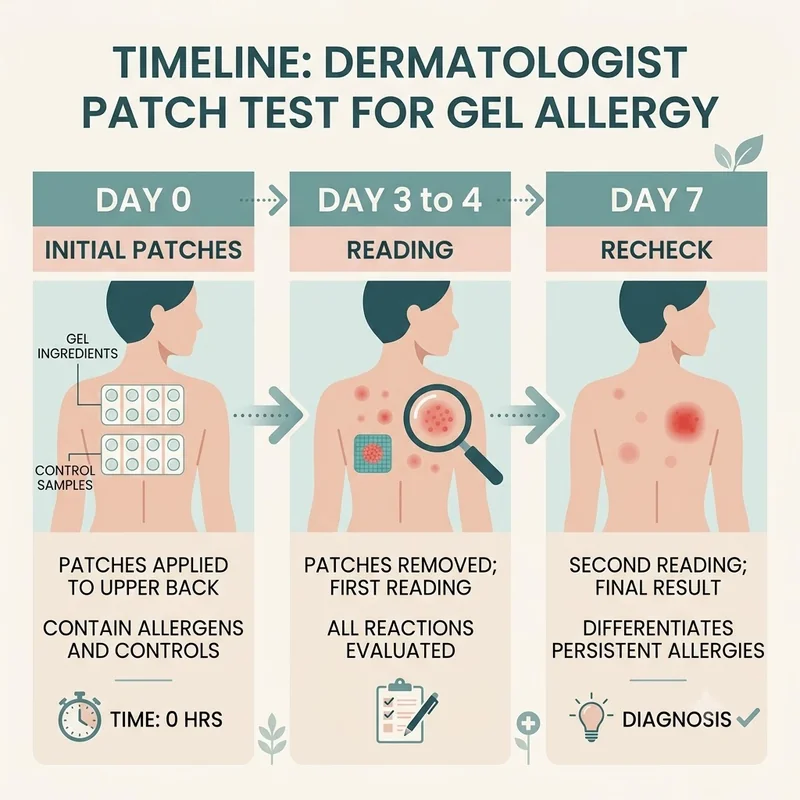
A dermatologist nail patch test takes about a week from first visit to final reading. Patches sit on your upper back for 48 hours, and the skin is read again on day 3 or 4, with a late reading around day 7 for slower reactions.
The test itself is painless. A nail patch test uses small chambers, each holding a standardized allergen, taped flat to your back like stickers. Clinicians typically start with a baseline series of common allergens, add a methacrylate series covering gel and acrylic ingredients, and sometimes test your own products in diluted form when they judge it safe. The dermatologist quoted earlier sums up the load in a single line: a dermatology visit, "application of allergen panels for 48 hours, and follow-up readings days later."
The delay matters because allergic contact dermatitis is a delayed reaction. Reading only at 48 hours would miss allergies that surface on day 3 or 4. A positive result looks like a small red, raised, itchy patch beneath one specific chamber. Irritant reactions usually fade by the later reading, while true allergic reactions tend to hold or strengthen.
Keep your back dry, skip heavy workouts, and resist scratching until the final reading.
How to Get a Patch Test (and What to Bring)
Booking a nail patch test is not a specialist-only ordeal. Dermatologists and allergists run patch testing as a routine outpatient service, usually through a dermatology office or a contact dermatitis clinic, and some insurance plans want a referral first. Skin patch testing by an allergist is how a nail product allergy gets confirmed or ruled out, as the Asthma and Allergy Foundation of America explains. Start with your primary care doctor or a dermatology office that lists patch testing among its services.
Bring the bottles or clear photos of every product used on your nails, along with ingredient lists and safety data sheets, which manufacturers publish for professional products. Add photos of the rash at its worst, the dates of your last few sets, and a list of anything else that regularly touches your skin.
If you work in the nail industry, say so when you book. Daily exposure changes which allergens matter and how results are read.