What Causes Beau's Lines?
A short list of ordinary causes accounts for most cases of Beau's lines: high fever, a significant illness, surgery, and physical injury to the nail. Anything that briefly interrupts the nail matrix can leave a groove, and chemotherapy, which slows fast-dividing cells, is another well-known trigger. Chronic conditions and skin problems near the nail base cause fewer cases.
Illness sits at the top. A bad flu, a viral infection with a high temperature, or a hospital stay can pause growth, and the groove becomes visible weeks later, once that stretch of nail grows out from under the cuticle. COVID-19 has been reported to cause Beau's lines several weeks after infection, and these "COVID nails" follow the same fever-and-illness pause. Major physical or emotional stress can do the same, while an ordinary hard week almost never does.
Injury comes next. A slammed finger, a harsh cuticle push, or tight shoes pressing on a big toenail can mark a single nail.
Nutrition ranks lower than most people expect. Severe deficiency can interrupt growth, but everyday nail weakness is a different problem, and our piece on why nails become weak and brittle covers that side. Chronic conditions such as diabetes or circulation problems, and eczema around the nail base, account for a smaller share and usually announce themselves in other ways first.
Onychomadesis is the complete separation of the nail plate from the matrix at a growth pause, and it is the stronger form of what happens with Beau's lines. A groove deep enough to split the nail at that line sits close to it.
One Nail, All Nails, or Repeating Lines: What the Pattern Tells You
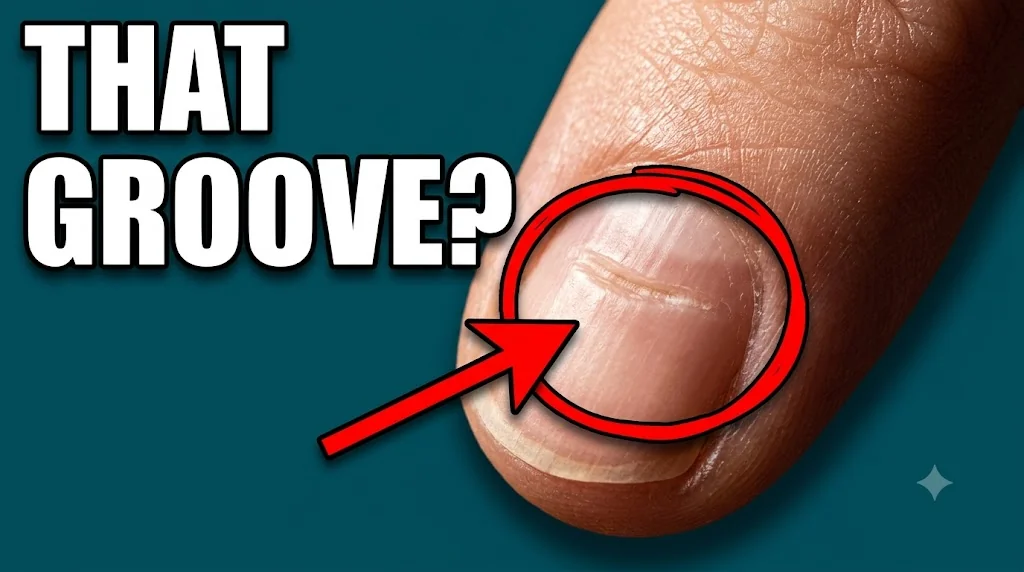
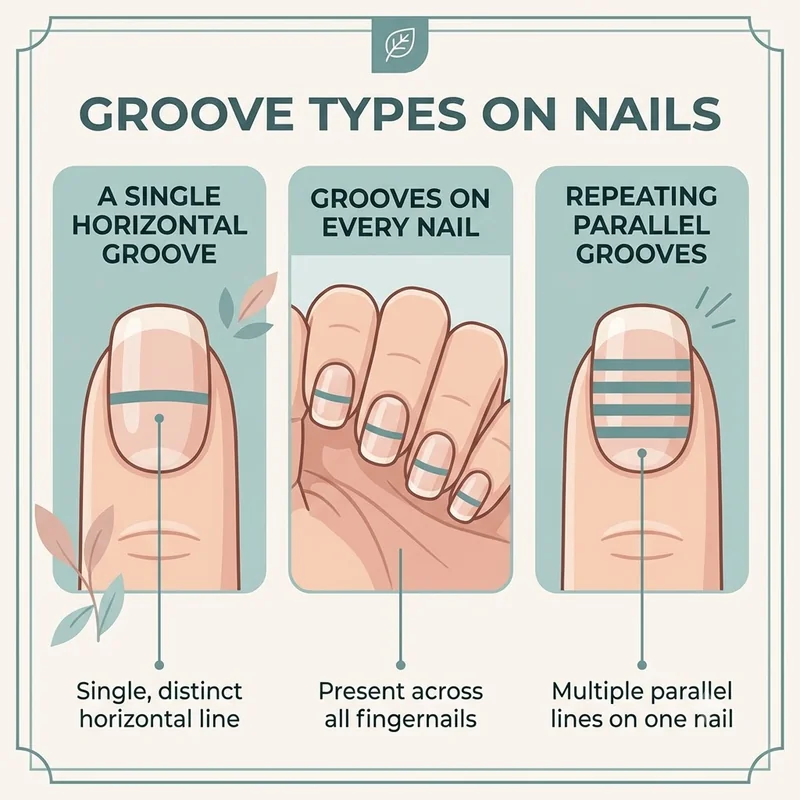
The pattern of Beau's lines tells you more than any single groove does. A groove on one nail points to a local injury, grooves at a similar height on every nail point to a body-wide event, and evenly spaced parallel grooves point to something that recurred.
One nail is usually trauma: a slammed finger, an aggressive manicure, or, on big toenails, repeated pressure from shoes.
Several nails are a different story. One nail health expert explains that Beau's lines are "horizontal grooves crossing several nails at once" that "usually mark a specific illness, high fever, or major stress from weeks earlier when that section of nail was forming." Grooves at a similar height share one date, and that shared date is the clue.
Feeling fine does not contradict Beau's lines on every nail, because the event was weeks ago and you have recovered from it. What you need is a date. If the groove lines up with a fever, surgery, or hard stretch, you have your explanation, and Cleveland Clinic explains how clinicians read the number of lines, including depth and thickness.
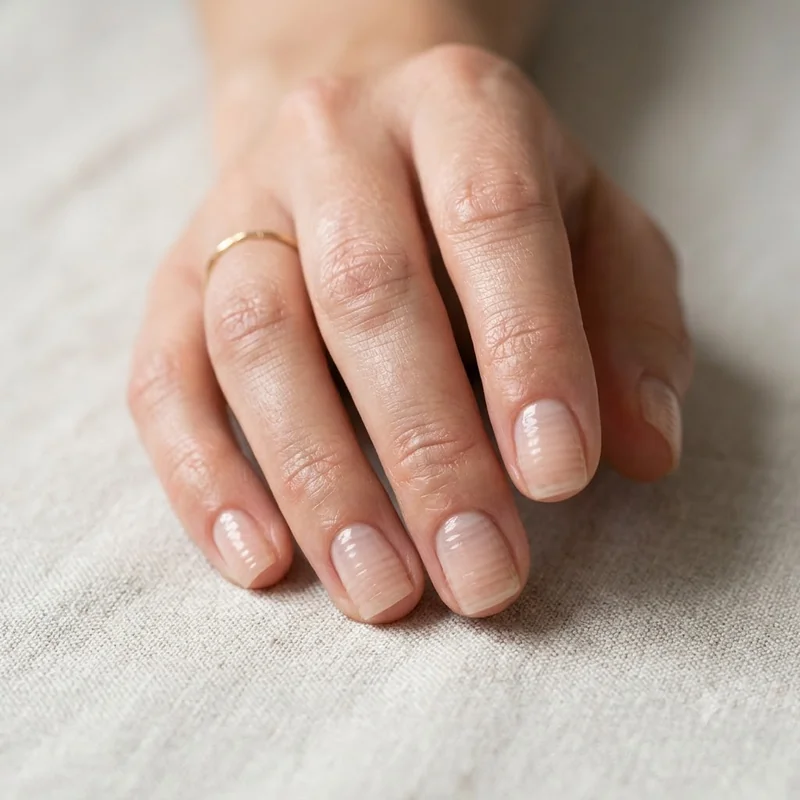
Repeating Beau's lines, spaced at regular intervals, usually track a recurring cause such as chemotherapy cycles or repeated fevers. New grooves forming behind old ones are a pattern worth taking to a doctor.
How to Tell When Your Beau's Lines Happened
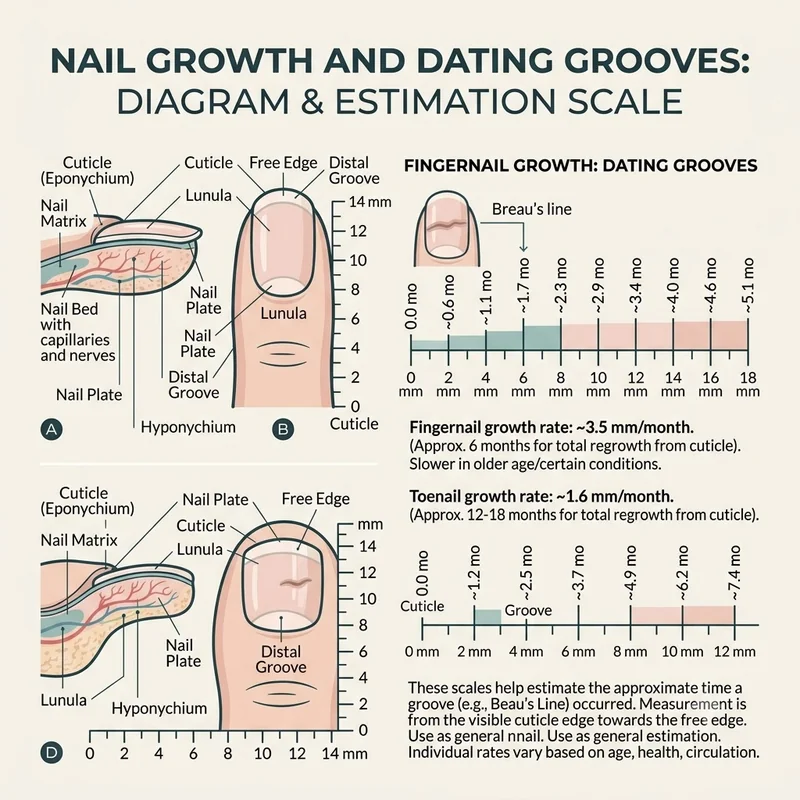
Beau's lines look like a flaw but work as a date: measure from the cuticle to the groove, then divide by the nail's growth rate, about 3 millimeters per month for fingernails and about 1 millimeter per month for toenails. A groove 6 millimeters from a fingernail cuticle has about two months of growth behind it. The event usually sits a few weeks earlier than that number suggests, because the groove spends time hidden under the skin before it shows, so widen your window backward.
The method takes two minutes:
- Hold the nail under bright light and find the middle of the groove.
- Measure from the cuticle line to that point in millimeters.
- Divide by 3 for a fingernail or by 1 for a toenail to get months.
- Count back that many months from today, then add a few weeks.
Then match that window to your own calendar. A fever, surgery, a new medication, a chemotherapy cycle: one of them usually fits. Toenails reach much further back, since a groove 5 millimeters from a big toenail cuticle has about five months of growth behind it, an event most people have already forgotten. That gap is why toenail grooves are harder to explain, and why repeated shoe pressure is so often the answer.
Measure again in a month. A fingernail groove should have moved about 3 millimeters toward the tip. If a fresh groove has formed closer to the cuticle, Beau's lines are repeating and the cause is still active.
Beau's Lines vs Vertical Ridges, Picking Damage, and White Lines
Beau's lines run across the nail from side to side and vertical ridges run along it from cuticle to tip, and that difference in direction separates the two almost every time. Vertical ridges become more common with age and are not a growth pause, so the dating method does not apply to them. Our guide to vertical ridges on nails and what causes them covers that pattern.
Picking damage is the next look-alike. Habit-tic deformity is a pattern of evenly spaced, washboard-like horizontal ridges caused by repeatedly picking, pushing, or rubbing the cuticle and nail fold, and it usually affects one or both thumbnails, sometimes with a central channel that gives a fir-tree look. It repeats for as long as the habit does. Beau's lines from illness sit at a similar height across several nails and do not recur without a new trigger.
White lines are a separate group. Mees' lines are white transverse bands within the nail plate that stay smooth to the touch, and they signal a body-wide cause such as severe illness or chemotherapy, so they deserve a doctor's opinion. Run a fingertip across the mark: a groove catches, a Mees' line does not. Muehrcke's lines are paired white bands that fade when you press the nail and do not move as it grows. They are uncommon, and they also deserve a doctor's opinion.