Why Mayo Clinic and Some Podiatrists Disagree
Two things go wrong when floss slides under a nail that has already cut the skin: it adds trauma to inflamed tissue, and it can hold bacteria against an open wound. So yes, floss can make an ingrown toenail worse, and that is the core of the objection from Cedars-Sinai's podiatrist and from the American College of Foot and Ankle Surgeons. Mayo Clinic describes floss for a different toe, one that is only slightly ingrown and has no pus.
Picture one sore big toe and two browser tabs. In the first, Mayo Clinic and Cleveland Clinic list dental floss for an ingrown toenail as a home step. In the second, Jacob Stibelman, DPM, a podiatrist at Cedars-Sinai, advises against forcing cotton balls or floss under the nail because it adds trauma to tissue that is already inflamed.
The American College of Foot and Ankle Surgeons (ACFAS) cautions that placing cotton or floss under the nail may increase pain and let harmful bacteria thrive, a position reported by Cleveland Clinic and by Healthline's review of ingrown toenail remedies. Healthline adds that soaking floss in alcohol may reduce the risk.
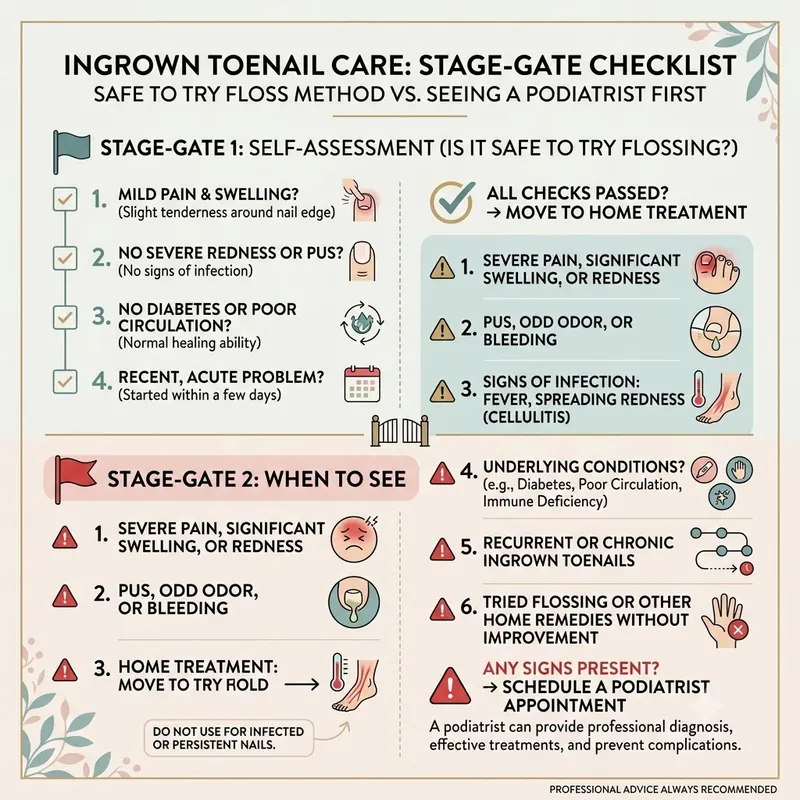
Neither side is careless. Each is right about the toe it has in mind. Mayo's wording covers a nail edge that is only mildly ingrown. The warning from Cedars-Sinai covers a nail that has already broken the skin, where anything pushed underneath is pushed into a wound. Put together, the two positions describe one boundary, and the boundary is the state of the skin. That is why dental floss under an ingrown toenail earns a yes from one clinic and a no from another.
Who Should Try the Floss Method (and Who Should Skip It)
Skip dental floss under an ingrown toenail if the skin beside the nail is broken, draining pus, or turning redder and wider, and skip it at home entirely if you have diabetes, poor circulation, nerve damage in the feet, or a weakened immune system. Everyone else needs a podiatrist, not a spacer.
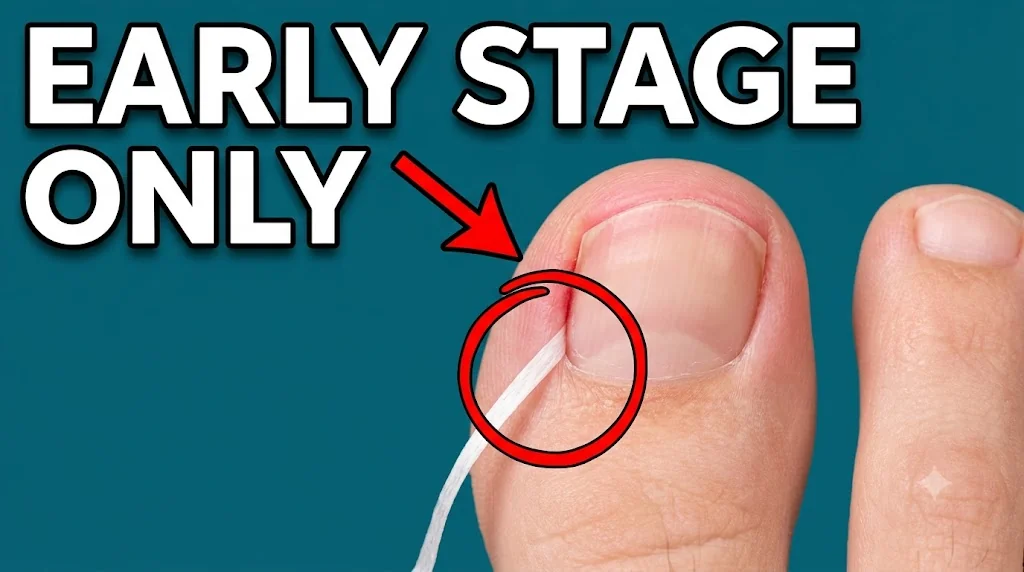
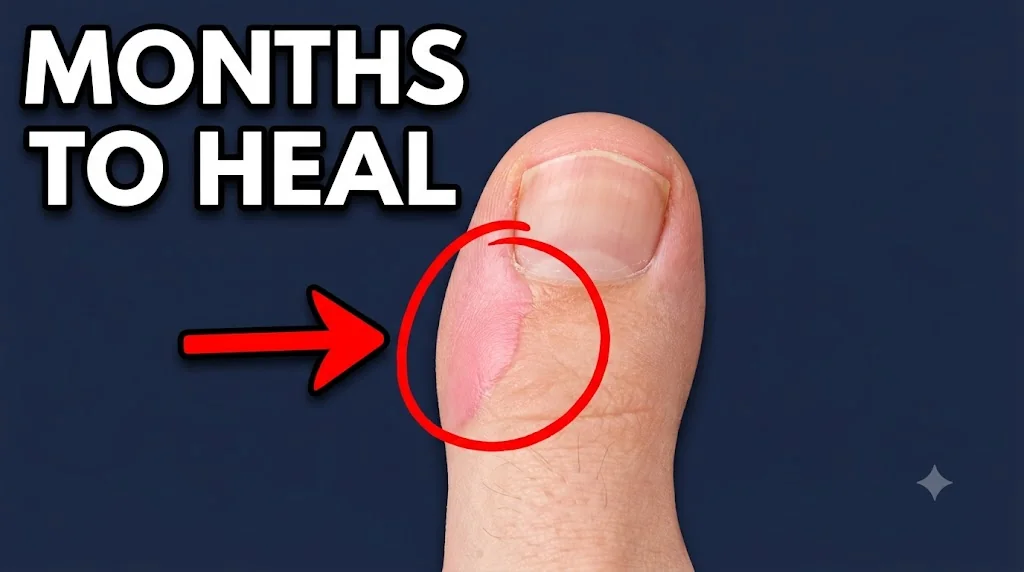
In the early stage, the nail edge presses on the skin fold and it hurts, but the skin has not split and nothing is draining. Clinicians lay out how ingrown toenails progress from mild to infected, and floss only has a place on the first rung. Floss and cotton work as a buffer between nail and skin, and one nail health expert is specific about when: "This can be useful in the early stages before the nail has cut into the skin, to reduce some of the pressure and allow the edge of the nail to grow out instead of becoming ingrown."
Try dental floss for an ingrown toenail only when the edge is sore, the skin is unbroken, and nothing is draining. If you see pus, a hot throbbing toe, or spreading redness, read the signs you need a doctor for an ingrown toenail and book the visit.
Diabetes, poor circulation, peripheral neuropathy (nerve damage that dulls feeling in the feet), and a weakened immune system share one problem: they hide or slow damage. A small DIY mistake can go unnoticed until it becomes a wound that will not heal. For anyone in those groups, the podiatrist is the first step, not the fallback.
Many ingrowns begin with corners trimmed too round, so how to shape toenails at home without causing ingrown nails is worth reading before the next trim.
How to Use Dental Floss for an Ingrown Toenail, Step by Step
Using dental floss for an ingrown toenail is a lifting technique, not a poking one. You soak the foot, slide a small piece of clean waxed floss between the nail edge and the skin so the edge sits slightly raised, trim the ends, and replace the piece every day. Stop after 48 to 72 hours if nothing improves.
Nail lifting places a thin spacer under the nail edge so it grows above the skin edge instead of into it, and floss or cotton is the household version.
- Wash your hands, then soak the foot in warm water, with Epsom salt if you like, for about 15 minutes. Dry the toe completely.
- Cut a fresh piece of plain waxed floss and roll it into a small wisp. Healthline reports that soaking the piece in alcohol may reduce the bacterial risk.
- With a clean fingertip, gently lift the nail edge and slide the wisp under it, between the nail and the skin fold. Never force it into the skin.
- Trim the ends short so the piece cannot catch on a sock, and check that the toe feels only light pressure.
- Once a day, remove the piece, soak and dry the toe, and place a brand-new piece. Never reuse one.
- Stop if pain, redness, or swelling has not eased by 48 to 72 hours, or gets worse at any point. Remove the floss and see a podiatrist.
Sharp pain is a stop signal, not something to push through. If dental floss under an ingrown toenail hurts more after you place it, take it out.
Waxed or Unwaxed Floss? Cotton vs Floss vs Splints
Waxed floss is the better pick, although the sources contradict each other. Mayo Clinic and Austin Foot and Ankle name waxed floss, Palm Medical names unwaxed, and none of them explain the choice. Waxed floss slides under the nail edge without fraying or dragging on tender skin, which is the whole argument for it.
Choose plain and unflavored, and use a fresh single-use piece each time. Flavoring adds an ingredient with no job to do near sore skin.
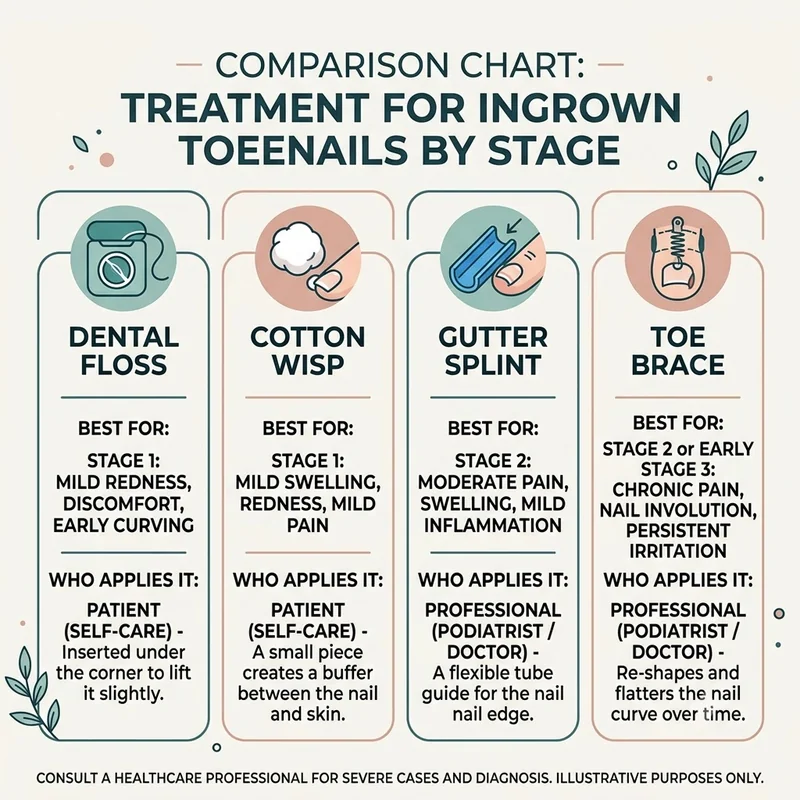
Cotton does the same job. A small wisp of cotton and a wisp of floss both act as a spacer, and clinicians name them in the same breath, so use whichever slides under your nail edge with less discomfort.
Toe braces and correction strips work differently: they are sold to lift the nail edge up and away from the skin. Whether dental floss under an ingrown toenail beats a brace depends on how far along the nail is, and the same nail health expert is blunt about the limit: "For some people these can be helpful, but if the ingrown nail is quite progressed, they are rarely enough to settle it completely."
A podiatrist places a gutter splint or collodion-coated cotton, and both are aimed at a nail that is already embedded. By stage, then: floss or cotton for a sore edge with unbroken skin, braces and strips for that same early window, and a podiatrist's splint once the nail has embedded.