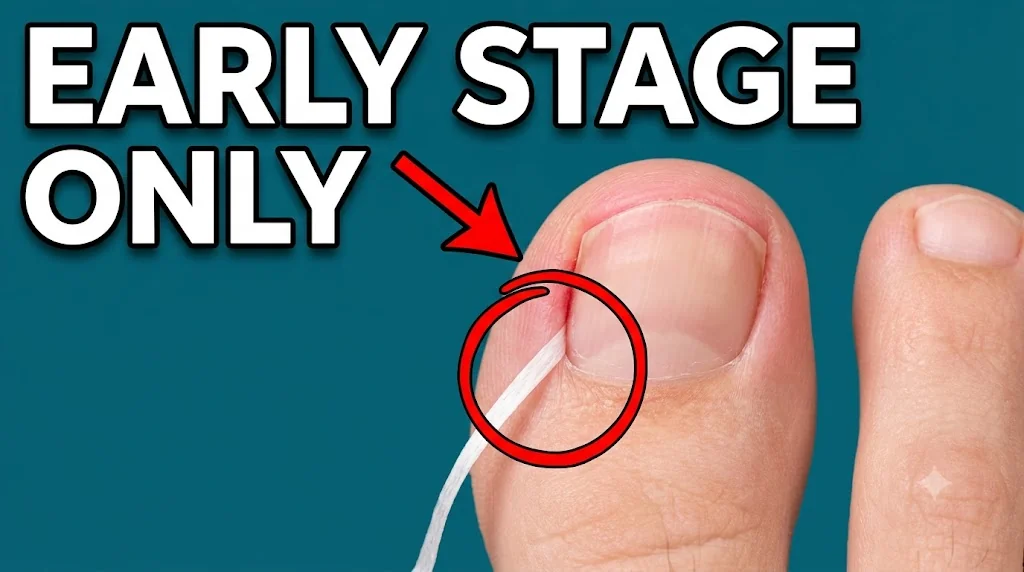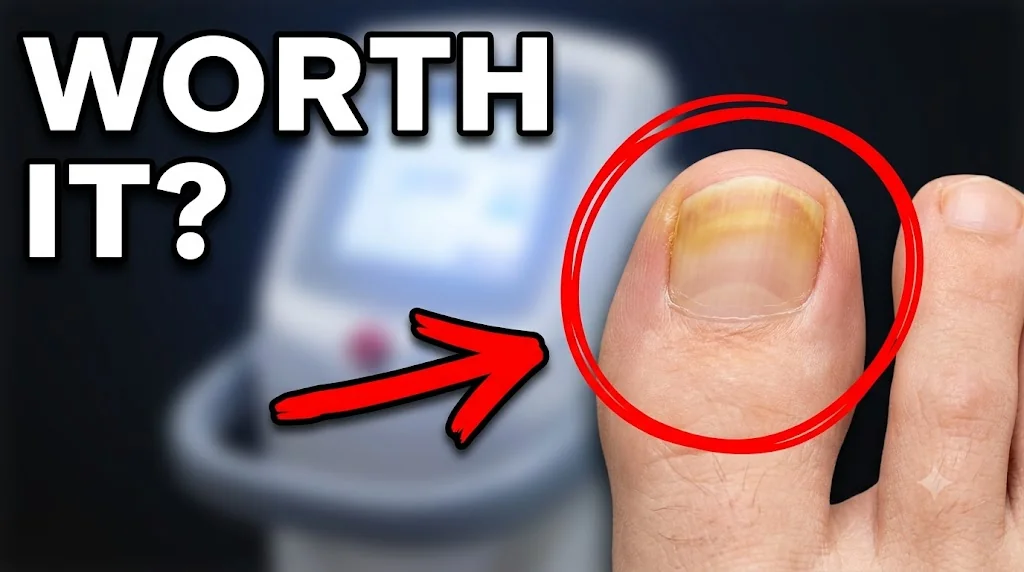
Does laser treatment work for nail fungus? Clinics advertise 80% to 90% success, while some podiatrists say a laser will never cure it. Both sides are quoting real numbers, measured against different finish lines. The short answer to does laser treatment work for nail fungus is sometimes, and slower than any ad suggests.
When it works, it works modestly. The fungus can be knocked back and a toenail can look noticeably better, but a fully clear nail after laser alone is the exception, not the plan. That gap between the advertised number and the lived result is where people end up paying $600 to $2,000 for an outcome they did not expect.
You may be holding a quote or a flyer right now, possibly after pills gave you a headache or a doctor advised against them. Fair enough. This post gives you the actual odds, what the studies measured, how long the nail takes to look different, and a way to judge which side of the numbers you are likely to land on before any money changes hands.
So, Does Laser Treatment Work for Nail Fungus?
Laser treatment can clear fungus from some toenails, but the odds are modest and the pace is slow. Pooled trial data shows about six in ten nails testing fungus-free, while far fewer end up looking fully clear. Think of laser treatment for toenail fungus as a slow supplement rather than a fast fix.
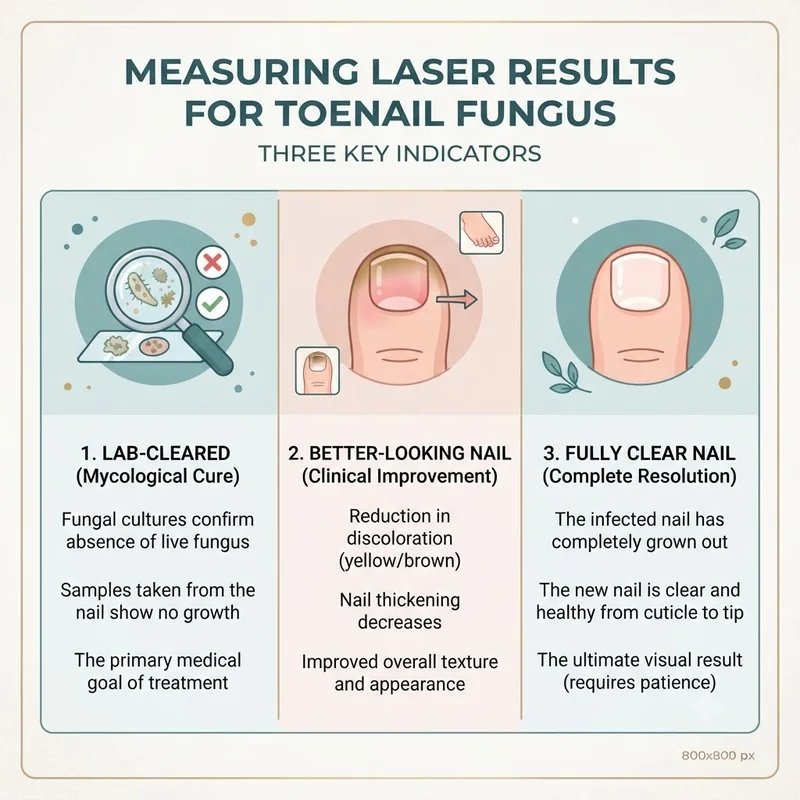
Most people assume "works" has one meaning. It has three, and clinics and researchers rarely use the same one:
- Lab-cleared fungus, judged by a test on a nail sample.
- A better-looking nail, with less thickness or discoloration but no full reset.
- A fully clear nail, with normal-looking growth from cuticle to tip.
Onychomycosis is the medical name for nail fungus, an infection of the nail plate and nail bed. It is stubborn partly because the fungus sits beneath a thick, slow-growing barrier. One podiatrist puts the trade-off plainly: "Laser treatment can work on fungal toenails, but in my experience, it takes a long time."
Keep those three finish lines in mind. Every number in the next section belongs to one of them.
What Do the Studies Actually Say About Laser Cure Rates?
Laser treatment for nail fungus shows a pooled mycological cure rate of roughly 63%, but the best-controlled trials found little or no difference from sham treatment. The honest reading is modest odds backed by weak evidence.
A mycological cure means lab testing finds no living fungus in the nail, a stricter bar than a nail that merely looks better. The 63% comes from a 2019 systematic review of 35 articles covering 1,723 patients and 4,278 nails. Nd:YAG lasers (1064 nm) matched that figure, and CO2 lasers reached 74.0%, though the CO2 range was very wide (95% confidence interval 37% to 98%). Medical News Today's overview of laser therapy covers that analysis and notes that the American Academy of Dermatology still calls laser unproven.
Cochrane's 2020 review of toenail studies is less flattering. It found three studies comparing laser with no treatment or sham treatment and saw little or no difference in mycological cure, though the evidence was low quality and complete cure was not measured. A 2024 meta-analysis leaned friendlier, calling laser comparable to terbinafine with fewer side effects, but it asked for larger trials. Pooled analyses disagree, and many laser studies are small, short, and in some cases funded by device makers.
FDA-cleared nail fungus lasers are cleared for a temporary increase in clear nail, not approved as a proven cure for the infection. Cleared is not approved, and the difference matters when an ad leans on the FDA's name.
That is how an 80% to 90% ad and a skeptical podiatrist coexist. One clinic's own estimate, offered as an estimate and not a study, is that laser makes 30% to 40% of nails look better and leaves under 15% completely clear. The same clinic calls the higher advertised figures misleading.