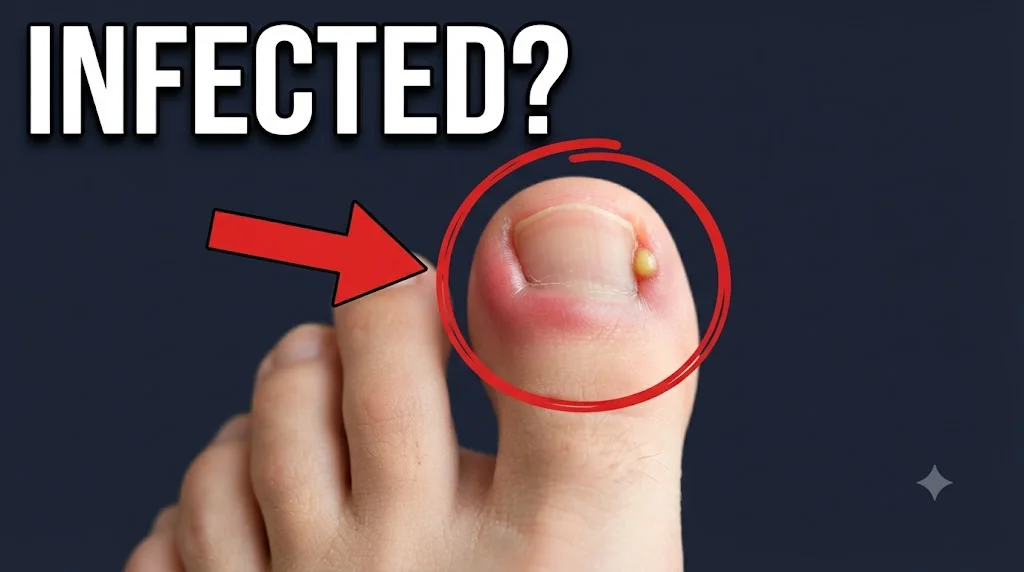
An infected ingrown toenail announces itself as a stack of signs, not a single one: pus, warmth, and redness that spreads past the nail edge, usually together. Redness, swelling, and soreness on their own describe a plain ingrown nail just as well, which is why so many symptom lists leave you exactly where you started. This guide draws the line between an irritated toe and an infected ingrown toenail, then tells you how fast to act on each side of it.
You have probably been soaking it for a few days. It throbs at night, the skin looks tight and shiny, and part of you is hoping it settles before anyone has to look at it. That hope is reasonable for an irritated toe and a poor bet for an infected one, and the difference is readable at home in a couple of minutes.
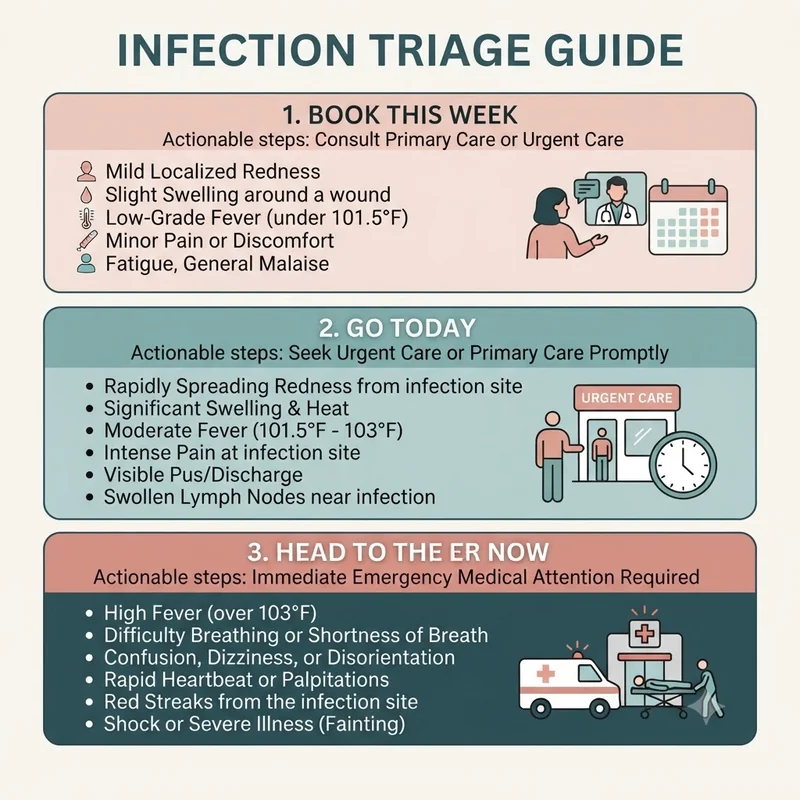
Most pages list symptoms and stop there; this one also tells you how urgent each combination is. Below: the stacking rule, what infection looks like, three urgency lines (this week, today, ER now), and the honest limits of home care. By the end you will know which tier your toe sits in and what to do tonight.
How Do You Know If an Ingrown Toenail Is Infected or Just Inflamed?
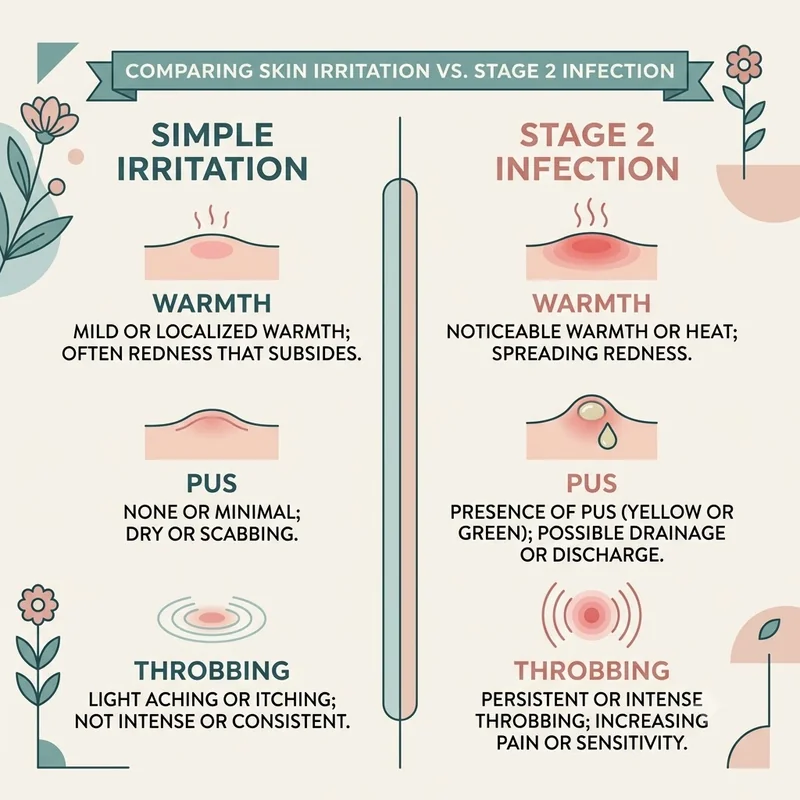
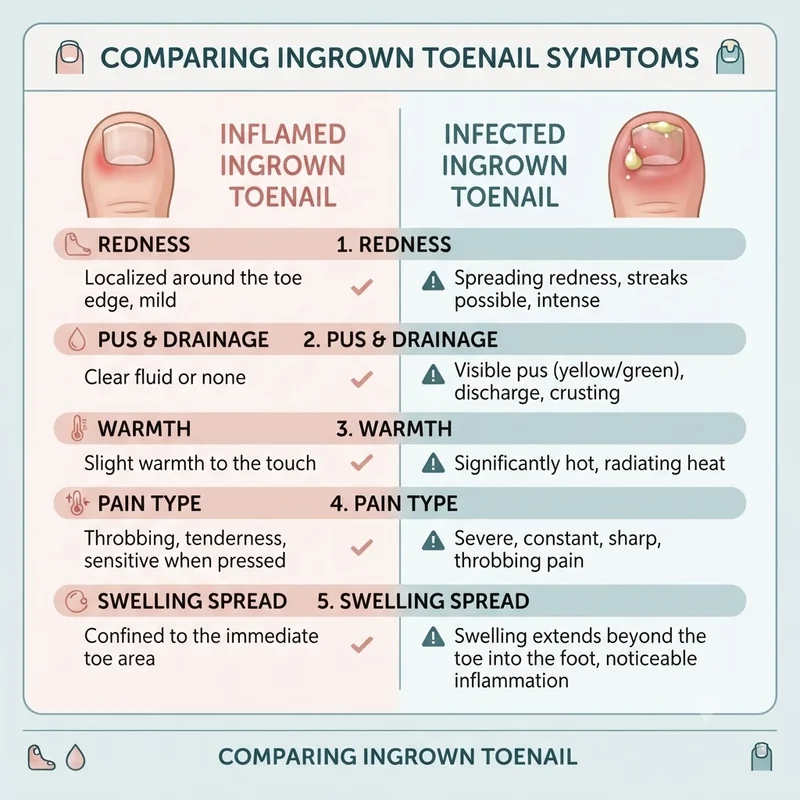
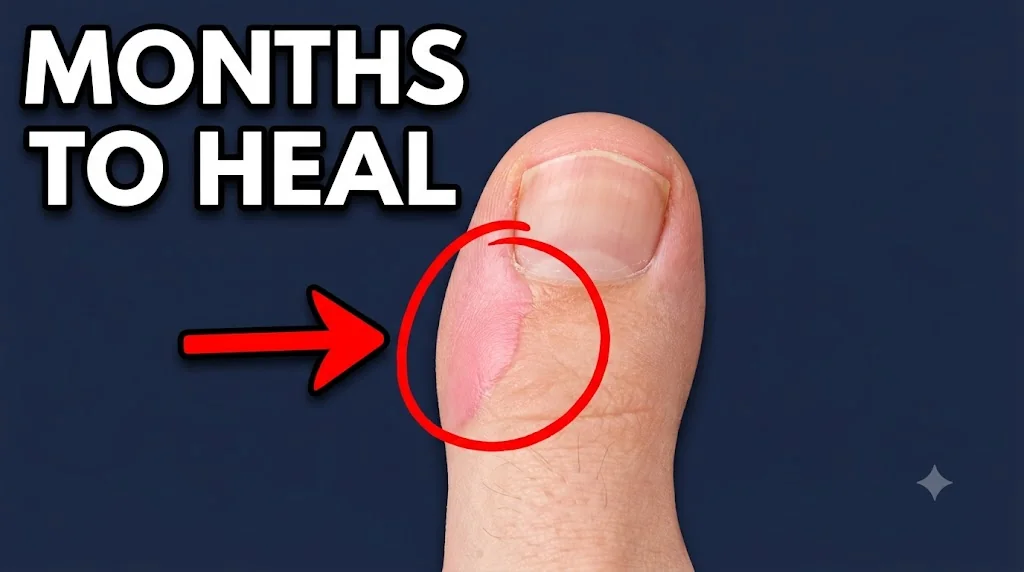
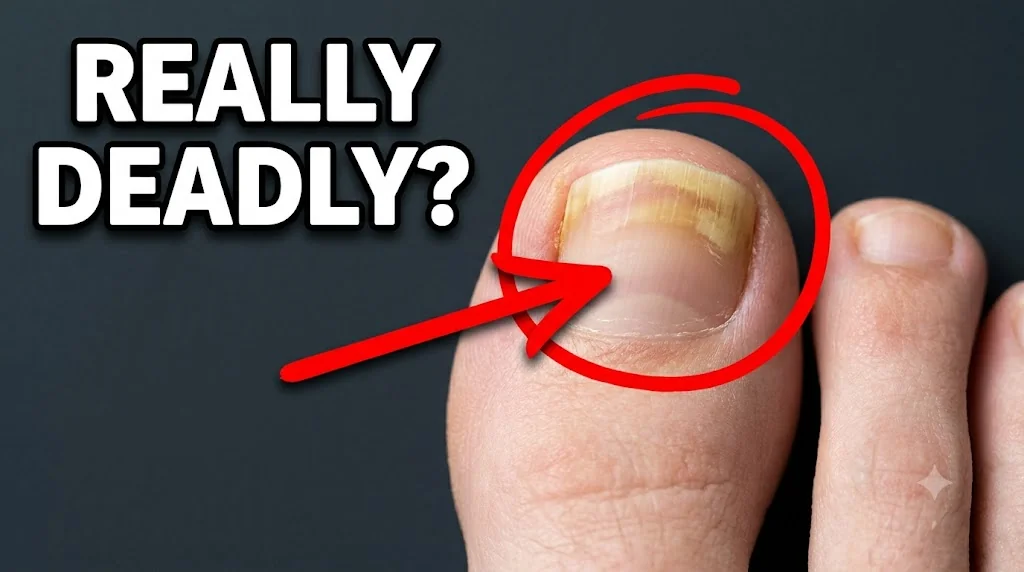
Redness, swelling, and soreness do not prove infection, because a plain ingrown nail causes all three. An ingrown toenail is infected when two or more signs stack up, especially pus and warmth together, or redness that keeps spreading past the nail edge. One sign alone is usually irritation.
Here is the mechanism. A nail edge that digs in makes the skin fold red, swollen, and tender, and that is inflammation. Once the skin breaks, bacteria get in. Paronychia is a bacterial infection of the skin fold around a nail, and it is the infection that develops when an ingrown toenail breaks the skin.
A nail health expert lists the common features as "redness, swelling, pain and pus," and names the cause as "bacteria getting into the cut made from the nail in the skin." Read that list as a stack, not a checklist. The first three describe an irritated toe equally well; pus arriving alongside them, or warmth you can feel against the other foot, is what tips an infected ingrown toenail out of the merely sore category.
If you suspect an infected ingrown toenail, count the signs instead of judging any one of them. To see where your toe sits on the bigger arc, read how ingrown toenails progress from mild to infected. At Mirellé, we are editors, not clinicians, so treat all of this as a way to read your toe, not a diagnosis.