That dark line on nail you cannot stop looking at is, far more often than not, harmless. A small number turn out to be melanoma, and the two are separated by a check you can do today: a harmless band is narrow, evenly colored, and unchanged, while a worrying one is wide, blurred, or new. By the end of this page you will know whether your dark line on nail is harmless or needs a dermatologist this week.
You probably arrived the usual way: a stripe noticed while typing, one search, and then a frightening word in the results. That spiral is understandable, and it is worth interrupting. Staring at the nail will not answer the question. Measuring it will. Most pages answer with an anatomy lesson or a list of causes, but this one starts with the decision, because one sign matters more than color, and it is not how dark the line looks.
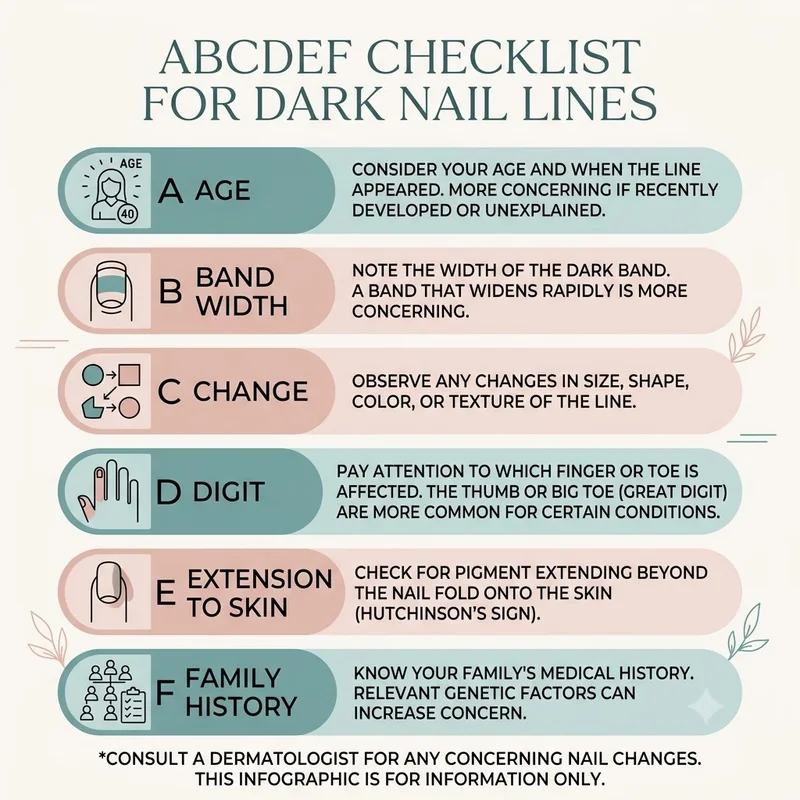
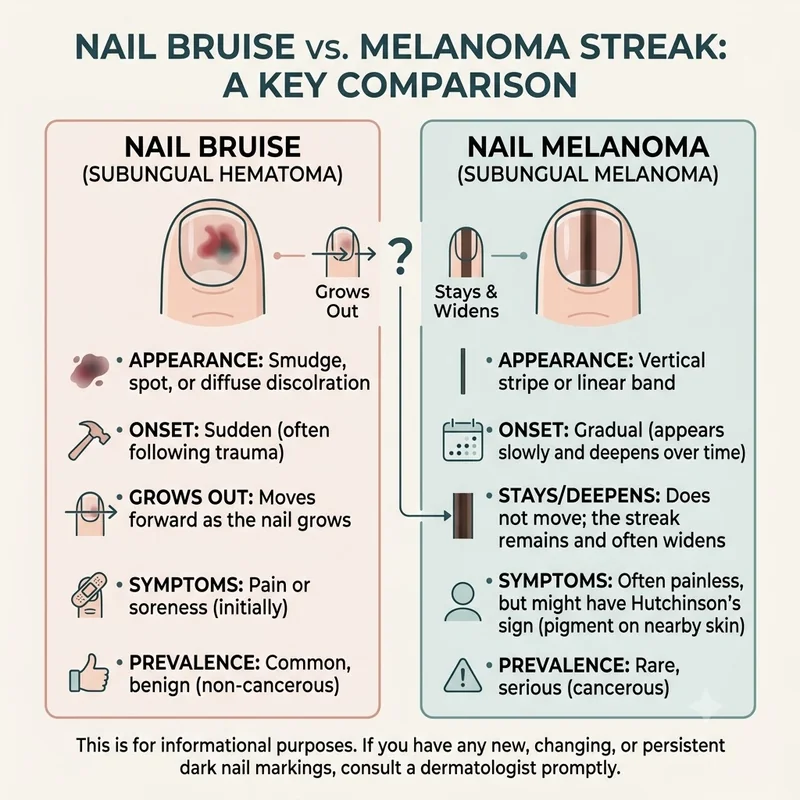
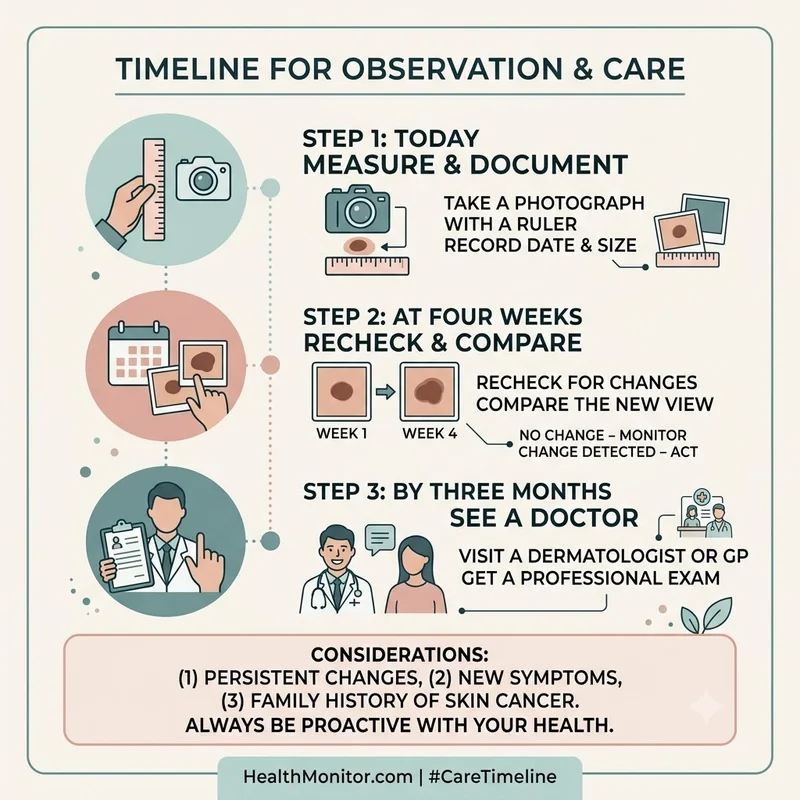
Below are the six checks doctors use, a simple test for telling a bruise from melanoma, a dated photo plan, and a plain account of what the appointment involves. Every threshold is attributed to its source, so you know exactly whose rule you are applying.
What a Dark Line on Your Nail Usually Means
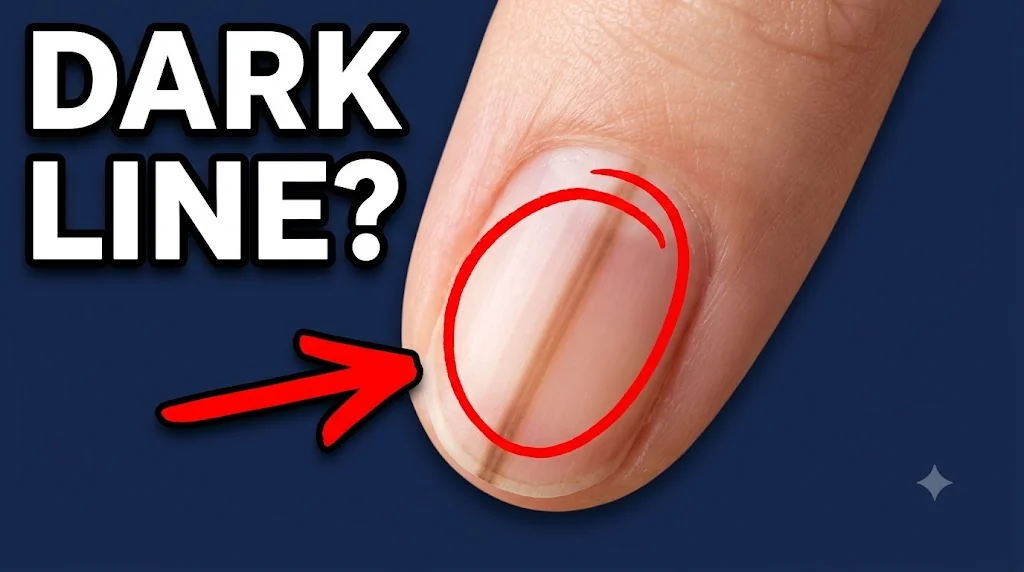
A dark line on nail usually means that pigment cells (melanocytes) in the nail matrix have started producing extra melanin. Longitudinal melanonychia (also called melanonychia striata) is a brown-to-black band of pigment running lengthwise along the nail from cuticle to tip. Only a dermatologist, and sometimes a biopsy, can confirm which kind of band you have.
The nail matrix is the tissue under the cuticle where the nail plate is made. That is why the stripe always begins at the cuticle and travels toward the tip as the nail grows: the pigment goes into new nail as it forms, so the band is a record of what the matrix has been doing, not a mark on the surface.
Most of the time, the extra pigment has an ordinary source. Natural melanocyte activation is common, especially in darker skin. Friction, repeated minor trauma, and hormonal shifts such as pregnancy can also switch these cells on. Less often, they gather into a mole (nevus) or a flat pigmented spot (lentigo). Rarely, they become melanoma, which is why the behavior of a dark line on nail matters more than how dark it looks.
A streak is one of several nail changes worth reading in context; for the wider color picture, see what your nail color is telling you about your health. A line running across the nail rather than down it is a different matter and is not covered here.
Why Most Dark Nail Lines Are Harmless
About 1 in 100 people with lighter skin have longitudinal melanonychia, compared with about 70 in 100 people with darker skin, according to WebMD. So a dark line on the nail does not always mean cancer, and in most people it is a benign band of extra pigment. Subungual melanoma, the nail form of melanoma, makes up roughly 0.7 to 3.5 percent of all melanomas, per the same source.
Dr. Rokhsar describes the benign version as a band that is "usually a single narrow streak, uniform in color and width from cuticle to nail tip, with sharp parallel edges." The same description notes that a benign band "stays essentially unchanged over months." Picture a line drawn with a fine marker and a ruler: straight, even, the same shade end to end.
Time is the strongest reassurance. A dark line on nail that has sat unchanged on a thumb for years, the situation many readers describe, is behaving like a benign one. Stability does not replace an exam, but it is the pattern doctors want to see.
Plain vertical ridges are common and colorless, and this guide to how harmless vertical ridges differ from a pigmented band helps if your nail has both.