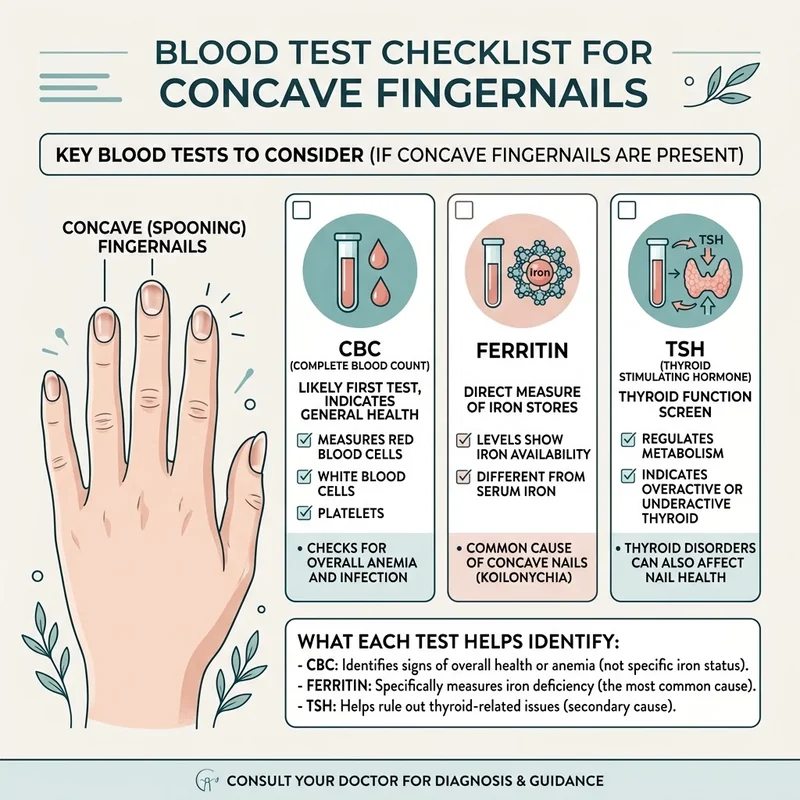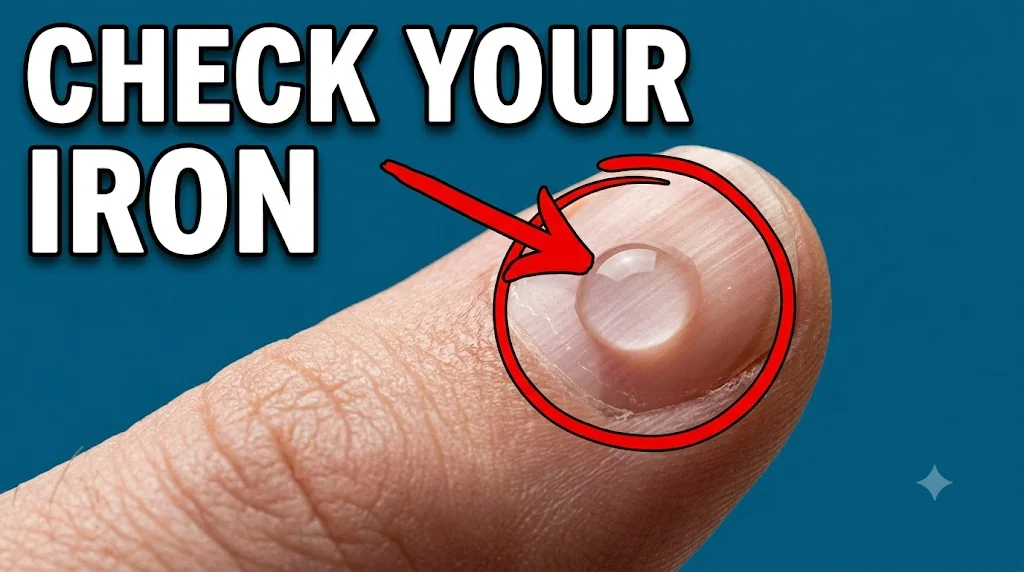
A nail that suddenly holds a drop of water is the classic sign of spoon nails, a dip in the center of the nail that most often points to low iron or a thyroid issue. The fear that arrives with it is reasonable, and the honest answer is that it deserves a blood test, not panic. Spoon nails can be confirmed at home in under a minute, checked in a lab with a single draw, and are often reversible once the underlying cause is treated.
The medical name is koilonychia, from the Greek for hollow nail. At Mirellé, we treat it as health information first and a beauty concern second, which is why this guide starts with the home check and the three lab tests worth asking for before it gets anywhere near nail polish. Most explanations stop at low iron. This one keeps going, because plenty of people with scooped nails have iron levels that came back fine, and they deserve an answer too. You will learn how to run the water-drop test, what the three stages look like, which causes matter beyond iron, and how long recovery realistically takes. Thin, bendy, sunken in the middle: whatever brought you here, the next few minutes end with a plan.
What Are Spoon Nails Actually Telling You?
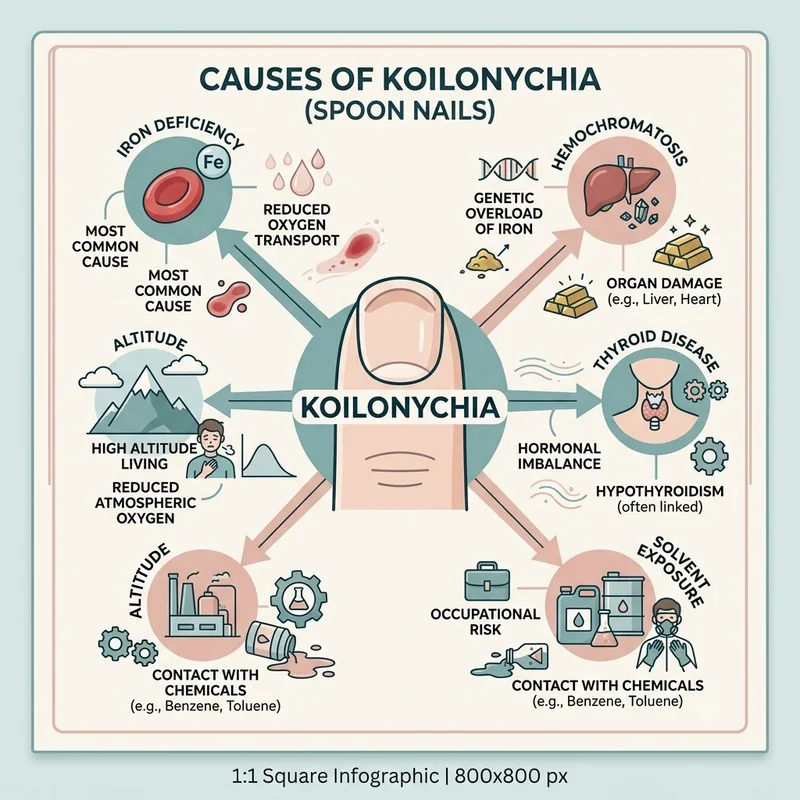
Spoon nails are a message from inside the body, and the most common message is low iron. Koilonychia is a nail shape in which the center of the nail plate sinks inward and the edges lift, so it can hold a drop of water. Less often, the same shape points to a thyroid condition, too much iron in the body, or repeated contact with solvents.
The nail plate is the hard, visible part of the nail, and it grows from the nail matrix tucked beneath the cuticle. Anything that disrupts the matrix leaves a record in the plate, which is why nails change shape weeks after the trigger, not on the day it starts. A dip you notice today usually reflects what has been going on for months.
The signal is not reliable in either direction, which is why spoon nails count as a clue rather than a diagnosis. One clinical review puts koilonychia at roughly 5.4% of people who are iron deficient, so a flat nail cannot rule low iron out, and a scooped one cannot say which cause is behind it.
How to Tell If You Have Spoon Nails (The Water-Drop Test)
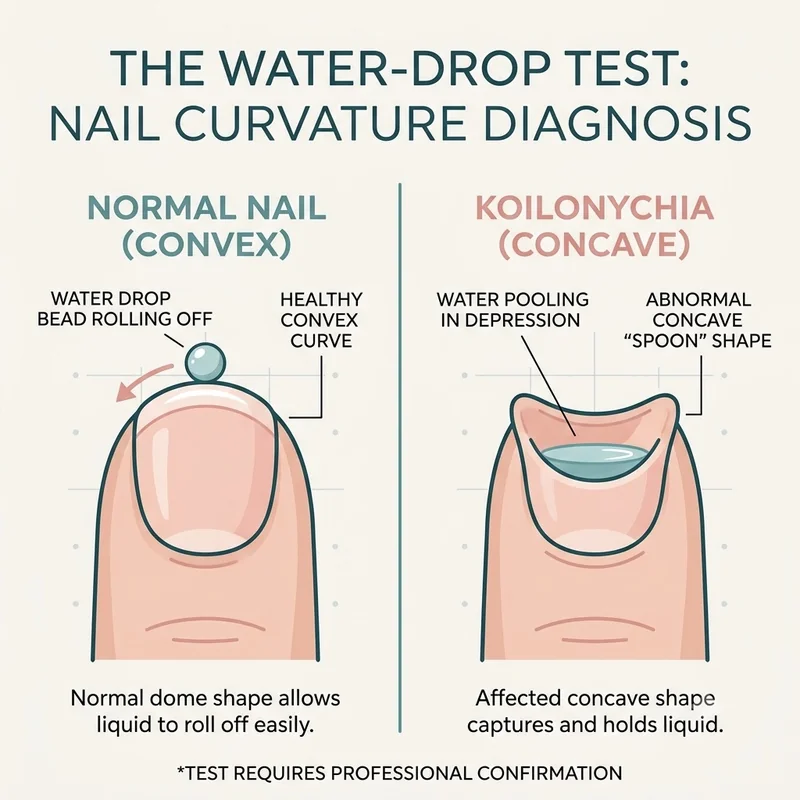
Place one drop of water on the middle of a clean, dry nail and hold your hand level. The water-drop test is a simple bedside check in which a bead of water pools in a concave nail and rolls off a normal, convex one. If the bead stays put, the nail is holding it like a tiny spoon.
- Remove polish and wipe the nail dry, since oil and product change how water behaves.
- Rest your hand palm down on a table so the nail sits level.
- Set a single drop of water at the center of the nail plate.
- Watch for ten seconds, then repeat on the other fingers, because spoon nails from a whole-body cause tend to appear on more than one nail.
Read the result as a prompt, not a verdict. A very short nail, a strongly curved one, or a drop placed near the edge can hold a bead without being truly concave, and nails in the earliest stage may pass the test while already thinning. Hold the nail at eye level for a second opinion: spoon nails show a hollow you can see from the side, with the corners lifting away from the fingertip.