Side by side: how the three prescriptions compare
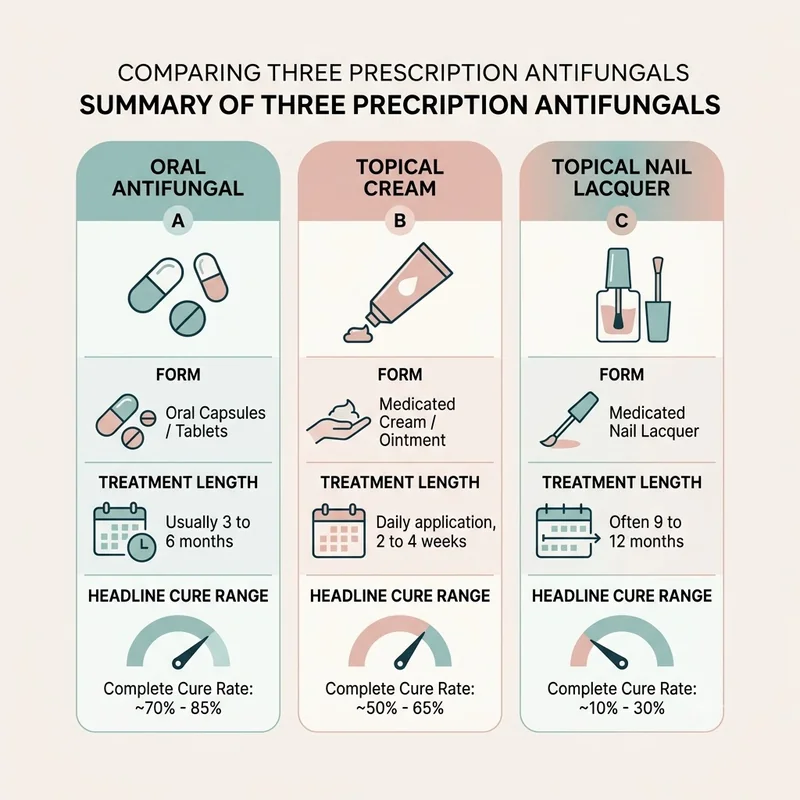
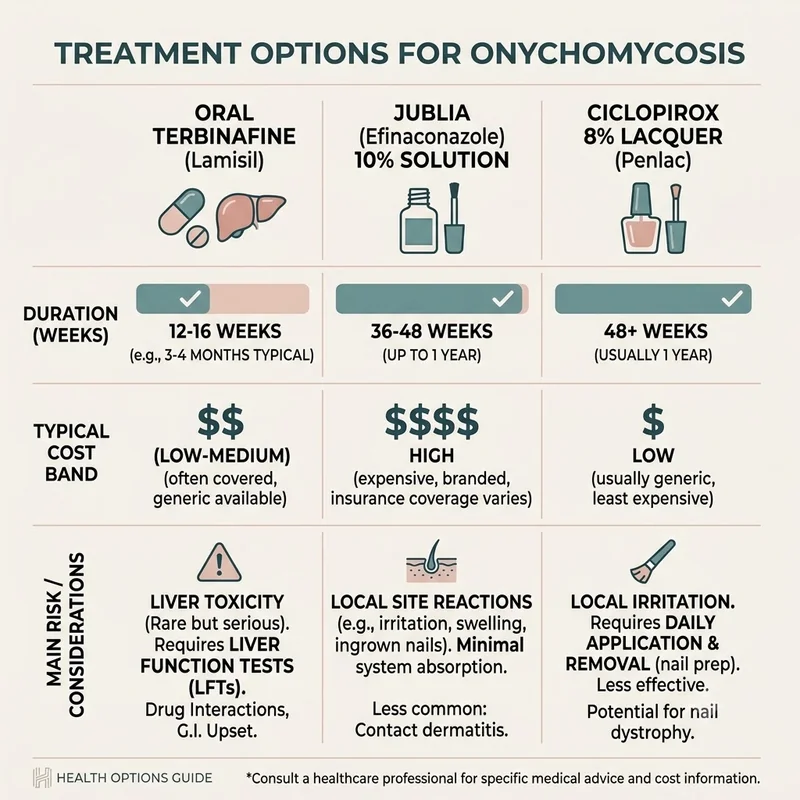
The three prescriptions are not three versions of the same idea. One is a pill that treats the nail from the inside, one is a solution that has to soak through it, and one is a lacquer that sits on top.
| Drug |
Form |
Typical length |
Complete-cure range |
Cost without insurance |
Main risk |
| Terbinafine (Lamisil) |
Oral tablet, once daily |
About 12 weeks |
About 38% |
About $14-$25 per 30 tablets |
Rare liver effects, many drug interactions |
| Jublia (efinaconazole) |
Topical solution, daily |
About 48 weeks |
About 15-18% |
About $790-$1,055 per 4 mL bottle |
Skin irritation at the nail |
| Ciclopirox (Penlac) |
8% lacquer, daily |
Up to 48 weeks |
About 8-11% |
About $12-$20 per bottle |
Redness and irritation |
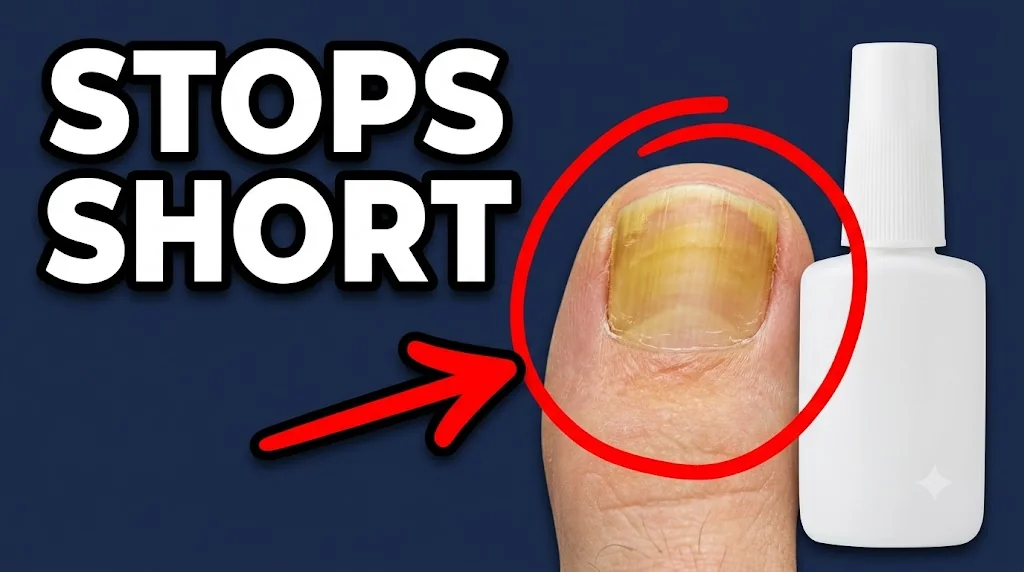
Ciclopirox is the active ingredient in Penlac, an 8% nail lacquer applied like polish and periodically cleaned off. Its label routine includes daily painting and a weekly removal of built-up layers, which is more upkeep than either of the other two.
At Mirellé, we read every row as a range from separate studies, never a promise, and every price as a US figure that shifts. Read across one row at a time and the tradeoff is plain: the drug that costs least and finishes fastest is also the only one with a liver question attached.
What "cure rate" really means (and why the numbers differ)
The cure-rate figures you keep seeing do not contradict each other. They measure different finish lines.
A complete cure means the nail looks clear or nearly clear and lab tests show no fungus. A mycological cure means lab tests show no fungus, even if the nail still looks thick or discolored. Terbinafine sits near 70 percent on the mycological measure and near 38 percent on complete cure, which is why one drug can appear in two very different statistics.
Jublia's 15 to 18 percent and ciclopirox's 8 to 11 percent are complete-cure ranges from separate trials with different patients and different rules. Setting them beside terbinafine's number shows a direction, not a verdict, and no trial cited here pitted all three drugs against each other.
Topicals trail for a physical reason. A nail is dense keratin, and a liquid brushed on the surface has to travel through that plate to reach the fungus underneath. Even a cleared infection looks unfinished for a long time, because the damaged nail must grow out, a timeline covered in the guide on how long nail fungus takes to clear on oral versus topical treatment.
The real cost of a full course
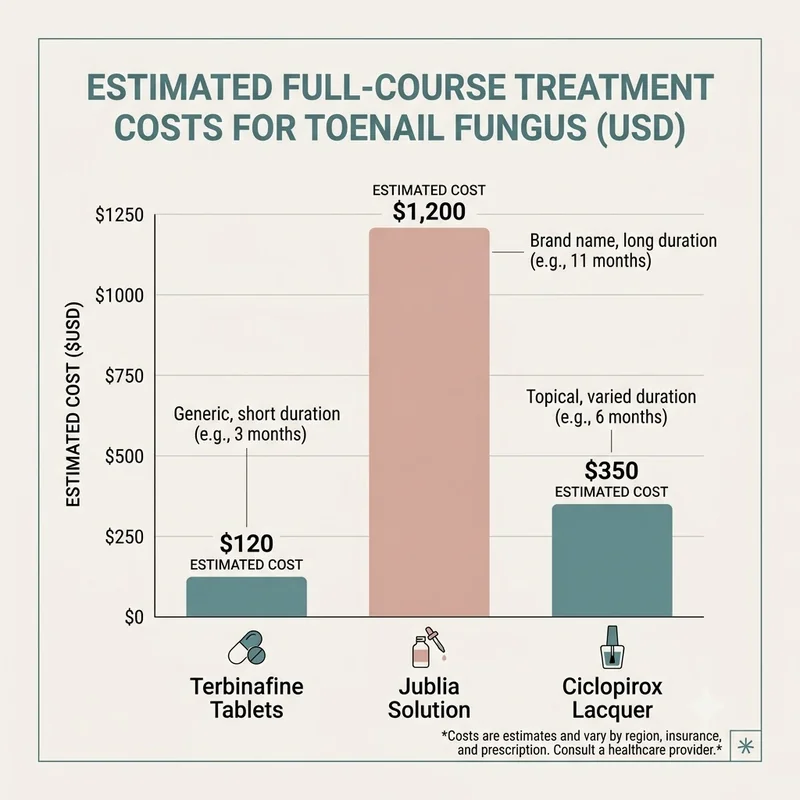
Without insurance, Jublia costs about $790 to $1,055 per 4 mL bottle and generic terbinafine costs about $14 to $25 for 30 tablets, which is the gap that stops people at the counter. Across a full course the difference grows: roughly 48 weeks of Jublia is an estimated $5,000 to $10,000 or more before insurance, while a typical 12-week terbinafine course is about three 30-tablet fills.
Those course totals are estimates that podiatry and pharmacy writers calculate from weeks of use, not published prices. One nail health expert frames the bottle price this way: "Without insurance you can expect to pay close to $1,000 per 4mL bottle; with insurance coverage it's often around $65 per 4mL bottle."
Jublia is expensive in practice because it is a brand-name product applied daily for close to a year, so the bottle price repeats. Some patients report paying about $20 a bottle with a savings card, a figure worth confirming with the pharmacy before you count on it.
Ciclopirox is the cheapest topical, at about $12 to $20 per bottle, though a cheap lacquer used for many months still adds up. Terbinafine can also add the cost of lab visits. Prices vary by pharmacy and change often.
Who should choose terbinafine, Jublia or ciclopirox
If you cannot take pills, Jublia is the strongest prescription topical, and ciclopirox is the cheaper, slower fallback. Both ask for daily application across many months, and neither has terbinafine's track record.
Terbinafine suits adults with healthy livers, a medication list that does not clash with it, and no wish to spend a year applying anything. For most readers, the jublia vs terbinafine decision resolves here.
Jublia suits people who cannot or prefer not to take an oral drug, whose insurance brings the bottle near that $65 range, and who will genuinely apply it every day. Consistency is the whole game with it.
Ciclopirox suits a narrower group: mild infections, a tight budget, and modest expectations. The same nail health expert flags his view as opinion: "In my opinion they do not penetrate through the nail very well, and most patients can expect to use lacquers for years without seeing significant clearing." Picture the lacquer as paint that mostly sits on top of the nail, and the penetration problem becomes easy to see.
Readers still waiting on a prescription can start by weighing whether over-the-counter treatments work, and the best toenail fungus treatments ranked covers the wider field beyond these three.