How Easily Does Nail Fungus Spread? What the Numbers Say
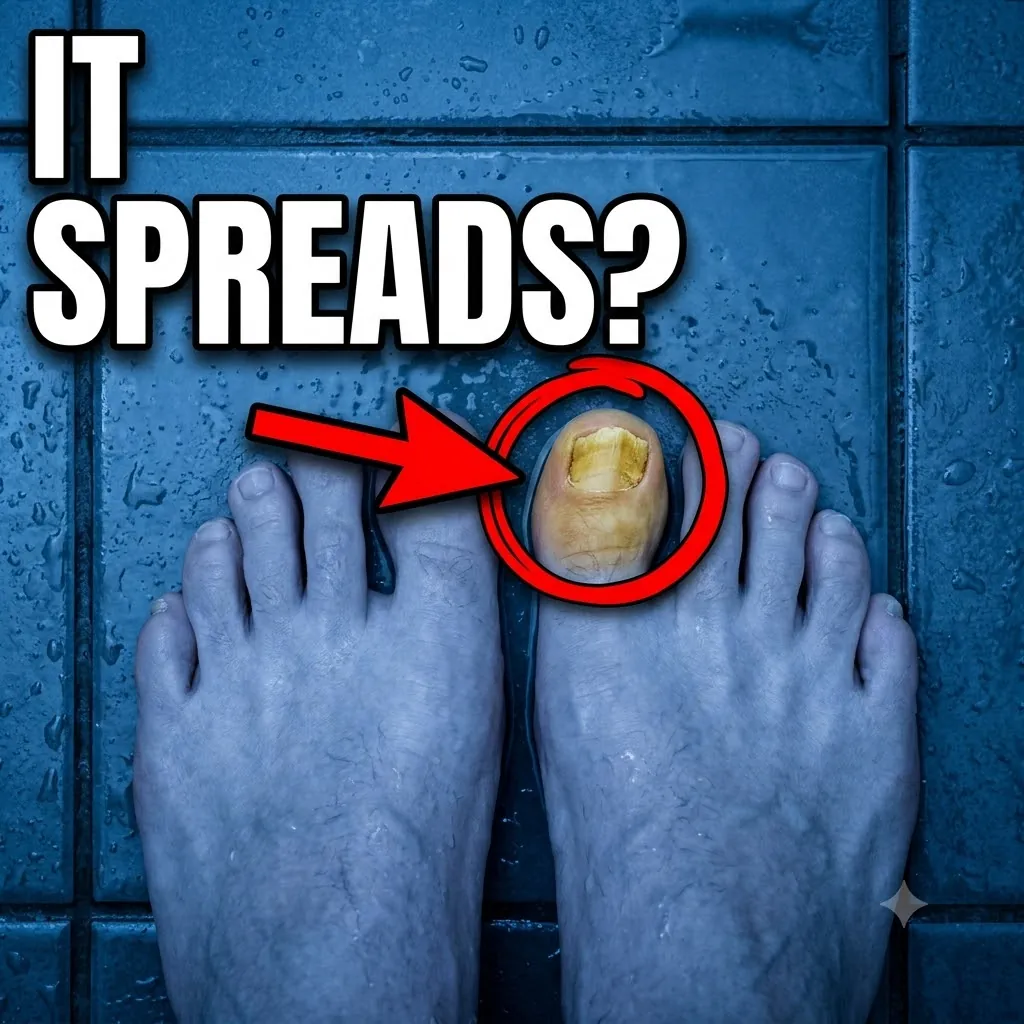
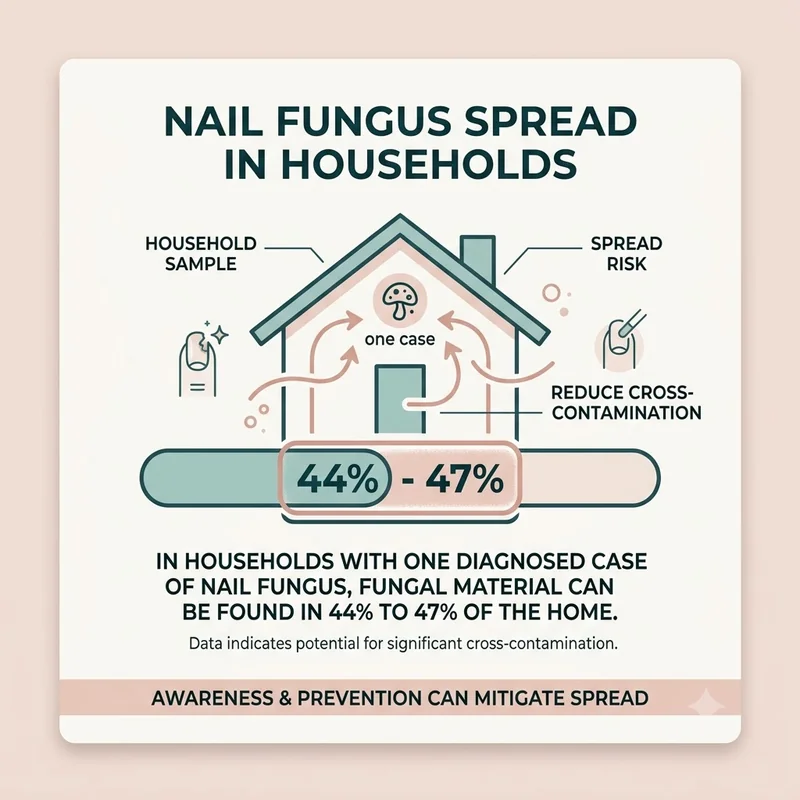
Between 44 and 47 percent of households with one affected member showed evidence of transmission in a scoping review on household transmission. Nail fungus spreads from person to person when fungal spores from an infected nail or the skin around it land on a surface, and someone else's bare skin then picks them up there. Direct touch can do it, and so can damp shared surfaces such as shower floors and bathmats.
A dermatophyte is a fungus that feeds on keratin, the protein in skin, hair, and nails, and Trichophyton rubrum is the species most often behind nail infections. Once it gets in, a nail is a comfortable place for it to stay.
Read the figure carefully. It describes households, not individual people. Just under half of households showed evidence of spread, which makes the risk real. More than half did not, which makes it far from automatic.
A bare yes to is nail fungus contagious gives no sense of scale, and scale is what settles the worry. Roughly half is a reason to change how the bathroom works. It is not a reason to keep your distance from someone you love.
Can You Get Nail Fungus From a Shared Bathroom, Partner, or Family Member?
Living with someone who has nail fungus is not the risk. The wet floor you both stand on is. So in a shared home, the practical answer to is nail fungus contagious is yes: you can get nail fungus from a partner or family member, mostly through shared damp surfaces and shared tools rather than everyday contact such as hugging or sharing a couch. Sharing a bed carries less risk than sharing a wet bathmat, since fungus favors moisture.
Shower, bathmat, and towels
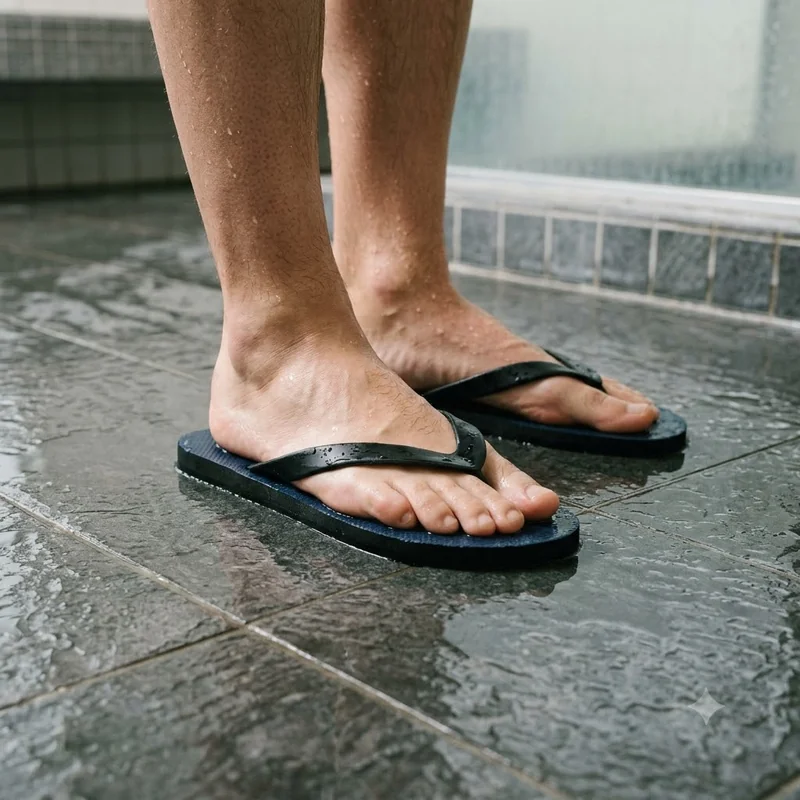
Yes, you can catch nail fungus from a shared shower or bathroom, particularly if you are susceptible and walk the floor barefoot. Fungal spores collect on damp tile and on cotton that stays wet. The fix is unglamorous: shower shoes for everyone who uses that floor, a separate towel and bathmat for the person with the infection, and feet dried fully afterward, including between the toes. Let the bathmat dry between uses instead of leaving it in a damp heap.
Socks, shoes, and clippers
A washed sock earns a qualified answer to is nail fungus contagious: less risk than a wet floor, but not zero. A cool wash may not clear every spore, so use a hot cycle, dry the socks fully, and keep the two people's socks apart.
Shoes matter more than socks because they stay damp longer. Rotate pairs, let each one dry out between wears, and dust the inside with antifungal powder. Clippers and files touch the infected nail directly, so the person with the infection needs their own set, wiped with rubbing alcohol after each use.
Can You Get Nail Fungus From a Pool, Gym, or Nail Salon?
Saturday, late afternoon, the last pedicure chair of a long day: yes, a nail salon can give you nail fungus, and it happens when a footbath or a metal tool was rinsed instead of properly disinfected between clients. A salon that cleans correctly between every client is a far smaller risk.
Nail salons
Two terms get confused in salon conversations. Sanitizing lowers the number of germs on a surface. Sterilizing destroys all microbial life, including fungal spores, and steam sterilization in an autoclave is the standard method for metal tools. A cold soak in disinfectant solution counts as disinfecting, which sits a step below sterilizing.
At a salon, is nail fungus contagious becomes a question about process: how the tools were cleaned, not how nice the room looks. Look for metal tools in a sealed pouch opened in front of you, a fresh file and buffer, and a footbath with a disposable liner or a visible disinfection routine between clients. The guide on how to check a nail salon's hygiene before you book covers what to ask before you sit down.
Pools and gyms
One nail health expert puts the surface point plainly: "Fungus is everywhere and if you are susceptible to it, you can pick it up from shoes, nail salon, gym and areas with moisture. Fungus loves moist environments."
That is why the floor, not the water, deserves your attention. Yes, you can swim with nail fungus in most cases. Wear pool sandals or shower shoes on the deck and in the locker room, dry your feet on your own towel, and skip walking barefoot on wet tile. Chlorine does not change that. It does not clear an infection living in and under the nail, and pool water is not the main concern. The wet deck, the locker room floor, and the shared shower are. The same shoes-on rule covers a gym shower.
Can Nail Fungus Spread From Toes to Fingernails, or Nail to Nail?
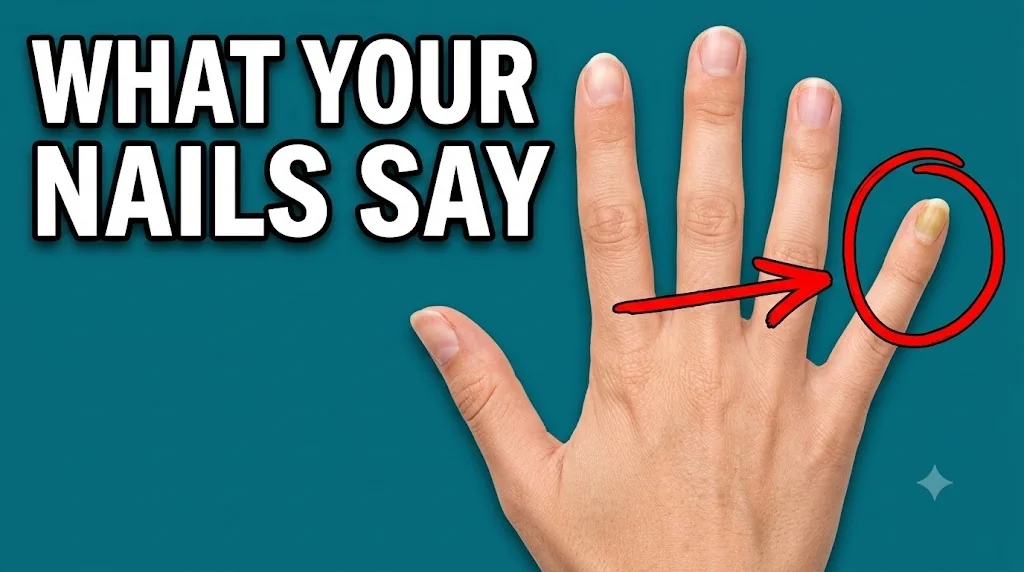
Yes. Nail fungus can spread from toenails to fingernails and from one nail to the next, usually when you touch, scratch, or pick at an infected nail and then handle another nail or the skin around it. Fingernails are affected less often than toenails, but the route is real.
Tinea pedis, better known as athlete's foot, is a skin infection caused by the same fungi that can invade the nail. It often acts as the bridge: fungus on the skin between the toes can move into the nail, and plenty of people carry it without noticing. If you have one, check for the other, because each can keep reinfecting the other.
Searches for is nail fungus contagious usually picture a second person, but the same infection can also move across your own body. Three habits limit it: leave the infected nail alone instead of picking at it, wash your hands with soap and water after touching it, and keep the clippers used on that nail away from your healthy ones.
Toes are where nail fungus shows up most often, and the full guide to toenail fungus contagiousness goes deeper on that side.