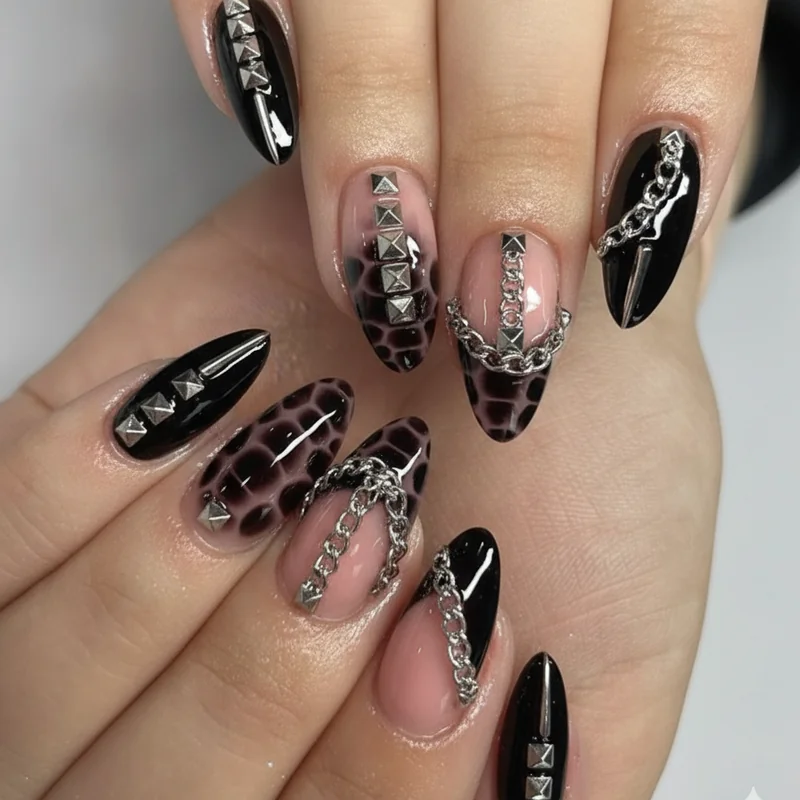
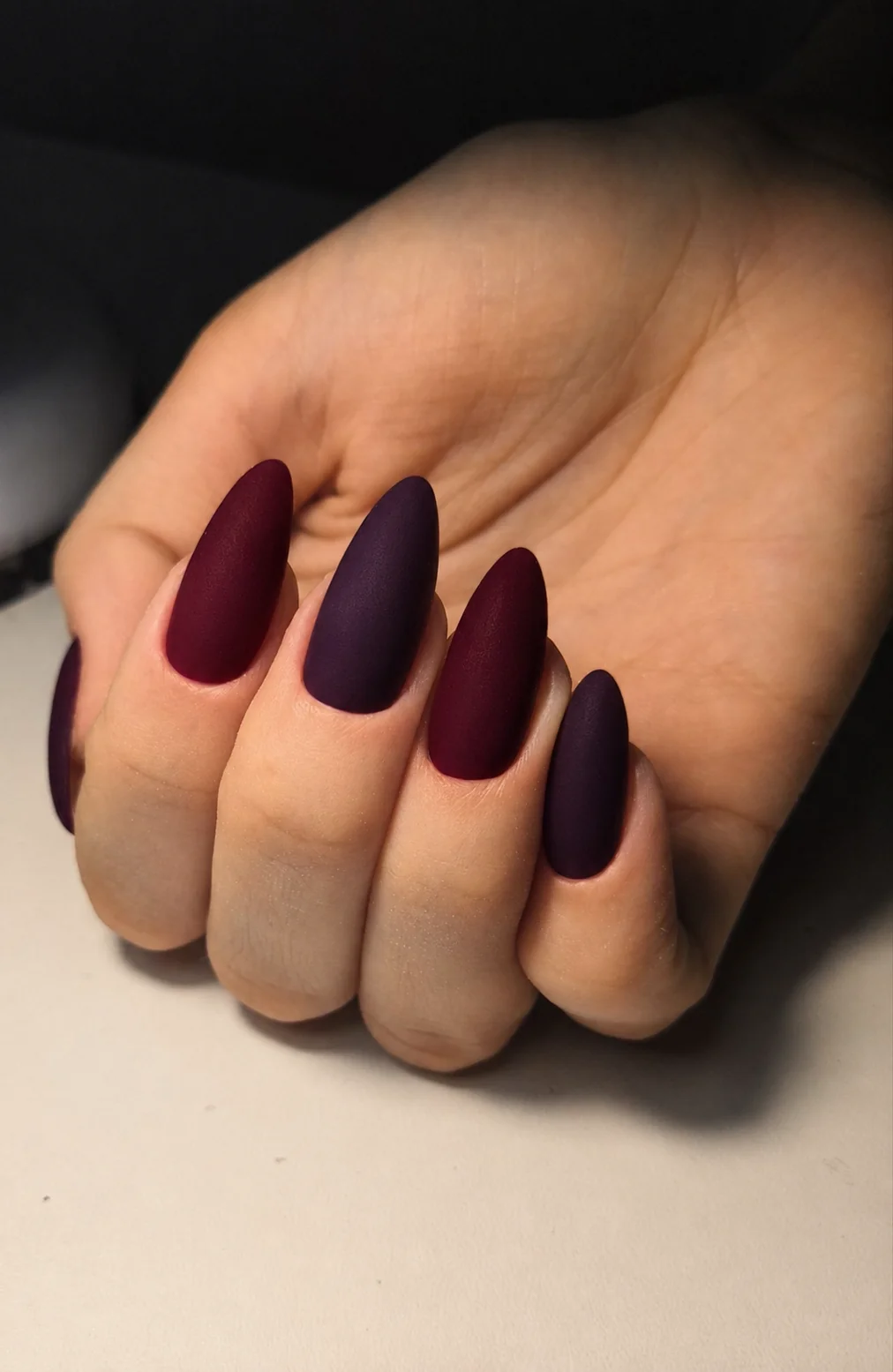
You have looked at every goth nail roundup the internet offers, and none of them have what you actually want. Not because the aesthetic doesn't exist (it does, in granular, specific, visually distinct territory) but because most content lumps everything dark into one vague category and calls it done. Cyber goth nails are not that. They are a specific visual language with sub-aesthetics that don't blur into each other if you know what you're looking at, and this post is for the person who already knows the difference between a rave in 2047 and a Victorian cemetery.
If cyber goth nails is the broad territory you want to explore: chrome, line work, gunmetal, industrial edge, alien-coded finishes. You are in the right place. This is the full breakdown: what the aesthetic actually is, how its sub-aesthetics differ, which shapes carry it best, and what you need to know before you walk into a salon or open your press-on cart.
What Actually Makes a Nail "Cyber Goth" (Not Just Goth)
Cyber goth is not goth with a chrome accent. That distinction matters because the entire design language shifts when you understand where the aesthetic comes from. The cyber goth subculture emerged in the late 1990s from a collision between German and Austrian rave scenes, industrial electronic music (EBM, Aggrotech, Futurepop) and cyberpunk futurism. It is not rooted in gothic rock or Victorian darkness. It is rooted in the dancefloor, the dystopia, and the digital.
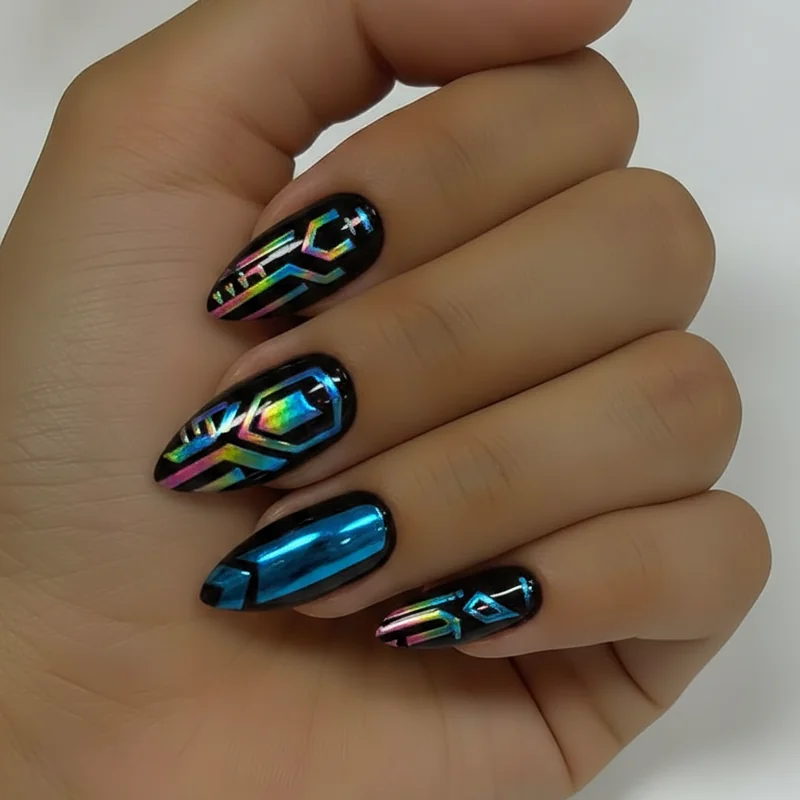
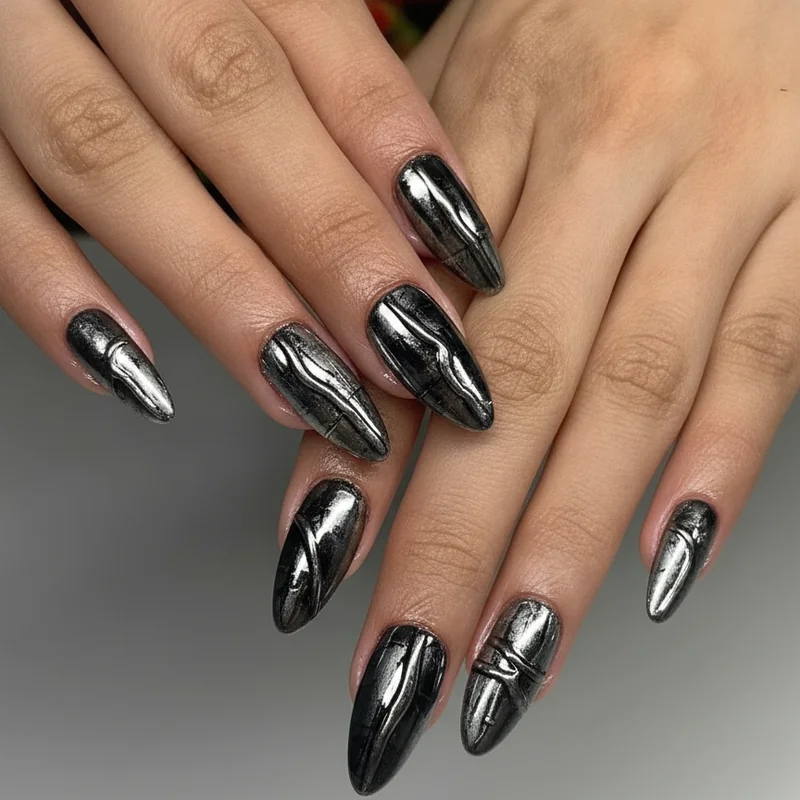
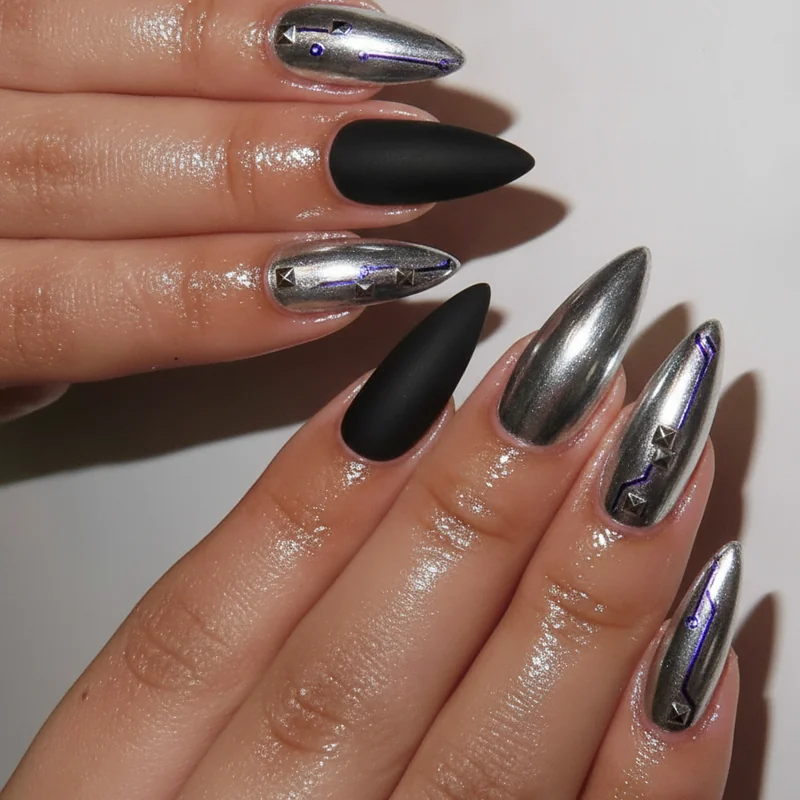
That origin shapes everything about what the nails look like. Where traditional goth nails reach for lace, blood-red, bat motifs, and dark romance, cyber goth nails go somewhere colder and more industrial: black bases with mirror-chrome or liquid silver finishes, UV neon accents in electric blue or UV purple against all that black, sharp angular shapes, and design elements borrowed from circuit boards and machine aesthetics. The palette is narrow on purpose. Black, silver, gunmetal, and neon is the full range, which is precisely why it reads so distinctly. If you want to go deeper into the full goth nail universe this sits within, Goth Nails: The Ultimate Guide to Dark & Edgy Nail Art lays out every sub-aesthetic from whimsigoth to darkcore.
What makes a nail cyber goth specifically: the chrome, the industrial edge, the rave-culture neon, and the futurist design vocabulary. None of that is negotiable.

Cybersigilism Nails The Line-Work Sub-Aesthetic Taking Over TikTok
The magnet is not the hard part of cyber goth. The line work is.
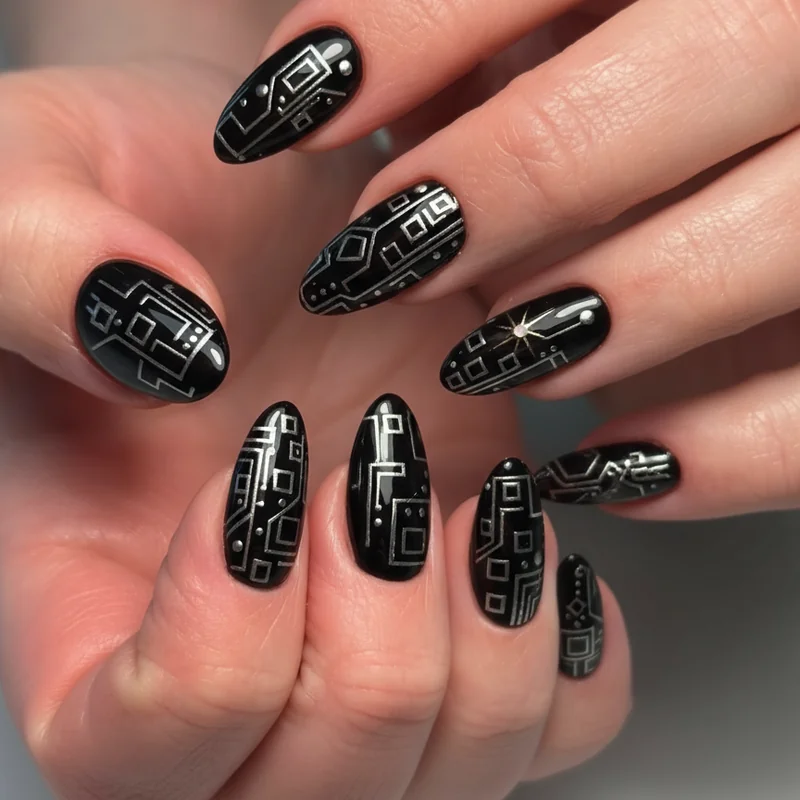
Cybersigilism is the most technically demanding sub-aesthetic in the cyber goth umbrella, and also the most distinctive. It originates from a blackwork tattoo aesthetic developed by LA-based artist A.i. (@cybersigilism) around 2018, which spread through Berlin's techno underground before hitting mainstream TikTok. The visual: ultra-fine branching line work that looks like circuit boards crossed with alchemical sigils. Angular, fractal, spreading outward from a focal point. On nails, this translates to silver or white ink line work on a black gel or acrylic base, creating what the community calls what cyber sigilism nails are when they describe them in their own terms: "silver line nails," "alien coded nails," "dark circuit art."
The distinction from cyberpunk is significant. Cybersigilism is almost entirely monochromatic: black and silver, minimal colour, maximum negative space. It carries an esoteric, underground quality that cyberpunk's neon-heavy palette does not. The line work is its own medium. A cybersigilism set done right looks like something that grew on the nail rather than was painted onto it. Angular and precise, but with an organic logic to how the lines branch.
For nail art, the technique uses a fine liner brush with silver gel or chrome line-work gel over a cured black base. Complexity varies from simple branching patterns on two or three nails to full-hand compositions that read as a single piece across all five fingers.