Every pastel goth nail inspo post you've ever found has either been too sweet or too dark and you've closed the tab knowing your version of the aesthetic lives somewhere the post never reached. That gap is exactly what pastel goth nails are supposed to close, and almost nobody maps it correctly. The spectrum between barely-pastel-with-one-dark-accent and full kawaii-goth maximalism is enormous, and where you fall on it matters. This post covers the whole thing.
Pastel goth nails sit at a very specific intersection: soft, light colour lavender, mint, baby pink, ghost white carrying dark motifs that would be at home on a traditional goth set. The contrast is the point. Not pastel nails with a skull sticker dropped on top, but a design where both elements are doing equal work. Colour theory, motif weight, shape choice, finish all of it contributes to whether the aesthetic lands or collapses into something that just looks like a holiday nail set. If you've been pulling inspo for a while and still can't articulate exactly what you want, this is where you'll find it. For the broader world this aesthetic draws from, Goth Nails: The Ultimate Guide to Dark & Edgy Nail Art covers the full landscape.
What Makes Pastel Goth Nails Different From Regular Goth Nails?
Most people assume pastel goth is just goth nails in lighter colours. It isn't, and the distinction is worth understanding before you pull up a reference image on your phone.
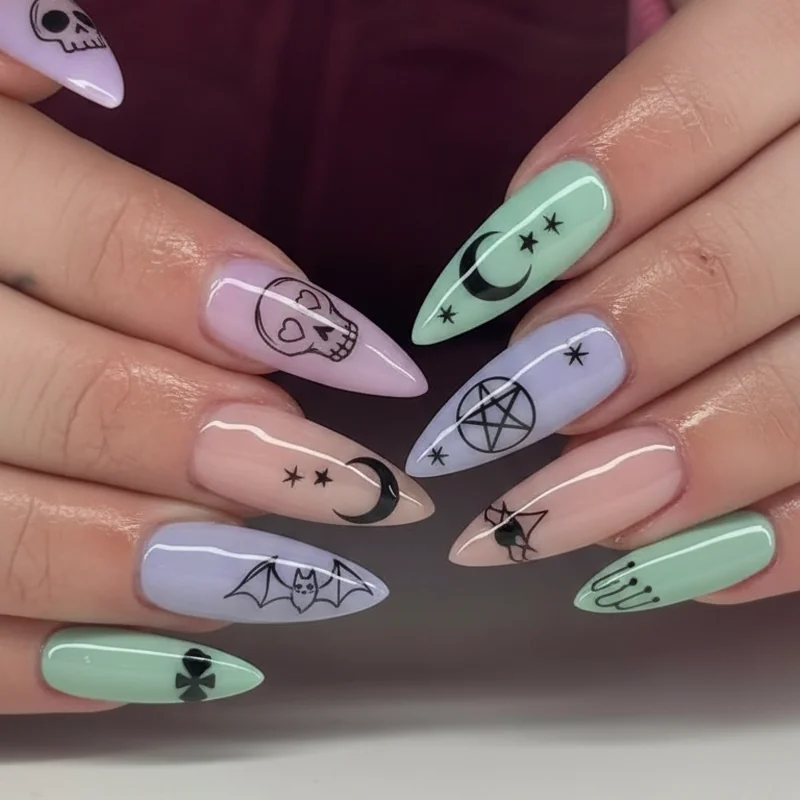
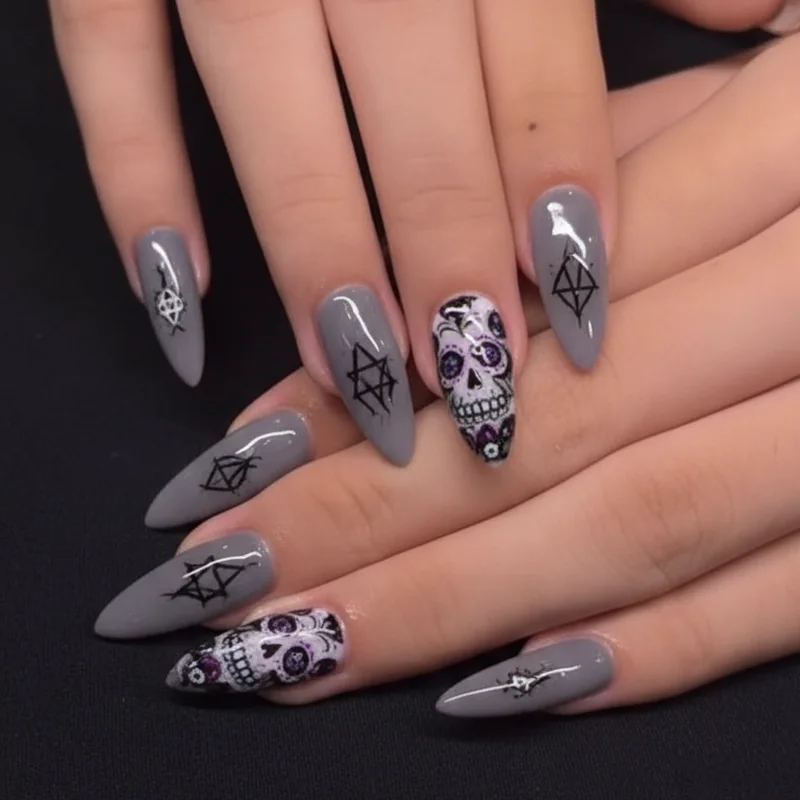
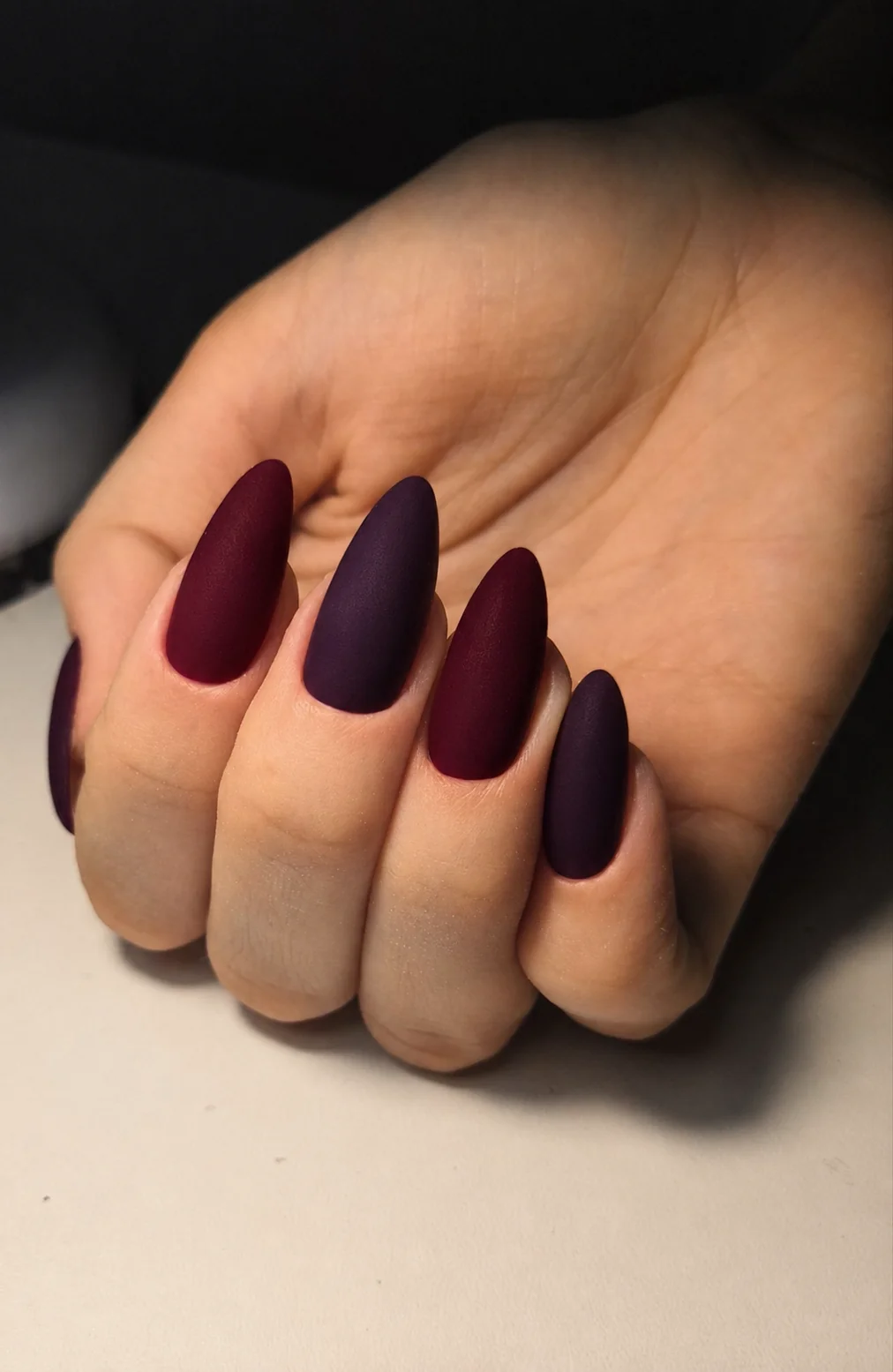
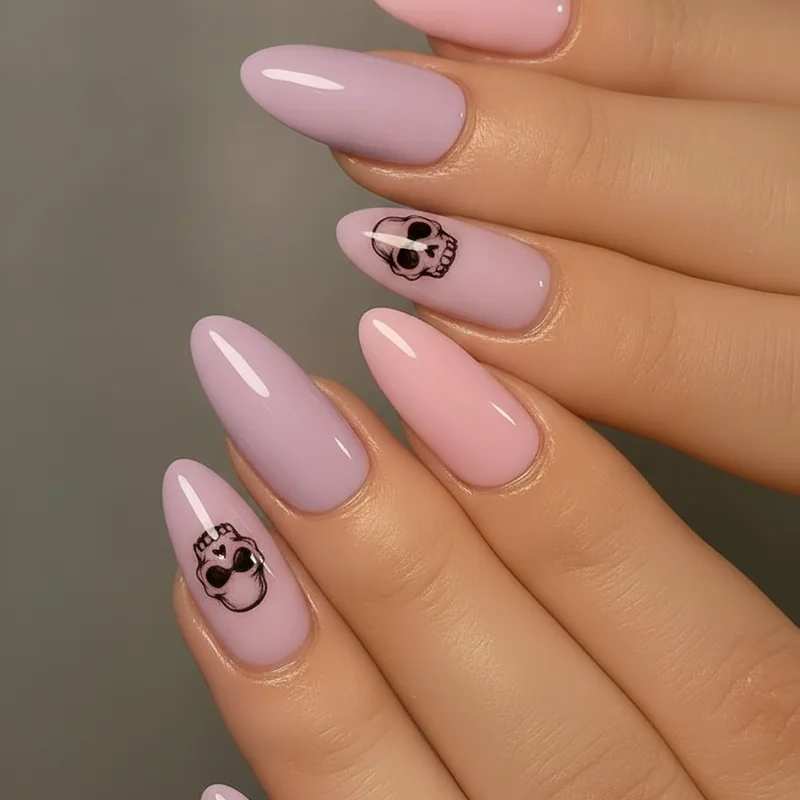
Traditional goth nails work in darkness. Black, deep burgundy, forest green, vampy plum the colour itself carries the mood. Motifs are reinforcing, but the palette is doing the heavy lifting. Pastel goth nails invert this entirely. The palette is light genuinely pastel, not dusty or desaturated and the dark element arrives through imagery. A muted lavender base with a black pentagram. Baby pink with a ghost white skull and black outline. Mint green with bat silhouettes in near-black charcoal. The pastels are not toned down versions of gothic colour; they're a deliberate counterpoint to it.
This is what separates pastel goth from the broader goth nail world and from soft goth, which uses muted tones but without the kawaii-meets-occult tension. It also explains why the aesthetic is so difficult to find done well it requires genuine design thinking to balance both elements rather than letting one overwhelm the other. Too much pastel and it reads as a spring manicure with a single dark detail. Too much dark and the pastel base becomes irrelevant. The look lives in the ratio, and that ratio is different for every design.
The aesthetic has roots in early 2010s Tumblr and Japanese Harajuku street fashion, specifically the Gurokawa (creepy cute) tradition that influenced global alt communities around 2012–2014. That revival is culturally active right now and it shows in what this audience is searching for.
The Pastel Goth Colour Palette: Every Shade That Works
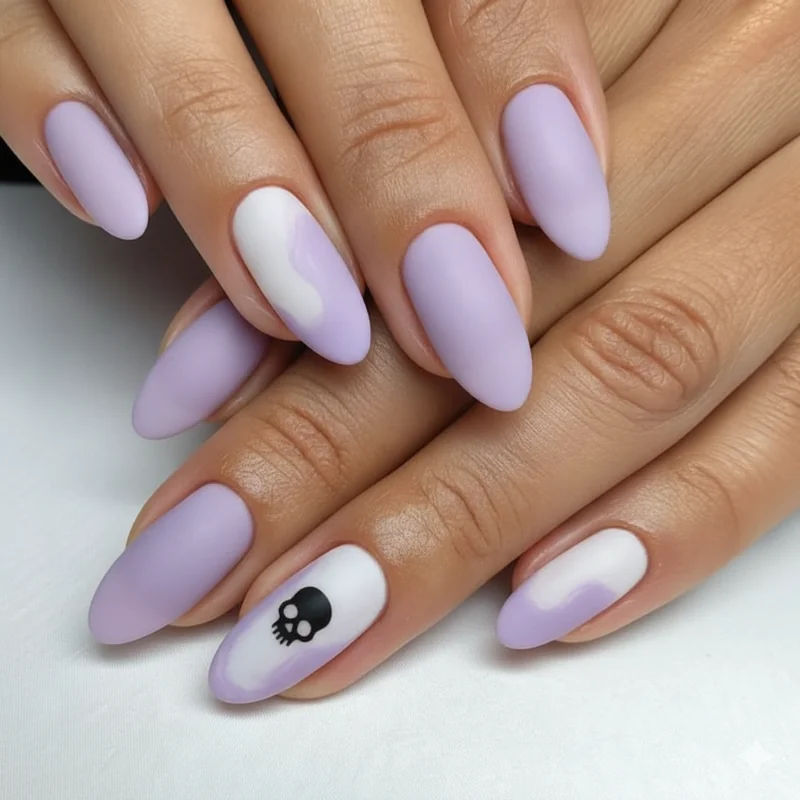
Three coats of muted lavender over a white base, finished matte. That's the single most transferable decision in pastel goth nails and it works because lavender is the colour that sits most naturally between soft and gothic without trying to be either.
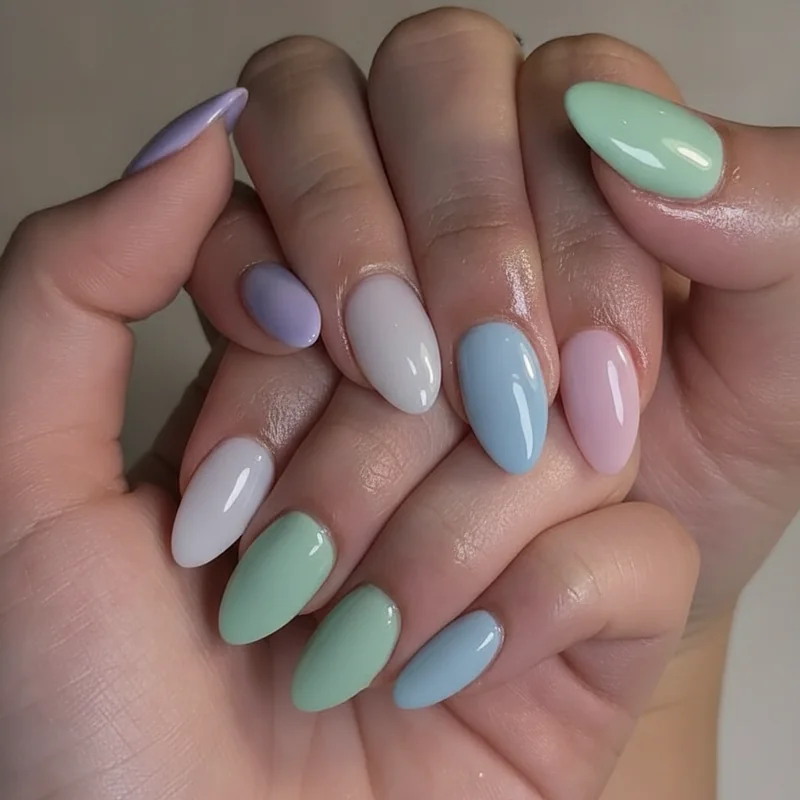
The core palette for this aesthetic runs across six families, each with a different emotional register:
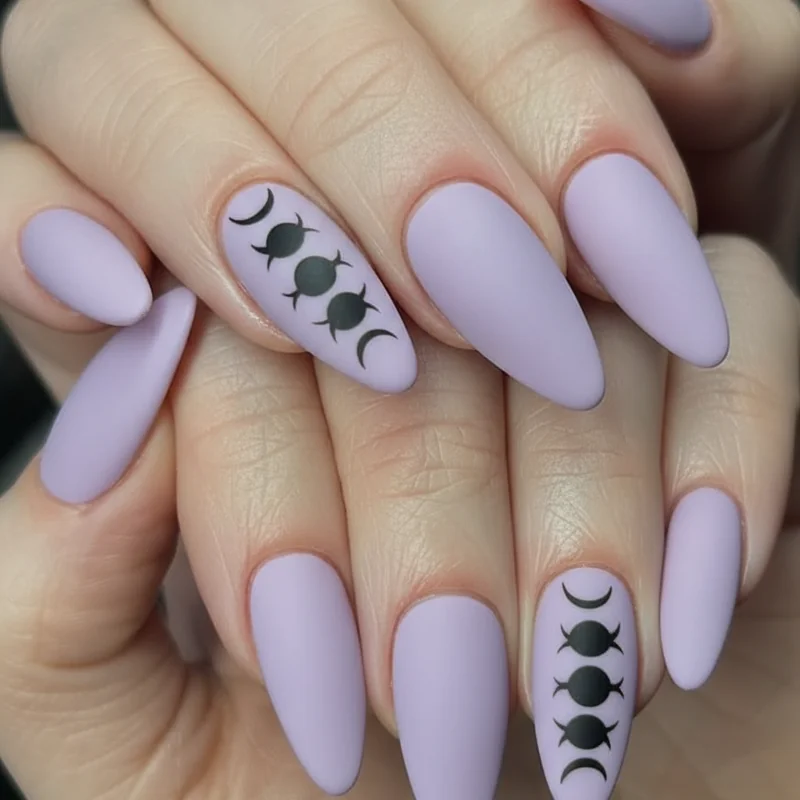
Lavender and lilac are the signature shades specifically the muted, slightly grey-toned versions rather than bright purple. A colour like a bruised petal, or a shadow cast on white fabric. This is the shade that photographs most true to life, which matters because several pastels in this palette lose their depth on camera.
Ghost white and pale ivory function as neutrals that still read "pastel" when set against dark motifs. A ghost white base with a minimal black skull outline is one of the cleanest expressions of the aesthetic nothing competes, nothing muddles.
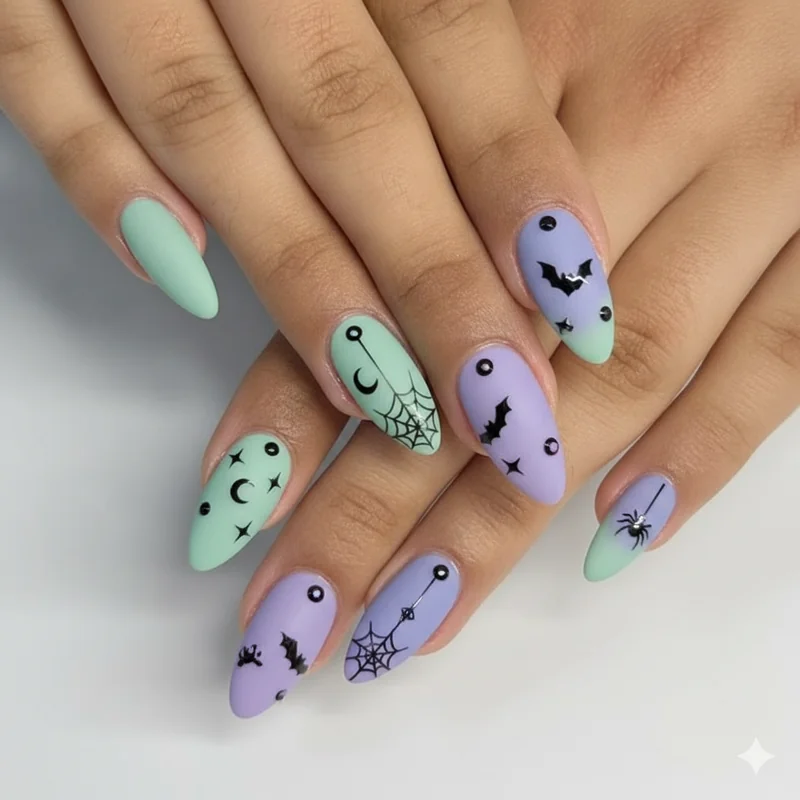
Mint and sage bring an edge that lavender doesn't. Mint is slightly more aggressive there's something genuinely unsettling about mint green when it carries a dark motif, in the best way. Sage leans softer and pairs well with moon phase detailing.
Baby blue and powder blue are the most underused shades in the palette. They carry a melancholy that lavender doesn't have and they photograph beautifully on both light and deep skin tones, unlike some of the paler lavenders that wash out.
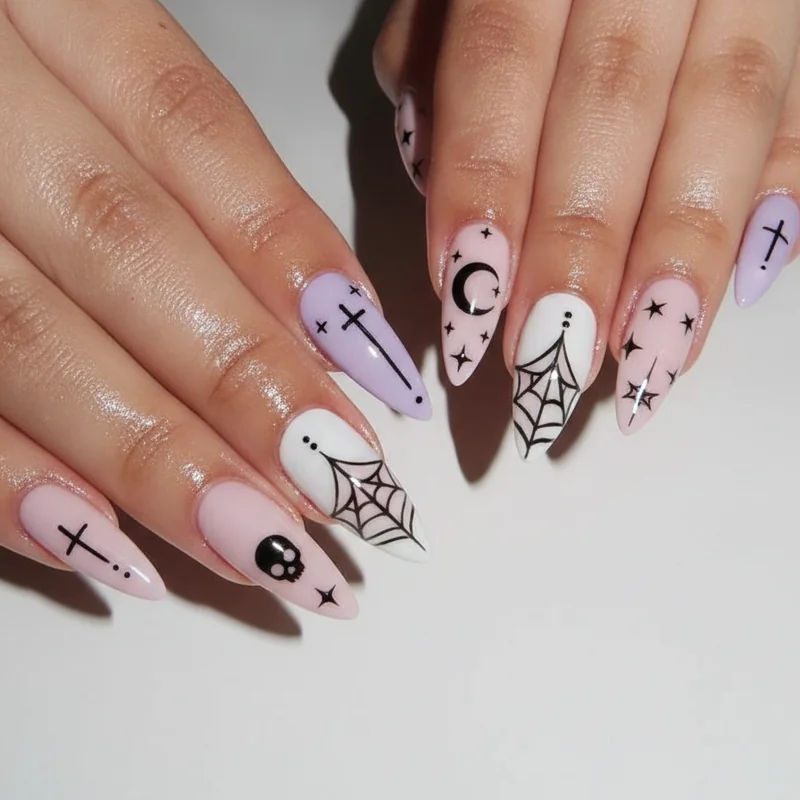
Pale pink is the trickiest. On its own it leans sweet rather than gothic, which means the motif has to work harder. Pair pale pink with a black pentagram or a drip detail in charcoal rather than a bow, and the balance holds.
Pale yellow sits at the outer edge of the palette "creepy cute" territory specifically. Pale yellow with black bat silhouettes or spider web details hits the aesthetic from an unexpected angle, and it's largely unrepresented in existing inspo content.
In terms of real-life wearability: lavender, ghost white, and baby blue are the most reliable. They translate from screen to nail bed without losing depth. Pale pink and pale yellow require more pigmented gel formulas to avoid looking washed out under indoor light. Always ask your nail tech to show you the colour on a tip before committing.
Symbols and Motifs That Define the Aesthetic (Skulls, Moons, Bows and More)
The motifs in pastel goth nail art are not decorative afterthoughts they're where the gothic half of the aesthetic actually lives. Without them, you have pastel nails. With the wrong ones, or too many, you lose the balance. Understanding which symbols do which work is the difference between a nail set that feels considered and one that just feels like a Halloween costume.
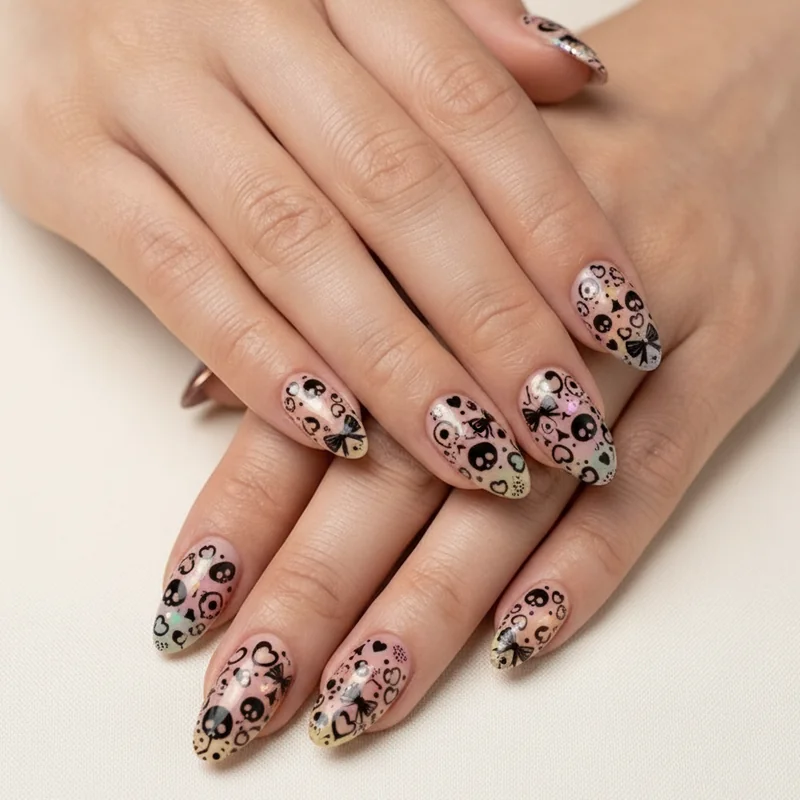
Skulls are the most legible signal of the aesthetic but the style of skull matters enormously. A kawaii skull (rounded, with large empty eye sockets and minimal teeth detail) reads as creepy cute. A realistic or highly detailed skull tips into full goth territory. For most pastel goth nails, a simplified kawaii skull in black outline over a pastel base is the most wearable version. One or two accent nails, not all ten.
Moon phases carry an occult register without the directness of a skull which makes them versatile across the full pastel goth spectrum. A single crescent on a lavender base reads as soft and mystical. A full moon phase sequence across a set of coffin nails reads as something more committed. For the mystical and witchy crossover territory that overlaps with this aesthetic, Witchy Nails Ideas for Every Aesthetic is worth exploring alongside this post.
Pentagrams and crosses function as harder-edged symbols they push the aesthetic toward the goth end of the spectrum. Best used as single accent details rather than repeated motifs, and in fine-line black rather than filled solid.
Bows are the element that anchors the kawaii side of the aesthetic. A black bow on a lavender base is one of the most instantly recognisable pastel goth combinations. Oversized 3D bows are trending on TikTok specifically within this aesthetic community.
Bats and spiders work best as small, silhouette-style details fine-line or stamped. They add the spooky element without overwhelming a design that's already doing work through colour contrast.
Drip nail art a dark colour dripping from the tip toward the cuticle is one of the more graphic techniques in the pastel goth toolkit. Lilac base with black drips, or a ghost white base with dark grey drips, creates a strong visual that reads immediately as creepy cute rather than Halloween.
The rule with motifs: pick two maximum per design, and let the palette do the rest. The aesthetic collapses when every element is fighting for attention.